Best resources for learning about survival skills: books, courses, and more
Discover essential resources for mastering survival skills, from books to online courses, tailored for preppers and survivalists.
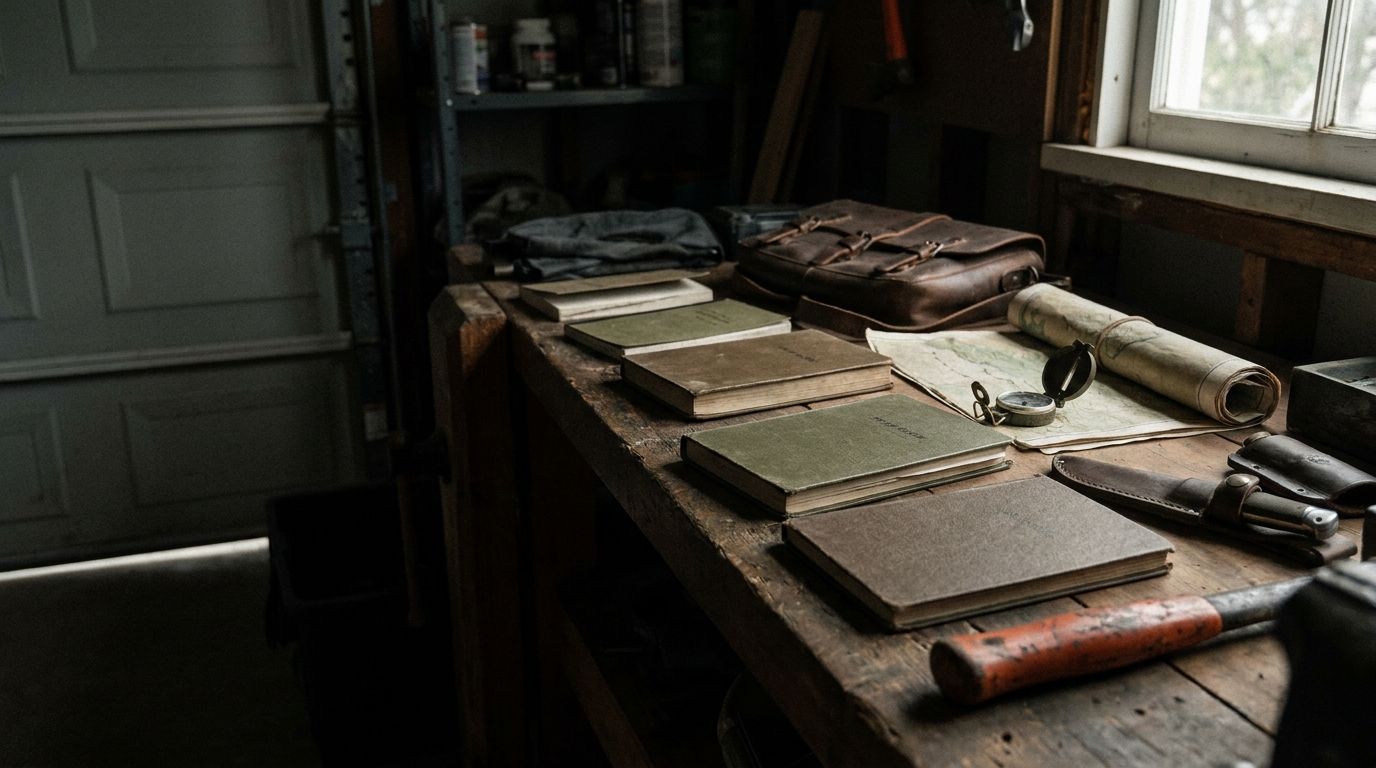
You're sitting around a firepit with a few friends, and someone mentions they've been deep in survival reading lately. You nod along. But quietly, you feel behind. You want in on this world, you just don't know where to start.
The good news: there's no shortage of solid resources. Books, courses, apps, local groups. The harder part is sorting the genuinely useful from the noise, and matching the format to how you actually learn best. This guide cuts through it.
Essential books for preppers
Books are a foundation. They let you go deep on one skill or broad across many, on your own schedule. A few titles belong on every prepper's shelf:
- "The Ultimate Guide to Wilderness Living" by John McPherson and Geri McPherson: A thorough field manual for surviving in the wild, covering shelter construction, food foraging, and more. The practical illustrations make it workable even for beginners, and complex topics get broken into steps you can actually follow.
- "SAS Survival Handbook" by John Lofty Wiseman: Written by a former SAS soldier, this one covers navigation, shelter, and emergency medical care with the kind of firsthand credibility that classroom-only authors can't fake. It's not just about staying alive. It's about staying sharp.
- "Emergency: This Book Will Save Your Life" by Neil Strauss: Strauss blends narrative storytelling with hard practical advice, walking through real scenarios and showing how preparation changes outcomes. Readers tend to appreciate the humor woven in. It makes the dense stuff easier to absorb.
- "Bushcraft 101: A Field Guide to the Art of Wilderness Survival" by Dave Canterbury: Canterbury is a survival instructor, and it shows. He emphasizes reading your environment and using it intelligently, with step-by-step guides and illustrations that hold up in the field.
Books give you the theory, but they only stick if you put them down and try things. Set aside an hour each week to practice one skill from whatever you're reading.

Online courses and workshops
Structured learning suits some people better than self-directed reading. Platforms like Udemy, Coursera, and MasterClass carry a solid range of survival-related content:
- "Survival Skills for the Modern Prepper" on Udemy: Covers food preservation, first aid, and self-defense without drowning you in theory. Video lectures and quizzes keep it practical, and the pacing works for beginners and intermediate learners alike.
- "Wilderness Survival" by the National Outdoor Leadership School (NOLS): NOLS runs both online and in-person courses built around real decision-making in real environments. Instructors walk you through navigation, shelter, and risk assessment, the kind of stuff that only clicks when someone's walking you through it live.
- "The Complete Survival Course" on Skillshare: Built for beginners, with coverage from fire-making to foraging. The community side of Skillshare is a genuine bonus here. You can connect with others working through the same material and compare notes.
Local workshops are worth hunting down too. Organizations like the Survival Training School of California run immersive programs covering everything from wilderness navigation to field medicine. Real-time instruction with an experienced instructor builds confidence faster than screen time alone.
YouTube channels for visual learners
Some skills just need to be seen before they make sense. These channels are worth bookmarking:
- Survival Lilly: Straightforward, hands-on demonstrations across a range of environments. Gear reviews, bushcraft techniques, and practical field skills, all shown rather than just described.
- The Urban Prepper: Focused on prepping in cities and suburbs, where space is tight and traditional wilderness skills need adapting. Genuinely useful for anyone not living in the backcountry.
- Alaska Grizzly: Survival skills wrapped in real outdoor storytelling. The creator navigates Alaska's wilderness and shows you how to read and work with challenging terrain. The narrative keeps it engaging without sacrificing substance.
- Prepper Nation: Broader preparedness content with a community angle. The host pushes the value of shared knowledge, which can motivate you to seek out local groups and get involved.
Watching someone execute a skill removes a lot of the guesswork. And subscribing means new techniques and gear reviews land in your feed automatically.
Podcasts for on-the-go learning
Commuting, working out, driving to the range. Podcasts fit into the gaps in your day without asking much. These are worth adding to your rotation:
- "The Survival Podcast": Jack Spirko covers preparedness and self-reliance with a conversational style that doesn't talk down to you. Guest experts bring real-world depth to the discussions.
- "Prepper Recon": Practical, actionable, and current. Episodes feature survival experts and take an honest look at how world events affect your preparedness strategy.
- "Survival Show": Wide range of topics, guest-heavy format, and a focus on real-world skills and self-reliance. Good for filling in gaps you didn't know you had.
- "The Art of Manliness": Not exclusively a survival show, but it returns to outdoor skills and self-reliance often. The guest roster is diverse and the conversations tend to go somewhere useful.
The format rewards consistency. Even 20 minutes a few times a week adds up faster than you'd expect.
Survival skill apps
A few apps are worth having on your phone, especially when you're out in the field and need a quick reference:
- Survival Guide: Covers shelter building, signaling, and food foraging with built-in quizzes to test retention. Handy when you're out and need to verify something quickly.
- First Aid by American Red Cross: Essential knowledge, always current, with interactive scenarios that let you practice rather than just read. Every prepper should have this one.
- Outdoor Survival: Interactive lessons and quizzes covering core skills, plus a survival checklist to prep for outings. Good for reinforcing what you've already learned.
- Compass Galaxy: Navigation fundamentals and real compass functionality. Knowing how to work a compass in unfamiliar terrain is non-negotiable, and this app makes it easier to practice.
These aren't replacements for real training. But having reliable references a tap away matters when you're making decisions under pressure.
Local community resources
Don't sleep on what's available close to home. Local resources often deliver more practical value than anything online, because you're doing it with people, not just watching it on a screen.
- Meetup.com: Find local survival groups and workshops where you can train alongside people with similar goals. Hands-on group training accelerates learning in ways solo study can't replicate.
- Community colleges: Many offer courses in outdoor skills, bushcraft, or emergency preparedness. Check the catalog. Some have full outdoor recreation programs with real field components.
- Local outdoor stores: REI and similar shops frequently host workshops on knife skills, fire starting, and wilderness navigation. Low barrier to entry and often free or cheap.
- State parks and nature reserves: Many run educational programs led by experienced instructors. Check for scheduled events. It's real terrain, real conditions, and usually underutilized.
Building a local network means you have people to train with, learn from, and call on. That's a resource no app can replicate.
FAQ
What are the best books for learning survival skills?
A few top recommendations include "The Ultimate Guide to Wilderness Living" by John McPherson, "SAS Survival Handbook" by John Lofty Wiseman, and "Emergency: This Book Will Save Your Life" by Neil Strauss. Each offers unique insights into various survival techniques and practical skills.
Where can I find online courses for survival skills?
Websites like Udemy and Coursera offer a variety of courses on survival skills. For more hands-on experiences, consider organizations like the National Outdoor Leadership School (NOLS) that provide in-person and online options. Look for courses that match your specific interests, whether it's wilderness survival or urban prepping.
Are there any podcasts focused on prepping and survival skills?
Yes, podcasts like "The Survival Podcast," "Prepper Recon," and "Survival Show" cover various topics related to prepping and survival skills. They often feature expert interviews and practical advice that can enhance your preparedness knowledge.
How can I learn survival skills in my local community?
Look for local survival groups on Meetup.com, check with community colleges for relevant courses, or visit outdoor stores for workshops. Engaging with local resources can enhance your learning experience and provide opportunities for hands-on practice.
What are some useful survival skill apps?
Apps like Survival Guide, First Aid by American Red Cross, and Outdoor Survival can help you learn and practice essential survival skills. They provide information and interactive lessons at your fingertips, making it easy to access critical knowledge when needed.
Can I practice survival skills at home?
Absolutely. Many skills translate directly to your backyard: fire-starting, basic shelter construction, first aid practice with a family member. Setting up a mock scenario forces you to apply what you've read in a controlled setting, which is where real retention happens.
What skills should I prioritize as a beginner prepper?
Start with first aid, basic navigation, fire-making, and food preservation. Learn to assess risk and build a plan before you need one. Then stack skills gradually as your confidence grows. Depth beats breadth early on.
The best way to build these skills is simple: use the resources, then go do the thing. Pick one item from this list today. Read the first chapter, watch the first video, download the app. The gap between knowing and doing closes faster than most people expect once you start.
Want this handled automatically? See the Mainstay membership.
Subscribe to comment
Join the Mainstay newsletter to leave a comment — and get new field notes in your inbox.
Get new field notes in your inbox
Practical, calm preparedness — one useful note at a time.