Navigating food storage: tips for long-term survival supplies
Master the art of food storage for long-term survival with these practical tips and relatable experiences shared by fellow preppers.
The kitchen had that particular Saturday-morning energy. Sam Wills stood at the counter, both hands buried in a large bucket of rice, pouring the grains into smaller containers and labeling each one with the kind of focus most guys reserve for fantasy football. His 10-year-old son, Jake, peered over the edge of the bucket. "Dad, why are we doing this again?" he asked, brow furrowed somewhere between confused and genuinely curious.
Sam paused. "This isn't just about storing food, buddy. It's about making sure we have what we need, when we need it. Whatever life throws our way."
Jake nodded, still processing. But watching his father work, he felt something shift. This wasn't a chore. It was a lesson in responsibility and foresight, dressed up as a Saturday project.
Food storage is a core part of self-reliance. Not hoarding, not panic-buying, but managing your resources with intention. With the right approach and a few practical habits, you can build a system that actually works for you. Here's where to focus.
Understanding your food storage needs
Before you buy a single can, take stock of what you actually need. Think about the size of your household, any dietary restrictions, and how long you want your supply to carry you. That clarity drives every decision downstream.
- Assess your consumption habits: Track what your household eats in a typical week. That baseline tells you how much to stockpile and what to prioritize.
- Consider dietary restrictions: Allergies, intolerances, specific nutritional needs. If someone in your house can't eat gluten, a barrel of wheat berries isn't much of a backup plan.
- Decide on a time frame: A two-week buffer looks very different from a six-month supply. Know your target before you start spending money.
Once you've mapped out those needs, you can start selecting the right foods with confidence instead of guesswork.

Choosing the right foods for storage
Not all shelf-stable foods pull equal weight. Focus on items that are nutrient-dense, versatile, and things your household will actually eat. Here's a practical shortlist:
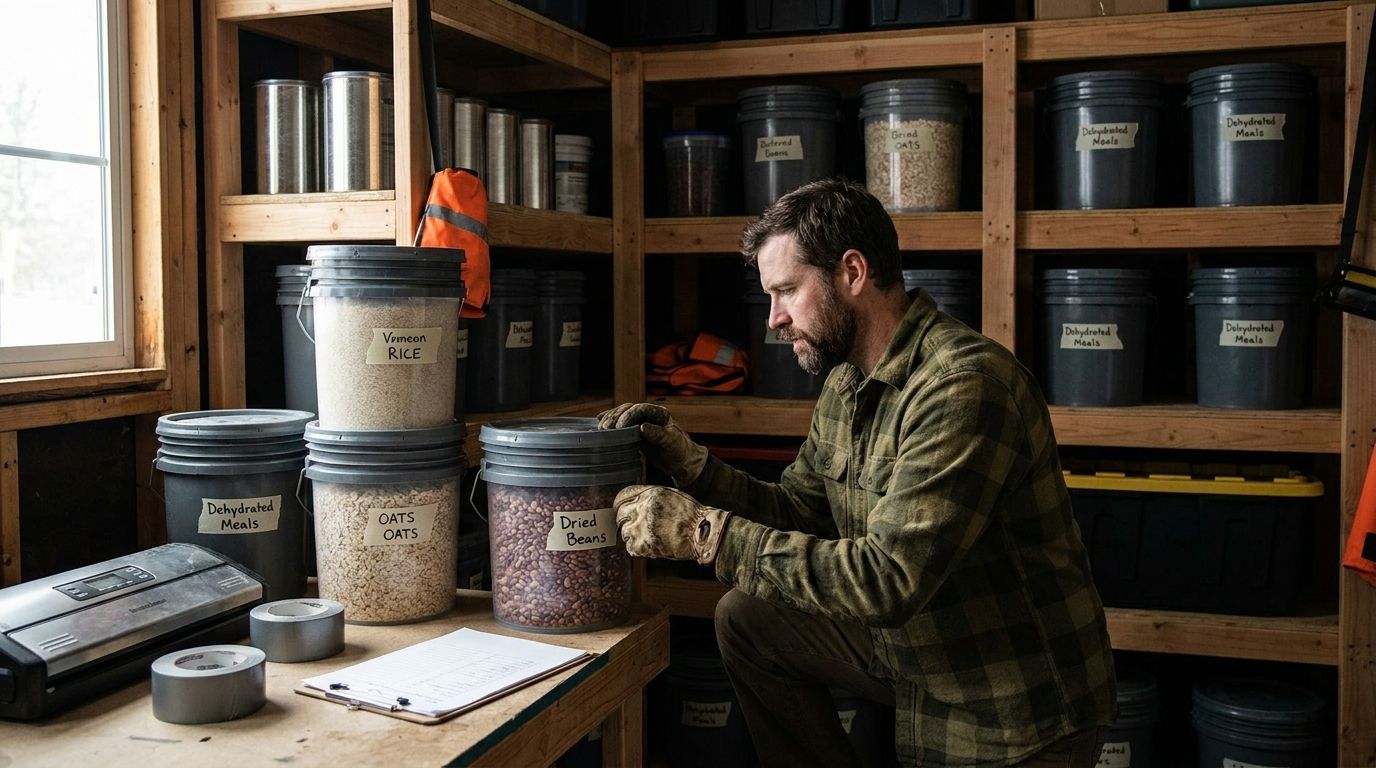
- Grains: Rice, oats, and quinoa are workhorses. High energy, long shelf life, useful in dozens of recipes.
- Legumes: Beans and lentils deliver protein and fiber and can sit on a shelf for years without complaint.
- Canned goods: Fruits, vegetables, and meats round out your nutrition. Check expiration dates and rotate stock consistently.
- Dehydrated and freeze-dried foods: These can last a decade or more and hold onto most of their nutrients in the process.
- Baking supplies: Flour, sugar, and baking powder give you the raw materials to make real meals, not just survival rations.
And here's the part people skip: store what your family will actually eat. A shelf full of foods nobody touches is just wasted money and space. Balance matters.
Storing food properly
What you store only matters if you store it right. Bad conditions mean spoilage, pests, and waste, which defeats the whole purpose.
- Use airtight containers: Glass jars, food-grade buckets, vacuum-sealed bags. Whatever you choose, it needs to keep moisture and pests out completely.
- Label everything: Contents and storage date on every container. No exceptions. (Sam learned this one after playing "guess what's in the mystery jar" for about six months straight.)
- Keep it cool and dark: Heat and light degrade food faster than almost anything else. A basement or interior pantry is your best friend here.
- Rotate your stock: First in, first out. New supplies go behind the older ones, so you're always pulling from the front and nothing quietly expires in the back corner.
Sam had learned the hard way about what happens when you skip this. A few years back, he cracked open a bag of flour that had turned into something closer to a biology experiment. He laughs about it now, but it locked in a habit he hasn't broken since.
Making it easy to manage your food supply
A stockpile without a tracking system is just a cluttered shelf. Organization is what turns a pile of supplies into a working resource.
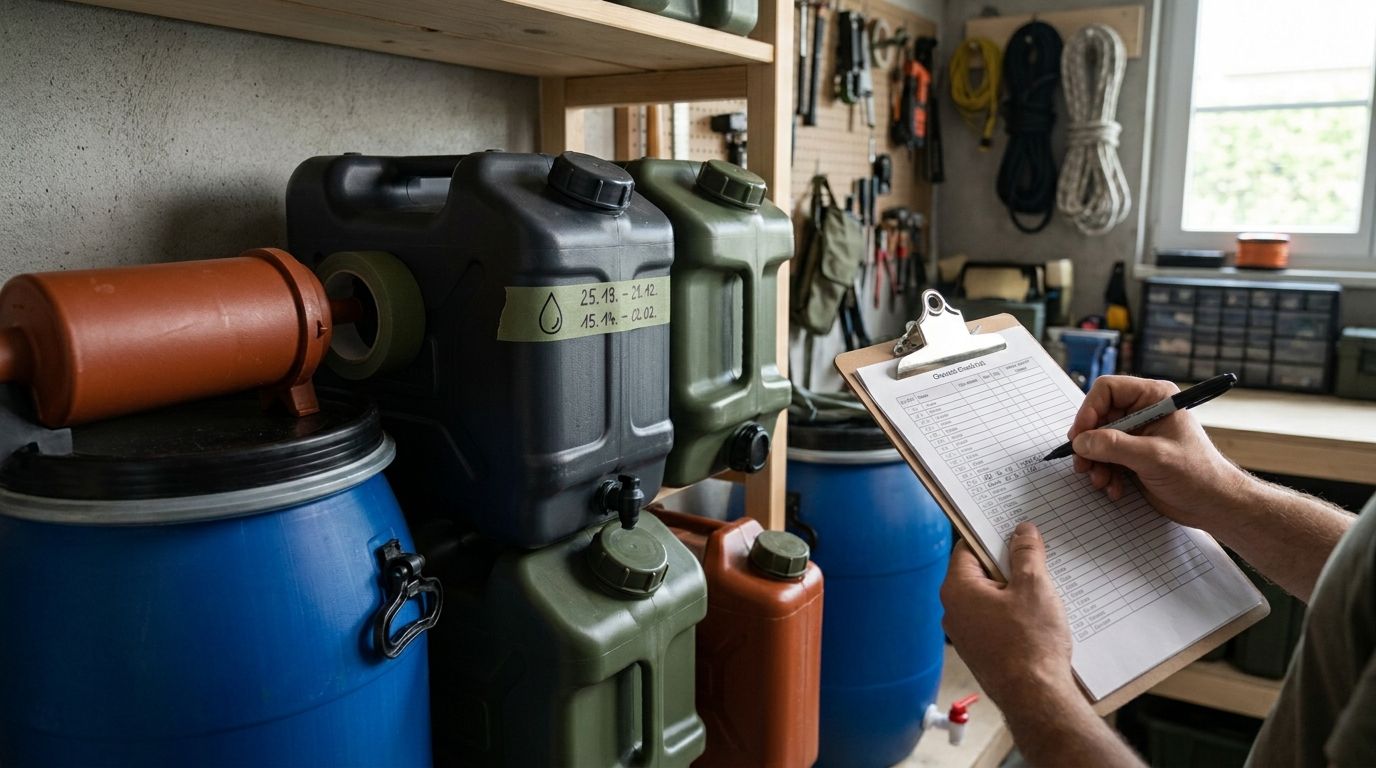
Start with a simple inventory. A notebook works fine, a spreadsheet works fine, a dedicated app works fine, pick the one you'll actually update. Log the item, quantity, and expiration date. Add or subtract entries whenever the supply changes.
Set calendar reminders to check your stock every few months. Rotation and replenishment are ongoing, not one-time tasks.
And get the rest of the household involved. Jake started asking Sam detailed questions about every food they stored, genuinely wanting to understand the reasoning. What started as a chore turned into a real conversation, and a habit Jake started taking ownership of himself.
Food storage is a practical skill, but it's also a mindset. It's knowing your household is covered, that you've thought ahead and built something solid, and that you're not dependent on a supply chain that can snap without warning.
FAQ
How long can I store food?
Most dry goods last for years with proper storage. Grains, legumes, and canned goods commonly hold up for 5-10 years or more. Always check expiration dates and keep your rotation consistent.
What should I do if I find expired food?
For canned goods, look for physical signs before tossing anything. Bulging lids, bad smell, discoloration, those are your cues to discard. For dry goods with no signs of pests or spoilage, they may still be usable, but when in doubt, replace it and move on.
How can I make sure my food storage is pest-proof?
Airtight containers are your primary defense. Beyond that, inspect your storage area regularly and clean it out on a set schedule. Pests find opportunities in neglected corners.
What if I don't have enough space for food storage?
Go vertical with shelves. Use under-bed storage for flat containers. Look at closets, utility spaces, even the area behind a couch. Most homes have more usable storage space than their owners realize, it just takes some creative thinking.
Sam Wills understood, standing there in the kitchen with Jake beside him and their supplies neatly lined up on the counter, that this was never really about the food. It was about the habit of thinking ahead, and passing that habit on.
You're not just building a stockpile. You're building a way of operating. Whether you're starting from zero or tightening up a system you already have, every step forward counts. The process itself is worth something.
When the next disruption hits, you won't be scrambling. You'll already know exactly what you have, where it is, and how long it'll last. That's the whole point.
Want this handled automatically? See the Mainstay membership.
Subscribe to comment
Join the Mainstay newsletter to leave a comment — and get new field notes in your inbox.
Get new field notes in your inbox
Practical, calm preparedness — one useful note at a time.