The essential prepper's guide to water purification
Learn practical methods for purifying water, ensuring clean drinking water in survival situations. Stay prepared with these essential tips.
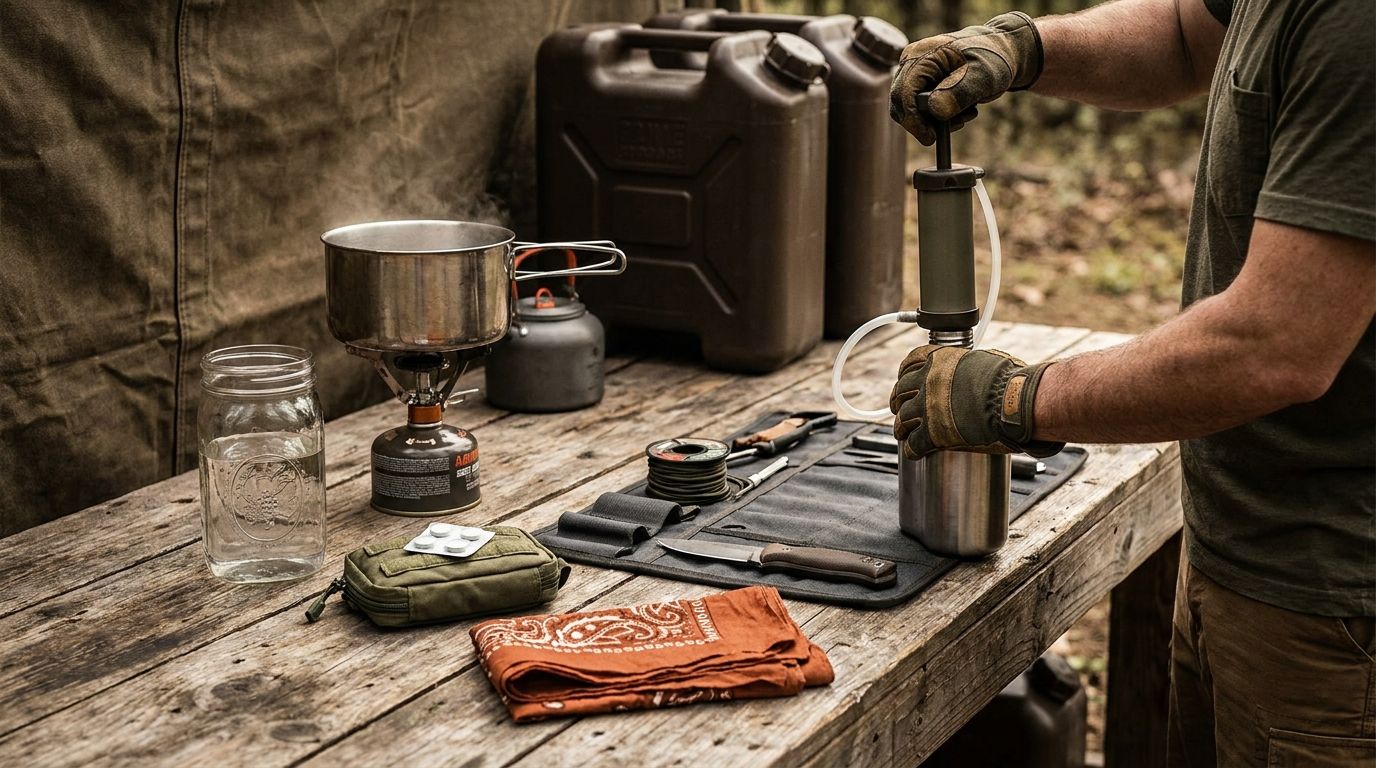
Jake stared at the murky stream in front of him, the sun glinting off its surface. He was on a weekend camping trip with his brother, Sam, and they both had real doubts about drinking from it. "What do you think?" Jake asked, eyeing the water warily. Sam shrugged, his brow furrowed. "I guess we could boil it? But what if we don't have enough fuel?" Just like that, casual camping talk turned into a hard conversation about survival.
Water is non-negotiable. Yet a surprising number of guys who consider themselves prepared have never actually stress-tested their purification setup. Whether you've been building your kit for years or you're just getting serious about self-reliance, knowing how to clean water from any source is one of those skills that separates the ready from the scrambling. Here's a straight look at what works, what doesn't, and what you should actually have on hand.

Understanding water sources
Before you can purify water, you need to know where to find it. Natural sources include lakes, rivers, streams, and rainwater, and each one brings its own contamination risks. Knowing the difference shapes every decision you make when you're pulling water in the field.
- Surface water (lakes and rivers): Exposed to bacteria, viruses, chemicals, and runoff. A 2021 EPA study found that up to 40% of surface water in certain regions contained harmful levels of E. coli, a bacteria that can cause severe gastrointestinal illness. Never drink it untreated.
- Groundwater (wells and springs): Cleaner than surface water as a rule, but not clean by default. The CDC has noted that well water is especially vulnerable to contamination from agricultural runoff and septic systems. Test it before you trust it.
- Rainwater: A solid resource if you collect it right. The World Health Organization recommends filtering and treating rainwater before consumption to eliminate potential pathogens. Your collection setup matters as much as the rain itself.
The takeaway here is simple: prioritize less contaminated sources when you have a choice, but always treat whatever you collect. Contaminants are invisible, and clear-looking water has killed plenty of people who assumed otherwise.
Water purification methods
Once you've found a source, you need a plan for cleaning it. Here are the methods worth knowing cold.
Boiling
Boiling is the oldest trick in the book, and it still works. Bring water to a rolling boil for at least one minute, or three minutes at higher elevations. A 2020 CDC study found that boiling deactivated 99.9999% of pathogens. Reliable. But it needs a heat source, which isn't always a given.
Filtration
A good portable filter removes bacteria and protozoa without fire or chemicals. The Sawyer Squeeze, for example, filters out 99.9999% of bacteria and 99.999% of protozoa, which is why it shows up in so many serious preppers' kits. Look for filters that hit those numbers at minimum. Some advanced models also handle chemicals and viruses, which is worth the extra weight if you're operating near industrial areas or heavy agriculture.
Chemical purification
Chlorine or iodine tablets are lightweight, cheap, and pack into any bag without taking up real estate. Follow the manufacturer's dosage instructions exactly. With iodine tablets, let the treated water sit for at least 30 minutes before you drink it. A 2022 study published in the Journal of Water and Health found that iodine effectively neutralized 99.9% of common waterborne pathogens. Worth noting: the taste can be rough, so a neutralizing agent is a smart addition to your kit.
UV light
UV purification devices kill microorganisms using ultraviolet light, no chemicals required. The SteriPEN is the standard-bearer here, treating a liter of water in about 90 seconds. Battery-dependent, though, and cloudy water cuts the effectiveness. Always carry a backup method when you're relying on UV (this is true of any single-method approach, honestly).
DIY methods
In a genuine pinch, you can build a basic filter from layers of sand, charcoal, and gravel packed into a container. It knocks out turbidity and improves taste, and a 2021 study in the Journal of Environmental Science and Technology confirmed it can reduce particulate load meaningfully. But it does not kill pathogens. Treat it as a pre-filter, not a solution. Always follow up with boiling or chemical treatment.
Practical takeaways for effective water purification
Knowing the methods is step one. Building the habit of using them correctly is what actually keeps you safe.
- Always have backup methods: Stack your options. Pair a filter with chemical tablets so a clogged filter doesn't leave you without recourse. One method failing shouldn't mean the whole system fails.
- Practice regularly: Get time on your gear before you need it. Boil water on your camp stove, run your filter in the backyard, time your iodine treatments. When things get stressful, you'll default to what you've drilled, not what you've read.
- Know your limits: Some sources aren't worth the fight. A stagnant pond near a feedlot is a last resort, not a water plan. If it smells wrong, looks wrong, or sits in a sketchy location, keep moving if you can.
- Stay informed: The CDC and EPA publish updated findings on waterborne pathogens and treatment efficacy. Check in occasionally. The fundamentals don't change, but the details do.
FAQ about water purification
How do I know if my water source is safe?
You can't know without testing, but clear water is generally safer than murky water. Avoid sources near industrial sites or heavy animal activity. A portable water testing kit gives you real data on bacteria, chemicals, and heavy metals, and it's a low-cost addition to any serious kit.
Can I use water from a river for drinking?
Yes, with treatment. Rivers carry bacteria, viruses, and chemical runoff, especially if they pass through farmland or cities. Boiling or filtration makes it drinkable. Be more cautious downstream of agriculture or population centers.
How long should I boil water to purify it?
One minute at sea level. Three minutes at higher elevations. Don't rush it, make sure you're hitting a rolling boil, not just a simmer.
What are the best portable water filters?
Sawyer and Katadyn both make solid, field-proven options that are light enough to carry anywhere. The LifeStraw is another well-regarded choice that lets you drink directly from a source without a container. All three have earned their reputations.
Is it safe to drink rainwater?
It can be, if you collect and store it properly. Filter and treat it before drinking. Skip the first rain after a long dry stretch, contaminants that built up on your roof or collection surface will wash off in that first flush.
Can chemical purification methods be harmful?
At the right dose, no. But overuse of chlorine or iodine can create unpleasant taste and potential health concerns. Read the instructions, stick to recommended amounts, and use a taste-neutralizing agent if you're sensitive to the flavor.
What should I do if I have no purification methods available?
Find the clearest source you can. Let the water settle, then carefully pour off the cleaner water from the top. Running it through a clean cloth removes some particulate. But these are stopgap measures, not solutions. Your immediate priority is getting to a real purification method as fast as possible.
Closing thoughts
Clean water is the foundation everything else is built on. Doesn't matter how dialed in your food storage is or how solid your shelter situation looks, if you can't produce safe drinking water, none of it matters. Jake and Sam figured that out on a camping trip. Better to figure it out there than somewhere with higher stakes.
Take the time now to build out your water purification setup, practice with it, and make sure you've got redundancy built in. Small investments in preparation today pay off when the situation actually demands it.
Stay safe and stay prepared.
Want this handled automatically? See the Mainstay membership.
Subscribe to comment
Join the Mainstay newsletter to leave a comment — and get new field notes in your inbox.
Get new field notes in your inbox
Practical, calm preparedness — one useful note at a time.