A calm household plan for power outages
A power outage plan does not need drama or expensive gear. Build a clear sequence for the first hour, the first night, and the return of service.
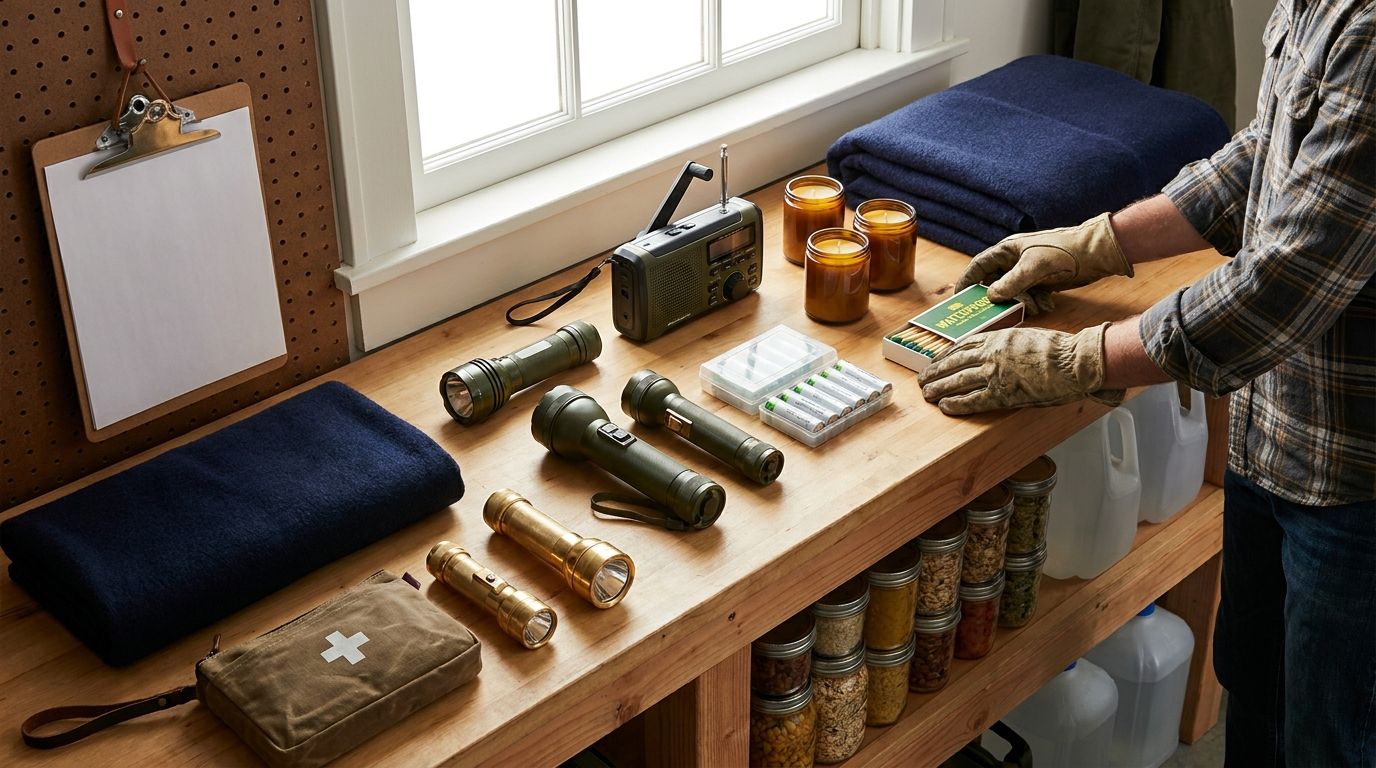
At 7:18 on a January evening in Boise, the kitchen lights blinked twice and went dark. June Wills was halfway through washing a pan, Rosa was checking homework at the table, and Scout lifted his head when the refrigerator stopped humming. Nobody needed a heroic response. They needed the next few steps to be obvious.
A calm household plan for power outages starts with priorities, not purchases. You need a way to see, communicate, keep essential devices running, protect food and equipment, and decide when the house is no longer a safe place to stay. The plan should work whether the outage lasts 20 minutes, six hours, or a cold night.
Recent reporting from USA Today has put a familiar question back in front of households: how reliable is the US power grid right now? The answer varies by region, weather, infrastructure, and the cause of an outage. Your useful response is local and practical. You cannot run the grid, but you can make your household less dependent on a perfect evening.
Decide what your outage plan must accomplish
A household plan is not a shopping list. It is a short operating sequence that keeps small problems from becoming confused decisions. Write down what must happen before you worry about comfort or convenience.
Your plan should answer these questions:
- How will you light the main rooms without using an open flame?
- How will you charge phones and receive local outage information?
- How will you protect refrigerated and frozen food from unnecessary exposure?
- How will you manage heat, cooling, medication, medical equipment, and mobility needs?
- How will you know when to leave the house or ask for help?
The US Energy Information Administration reported that average electricity customers experienced roughly six hours of interruptions in 2023 when major events were included. The number shifts sharply by state and by year. A severe storm can turn an ordinary inconvenience into a multiday problem, while a local equipment failure may be over before dinner.
That range is why your plan needs layers. The first layer handles a short interruption with lighting, phone power, and a quiet check of the house. The next layer covers food, temperature, water access, and communication through the night. A longer outage requires outside support, fuel management, or relocation.
Set a personal threshold before you need one. You might stay put while the home is safe, indoor temperatures are manageable, drinking water is available, and someone can receive updates. You might move to a relative's home when indoor heat or cold becomes unsafe, medical equipment cannot run, or local officials issue an evacuation order.
Keep that decision somewhere visible. A note inside the utility cabinet works. So does a printed page in your document vault. The point is to remove debate when everyone is tired and the house feels strangely loud without its usual appliances.
The first 15 minutes: check people, hazards, and information
When the power fails, pause before you start opening drawers. Look at the people and the structure of the house. June's first move in Boise was not to find a lantern. She checked that Rosa was safe, confirmed Scout was inside, and looked for smoke, sparks, and unusual smells near the electrical panel.
Use this order:
- Check household members, pets, and anyone who relies on powered medical equipment.
- Look for fire, smoke, sparking outlets, damaged utility lines, or a strong electrical smell.
- Turn off or unplug sensitive electronics, especially computers, televisions, and kitchen appliances.
- Check whether the outage affects only your home, your building, or the surrounding street.
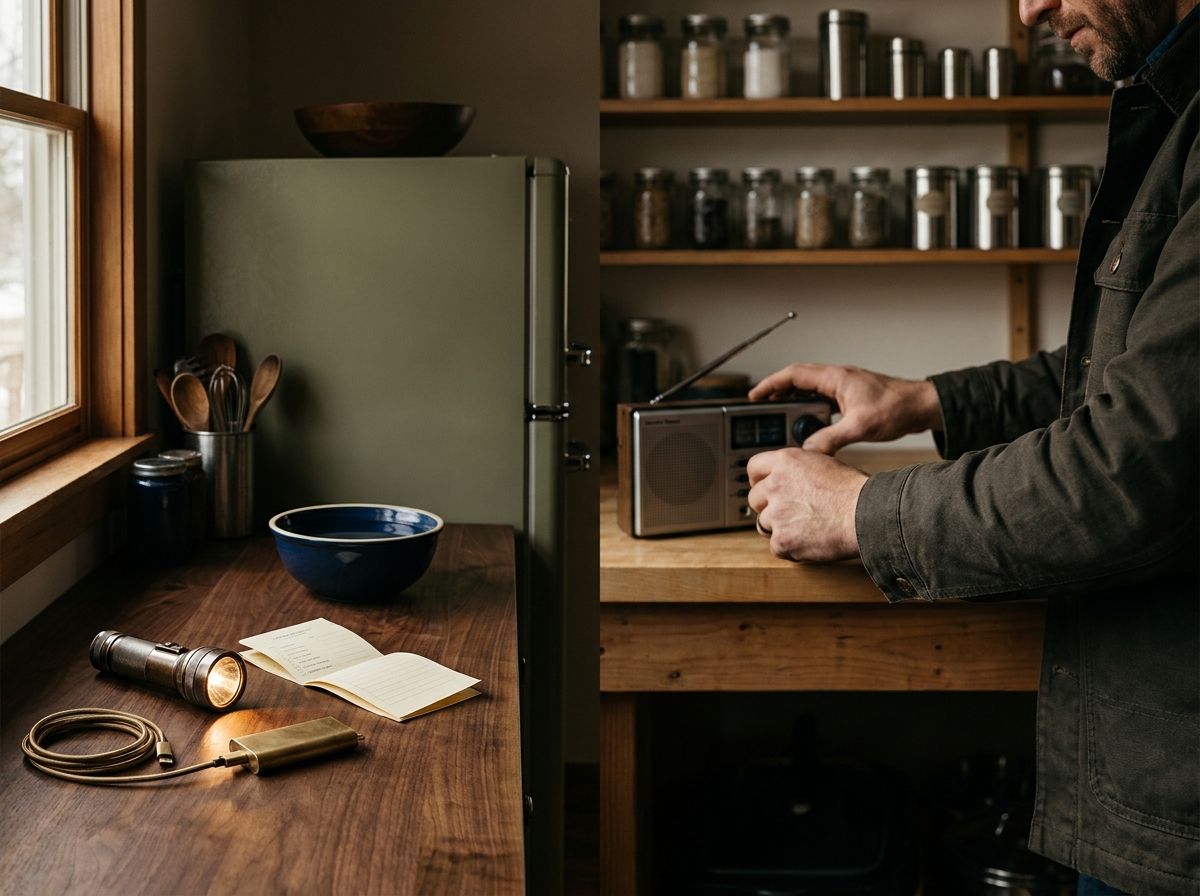
- Get a battery radio, charged phone, or vehicle radio for local information.
Do not investigate a fallen power line. Stay well away and report it to the utility or emergency services. If you smell gas, leave the building and call the gas utility from outside. A flashlight is a much better first tool than a candle, which has a talent for becoming a second problem.
If the outage is limited to your home, check the breaker panel only if it is dry, accessible, and undamaged. Reset a tripped breaker once. If it trips again, leave it off and call a qualified electrician. Do not remove the panel cover.
Then record the time. This one detail helps you judge food safety, battery use, and the likely pace of the evening. Write it on paper if your phone battery is low.
Check your utility's outage map when you can. Maps are useful, but they are not perfect. A listed restoration estimate is an estimate, not a dinner reservation, so treat it as one signal alongside weather, road conditions, and official local alerts.
Build a power map instead of buying random backup gear
Backup power is easier to manage when you know exactly what needs electricity. Walk through the home during daylight and write down every device that matters. Include the small items people forget: a modem, electric bed adjustment, aquarium pump, or medication cooler.
Sort each device into a power category:
- Must run continuously, such as powered medical equipment or essential mobility support.
- Must run periodically, such as a refrigerator, freezer, sump pump, or well pump.
- Needs charging, such as phones, radios, headlamps, and battery packs.
- Can wait, such as entertainment devices, printers, and most kitchen appliances.
Find the label on each important device. Record its voltage, wattage, or amperage, along with the expected runtime. If you cannot find the information, photograph the label and ask the manufacturer or an electrician. Do not guess with medical equipment, heating equipment, or generators.
A portable battery can handle phones, lights, and some small electronics. A generator can run larger loads, but it creates serious carbon monoxide and fire risks. Never operate a generator inside a home, garage, basement, crawl space, or enclosed porch. The CDC warns that carbon monoxide is an odorless gas that can kill without a clear warning. Keep fuel outside living spaces and follow the manufacturer's distance and connection rules.
Do not connect a generator to a household wall outlet. That can send power back into utility lines and injure workers. Use a properly installed transfer switch when a generator needs to serve household circuits, and have the installation completed by a qualified professional.
A power map also tells you what not to buy. If your real need is two phones, four lights, and a radio for one evening, a large fuel system may add cost and maintenance without improving your plan. With Mainstay's household inventory and Dashboard, you can record equipment, battery capacity, fuel, and test dates in one view rather than relying on a mental picture of the garage.
Test the setup under normal conditions. Plug in the devices you expect to use, run the battery for an hour, and check the charge remaining. Label cables. Store the charging kit together. A backup system that requires a treasure hunt is not a system yet.
Manage food, water, temperature, and the house itself
A power outage changes the house slowly at first. The refrigerator stays cold. The rooms feel normal. That quiet window is useful, so use it to reduce heat loss or heat gain and stop unnecessary activity.
Keep refrigerator and freezer doors closed. The USDA says an unopened refrigerator keeps food cold for about four hours. A full freezer can hold its temperature for about 48 hours, while a half-full freezer generally holds it for about 24 hours, assuming the door stays closed and the appliance starts at a safe temperature.
Use a refrigerator thermometer if you have one. Discard perishable food that has been above 40 degrees Fahrenheit for two hours or more, or one hour when the surrounding temperature is above 90 degrees. Never taste food to decide whether it is safe. Your tongue is not a laboratory.
Make the kitchen easier to manage:
- Use shelf-stable meals and manual-open containers before opening the refrigerator repeatedly.
- Keep a manual can opener with stored food.
- Do not use an outdoor grill, camp stove, or charcoal burner indoors.
- Treat a gas range as a fuel-burning appliance and follow the manufacturer's instructions.
- Keep drinking water accessible if the outage could affect a well pump or building water pressure.
Temperature needs a separate decision. During winter, close doors to unused rooms, block drafts with towels, and dress people in layers. Never heat a room with an oven, outdoor heater, charcoal appliance, or generator. During summer, use the coolest room, close blinds during the hottest part of the day, and check older adults, infants, pets, and anyone with a health condition more often.
At 10:40 p.m. in Tulsa, Sam Wills might find that the power is still out but the house is comfortable. That is the time to set a phone alarm for a morning check, move the family to one occupied room, and stop running lights in empty spaces. A calm plan uses less battery because it reduces wandering and repeated decisions.
Give every person a job and a communication path
A power outage is a household problem, not a test of one person's memory. Assign roles before the next outage. The roles can be simple and can shift with age, mobility, work schedules, and the size of the household.
Write down who will handle:
- The initial safety check and utility report.
- Lighting, charging, and battery tracking.
- Food temperature and refrigerator access.
- Pet care, medication checks, and contact with relatives.
- The decision to stay, seek assistance, or relocate.
Rosa Wills might handle the paper log while June checks the electrical panel and Sam brings the charging kit from its labeled shelf. Theo Wills might check that doors are locked and that Scout has water. The useful part is not the assignment itself. It is that everyone knows the assignment exists and does not duplicate the same task while missing another one.
Keep a printed contact sheet with utility numbers, local government alerts, nearby relatives, the household meeting place, and the address of a place where someone can stay. Store a copy in the document vault and another in a waterproof folder. Phones are excellent tools until they are at 4 percent and everyone is using them to search for the same utility number.
Use text messages when possible. They often require less network capacity than voice calls. Send one concise update: your location, household status, and what you need. Avoid repeated calls that drain batteries and clog local networks.
Set a check-in schedule. Household members can send a message at the top of each even-numbered hour while the outage continues, for example. If the network fails, use a preselected out-of-area contact or a nearby meeting place. Do not send anyone walking through dangerous weather just to deliver a routine update.
Pets need a place in the plan. Scout's water bowl, leash, medication, and anxiety response belong on the checklist. A frightened dog can bolt through an open door when people are moving supplies, so keep the leash near the main exit and close doors behind you.
Practice the plan and define the restart
A plan becomes reliable when you test the awkward parts. You do not need to shut off the main breaker during storm season. Pick a mild evening and run a 30-minute household drill using your normal backup lights and charging equipment.
During the test, ask each person to find the following without help:
- The main flashlight and spare batteries.
- The printed contact sheet and outage log.
- The phone charging kit and battery status.
- The water, pet supplies, and manual can opener.
- The safe location for a generator or fuel, if the household uses them.
Record what failed. Maybe the flashlight batteries were dead. Maybe the cable fit only one phone. Maybe the printed plan was in a drawer nobody opened. Fix the system while the failure is cheap.
Add a monthly five-minute check to your normal household routine. Confirm that batteries charge, fuel is within its storage limits, contact details are current, and the outage kit is still where the plan says it is. Seasonal checks should account for local conditions, a winter kit in Duluth needs a different temperature plan than one in Phoenix.
When service returns, do not switch everything on at once. Wait for stable power, then reconnect essential appliances one at a time. Check the refrigerator temperature, inspect for water damage around pumps and appliances, and reset clocks only after the household is functioning again.
Review the outage afterward. Write down the start time, end time, weather, utility updates, indoor temperature, battery use, and supplies you reached for. This is useful evidence. Your next plan should reflect what your household actually did, not what you hoped it would do.
Start with one action today: open a note titled "Power outage plan," write your first 15-minute sequence, and place a flashlight beside the note. Then walk the house and identify the one powered device you cannot afford to overlook.
FAQ
How long should a household plan cover a power outage?
Build the first layer for several hours and the next layer for an overnight interruption. Then decide what you will do if the outage extends beyond your household's ability to maintain safe temperature, medical support, water access, or communication.
What should I do first when the power goes out?
Check people and pets, look for fire or electrical hazards, and identify whether the outage affects your home or the wider area. Unplug sensitive electronics, record the outage time, and get reliable local information before using stored power.
How long will food last during a power outage?
An unopened refrigerator generally keeps food cold for about four hours. A full freezer can hold its temperature for about 48 hours and a half-full freezer for about 24 hours, according to USDA guidance, but use a thermometer and discard food that has spent too long above safe temperatures.
Can I run a generator in my garage with the door open?
No. Never run a generator in a garage, basement, home, enclosed porch, or other partly enclosed area. Carbon monoxide can build up quickly, so use the generator outdoors in the location and clearance specified by the manufacturer.
How often should I test my power outage plan?
Run a short household drill at least twice a year and check batteries, contact details, fuel, and device cables monthly. Update the plan after every real outage, especially when a missing supply or unclear task slows the household down.
Want this handled automatically? See the Mainstay membership.
Subscribe to comment
Join the Mainstay newsletter to leave a comment — and get new field notes in your inbox.
Get new field notes in your inbox
Practical, calm preparedness — one useful note at a time.