Home fire extinguishers: where to keep them, how to check them, and when to leave
A practical home fire extinguisher guide covering placement, monthly checks, fire classes, and the moment when fighting the fire is no longer your job.
At 7:18 on a Tuesday morning, June Wills smells hot oil before she sees the flame. The skillet is on the back burner, the smoke alarm has started its sharp complaint, and the kitchen exit is six steps away. This home fire extinguisher guide starts with one clear rule: an extinguisher is for a small, contained fire with a clear escape route, not for rescuing a bad situation.
For fire safety at home, keep the right extinguisher where you can reach it quickly, check it at least monthly, and leave as soon as smoke, heat, fire size, or uncertainty makes the room unsafe. Call 911 from outside. Property can be replaced. People cannot.
Choose the extinguisher before you need it
Most households need an extinguisher rated for common combustible materials and energized electrical equipment. Look for an ABC rating on the label. Class A covers materials such as paper, cardboard, cloth, and wood. Class B covers flammable liquids such as cooking oil, gasoline, and paint thinner. Class C covers energized electrical equipment.
The rating matters more than the color or shape of the cylinder. A small decorative canister may look reassuring and do very little against a real fire. For a typical home, the U.S. Fire Administration points homeowners toward a portable extinguisher that is large enough to handle a small fire but light enough for an adult to control. A 2-A:10-B:C extinguisher is a common residential choice, though the right size depends on the room, the household, and local fire guidance.
Read the label before buying. Confirm that the extinguisher is listed by a recognized testing organization, has clear operating instructions, and matches the hazards in that location. A kitchen unit should be suitable for grease and cooking fires. A garage unit should account for gasoline, solvents, and electrical equipment.
Do not use water on a grease fire or an energized electrical fire. Water can spread burning oil and create a dangerous path for electricity. A Class K extinguisher is designed for commercial cooking appliances and may be needed in some home kitchens with large cooking equipment. Ask your local fire department if you are unsure.
A household needs more than one cylinder when the layout or hazards call for it. Consider these locations:
- Kitchen, near the exit and away from the stove or oven
- Garage or workshop, mounted near a door rather than beside fuel or chemicals
- Utility room, if it contains a furnace, boiler, laundry equipment, or electrical equipment
- A separate floor or detached structure, if a fire there could block access to the main extinguisher
Size is a compromise. A larger extinguisher usually provides more agent and longer discharge time, but it is heavier. June can operate the extinguisher in the kitchen only if she can lift it, pull the pin, and aim it without losing control. That is the practical test. The biggest cylinder in the store is not automatically the best one for your household.
Where to store a fire extinguisher
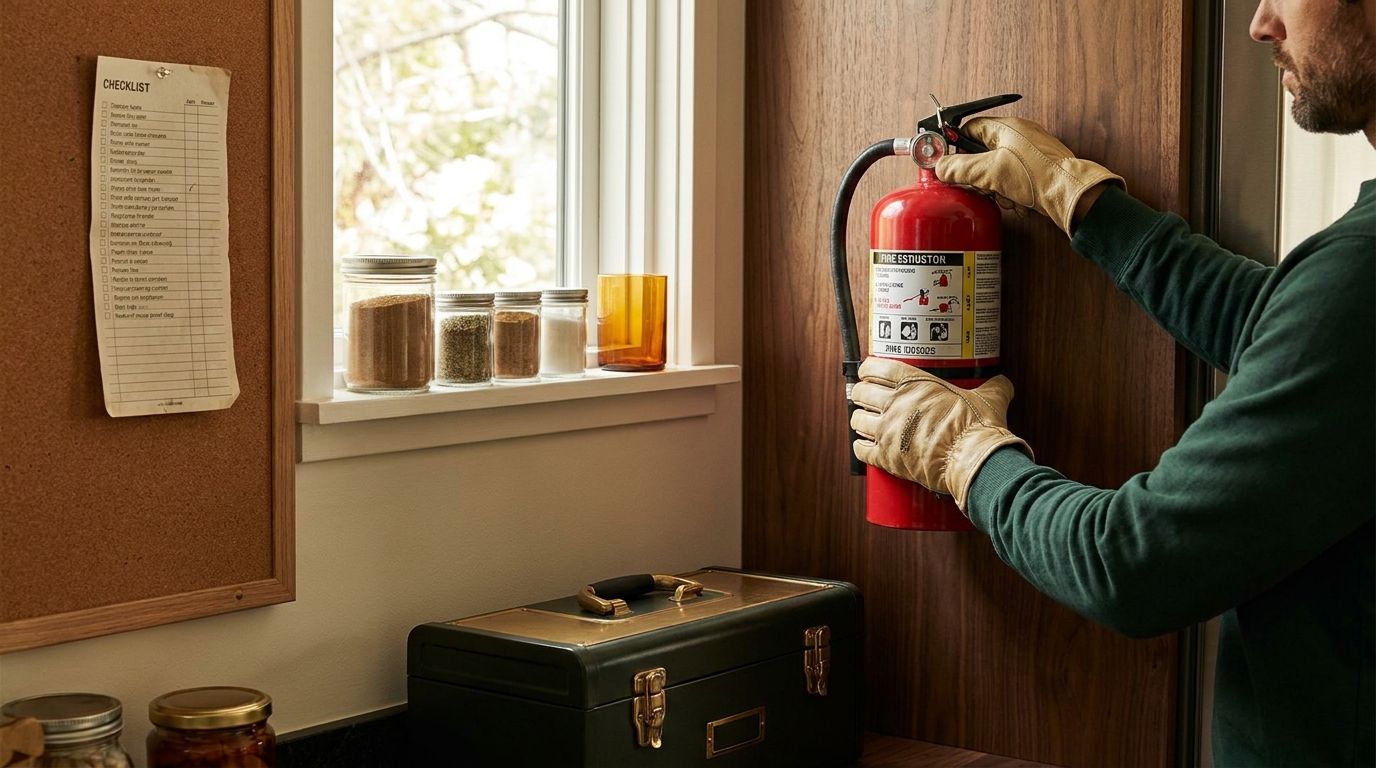
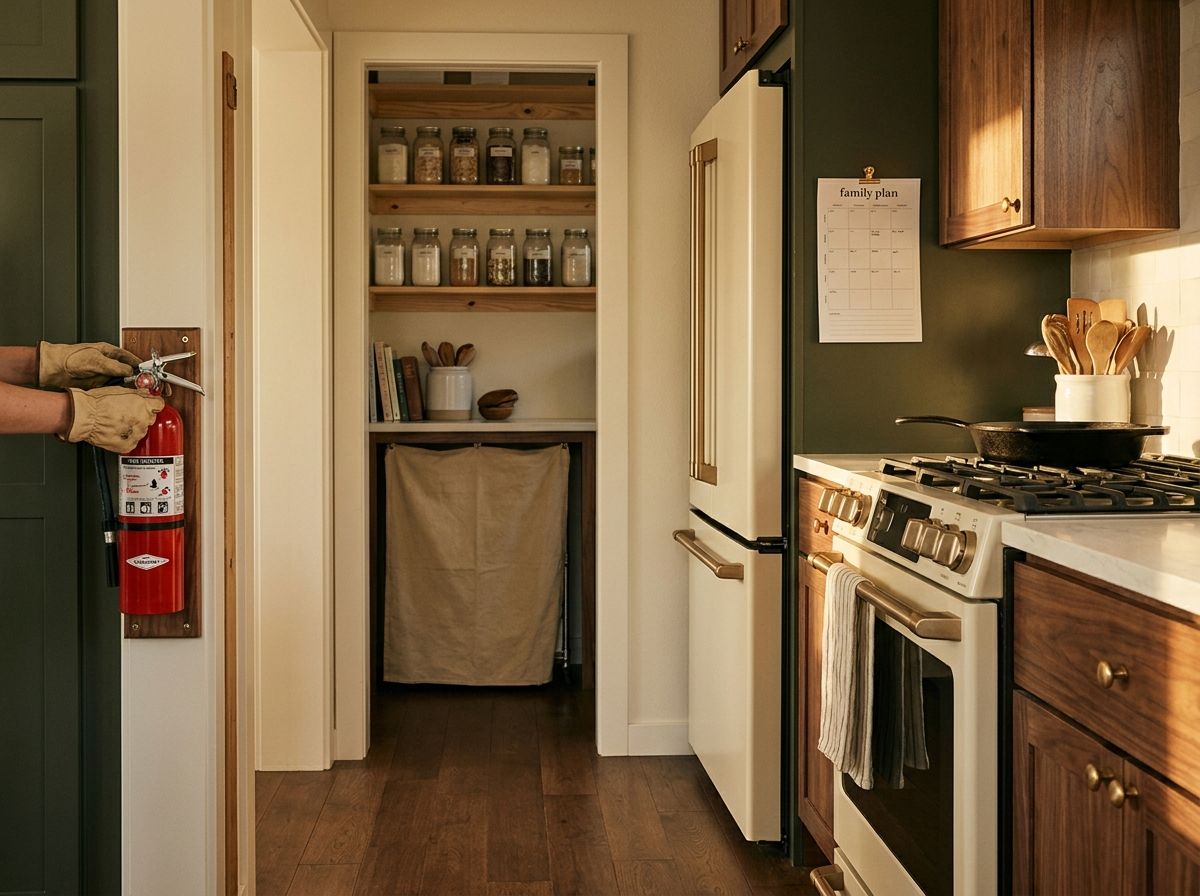
The best answer to where to store a fire extinguisher is simple: mount it along the path to an exit, close enough to reach quickly but far enough from the likely fire that you can approach it safely.
Do not hide it under the sink behind cleaning products. Do not place it inside a cabinet with a stiff latch. Do not set it on the floor behind the recycling bin, where it becomes a low obstacle and a high annoyance. The extinguisher must be visible, accessible, and mounted at a height that the adults in your home can manage.
A kitchen extinguisher usually belongs near the kitchen doorway or on an adjacent wall. It should not be mounted directly above the range. If a pan catches fire, flames and heat may block the path to a cylinder above the cooking surface, and the few extra steps toward a doorway are worthwhile if they keep you from reaching through the fire.
In a garage, mount the extinguisher near the door leading into the home or near the exterior exit. Keep it away from gasoline cans, propane cylinders, paint thinner, and other fuel sources. If those materials ignite, the area beside them may become inaccessible before you realize the fire has started.
A quick household walk-through helps. Stand at each proposed location and ask:
- Can you see the extinguisher from the usual entry point?
- Can you reach it without opening a locked cabinet?
- Can you pick it up without stepping around stored items?
- Can you leave by a clear route after grabbing it?
Sam Wills found a problem during one such walk-through: the garage cylinder was visible, but a stack of flattened boxes had grown in front of it. The extinguisher had not moved. The household had. Sam cleared a two-foot area around the mount and added the check to the monthly household inventory.
Keep extinguishers away from freezing temperatures, extreme heat, direct sunlight, and corrosive chemicals unless the label says the unit can tolerate those conditions. Make sure every adult knows the location, even if a child or visitor might occasionally be near it.
How to check a fire extinguisher
Learning how to check a fire extinguisher takes a few minutes. A monthly visual check catches most problems, while professional service and label instructions govern recharge intervals and replacement decisions.
Walk to each extinguisher on the same day every month. Use the label as your checklist. You are looking for condition, access, pressure, and evidence the unit has been used or damaged.
Check these details:
- The cylinder is in its assigned location and the access area is clear
- The pressure gauge is in the green operating range, if the model has a gauge
- The safety pin is present and the tamper seal is intact
- The hose or nozzle is attached, open, and free of insects, dirt, or blockage
- The cylinder has no deep dent, rust, leak, bulge, oily residue, or powder buildup
- The operating label is readable and the inspection or service date is current
A gauge in the green zone is useful, but it is not the whole inspection. Some extinguishers use a pressure indicator instead of a gauge. Others are cartridge-operated or designed for professional servicing. Follow the instructions printed on that specific cylinder.
Do not squeeze the handle to test it. That can discharge the agent and leave the unit partly empty. Do not remove the pin just to see whether it comes out, the pin is meant to stay in place until the extinguisher is actually needed.
If the pressure is low, the seal is broken, or the unit has been discharged even briefly, pull it from service and arrange a recharge or replacement. Rechargeable models should be serviced by a qualified provider. Many disposable models must be replaced after use or when their service life ends.
Record the check in a household log. Write the location, date, gauge condition, and action taken. Mainstay's inventory approach fits this job well: track what you own, assign it a location, and attach the next check date so a useful item does not quietly become a wall decoration.
Learn the fire classes and match the response
A fire extinguisher is not a universal tool. The wrong agent can spread the fire, damage equipment, or put you in greater danger. Read the label and understand the rating before smoke fills the room.
Class A fires involve ordinary combustibles. A wastebasket, cardboard box, curtain, or wooden shelf may fall into this category. An ABC extinguisher is commonly rated for these materials.
Class B fires involve flammable liquids. Gasoline, paint thinner, solvents, and some oils can produce a fast-moving surface fire. Never pour water onto a burning liquid. Move away and call the fire department if the extinguisher is not immediately effective.
Class C fires involve energized electrical equipment. Turn off power only if you can do so without approaching the fire. Do not touch damaged wires or wet equipment. An extinguisher rated for Class C fires is designed so the agent does not conduct electricity under the conditions listed on the label.
Class K fires involve cooking oils and fats in commercial-style cooking equipment. A household with a deep fryer, large griddle, or serious outdoor cooking setup should ask the fire department or equipment manufacturer what protection is appropriate. A regular ABC unit may not be the right answer for every cooking hazard.
You can use this room-by-room match:
- Kitchen: ABC for ordinary materials and many small appliance fires; confirm cooking-oil guidance before relying on it for a deep fryer
- Garage: ABC or another label-matched unit for fuel, solvents, ordinary combustibles, and electrical equipment
- Office or bedroom: ABC for paper, furniture, textiles, and electronics
- Utility space: an extinguisher rated for the equipment and materials stored there
If you cannot identify the fire class, do not guess while standing near flames. Leave. The label helps you choose equipment ahead of time. It does not turn a dangerous fire into a manageable one.
How to use an extinguisher without trapping yourself
Only consider using an extinguisher when the fire is small, contained, and still in its early stage. The fire should be no larger than a small wastebasket or pan, depending on local fire guidance and the extinguisher label. There should be little smoke, no spreading flames, and a clear exit directly behind you.
Alert everyone in the home. Have someone call 911. If you are alone, call 911 before attempting to fight the fire if you can do that without delay. Never let the extinguisher attempt become the reason nobody calls for help.
Use the PASS method printed on many extinguishers:
- Pull the pin while holding the extinguisher with the nozzle pointed away from you
- Aim low at the base of the flames, not at the smoke or upper flame tips
- Squeeze the handle steadily
- Sweep the nozzle from side to side across the base of the fire
Stay several feet away at the start, then move closer only if the flames shrink and the exit remains clear. Keep the cylinder upright unless its instructions say otherwise. If the extinguisher runs out and the fire continues, leave immediately.
Never fight a fire if smoke is building, the ceiling is involved, the fire is spreading beyond its original container, or the heat is intense. Do not enter a smoke-filled room to retrieve an extinguisher. Do not turn your back on a fire while leaving.
At a rental house in Boise, Theo Wills sees a toaster fire flare beneath a cabinet. He unplugs it only because the outlet is beside him and safe to reach, then tells Rosa Wills to get outside while he takes the nearby extinguisher. The flames do not shrink after a short discharge. Theo leaves, closes the door behind him, and waits for firefighters. That is a successful decision, even though the toaster is ruined.
When to leave and what happens next
Leaving is the right response when the fire is not immediately controlled. You do not need a dramatic sign. A growing flame, thick smoke, a blocked exit, a missing extinguisher, or an uncertain fire type is enough.
Use the nearest safe exit. Close doors behind you if you can do so without slowing your escape. Do not use an elevator during a building fire. Once outside, move away from the building and call 911. Tell the dispatcher the exact address, the room involved, whether anyone is missing, and whether propane, gasoline, or other hazardous materials are present.
Never go back inside for pets, documents, medication, phones, or a favorite jacket. Tell firefighters where Scout, the household dog, may be if he cannot be accounted for, but do not reenter. Fire crews have breathing equipment and training for interior searches. You do not.
A home fire plan should cover more than extinguisher placement. The National Fire Protection Association reports that cooking has been the leading cause of reported home structure fires in the United States, and heating equipment remains a major source of winter fire risk. Smoke alarms, clear exits, closed bedroom doors, and a practiced meeting place do more for survival than a collection of unused cylinders.
Check the basics each season:
- Test smoke alarms and replace batteries or units according to the manufacturer's instructions
- Keep the route from bedrooms to outside clear at night
- Make sure every adult knows the outdoor meeting point
- Review the address and room details that someone should give 911
- Arrange a plan for pets, mobility limits, hearing loss, and visitors
Rosa keeps a paper copy of the household plan beside the document vault, while June stores the same details in the household profile. The point is not paperwork for its own sake. The point is that a tired person at 2 a.m. can find the address, meeting place, and responsibilities without inventing a plan under pressure.
Build a fire equipment check into your household routine
A fire extinguisher works best as part of a small system. Buy the right unit, mount it correctly, check it monthly, and practice the decision to leave. That sequence is more useful than memorizing every fire fact on the internet, where confidence often grows faster than competence.
Put a recurring monthly task on your calendar. Walk the same route each time. Check the kitchen, garage, utility space, and any separate structure. If one extinguisher is missing or out of service, note how the gap affects the whole household and correct it promptly.
Keep purchase records, service receipts, model numbers, and replacement dates in your document vault. Photographing the label helps when ordering a replacement, but do not rely on a blurry phone image if the printed instructions are still readable and within reach.
A useful household fire audit asks:
- Is every extinguisher matched to the likely hazard?
- Can every adult reach and operate the unit?
- Does each location preserve a clear exit?
- Are smoke alarms working on every level and near sleeping areas?
- Can everyone name the outdoor meeting place?
The audit should take less than ten minutes once the locations are established. Sam added it to the same monthly routine as checking water containers and rotating batteries. That is the right scale: small enough to repeat, specific enough to catch a problem.
Tonight, walk to your kitchen extinguisher. If you cannot point to it without searching, move it. Then check the gauge, pin, seal, hose, label, and access path. Finish by standing at the exit and deciding what you will do if the fire is larger than the extinguisher's label says it can handle. The answer should be immediate: leave, close the door, and call 911.
FAQ
Where should I store a fire extinguisher in my home?
Store it in a visible, accessible location along the route to an exit. Keep a kitchen extinguisher near the doorway, not above the stove, and keep garage units away from fuel and chemicals.
How often should I check a fire extinguisher?
Perform a visual check at least once a month. Confirm the pressure indicator, pin, tamper seal, hose, label, cylinder condition, and clear access area. Follow the manufacturer's instructions for professional service and replacement.
Can I use water on a grease fire?
No. Water can spread burning cooking oil and create a larger fire. Turn off the heat only if you can do so safely, use a suitable lid or rated extinguisher when appropriate, and leave if the fire does not stop immediately.
When should I leave instead of using an extinguisher?
Leave if the fire is spreading, producing heavy smoke, blocking your exit, reaching the ceiling, or larger than a small contained fire. Leave immediately if you are unsure or the extinguisher does not reduce the flames quickly.
What does ABC mean on a fire extinguisher?
ABC means the extinguisher is rated for Class A ordinary combustibles, Class B flammable liquids, and Class C energized electrical equipment. Always read the specific label because ratings and limitations vary by model.
Before you close this article, check one extinguisher and clear the space around it. Put the next monthly inspection on your calendar. A calm fire plan is built from ordinary actions completed before the room fills with smoke.
Want this handled automatically? See the Mainstay membership.
Subscribe to comment
Join the Mainstay newsletter to leave a comment — and get new field notes in your inbox.
Get new field notes in your inbox
Practical, calm preparedness — one useful note at a time.