Creating a family emergency plan: involve everyone in your preparedness journey
Crafting a family emergency plan can be an empowering experience. Learn how to involve everyone in your household in this vital journey.
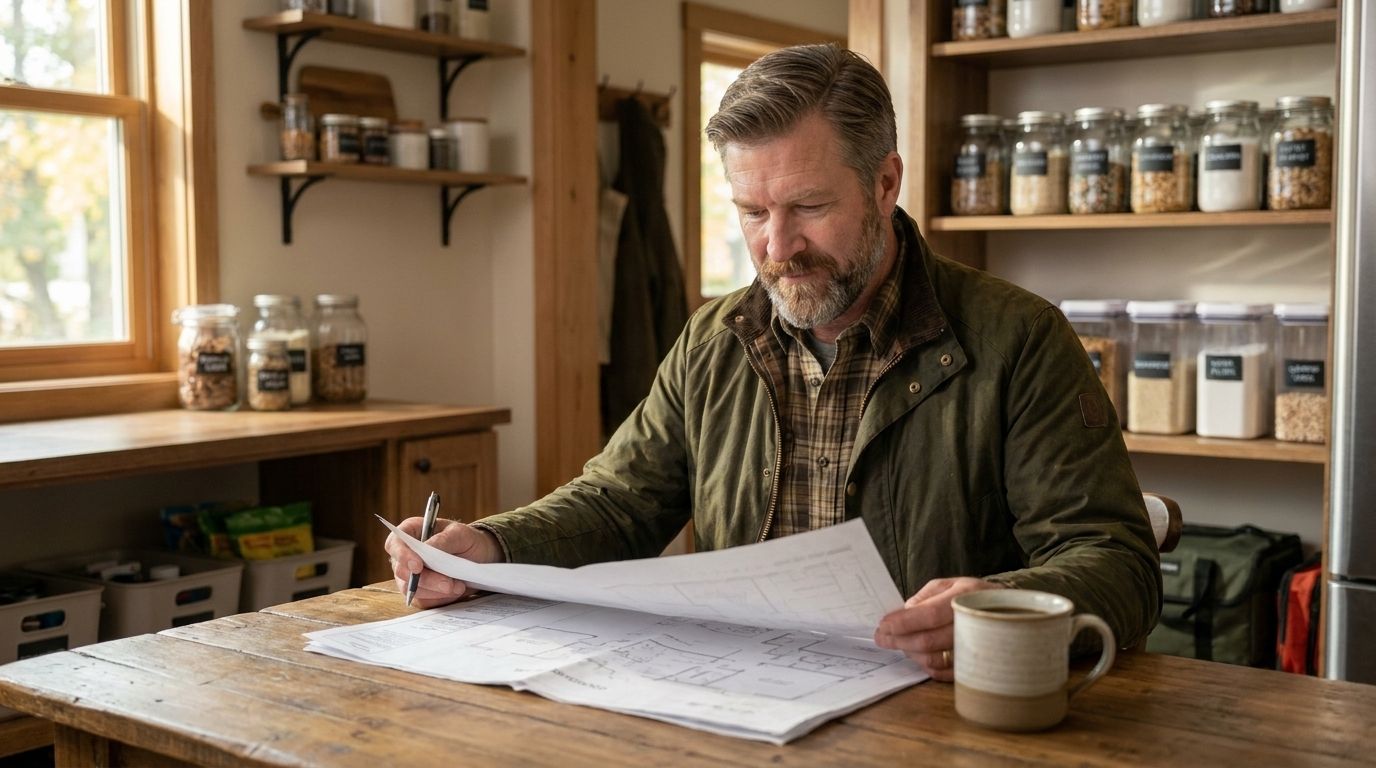
On a brisk Saturday morning, Sam Wills gathered his family around the kitchen table. Fresh coffee, pancakes on the griddle, two kids doodling in notebooks. His wife Sarah glanced at a stack of papers that had been sitting untouched for weeks. Today was the day they'd finally build their family emergency plan. Not to check a box. To make sure everyone knew exactly what to do when things got real.
A solid family emergency plan isn't just documentation. It's a process that pulls everyone in the same direction, builds shared confidence, and makes sure nobody freezes up when the pressure hits. Here's how to get your whole household involved.
Start with a family discussion
Before you map routes or stock supplies, sit down together. Ask open-ended questions. "What do we do if we have to evacuate fast?" or "Where do we go if we can't reach each other?" Let everyone answer.
Sam found that when Jack admitted he was scared of getting separated, Mia immediately suggested a neighborhood meetup spot. That's the kind of ground-level input you can't get by writing a plan alone. It also tells you what each person is worried about, which is exactly where your plan needs to be strongest.
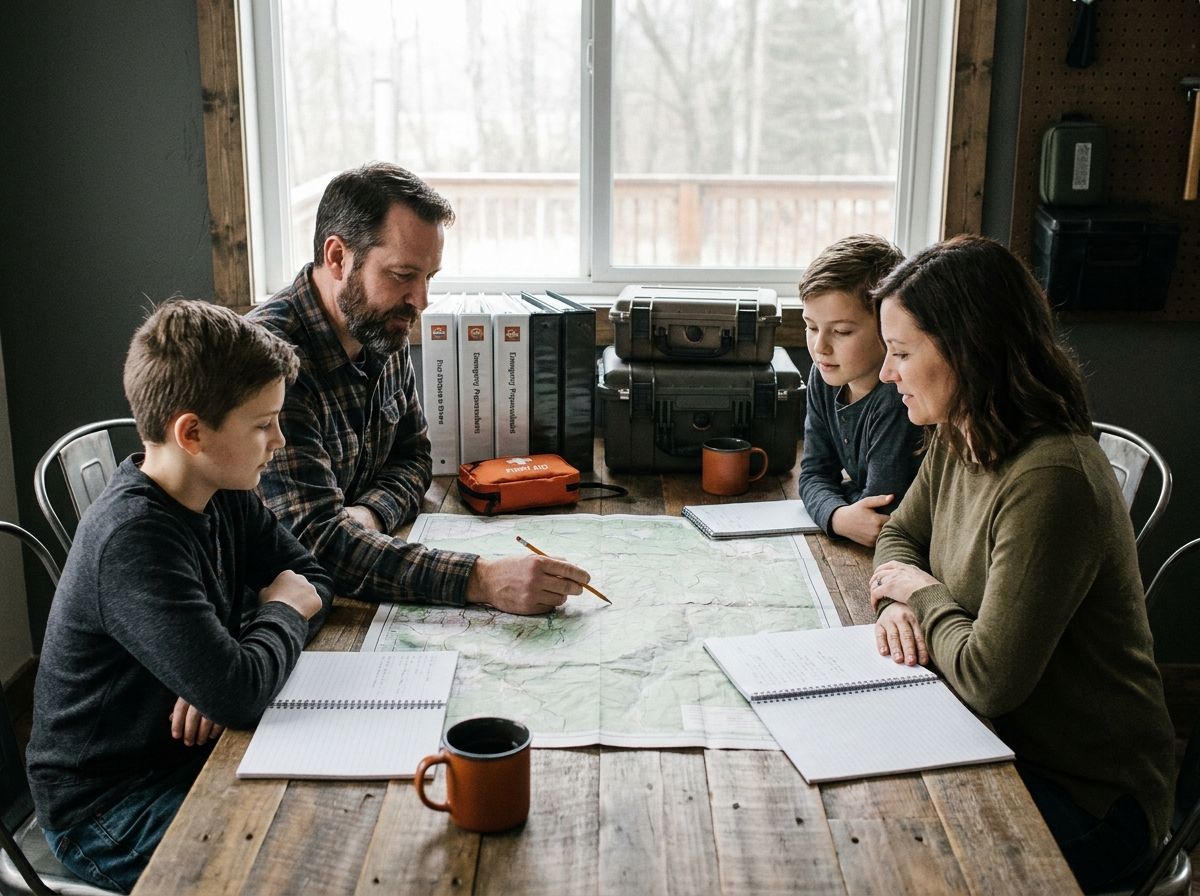
Take stock of your family's specific situation: kids' ages, medications, pets, anyone with mobility limitations. The more the plan reflects your actual household, the more seriously everyone will take it.
Outline your emergency plan
Once you've had that first conversation, build the framework. It should cover:
- Communication protocols: Decide how you'll stay in contact. A group chat, a specific app, a designated out-of-state contact everyone can check in with.
- Evacuation routes: Map at least two ways out of your home and your neighborhood. Everyone needs to know both.
- Meeting points: Pick a primary and a backup. A neighbor's house, a local park, somewhere everyone can find without GPS.
- Emergency contacts: Write down key numbers, neighbors, relatives, local emergency services, and post the list somewhere visible, like the fridge or a family bulletin board.
Put the kids to work. Let Mia sketch a neighborhood map with the routes marked. Let Jack build the contact list. According to the American Red Cross, giving children concrete tasks during this process builds their confidence and helps them internalize the plan rather than just hearing about it.
Prepare together
The plan on paper is just the start. You have to run it. Sam committed to a quick evacuation drill once a month, it felt awkward the first time, then it became something the kids actually looked forward to.
Assemble your emergency kit as a group, not alone on a Sunday afternoon. Walk each family member through what goes in and why. Let everyone claim a few items. That sense of ownership matters more than you'd think.
When a drill wraps up, talk through it. What worked? What broke down? (Ours fell apart at "find the flashlights," which turned out to be a very solvable problem.) That kind of honest debrief is how the plan actually improves over time, and it reinforces that this is a team effort, not a dad-handles-it situation.
Stay involved with the community
Your preparedness doesn't have to stop at your property line. Talk to neighbors. Share your plan's basic structure and ask if they've thought through theirs. You'll often find people who have resources, skills, or local knowledge that fills gaps in your own planning.
Sam's family hosted a neighborhood prep meeting where families compared notes, pooled ideas, and put together a shared resource list. Simple, low-key, genuinely useful.
Building those connections before you need them is the whole point. When things go sideways, the neighborhood that already knows each other responds faster and smarter than a block full of strangers.
Practical takeaways
- Engage everyone in discussions about safety and preparedness.
- Outline a clear emergency plan with communication protocols, evacuation routes, meeting points, and emergency contacts.
- Practice the plan together through drills and kit assembly.
- Involve your community in preparedness efforts to enhance overall safety.
FAQ
Why is it important for the whole family to be involved in the emergency plan?
Involving everyone in the emergency plan ensures that all voices are heard and that everyone understands the steps they need to take during an emergency. This collective involvement fosters a sense of responsibility and preparedness among family members.
How often should we practice our emergency plan?
It's recommended to practice your emergency plan at least once a month. Regular drills help reinforce the steps everyone needs to take and ensure that everyone feels confident in their roles during an actual emergency.
What should I include in our family emergency kit?
Your family emergency kit should include essentials like water, non-perishable food, a first aid kit, flashlights, batteries, necessary medications, and important documents. Involving each family member in assembling the kit can help them feel more connected to the process.
How can I find resources for community preparedness?
Start by reaching out to local organizations such as the Red Cross or community centers. Many offer resources, workshops, and even community events focused on safety and preparedness. You can also connect with neighbors to share ideas and resources.
The plan itself matters. But what you're really building is a household that communicates under pressure, knows its roles, and doesn't have to figure things out from scratch when every second counts. That's worth more than any single piece of gear or document. Your family is more capable than they realize, and this process is how they find that out.
Want this handled automatically? See the Mainstay membership.
Subscribe to comment
Join the Mainstay newsletter to leave a comment — and get new field notes in your inbox.
Get new field notes in your inbox
Practical, calm preparedness — one useful note at a time.