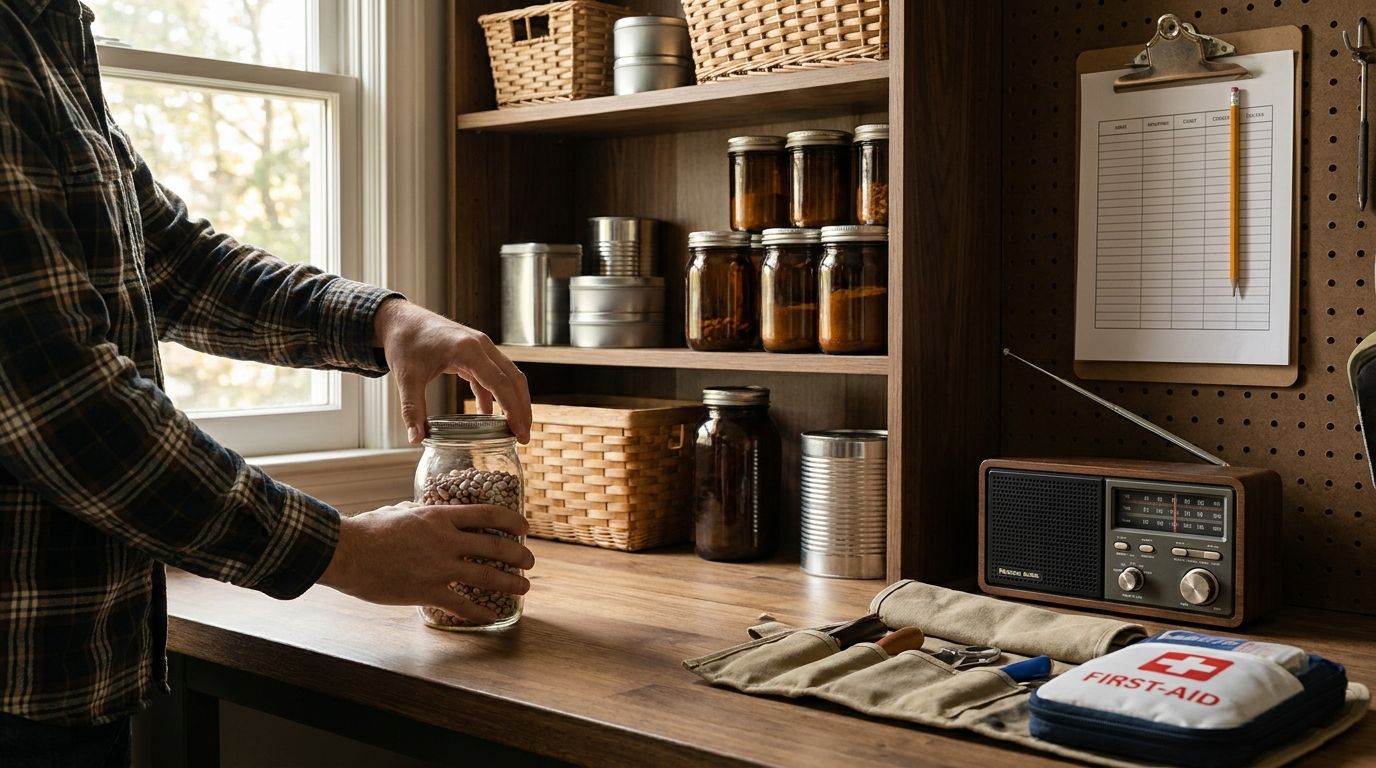
The 10-minute audit routine: a simple weekly check that keeps you ready
Your supplies don’t need a makeover. They need a weekly check. Here’s a 10-minute audit routine that makes inventory tracking feel doable.
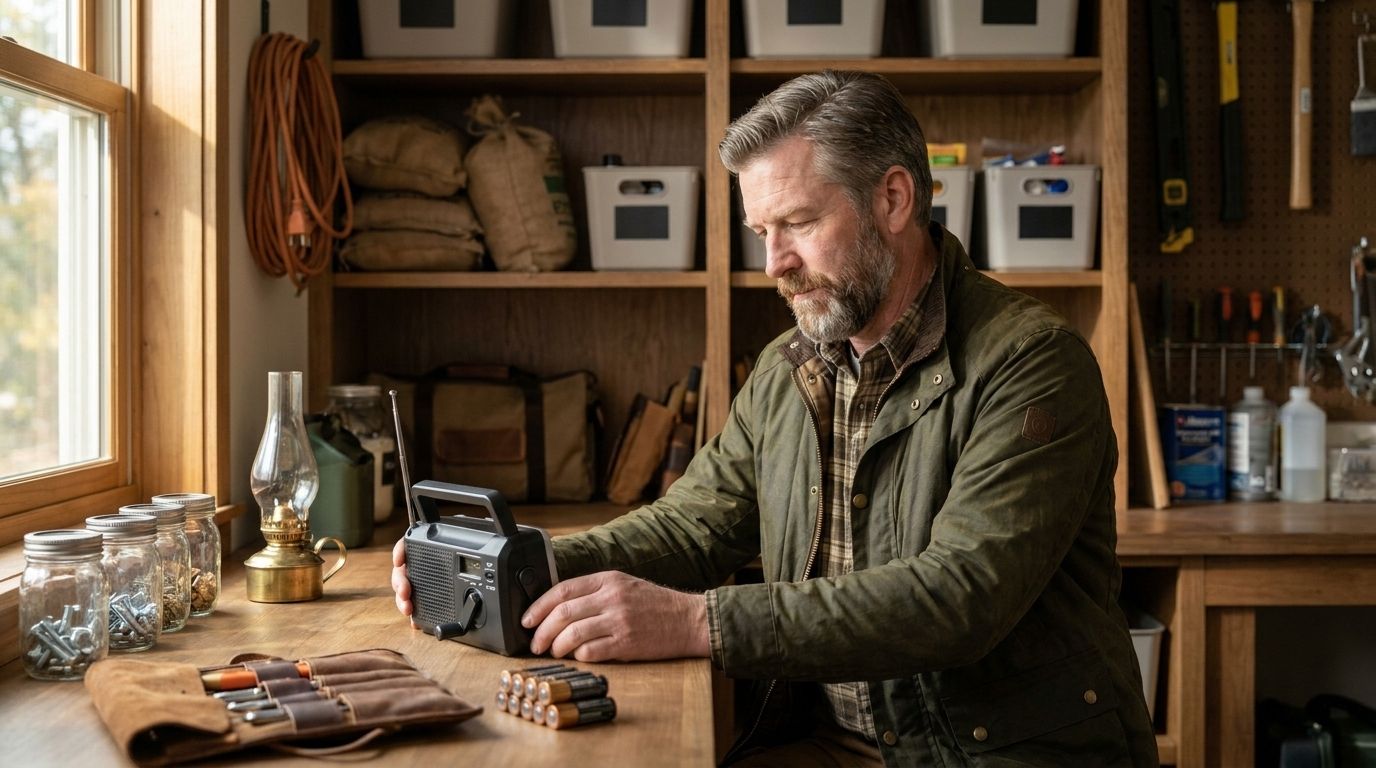
Sam Wills is wiping down the kitchen counter when he notices the pantry shelf looks… off. Not empty, just wrong. A row of bars has shifted. The labels are a little faded. And the one thing he always forgets is right there in front of him: he has no idea when he last checked.
That moment is familiar, even if your pantry is in a different room. The fix is simpler than you think. A weekly inventory audit that takes 10 minutes keeps your prepper checklist current, so you spend less time guessing and more time knowing exactly what you have.
With Mainstay's adaptive learning system, you can build a routine around what you actually track, not what you wish you tracked.
Why a 10-minute routine beats a "someday" inventory
You've probably tried the big sweep. You set aside an afternoon, pull everything out, and promise yourself you'll do it every season. Then life happens. The audit turns into a chore marathon. The supplies get stacked "temporarily." The spreadsheet gets closed. And the next time you need something, you still feel that low-grade edge of uncertainty.
A weekly inventory audit is different. Small enough that you do it even when you're tired. Consistent enough that problems surface early, before they cost you.
And you don't need to check everything every week. Your goal is to catch three kinds of drift: items that moved from where they belong, items that are getting low or expiring, and items you forgot you had or forgot you used.
Sam Wills once told me he thought he was "bad at inventory." He wasn't. He just didn't have a routine that fit real life. The 10-minute routine does.
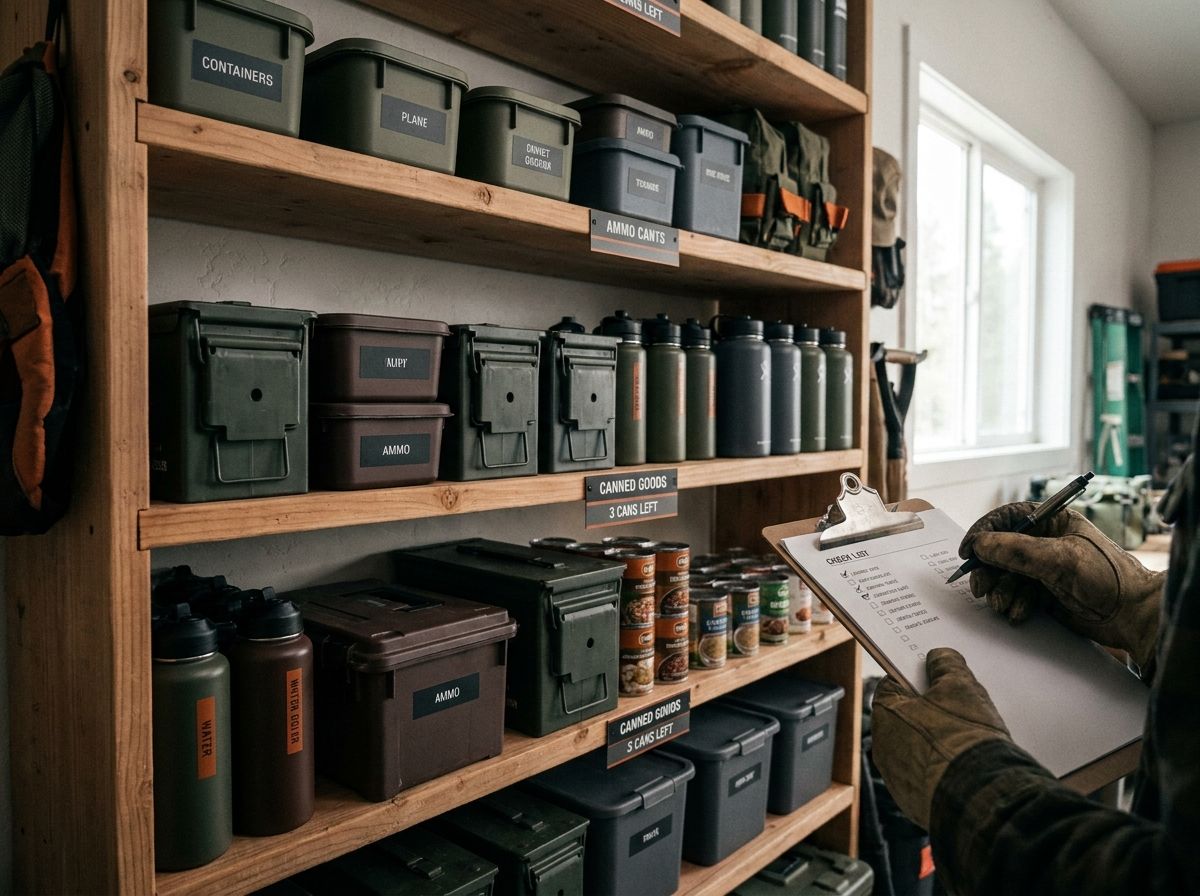
That shelf is the point. A quick check is how you turn chaos into a system you can actually trust.
The 10-minute audit routine (weekly inventory audit)
This is the exact rhythm you can run on the same day every week. Pick a day that already has momentum. For some people it's Saturday morning. For others it's the day after payday. The day matters less than the repeat.
You're doing a prepper checklist, but you're doing it fast.
Step 1: Set up in one spot (1 minute)
Grab your inventory tracking method. That might be a notebook with category pages, a phone note you update at the counter, or a spreadsheet you actually open. Then set a timer for 10 minutes. You're not trying to build a perfect system. You're trying to keep the system alive.
If your brain wants to wander, give it a job. Tell yourself: "I only write down what I see." That keeps the audit from turning into a research project.
Step 2: Scan each zone, not each item (4 minutes)
Inventory tracking fails when you try to inspect everything individually. You don't need that. You need a scan.
Use zones. In a solid survival organization setup, zones are areas you can reach quickly: pantry shelf or storage bin, garage shelf for tools and fuel-related items, under-bed storage for bedding and bags, bathroom cabinet for hygiene and first aid items, and kitchen drawer for batteries, lighters, and small parts.
For each zone, ask three questions:
1) Is anything missing or moved?
2) Is anything low?
3) Are any labels hard to read or outdated?
You're looking for patterns. If one item is low, check the rest in that category. If labels are fading, fix the labeling before it becomes guesswork.
Step 3: Confirm quantities and dates (3 minutes)
Here's where the weekly inventory audit becomes useful instead of just "looking." For each zone, focus on the items that matter most.
A practical rule: track what you would actually run out of. That usually includes food staples you rotate, water-related supplies you plan to refill, hygiene items, batteries and chargers, first aid consumables, and any "small but critical" tools like duct tape, zip ties, or a spare headlamp battery.
For each critical item you spot, confirm one thing: quantity on hand and expiration date, or pack date. If an item has no date, write the purchase month and year on the label. That keeps your survival organization grounded in reality, not guesswork.
Step 4: Write your next actions (2 minutes)
Now you do the part most people skip. You decide what happens next.
Your prepper checklist needs action lines, not just notes. Use one of these formats: "Buy: X. Replace by: next week," "Repack: move X to front. Rotate by: today," or "Check: Y label. Replace label if needed."
If you use a spreadsheet, keep it simple. If you use paper, keep it consistent.
Step 5: Put everything back in place (0-1 minute)
You're done when the zone looks normal again.
A quick audit is only useful if the supplies stay organized after the timer ends. Put items back where they belong. Fix labels while you're already there. Then stop.
That last part is underrated. Stopping on time is what makes the 10-minute routine sustainable.
Make your prepper checklist match your real life
Sam Wills didn't need a more complicated system. He needed the right categories.
Most people start with a giant list. Then they realize they can't maintain it, and they end up ignoring the audit entirely. The list becomes a monument to good intentions.
Build a prepper checklist that matches your storage reality instead.
Choose 10 categories you can actually reach
Your weekly inventory audit should cover the spots you use and replenish regularly.
Pick categories you can scan in under five minutes total. Here's a starting point you can adapt: water storage and water treatment, food you rotate, first aid and hygiene, batteries and power backups, cooking and heating basics, light sources, tools and repair supplies, pet supplies (if you have them), documents and paper copies, and comfort and shelter basics.
If that feels like too much, cut it down. Run the routine on fewer categories at first and build from there.
Track only what you will reorder or rotate
Inventory tracking is not a hobby. It's a decision system.
So track items you will actually act on. When you see "low," you reorder. When you see "expiring," you rotate. Simple as that.
A quick way to decide what's reorder-worthy is to ask: If I run out tomorrow, would I notice? Do I have a replacement plan? Is it stored where I can get to it fast? If the answer is no, you either adjust storage or accept that item isn't part of your core prepper checklist.
Use labels that reduce thinking
Labels are part of survival organization. They stop you from guessing at 6 AM when you're half awake and just want to know what you have.
When Sam Wills started doing the weekly routine, he noticed a pattern. He wasn't just forgetting to check. He was forgetting what he had because labels were inconsistent across different storage areas.
So he standardized labels in a way that made scanning faster: category name, purchase or pack month/year, and quantity for things stored in bulk. You don't need fancy labels. You need consistent ones.
Turn the audit into a system that improves every month
A weekly inventory audit is not just a check. It's feedback.
Over time, you learn where your inventory drifts. You learn what you reorder too often. You learn what you forget because it's stored out of sight.
That's how the routine gets easier with each passing week.
Keep a "top three surprises" note
Once a week, after you finish the 10-minute routine, write down the three things that caught you off guard. Examples: "We used the last hand soap refill and didn't replace it," "The batteries in the drawer are mixed types," or "The expiration labels are too faded to read."
This note is valuable because it shows you exactly what your system is missing.
After a month, look at those surprises and pick one improvement: move items so they're visible during the scan, standardize label format, or create a reorder trigger for one category. You don't need to fix everything at once. One improvement per month beats zero improvements forever.
Use a "rotate forward" habit
Rotation is where preparedness becomes real.
During your audit, you'll see items with dates. Your job is to make the next use easier. When you spot older items, move them to the front. Keep newer stock behind them. This keeps your survival organization from turning into an expiration-date scavenger hunt every few months.
Make inventory tracking match your budget
If you buy supplies in bursts, your audit should reflect that.
Maybe you order bulk every other month. Maybe you restock small items weekly. Either way, your 10-minute routine should tell you what's coming next.
When you write your next actions in step 4, include a simple timing note: "Order this month," "Replace next paycheck," or "Rotate by next week." Those notes help you avoid the panic-buy cycle that kicks in when you discover low stock after you already needed it.
Common ways the 10-minute routine fails (and how to save it)
The 10-minute routine works because it's small. But small routines still fail when you treat them like big projects.
Here are the common traps.
Trap 1: You try to audit everything
If you pull out every box and open every container, the timer will feel like a joke. You will stop doing the routine.
Fix it by scanning zones, then confirming only critical items.
You're building momentum, not doing a museum inventory.
Trap 2: You write notes but never act
A prepper checklist full of "check later" entries becomes a graveyard of good intentions.
Fix it by writing next actions before you end the audit. Even if the action is "order next week," it's still a concrete action with a direction.
Trap 3: You pick a day and then skip it once
Skipping once is normal. What kills routines is the guilt spiral that follows.
So when you miss your weekly inventory audit, run a "catch-up scan" the next day the supplies cross your mind. No drama. Ten minutes still counts.
Trap 4: You keep changing your system
If you rewrite your spreadsheet every week, you'll stop trusting it, then stop using it entirely.
Fix it by keeping the same structure for at least a month. You can refine, but don't rebuild.
A simple template you can copy tonight
If you want something concrete, use this template for your weekly inventory audit.
For each zone, write:
- Quantity check: (item, amount)
- Date check: (item, date or purchase month)
- Label check: (yes/no)
- Action: (buy/rotate/repack)
That is it.
If you do paper, keep one sheet per week. If you do phone notes, keep it as a running checklist where you add updates.
With Mainstay's adaptive learning system, you can keep your inventory tracking organized around categories you actually use, so your prepper checklist stays aligned with your life.
FAQ
How often should I do a weekly inventory audit?
Weekly is a solid baseline because it catches small changes before they become big problems. If your storage is simple and stable, every other week can work. If you use supplies often or rotate frequently, weekly keeps everything honest.
What should be on my prepper checklist?
Put items you would run out of or need quickly. Food you rotate, water treatment, hygiene, batteries, first aid consumables, and light sources usually matter most. If you can't reach it easily or it's not part of your plan, it can wait.
What if I don't have expiration dates on my supplies?
Write the purchase month and year on the label. For items with no dates, set a simple review month where you inspect condition and packaging. The goal is not perfect accuracy. The goal is knowing what you have and when you last checked it.
How do I keep inventory tracking from turning into a chore?
Use the 10-minute routine and scan zones instead of inspecting every item. Track critical items only. Write next actions before you stop, so the audit creates momentum instead of stress.
Your next 10 minutes
Right now you don't need a new storage room or a perfect spreadsheet. You need a weekly inventory audit that fits your day.
Pick a zone you can reach in under a minute. Set a timer. Scan for moved items, low stock, and unreadable labels. Then write your next actions and put everything back.
Sam Wills didn't become organized overnight. He became consistent. And once consistency showed up, the uncertainty went away with it.
Do your 10-minute routine this week. Then let next week be easier than this one.
Want this handled automatically? See the Mainstay membership.
Subscribe to comment
Join the Mainstay newsletter to leave a comment — and get new field notes in your inbox.
Get new field notes in your inbox
Practical, calm preparedness — one useful note at a time.