Digital vs. physical inventory management: finding what works for you
Struggling to manage your supplies? Explore the pros and cons of digital vs. physical inventory systems to discover what suits your prepping needs.

Imagine standing in your garage at 9 PM, surrounded by stacks of bins and boxes you've accumulated over years of careful collecting. You need a flashlight - now - and you have absolutely no idea which container it's in. This scene is painfully familiar to a lot of preppers, and it's exactly the kind of friction that a solid inventory system eliminates. Whether you go digital, stick to pen and paper, or blend both, the choice matters more than most people realize.
Understanding inventory management systems
Inventory management is the process of tracking your goods and supplies so you always know what you have, where it lives, and when it needs replenishing. For preppers, that clarity isn't a nice-to-have - it's the whole point. You can pursue that clarity through digital tools (flexible, searchable, always in your pocket) or physical systems (tangible, zero-battery-required, deeply satisfying in their own way). Which path makes sense depends on your preferences, your tech comfort level, and the sheer volume of what you're managing.

Digital inventory management: the pros and cons
A good digital inventory system feels like a superpower. Your entire supply list, organized and searchable, is available the moment you pull out your phone in the grocery store aisle.
Apps and software let you input items, sort them into categories, set restocking reminders, and even scan barcodes as new supplies come in. Take Sarah, a dedicated prepper in a suburban neighborhood who uses Sortly synced across all her devices. Standing in the store, unsure whether she has enough water purification tablets, she checks the app in ten seconds flat - no duplicate purchase, no guesswork.
But digital systems have real vulnerabilities. What happens when the power goes out, your phone dies, or the cloud-based app you've trusted suffers a data breach? There's also a learning curve, and for preppers who'd rather spend their time on actual preparedness than troubleshooting software, that curve can feel steep.
Physical inventory management: tactile and tangible
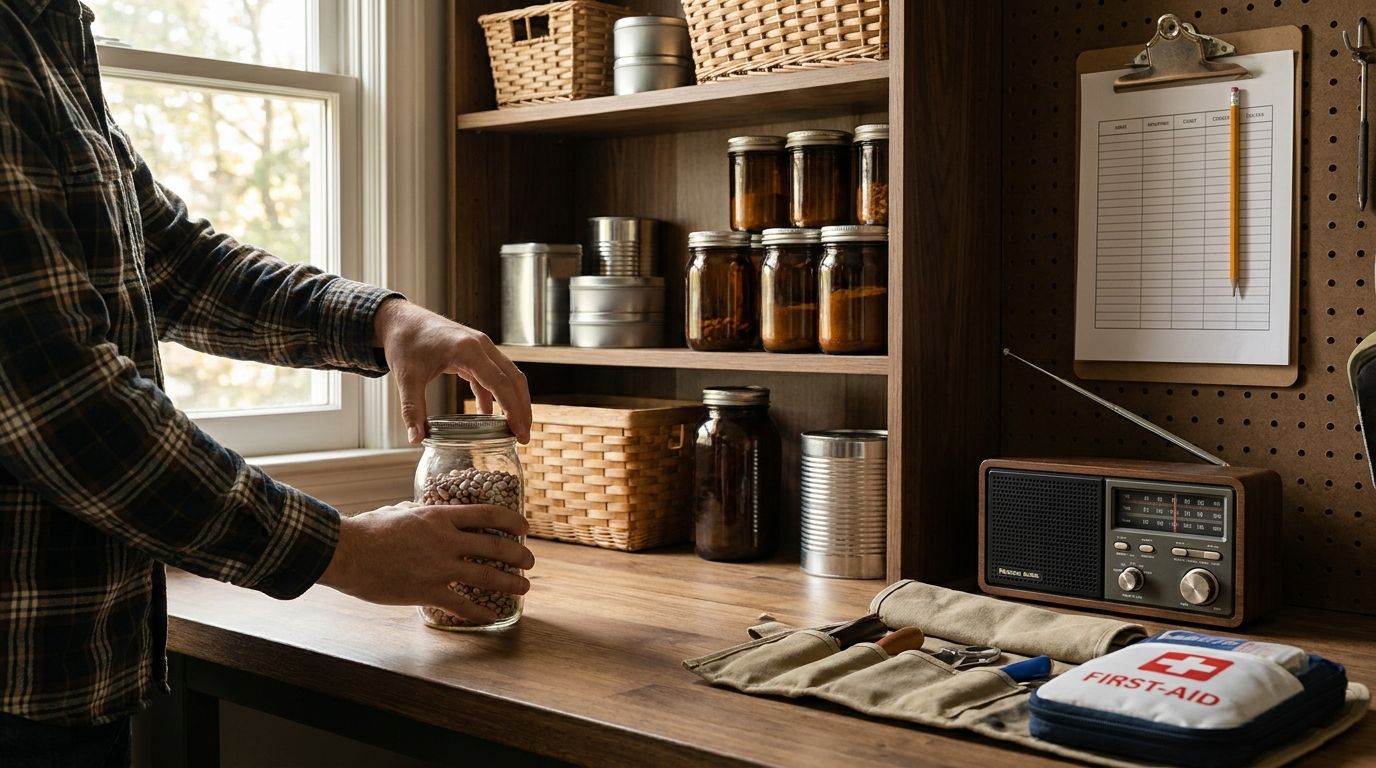
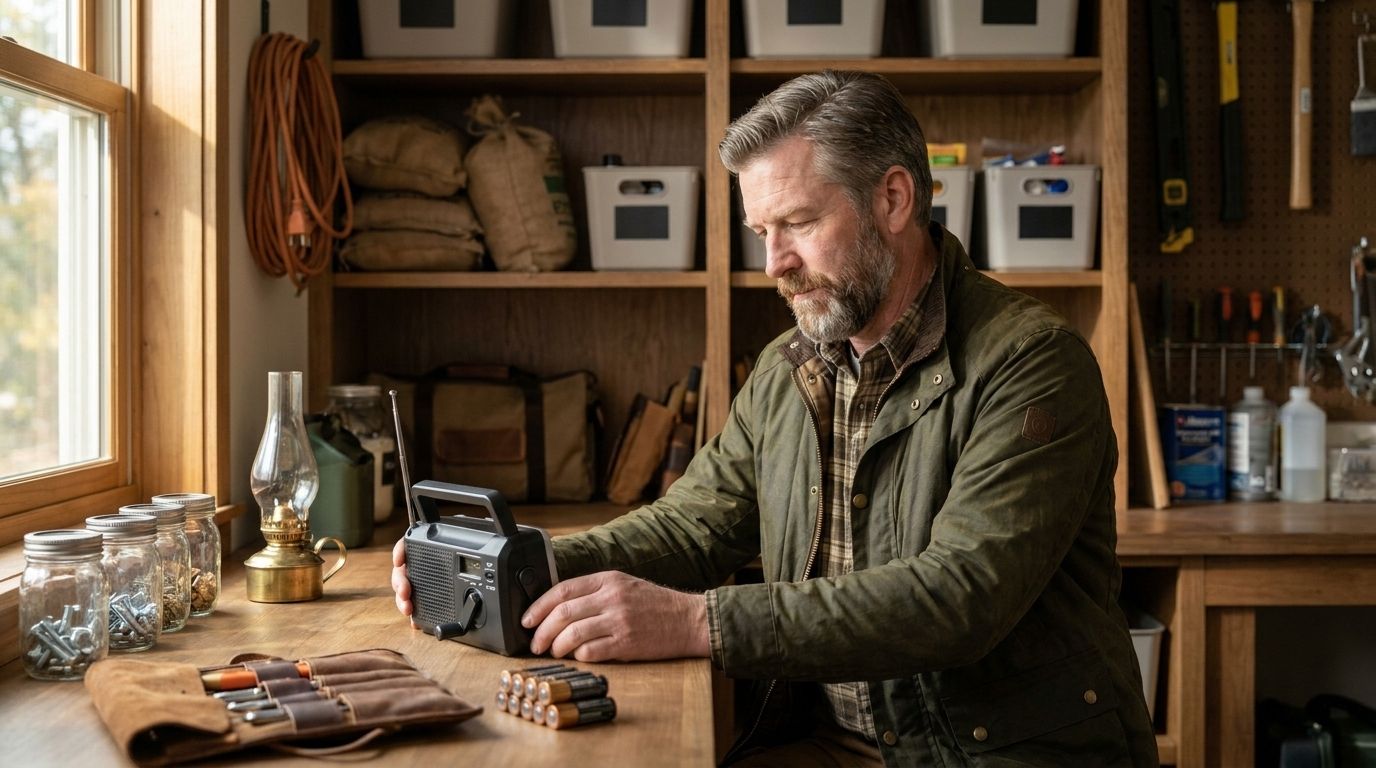
Physical inventory management puts you in direct contact with your supplies. Labeled bins, organized shelves, a dedicated notebook - these tools are simple, immediate, and require nothing more than a working pen.
Mike is a good example. He has a dedicated prep room with a pen-and-paper system he's refined over years. Every week he walks his shelves, checks expiration dates, and notes what's running low on a large whiteboard mounted near the door. He genuinely enjoys this ritual (which sounds odd until you've tried it and felt the satisfaction yourself). The whiteboard doubles as a visual alarm - if batteries or canned goods are dwindling, he sees it the moment he walks in.
The downside? Physical systems scale awkwardly. When your supply volume grows, a single notebook becomes a scavenger hunt. Tracking expiration dates across dozens of categories by hand is time-consuming, and it's easy to miss a restocking check before a big storm rolls in and you discover you're short on exactly what you need.
Hybrid systems: combining the best of both worlds
Some preppers land on a hybrid approach, and honestly, it's often the smartest move. Physical tracking works well for stable, long-shelf-life items; digital tracking handles perishables and frequently rotated stock.
Jessica keeps a handwritten list on the inside of her pantry door for staples like canned goods and bulk grains. But for her first aid supplies - where expiration dates are non-negotiable - she uses Evernote to log items with precise dates and reminders. She gets the tactile satisfaction of crossing things off a physical list and the precision of a digital system where precision actually counts. And when the power cuts out, she's not stranded. Her pantry list is right there on the door.
Choosing the right tools for your inventory
The best tool is the one you'll actually use consistently. Here's a starting lineup worth considering:
Digital options:- Evernote: Solid for flexible note-taking and lists; you can attach photos of your supplies directly to entries.
- Sortly: A visual inventory app with barcode scanning - genuinely useful when you're managing a large, varied stockpile.
- Google Sheets: Highly customizable, free, and accessible anywhere, though it requires more upfront setup than a dedicated app.
- Inventory Tracker: Built with preppers in mind; tracks expiration dates, logs items, and sends restocking reminders.
- Plastic bins with clear, durable labels organized by category.
- A dedicated notebook or binder with dated entries.
- A whiteboard for at-a-glance restocking reminders.
If an app feels clunky after two weeks of use, don't force it. Try another one. Your system only works if it fits naturally into your routine.
Maintaining your inventory: best practices
Choosing a system is step one. Sticking to it is the whole game.
Block off a recurring window - the first Saturday morning of each month works well for a lot of people - and spend an hour walking your supplies, updating your records, and flagging what needs replenishing. It can feel tedious, but that monthly hour is what keeps you from scrambling when it actually matters.
Also think seasonally. Spring might mean rotating in gardening tools and seeds; fall might mean auditing your cold-weather supplies - blankets, heaters, long-term food storage. Your inventory isn't a static document; it's a living one, and treating it that way keeps it useful year-round.
The importance of adaptability in your inventory system
No two preppers have identical needs, and your system should reflect yours specifically. The size of your stockpile, your living situation, your household - all of it shapes what works.
If you relocate to a flood-prone area, waterproof bins become a priority and your whole organizational logic might need revisiting. If your digital system stops serving you, switch. If your physical system can't keep up with your growing inventory, layer in a digital tool. Rigidity is the enemy here. The goal is a system that works, not loyalty to a method.
FAQ
What are the main benefits of digital inventory management?
Digital inventory management provides convenience, accessibility, and ease of updates. You can quickly check your supplies from anywhere, and many apps help set reminders for restocking. Features like barcode scanning streamline the process, making it easier to manage larger inventories.
How do I start a physical inventory system?
Begin by gathering all your supplies in one area. Sort them into categories - like food, medical supplies, and tools - and label containers or shelves accordingly. Create a simple list to track what you have and what needs replenishing. You might also use color-coded labels to indicate expiration dates or urgency for specific items.
Can I use both digital and physical systems together?
Yes! Many preppers find success with a hybrid approach, using physical inventories for longer-lasting items and digital systems for perishable or frequently restocked supplies. This way, you can enjoy the benefits of both systems while minimizing the drawbacks.
How often should I review my inventory?
Aim for a regular review at least once a month. This helps you stay on top of your supplies and ensures you know when it's time to restock. Additionally, consider conducting more thorough reviews before major seasons or events that might affect your supply needs.
What tools should I consider for inventory management?
Digital tools include apps like Evernote and Sortly, while physical tools can range from labeled bins to notebooks. Choose tools that fit your needs and preferences, and don't hesitate to experiment until you find the right combination that works for you.
Back in that garage, surrounded by bins you can't read in the dark - that's the moment your inventory system either earns its keep or fails you. Digital, physical, hybrid: the format is secondary. What matters is that you know exactly what you have, where it is, and what's running low. Pick the approach that fits your life, build the habit of maintaining it, and adjust as your situation changes. Your future self will be glad you did.
Want this handled automatically? See the Mainstay membership.
Subscribe to comment
Join the Mainstay newsletter to leave a comment — and get new field notes in your inbox.
Get new field notes in your inbox
Practical, calm preparedness — one useful note at a time.