Do you need a bug-out bag at home? Straight talk for households
A bug-out bag is useful when leaving home is the safest choice. Learn what belongs in it, how it differs from an emergency kit, and when to skip it.
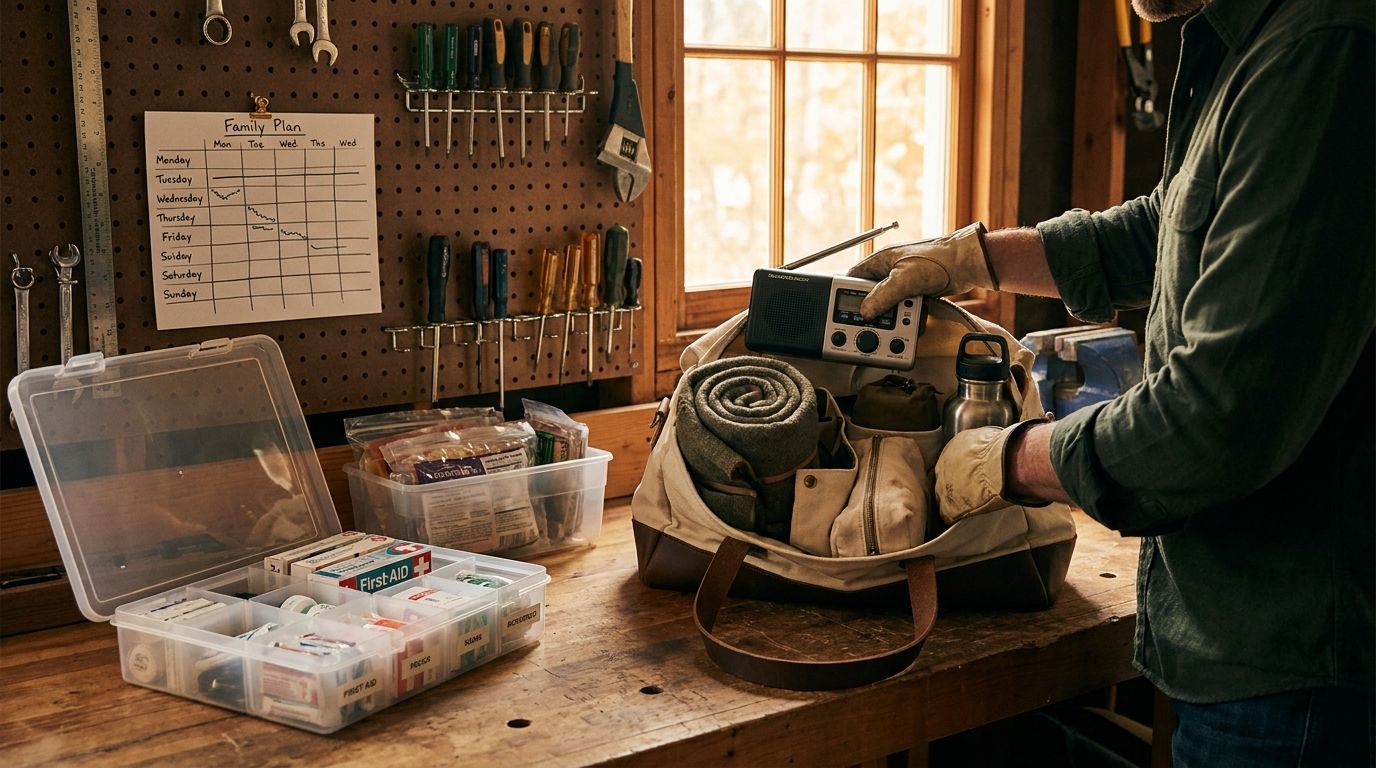
At 6:42 on a wet Tuesday morning, June Wills was standing in the kitchen with one shoe on when the evacuation alert arrived. Sam was looking for the car keys, Scout was pacing by the back door, and the phone battery was at 18 percent. That's when the question stopped being theoretical: do you need a bug-out bag at home?
Usually, yes, if your household can leave quickly and safely with a small set of supplies. A bug-out bag is not a survival costume or a substitute for a household emergency kit. It's a packed, portable set of essentials that helps you leave without spending ten frantic minutes deciding what matters.
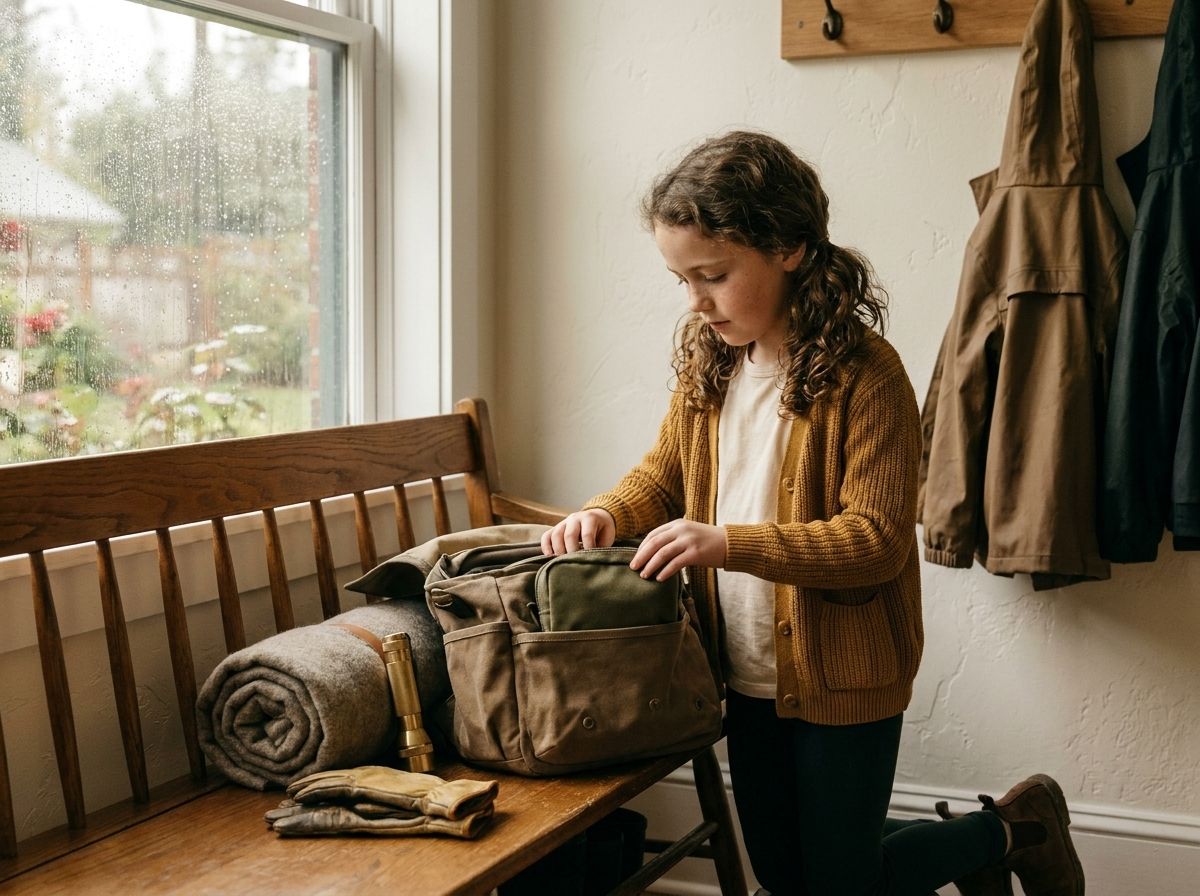
June did not need a giant hiking pack. She needed a way to carry medication, water, documents, chargers, and a few items for Scout while everyone moved toward the car. The bag's value was not in looking rugged, but in removing decisions at a bad time.
What a bug-out bag is actually for
A bug-out bag supports a short, forced departure from your home. It gives each person a small amount of practical support while you travel to another location, wait for pickup, or reach a shelter or hotel.
That makes it different from supplies meant to keep you at home. A household emergency kit supports sheltering in place during a power outage, water problem, severe storm, or other disruption. A bug-out bag supports movement.
The word "bug-out" can make the whole idea sound dramatic. The real version is less exciting and more useful. You might leave because of a wildfire, a gas leak, a flood warning, a building problem, or a local order to evacuate. Sometimes you have hours. Sometimes you have minutes.
A useful bag helps with the period between leaving your front door and getting settled somewhere else. It does not need to support your household indefinitely, just cover the basics while you make the next sound decision.
A good home evacuation bag has these jobs:
- Keep essential medications and health information with you.
- Give each person water, a small amount of food, and weather-appropriate clothing.
- Keep phones, identification, payment cards, and key documents together.
- Help you manage travel with children, older adults, pets, or mobility needs.
- Give you light and basic communication support if power or service is limited.
You do not need to carry every useful thing in the house. That is how a practical bag becomes a second household stuffed into nylon. If you cannot lift it, find the zipper, or remember who needs what, it is not helping much.
Why does a household need a bug-out bag if it already has an emergency kit?
A household emergency kit is built around staying put. A bug-out bag is built around leaving. They overlap in supplies, but their locations and purposes are different.
Think about the difference between a toolbox in the garage and the small tool roll in your vehicle. The large toolbox handles more jobs. The tool roll helps when you are already away from home or cannot bring the whole workshop. Neither one makes the other pointless.
Bug-out bag vs emergency kit: the practical difference
The easiest way to compare them is to ask one question: where will you use the supplies?
If you expect to remain home, store more water, food, sanitation supplies, lighting, cooking equipment, and comfort items in your household kit. If you expect to leave, reduce the load and focus on what travels well.
Here is a simple comparison:
| Need | Household emergency kit | Bug-out bag |
|---|---|---|
| Main purpose | Support the household at home | Support a quick departure |
| Storage location | A known, accessible area indoors | Near an exit or departure route |
| Water | Larger stored supply | Portable bottles or a compact option |
| Food | More meals and cooking choices | Ready-to-eat, low-mess food |
| Documents | Full document storage and backups | Copies of key records and contact details |
| Clothing | Several changes or seasonal supplies | One compact change suited to the weather |
| Pet support | Larger food and care supply | Leash, food, medication, and waste bags |
The bag should not duplicate every home supply. It should close the gap between "we have to go" and "we are somewhere reasonably stable."
A household may need more than one bag, and that does not mean every person needs a fully separate setup. One adult might carry the main bag, while another carries a smaller personal pack with medication, a phone charger, and water. Scout needs a dedicated pet kit that can be grabbed without opening every cabinet in the house.
Keep weight realistic. A useful rule: the bag should be comfortable enough to carry from the house to the car, from the car to a shelter, and across a parking lot without turning the trip into a strength test. If an adult cannot carry it while helping someone else, divide the load.
Home evacuation bag checklist that fits real life
Start with the needs that would be difficult or impossible to replace quickly. Medication is usually more important than another gadget. Identification matters more than a clever camp accessory. A leash matters more than a second flashlight if Scout is coming with you.
Use this home evacuation bag checklist as a starting point, then adjust for your household:
- Medications and a written list of prescriptions, doses, and prescriber contact details.
- Copies of identification, insurance information, emergency contacts, and important household records.
- Water in containers that will not leak inside the bag.
- Ready-to-eat food that matches allergies, medical needs, and personal preferences.
- A phone charging cable, wall adapter, and compact backup battery kept charged.
- A flashlight with spare batteries stored beside it, not loose at the bottom of the bag.
- Weather-appropriate clothing, sturdy socks, and basic rain protection.
- Hygiene supplies, toilet paper, hand sanitizer, and menstrual products if needed.
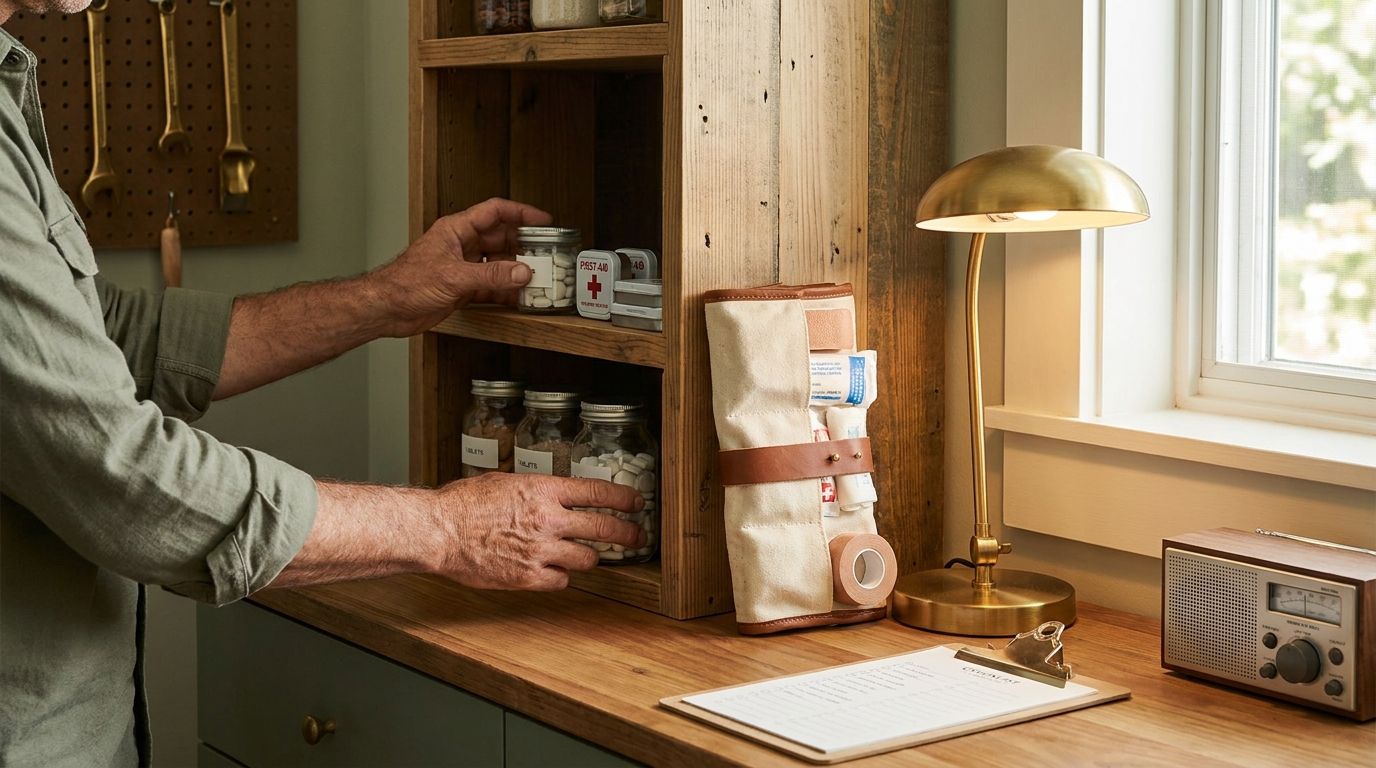
- Basic first aid supplies for small cuts, blisters, and routine care.
- Cash in small bills, payment cards, and a spare house or vehicle key.
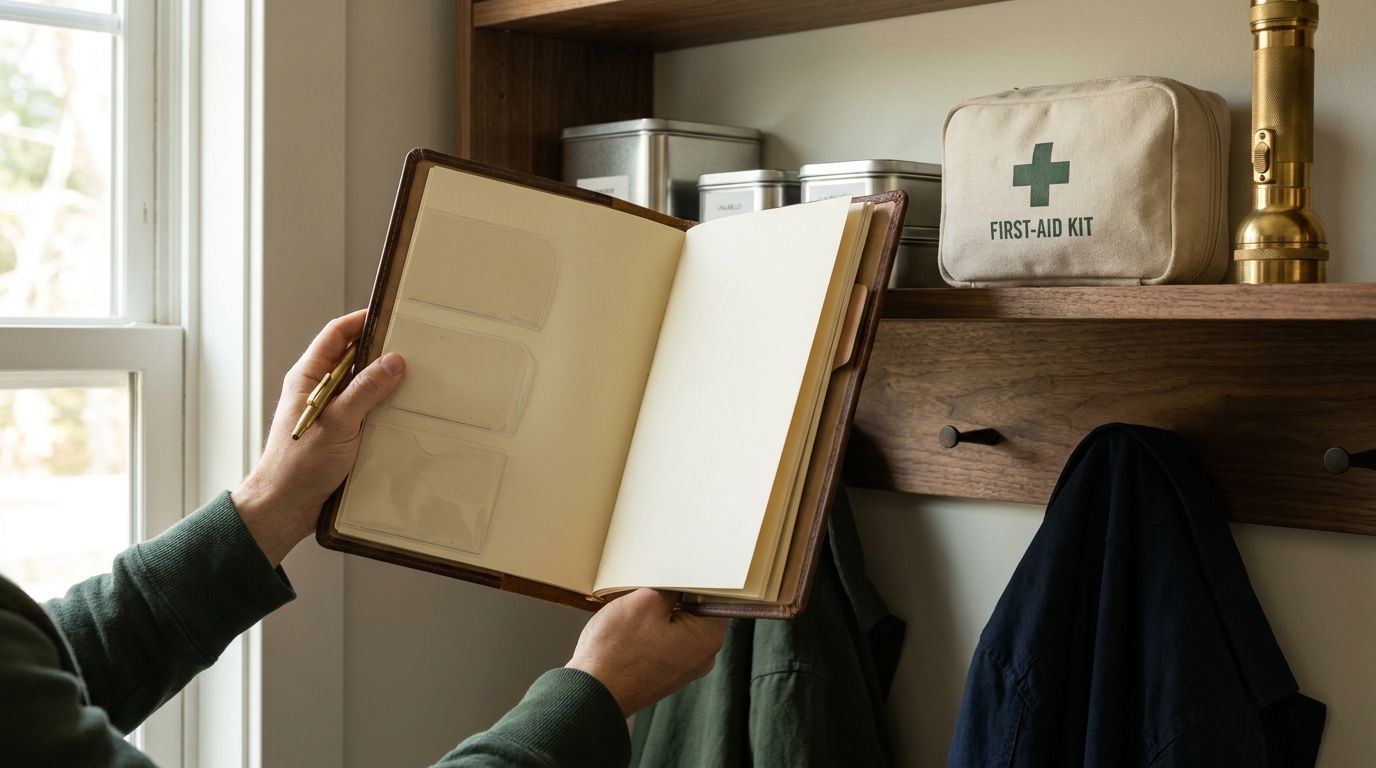
- A small notebook and pen for addresses, phone numbers, and instructions.
- Pet supplies, including food, water, medication, leash, carrier needs, and waste bags.
Do not treat that list as a shopping order. Walk through your actual household first. If someone uses hearing aids, include spare batteries or the charging case. If someone wears glasses, include a backup pair. If a child needs a comfort item to sleep somewhere unfamiliar, make room for it.
Clothing deserves more attention than it usually gets. A lightweight shirt may be fine in July and useless in January. Review the bag when the weather changes, because last season's jacket can quietly become a very expensive storage decoration.
Food should be boring in the best way. Choose items that need no cooking, tolerate being carried, and are familiar enough that nobody discovers a new allergy in a shelter hallway. Rotate them into normal household use before quality drops.
Documents need care, too. Keep paper copies in a waterproof sleeve and maintain secure digital copies elsewhere. Do not put every original document in the bag, losing the bag should not mean losing the household's entire record.
Where to keep it and how to keep it current
A bug-out bag is useful only if you can reach it. Store it near a main exit, but do not block a door, stairwell, or walkway. A closet shelf, mudroom, entry cabinet, or clean corner near the garage can all work.
Avoid burying it under seasonal decorations. Avoid putting it in the attic if you would need to cross a hot, dark house to reach it. The right location is accessible to the adults who may need to leave, including anyone with limited mobility.
Use a short maintenance routine rather than a dramatic annual repack. Every few months, check:
- Medication dates and quantities.
- Battery charge and flashlight function.
- Clothing size, weather fit, and shoe condition.
- Food packaging, water containers, and pet supplies.
- Documents, cash, keys, and current contact information.
- Bag straps, zippers, and signs of moisture or pests.
Keep an inventory where the household can find it. Mainstay can help you keep the bag listed alongside the rest of your household inventory, so the contents do not disappear into the familiar fog of "I think we have that somewhere."
Write the inspection date on a small card inside the bag. Add the next review month to the household calendar. No complicated system required. Just a visible reminder that survives a busy season.
Make sure everyone who may need to leave knows the bag's location. You do not need a family meeting with a slideshow. A short walk-through is enough: here is the bag, here are the documents, here is Scout's leash, here is where we go if we leave.
That conversation matters because evacuation decisions can feel personal. One person may want to wait for more information. Another may want to leave immediately. A simple plan gives the household a shared starting point instead of forcing someone to invent one while the phone is buzzing.
When you should leave the bag behind
A bug-out bag is not automatically the right answer. If officials direct you to evacuate, follow that direction and use the bag if you can leave safely. But do not delay departure to pack it, and do not enter a dangerous area to retrieve it.
Your household's safety takes priority over equipment. Full stop. If smoke is entering the home, water is rising, a fire is nearby, or a medical situation is unfolding, leave with the people and animals you can safely move. The bag is replaceable. People are not.
You may also need a different approach if someone uses a wheelchair, walker, oxygen equipment, or another essential device. The bag should support that equipment plan, not interfere with it. Keep required mobility and medical items in the departure plan itself.
Before you leave, use whatever information local authorities are putting out. Confirm the route if time allows, but do not assume the usual road will be open. If you have a vehicle, keep enough fuel for ordinary disruptions and know where the household would meet if people separate.
A simple departure plan can include:
- The primary place your household will go.
- A backup location if the primary place is closed or unreachable.
- Two ways to contact one another when calls are difficult.
- The person responsible for transporting Scout and the pet supplies.
- A neighbor or relative who knows how to reach the household.
This is household evacuation preparedness in its most useful form: not a perfect plan, but a plan that gives people something clear to do. You can improve it after every drill, trip, or seasonal review.
Is a bug-out bag worth it for an apartment or small home?
Yes, if you can keep it compact and accessible. A small bag near the door is often more useful than a large kit stored in a basement, garage, or distant closet.
Apartment households should account for stairs, elevators, shared exits, and limited storage. Choose a bag you can carry without blocking your view or losing control of a handrail. If you have pets, include the carrier or leash plan rather than assuming you can improvise it while leaving.
How much should a bug-out bag weigh?
It should be light enough for the intended carrier to move safely while helping another household member. There is no universal weight target because a healthy adult, an older adult, and a person with mobility limits will have different needs.
Start with essential medications, identification, water, weather protection, communication items, and food. Remove duplicates before adding specialty gear. A smaller bag that leaves with you is more useful than an impressive bag that stays in the closet.
How often should you check a home evacuation bag?
Review it at least once each season and whenever a household need changes. Check medications, clothing, batteries, food, water, pet supplies, documents, and bag condition.
A seasonal review is enough for most households when paired with a quick check after use. Update it after a move, a new prescription, a new pet, a change in household members, or a change in transportation.
The practical next step
Tonight, stand near the exit you would actually use. Pick a bag. Put in the items nobody can afford to lose, then write down what is missing. Do not chase a perfect loadout.
June's bag did not solve every problem that morning. It gave the household a clear place to start, and that mattered. You can build the same kind of calm at home, one reachable bag and one honest household conversation at a time.
Want this handled automatically? See the Mainstay membership.
Subscribe to comment
Join the Mainstay newsletter to leave a comment — and get new field notes in your inbox.
Get new field notes in your inbox
Practical, calm preparedness — one useful note at a time.