Emergency batteries at home: storage, testing, and replacement rules
A practical guide to storing, testing, labeling, and replacing household batteries before a power outage turns a small oversight into a midnight scavenger hunt.
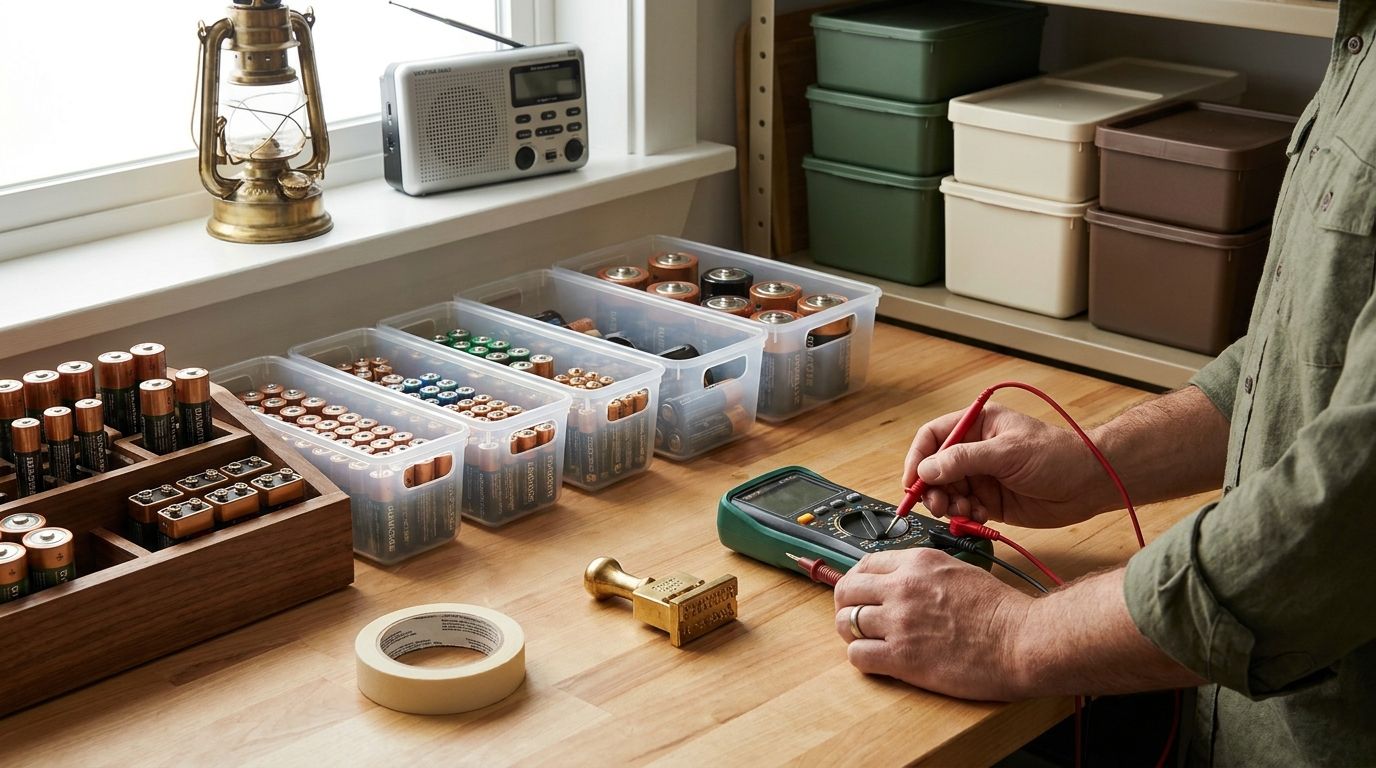
At 9:14 on a wet Tuesday night, June Wills opened the kitchen drawer and found four batteries, two dead flashlights, and one mystery-sized cell rolling under the silverware tray. The power had flickered twice. Her family had light, but not from the supplies they thought were ready.
The fix was simple. June bought the right batteries, stored them properly, tested each device, and wrote down replacement dates. That is the heart of how to store emergency batteries: keep them cool, dry, sealed, labeled, and matched to the devices your household actually uses. Test the batteries and the equipment on a regular schedule, then replace cells when they show age, damage, leakage, or weak performance.

If your battery drawer looks like it has been managed by a raccoon with a key ring, you are not alone. Batteries are small, easy to overlook, and rarely urgent until the flashlight stays dark. A little order removes that friction.
How to store emergency batteries
Start with location. Batteries belong in a cool, dry cabinet inside the home, away from direct sunlight, heaters, stoves, damp basements, and unconditioned garages. A stable room-temperature spot is usually a better choice than a shed or attic, where summer heat and winter cold quietly shorten battery life.
Keep batteries in their original packaging whenever possible. The packaging protects the terminals from contact with metal objects and makes the battery type and manufacture date easier to identify. If the package is open, use a small plastic container with dividers or separate bags. Do not toss loose batteries into a drawer with coins, keys, screws, or tools.
A battery can discharge when its positive and negative terminals touch another conductive object. A loose 9-volt battery is especially easy to short because both terminals sit together at the top. Covering the terminals with the original cap or a small piece of nonconductive tape adds protection, but good storage starts with separation.
Do not refrigerate household batteries. Condensation can form when a cold battery comes back into a warm room, and modern alkaline and lithium batteries already have long storage lives when kept in suitable conditions. The fridge is not a magic shelf-life box.
Use these storage rules:
- Store alkaline, lithium, and rechargeable batteries in separate labeled containers.
- Keep batteries away from water, heat, children, and pets.
- Leave batteries in their retail packaging until you need them.
- Store rechargeable batteries with their charger nearby, but do not leave them charging without following the charger instructions.
- Keep damaged, swollen, rusty, or leaking batteries out of the household supply.
Temperature matters because heat speeds up chemical reactions inside a battery. Energizer says many of its alkaline batteries have a shelf life of up to 10 years, while some lithium primary batteries have shelf lives of up to 20 years. The exact date depends on the manufacturer, chemistry, and storage conditions, so the package date is the useful starting point.
A cool cabinet is enough. No climate-controlled bunker required.
Build a battery storage checklist
A household battery inventory is more useful when it answers two questions quickly: what do you have, and what does it power? Counting batteries alone can leave you with 24 AA cells and no 9-volt for the device that actually needs one.
Walk through the house with a notepad or your phone. Check the equipment that matters when the power is out or when a basic device needs to keep working. Include flashlights, lanterns, radios, headlamps, battery-powered clocks, door alarms, medical equipment that permits battery backup, and child or pet supplies that rely on battery power.
Then record the battery type, quantity, location, and condition. A simple household battery inventory can look like this:
| Device | Battery type | Quantity needed | Batteries on hand | Test date | Replace by |
|---|---|---|---|---|---|
| Kitchen flashlight | AA | 2 | 4 | September 2026 | September 2029 |
| Hallway lantern | D | 4 | 4 | September 2026 | September 2029 |
| Portable radio | AAA | 2 | 6 | September 2026 | September 2029 |
| Smoke alarm backup | 9-volt | 1 | 1 | September 2026 | September 2027 |
The dates in this example are planning dates, not universal expiration rules. Use the manufacturer date when one is printed. If no date is visible, write down the purchase month and replace the battery according to your household schedule and performance checks.
Label the storage container with four pieces of information:
- Battery chemistry, such as alkaline, lithium primary, or rechargeable NiMH.
- Size, such as AA, AAA, C, D, or 9-volt.
- Quantity inside the container.
- Date checked and the next planned review.
Keep new batteries separate from batteries already installed in devices. That distinction helps you spot a device that has been quietly draining power. It also stops the classic drawer debate where someone asks "Are these new?" and everyone stares at the batteries as though they might testify.
Mainstay can help you keep this current by giving your household a place to track inventory and review dates alongside other supplies. You can also use a paper card taped inside the cabinet. The method matters less than having one reliable place to look.
A useful reorder point is the smallest quantity you want available for the devices you depend on. If your home has three important flashlights that each use two AA batteries, six is the working minimum. Add the quantity you want for replacements, then buy before the cabinet reaches that line. This turns battery shopping into a routine restock instead of a late-night hunt.
How to test batteries and the devices that use them
A battery tester can tell you whether a cell has voltage, but a voltage reading does not always tell you how the battery will perform under a real load. A weak battery may look acceptable without a device attached and then fail the moment a flashlight or radio demands current.
The most useful test is the device test. Put the battery into the equipment it is meant to power. Confirm that the device starts, runs at normal brightness or volume, and continues working for several minutes. Check the battery compartment for corrosion or a sticky residue while you are there.
Use this testing routine during a monthly or quarterly household check:
- Inspect the battery package for swelling, corrosion, tears, or a damaged terminal.
- Check the device for rust, white powder, green residue, or a chemical smell.
- Install the correct battery type with the positive and negative ends aligned.
- Run the device long enough to notice dimming, weak sound, flickering, or a slow motor.
- Remove batteries from equipment that will sit unused for a long period.
- Mark the test date on your inventory card.
Do not mix old and new batteries in the same device. Do not mix different chemistries or brands unless the device instructions specifically allow it. One weak cell can pull down the performance of the others, and different battery types discharge at different rates.
If a battery has leaked, put on disposable gloves and remove the batteries carefully. Follow the device manufacturer's cleaning guidance. Alkaline leakage often leaves a powdery residue. A cotton swab lightly dampened with vinegar can help neutralize it, but the device must be fully dry before new batteries go in. If corrosion has damaged the contacts or the leakage is extensive, replace the device rather than forcing a repair.
Lithium-ion rechargeable batteries need extra care. Stop using one if it is swollen, punctured, unusually hot, or damaged. Do not put a damaged lithium-ion battery in household trash or a regular battery collection bin. Contact your local household hazardous waste program or recycling provider for disposal instructions.
Testing is also a chance to check whether your household can find the device in the dark. Put the flashlight back where everyone expects it to be. A working flashlight hidden behind the holiday decorations is technically useful, but it is not helping much at 2 a.m. (Ask me how I know.)
How often to replace emergency batteries
The answer depends on the battery chemistry, the device, and the storage conditions. Do not use one blanket replacement date for every cell in the house.
For unopened alkaline batteries, follow the manufacturer's printed expiration or best-before date. Many have a storage life of five to 10 years. Replace them sooner if they were stored in high heat, if the package is damaged, or if the terminals show corrosion.
For unopened lithium primary batteries, the manufacturer date may allow roughly 10 to 20 years of storage. These batteries often work well in demanding devices and cold conditions, but the date still matters. Do not assume lithium means permanent.
Rechargeable batteries have a different rule. They lose capacity through use and age, even when they still accept a charge. Replace a rechargeable battery when it holds noticeably less charge, becomes hot during normal charging, swells, leaks, or no longer runs the device for the expected time. Follow the charger and battery instructions rather than relying on a fixed calendar date.
Use this replacement guide:
- Replace any battery that leaks, swells, cracks, rusts, or smells unusual.
- Replace batteries that fail a device test or cause dim, unstable, or weak operation.
- Replace unopened cells at or before the package expiration date.
- Replace installed batteries before long storage periods if the device may be damaged by leakage.
- Replace the whole set in a device when one cell has failed, unless the manufacturer says otherwise.
For smoke alarms and other life-safety devices, follow the device manufacturer's instructions. Many smoke alarms use sealed batteries and require full alarm replacement after a stated service period. A battery check is not a substitute for pressing the test button on the alarm.
A practical household rhythm is to inspect emergency batteries every three months and do a deeper inventory twice a year. Put the check near a task you already remember, like changing clocks or reviewing seasonal supplies. The exact month is your choice. The repeatable habit is the point.
When you replace batteries, dispose of them according to local rules. Many communities accept household batteries at retail collection points or household hazardous waste sites. Do not burn batteries. Do not crush them. Tape the terminals of loose lithium and 9-volt batteries before transport if your local guidance recommends it.
A battery routine your household can keep
You do not need to organize every drawer in the house this weekend. Start with the devices you would reach for during a power outage, then work outward.
Set up one labeled battery location. Put the batteries in containers by chemistry and size. Write the inventory on paper or add it to the tool you already use for household supplies. Then test one device at a time until you know what works.
Your next check can follow this short plan:
- Gather every loose battery and battery-powered device from the main living areas.
- Separate usable, questionable, and damaged batteries.
- Test the devices that matter most to your household.
- Record quantities, dates, and missing sizes.
- Buy only what fills the gaps.
- Put everything back in the same labeled location.
If another adult helps manage the home, show them the storage spot. If a child is old enough to use a flashlight, make sure the flashlight has a known home and that an adult handles battery replacement. Scout does not need to supervise this part, although he may inspect the empty cardboard packaging with professional interest.
The emotional part matters, too. A forgotten battery is not a character flaw. Most households have a drawer like this because daily life keeps moving, and tiny supplies fall behind larger tasks. The goal is not perfect control. It is a clear answer when someone asks where the batteries are and whether they work.
Take five minutes today. Choose the cabinet, make the list, and test one flashlight. That small check gives the rest of the routine somewhere to begin.
FAQ
How should I store emergency batteries at home?
Store batteries in a cool, dry indoor cabinet, preferably in their original packaging or divided containers. Keep them away from heat, moisture, direct sunlight, metal objects, children, and pets. Do not refrigerate them or store loose batteries with coins and keys.
How often should I replace emergency batteries?
Use the manufacturer's expiration date for unopened alkaline and lithium primary batteries, then replace them by that date or earlier if they were stored in heat or show damage. Replace rechargeable batteries when capacity drops, charging causes unusual heat, or the battery swells, leaks, or fails the device test.
What belongs on a battery storage checklist?
Record each device, battery size, quantity required, quantity available, test date, and planned replacement date. Also note the storage location and battery chemistry so you do not mix old, new, alkaline, lithium, and rechargeable cells without checking the device instructions.
Can I leave batteries inside emergency flashlights?
You can, but remove them from devices that will sit unused for a long period or that have a history of leakage. For frequently checked equipment, leave batteries installed only if the device works and your inspection schedule includes the battery compartment.
Want this handled automatically? See the Mainstay membership.
Subscribe to comment
Join the Mainstay newsletter to leave a comment — and get new field notes in your inbox.
Get new field notes in your inbox
Practical, calm preparedness — one useful note at a time.