Emergency cooking without power: safe indoor options and what to avoid
Learn how to cook without power safely, choose practical emergency cooking options, and avoid carbon monoxide and fire hazards at home.
At 6:40 p.m. in a dark kitchen, the refrigerator is silent, the stove is dead, and a pot of rice is still sitting on the counter. Emergency cooking at home comes down to a simple decision: use food that needs no heat, use a listed appliance with a safe power source, or move flame-based cooking outdoors. You can cook during a power outage safely, but keeping fire and carbon monoxide out of the living space is non-negotiable.
The safest plan is not the most dramatic one. It is a short menu, a tested setup, and a firm boundary around anything that burns fuel. For most households, that means no-cook food indoors, approved electric cooking from stored power, and outdoor cooking only when weather, space, and local rules allow it.
Start with the safest indoor options
The safest indoor emergency cooking option is often not cooking at all. Keep foods that are ready to eat and need no refrigeration, no heat, and no complicated prep. That includes shelf-stable meals, canned food you can open without a powered device, crackers, nut butter, dried fruit, and other foods your household already eats without complaint.
This matters because every extra step creates another point of failure. A can opener gets misplaced. A fuel canister does not fit the stove. A tired person leaves a pan unattended. Nobody plans to make a bad decision in a dark kitchen, but fatigue is an excellent substitute for poor judgment.
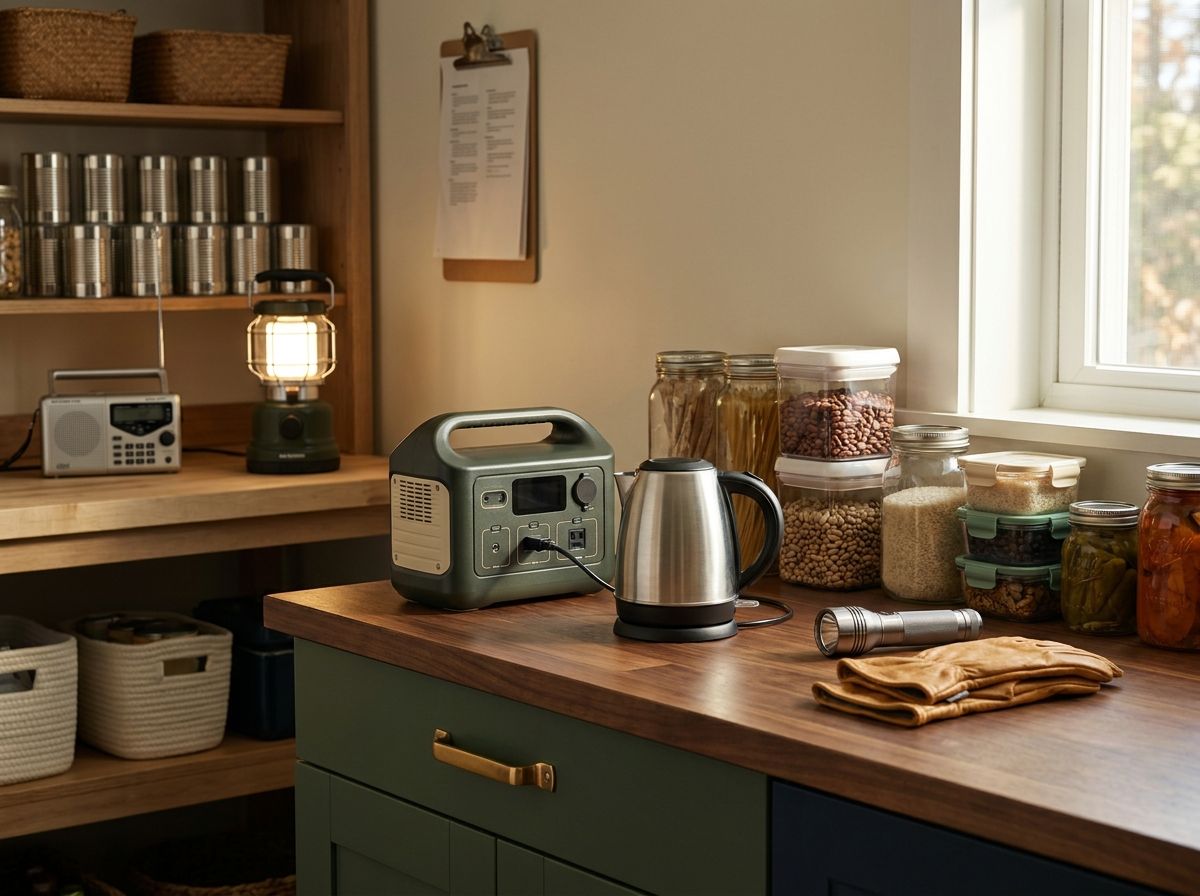
If you want a hot meal indoors, start with equipment that produces heat without combustion. A battery power station may run a small electric kettle, rice cooker, pressure cooker, or similar appliance if the station can safely support that appliance's electrical draw. Read both labels before the outage, and test the actual combination while you still have normal lighting and a working outlet.
Keep the cooking setup on a clear, stable, heat-resistant surface. Stay with the appliance while it runs. Keep towels, paper packaging, curtains, and loose clothing away from the heating element. If the power station becomes hot, smells unusual, swells, or behaves differently from its instructions, stop using it and move people away.
A simple indoor menu may be less impressive than a skillet meal, but it is far easier to manage. Warm soup, hot water for an instant drink, or a reheated pouch can make the evening feel normal without bringing an open flame into the room.
Know the difference between indoor and outdoor fuel use
A fuel-burning stove uses combustion. Combustion produces carbon monoxide, a colorless and odorless gas that builds up indoors. Opening a window does not turn a camping stove, propane burner, charcoal grill, or fuel canister into an indoor appliance.
Use fuel-burning cooking equipment only where the manufacturer allows it. If the instructions say outdoor use, take that literally. A porch, garage, carport, basement, shed, or enclosed balcony is not a substitute for open outdoor space. Carbon monoxide can collect in areas that feel ventilated to someone standing there.
The CDC says, "Install battery-operated or battery back-up CO detectors near every sleeping area in your home." It also says, "Check CO detector batteries when you change the time on your clocks each spring and fall to be sure they are functioning properly." Keep those alarms working even when your cooking plan involves no fuel at all. Other household equipment can create the same hazard.
A carbon monoxide alarm is not permission to use an outdoor stove indoors. It is a warning device, not a ventilation system. If an alarm sounds, or if anyone develops a headache, dizziness, weakness, nausea, chest pain, or confusion, leave the home immediately and contact emergency services from a safe location.
The CDC also advises, "Have your heating system, water heater, and any other gas, oil, or coal burning appliances serviced by a qualified technician every year." And if your home has a chimney, the CDC says, "Have your chimney checked or cleaned every year." These checks belong in your regular household maintenance schedule, not on the same hurried list as buying fuel before a storm.
How to cook outside without creating a new hazard
Outdoor cooking still needs a deliberate setup. Choose a level surface away from the home, dry leaves, stored fuel, vehicles, overhanging branches, and anything that could catch fire. Follow the appliance manual for fuel type, lighting method, cookware, placement, and shutdown. Local fire restrictions take priority over your meal plan.
Position the stove where the person cooking can see the flame and reach the controls without crossing hot cookware. Keep children and pets away from the cooking area. (Dogs have an uncanny ability to appear the moment something interesting is sizzling, and a curious animal near a hot burner is a problem with excellent timing.)
Do not move a lit stove. Do not carry a hot pan through the house. Let equipment cool according to the manufacturer's instructions before storing it. Keep fuel containers upright and away from heat, ignition sources, and any area where a leak could collect.
A covered outdoor space can work only if the equipment instructions and local rules allow it, and the area remains genuinely open to the air. Never use a charcoal grill, camp stove, or portable gas burner inside the home, garage, basement, tent, vehicle, or any enclosed space. Moving the equipment near a doorway does not remove the danger.
If the weather makes outdoor cooking unsafe, change the menu instead of forcing the setup. Eat shelf-stable food, use a tested electric appliance on an appropriate power source, or wait until conditions improve. A cold meal is inconvenient. A fire or carbon monoxide exposure is a serious household event.
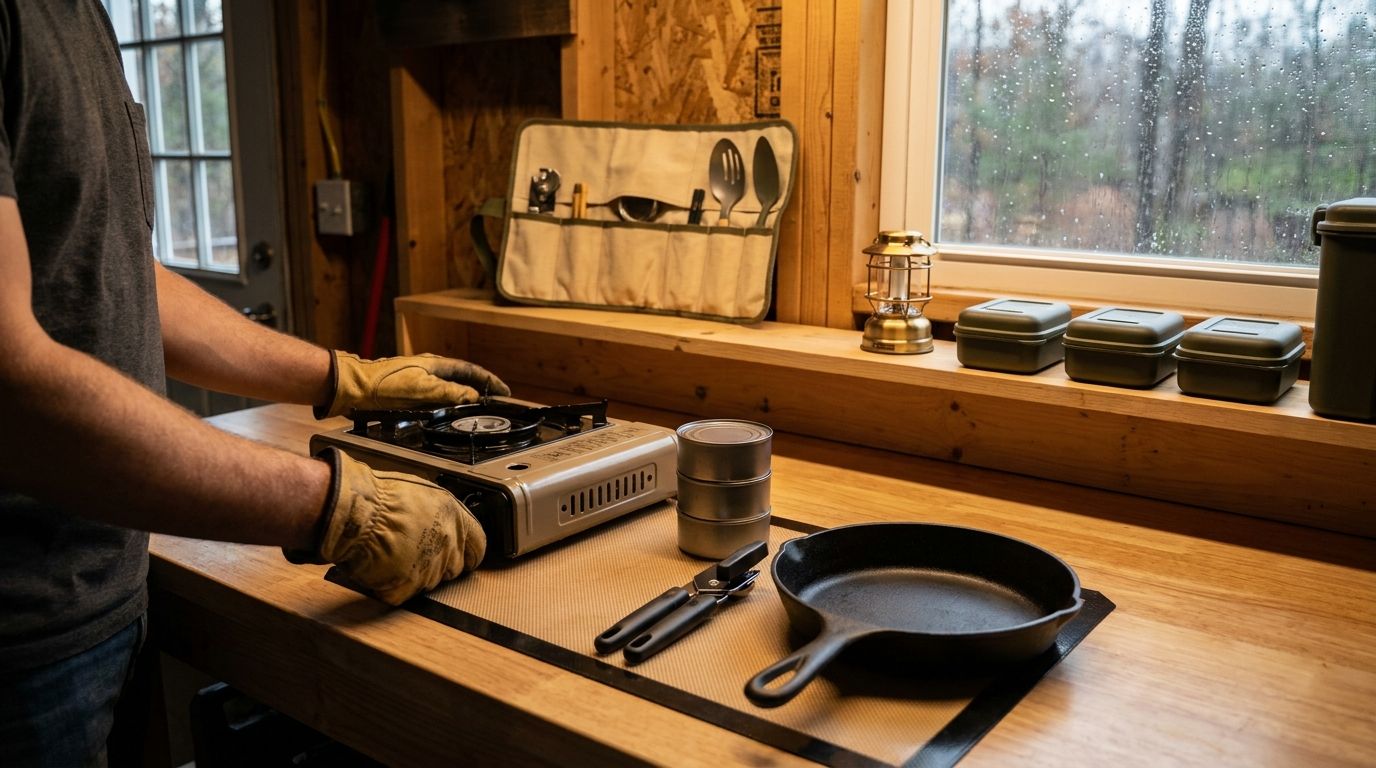
Before the outage, practice the process with cold equipment. Lay out the stove, fuel, lighter, pan, utensils, gloves, and a designated storage spot. You are not rehearsing a camping trip, you are finding the awkward parts while the lights still work.
What to avoid during a power outage
Some methods look familiar because they belong in a normal kitchen. That does not make them safe without power. Do not use a gas oven or stovetop as a room heater. Do not burn charcoal indoors. Do not use a patio heater, portable propane heater, or outdoor cooking appliance inside the home unless the manufacturer specifically lists it for indoor use and the setup follows every instruction.
Do not improvise a burner with candles, rubbing alcohol, fireplace fuel, or a homemade wick. Do not set a pan directly on a wood stove unless the appliance is designed for cooking and the manufacturer permits it. A fireplace built to contain a fire is not automatically a kitchen appliance.
Do not run a vehicle in a garage to power equipment or warm the space. The CDC says, "Have a mechanic check the exhaust system of your car or truck every year." A damaged exhaust system adds risk, and an open garage door does not make vehicle exhaust safe around the home.
Do not use a generator for cooking indoors or in an attached structure. The CDC says, "Only use generators outside, more than 20 feet away from any windows, doors, and vents." That instruction applies to the generator itself, not just the exhaust pipe. Keep the generator away from the building and direct exhaust away from the home.
Do not store fuel beside a refrigerator, furnace, water heater, electrical panel, or other ignition source. Read the label and the owner's manual for storage and handling instructions. If a product does not clearly explain where it may be used, leave it out of the indoor cooking plan.
The question is not whether someone online has tried a method. The question is whether the equipment was designed for that location, whether the fuel can burn safely there, and whether your household can manage the setup when tired, cold, or distracted.
Build a cooking plan around your household
A useful plan begins with the people who actually live in the home and the conditions they face. June Wills might cook for a household with a toddler, a person who uses mobility equipment, or a dog that follows every smell. Those details change where you place hot equipment, how much supervision cooking requires, and whether outdoor cooking is realistic at all.
Write down the meals you will use during an outage and match each one to its preparation method. Mark food as ready to eat, suitable for electric reheating, or suitable for outdoor cooking. Keep the plan where the household can find it without a phone connection.
Use a simple decision path:
- If the weather is poor, choose food that needs no heat.
- If indoor heat is needed, use only an approved electric appliance and a suitable power source.
- If fuel is required, move the cooking setup outdoors and follow the equipment manual.
- If the setup feels unstable, smoky, unusually hot, or confusing, shut it down and leave the food uncooked.
Store cooking tools together so you are not searching through drawers in the dark. Include a manual can opener, heat-resistant gloves, a stable pan, utensils, cleaning supplies, and a flashlight. Keep water available for cooking and cleanup, but do not assume stored water makes an unsafe fuel setup acceptable.
Your household profile should also account for medical needs, allergies, food texture, and appetite. A shelf-stable meal nobody can eat is inventory, not a plan. Test the food during an ordinary week. If the meal creates a mountain of cleanup, replace it with something simpler.
Mainstay can help you keep the household profile, inventory, preparedness plan, and document details current in one place. The point is not to build a complicated emergency kitchen. It is to make the safe choice obvious when the usual kitchen is unavailable.
Test, maintain, and document the setup
A cooking plan is only useful if you can operate it without guesswork. Test the electric appliance with the power station, including startup behavior and how long it takes to heat food. Test the manual can opener. Check that the flashlight works and that the cooking surface stays clear when the counter gets crowded.
Read the labels on every fuel container and appliance. Confirm the correct fuel, storage position, lighting method, shutdown process, and disposal instructions. Keep the manuals with the equipment or store a printed copy in your document vault, because a phone may be unavailable, damaged, or needed for communication.
Add cooking equipment to your inventory with its location, fuel type, condition, and last test date. Note which meals use it. If a stove requires a specific connector or pan, keep that information with the stove. The goal is to prevent the classic outage discovery: the burner is present, but the adapter is somewhere known only to a former version of you.
Maintain the carbon monoxide side of the plan as carefully as the food side. The CDC says to replace a CO detector following the manufacturer's instructions or every 5 years. Keep battery-operated or battery back-up detectors near every sleeping area, and replace batteries when you change the time on your clocks each spring and fall.
Inspect cords, plugs, fuel containers, hoses, regulators, and cookware for damage. Do not repair fuel equipment with tape or substitute parts unless the manufacturer gives that instruction. Retire equipment that leaks, cracks, swells, overheats, or no longer matches its manual.
Choose a calm evening to run the plan from start to finish. Have Sam Wills locate the food while Rosa Wills checks the cooking area and June Wills reviews the shutdown steps, if that division fits the household. Include Theo Wills in the household discussion when useful, without turning the exercise into a performance. The standard is simple: everyone knows what is safe, what is off-limits, and where the supplies live.
Make the next decision before the lights go out
Walk through your kitchen today and identify every appliance that uses heat. Mark each one as safe with normal power, safe with stored electric power, outdoor-only, or not part of the plan. That small audit removes dangerous improvisation later.
Then choose a meal for each path. Keep a no-heat option where the household can reach it, place the electric cooking equipment with its power source, and store outdoor fuel according to the label and local requirements. Add the plan to your household inventory so missing pieces become visible before an outage.
Check the carbon monoxide detectors and confirm that everyone knows the alarm means leave the home, not open a window and continue cooking. Review the generator location if you own one. The CDC requires more than 20 feet from windows, doors, and vents for generator use, and that distance needs to be measured from the home before the generator runs.
Finally, test the setup under ordinary conditions. Heat the meal, clean the equipment, return every item to its marked location, and record what failed. The point is not to prove your household can cook an elaborate dinner in the dark. It is to make a safe, boring meal easy to produce when the power is gone.
FAQ
What is the safest way to cook without power safely?
The safest approach is to use food that needs no heat indoors. If you want a hot meal, use a listed electric appliance with an appropriate stored power source, or use a fuel-burning stove outdoors according to its instructions.
Can I use a camping stove indoors during a power outage?
No, unless the manufacturer specifically lists that exact equipment for indoor use and the setup follows all instructions. An outdoor-rated camping stove can produce carbon monoxide and should not be used inside a home, garage, basement, tent, vehicle, or other enclosed space.
Can I use a gas oven to heat my home while cooking during a power outage?
No. Do not use a gas oven or stovetop as a room heater. Use heating equipment only as its manufacturer intends, and leave the home if a carbon monoxide alarm sounds or anyone develops possible poisoning symptoms.
Where should I use a generator during an outage?
Use a generator only outside, more than 20 feet away from any windows, doors, and vents, as the CDC advises. Never run it inside the home, garage, basement, shed, or another enclosed or attached space.
How do I maintain carbon monoxide protection at home?
Install battery-operated or battery back-up CO detectors near every sleeping area. Check detector batteries each spring and fall when you change the time on your clocks, and replace detectors following the manufacturer's instructions or every 5 years.
Where this comes from
Want this handled automatically? See the Mainstay membership.
Subscribe to comment
Join the Mainstay newsletter to leave a comment — and get new field notes in your inbox.
Get new field notes in your inbox
Practical, calm preparedness — one useful note at a time.