Emergency radios: how to choose, store, and test one for your household
A household emergency radio is only useful if it receives the right broadcasts, has dependable power, and can be found quickly. Here is how to choose and test one.
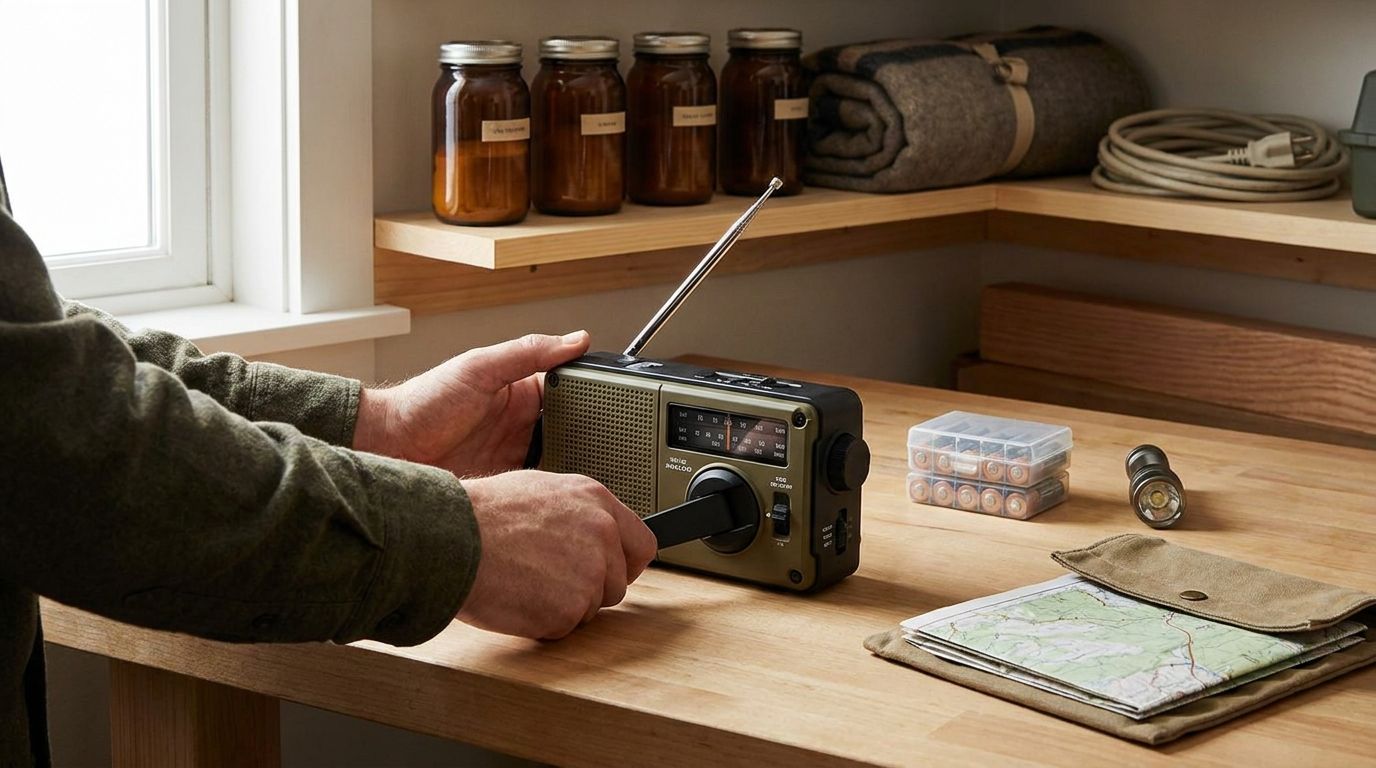
At 6:42 on a Tuesday morning, the power drops across a neighborhood outside Tulsa. The refrigerator goes quiet, the Wi-Fi disappears, and the phone shows one weak bar. A radio on the kitchen shelf gives the household its next useful fact: a line of severe storms is moving east, and the warning area has shifted south.
That is the point of an emergency radio. It gives you local information when internet access, television, and mobile alerts are unreliable. The best emergency radio for home is not the one with the longest feature list. It is the one that receives relevant broadcasts, has more than one dependable power option, stays stored where you can find it, and works when you test it.
This guide covers radio features, storage, power, weather broadcasts, and a simple emergency radio checklist. You will also see how to use a weather radio without treating every alert tone as a reason to panic.
Choose the broadcast coverage first
Start with the signals your household needs. A basic AM/FM radio can provide news, local instructions, and updates from nearby stations. That coverage matters during a long power outage, especially when local broadcasters are still running on backup power.
For weather information in the United States, look for a radio that receives NOAA Weather Radio. The National Weather Service broadcasts continuously on seven frequencies between 162.400 and 162.550 MHz. A radio does not need to scan every frequency manually if it has an automatic weather-band scan, but confirm that it can receive your local transmitter before you buy it.
The best emergency radio for home usually includes these functions:
- AM and FM reception for local news and public updates.
- NOAA Weather Radio reception for watches, warnings, and forecasts.
- SAME location coding, when available, so alerts can target your county or area.
- A clear speaker and a headphone jack for quiet listening.
SAME means Specific Area Message Encoding. It lets a compatible radio respond to alerts for selected counties rather than every warning within range. That feature earns its keep in a large state or a region where storms regularly pass nearby without touching your address.
Reception depends on geography. Hills, dense buildings, metal siding, and distance from a transmitter all matter. Before you settle on a model, use the National Weather Service transmitter search for your area. Note the station frequency and call sign in your household records. A radio that works perfectly in a store may struggle behind a basement wall.
Bluetooth speakers, a color screen, or a hand crank can be useful. They do not replace signal coverage or a readable control panel. Keep the priority in order: receive the broadcasts, understand the alert, keep the radio operating.
Match the radio to your household
A radio for a small apartment does not need the same setup as one for a rural home with weak cellular coverage. Consider where you will use it, who needs to operate it, and how long you may need information without grid power.
A compact battery radio can work well when storage space is tight. It should have a simple tuning dial or clearly marked buttons, a visible power indicator, and enough speaker volume to be heard from a nearby room. If an older adult in the household will use it, avoid tiny labels and controls that require a magnifying glass. That is not a luxury concern, it is an operating concern.
A larger emergency radio may include a rechargeable battery, hand crank, solar panel, flashlight, USB output, and alarm functions. Treat those features as secondary tools. Small solar panels often recharge slowly indoors. Hand cranks can restore enough power for a short update, but they are not a substitute for stored batteries. USB output can drain the radio quickly when used to charge a phone.
Use this buying check before you commit:
- Can you tune the local NOAA Weather Radio station from inside the house?
- Can you replace the batteries without special tools?
- Does the speaker remain understandable at a low volume?
- Does the radio show remaining battery power or give a clear low-power alert?
- Can you operate it in the dark by touch or with minimal light?
For a household with a basement sleeping area, a radio with an external antenna or strong reception may be worth the extra cost. For a household that travels often, a compact model with standard batteries may be easier to maintain than a rechargeable unit with a proprietary cable.
The Federal Emergency Management Agency recommends having multiple ways to receive alerts, including weather radios and wireless emergency alerts. The goal is not to collect devices. It is to prevent one failed channel from becoming your only source of information.
Build an emergency radio power plan
A radio without power is a small plastic object with buttons. Power deserves its own plan.
Check the radio manual before buying batteries. Many models use AA or AAA cells. Others use a built-in lithium battery, a USB charging port, or a combination of methods. Standard batteries are convenient because you can keep replacements in your household supply cabinet, but rechargeable batteries can reduce waste during routine testing.
Store spare batteries beside the radio, not loose in a junk drawer. Keep them in their original packaging or a small case that prevents the terminals from touching metal. Heat shortens battery life, so avoid the attic, an uninsulated garage, or a vehicle that sits in direct summer sun.
A practical emergency radio checklist includes a power check:
- Write the battery type and quantity on a label inside the storage container.
- Keep one unopened replacement set with the radio.
- Test the charging cable if the radio uses a rechargeable battery.
- Inspect for corrosion, swelling, cracked plastic, or a damaged charging port.
- Mark the next test date on your household calendar or inventory.
Do not assume a hand crank solves every power problem. The American Red Cross describes hand-crank radios as one option for emergency communication, but physical output varies by design and user effort. Turn the crank for a minute during a routine test and listen for stable reception. You are checking whether the mechanism works, not trying to fill a phone battery from zero.
A simple power rotation works well. Test the radio every month. Replace or recharge what the test identifies. Replace stored disposable batteries according to the manufacturer's guidance, and replace them sooner if they show leakage or the radio has been stored in heat.
Mainstay can help you keep the radio, battery type, test date, and storage location alongside the rest of your household inventory. The useful result is not a perfect record. It is knowing what you have before the kitchen goes dark.
Store the radio where information starts
The right storage location is easy to reach and close to the household's normal activity. A high shelf in a crowded garage is technically storage, but not a useful communication point when the lights are out and everyone is moving around with flashlights.
Choose a location based on the likely event and the radio's job. A kitchen cabinet near the main household supplies may work for a general outage. A bedside drawer may make more sense for a severe weather radio that needs to wake the household overnight. If flooding is a local concern, keep the radio above the expected water level and avoid the basement entirely.
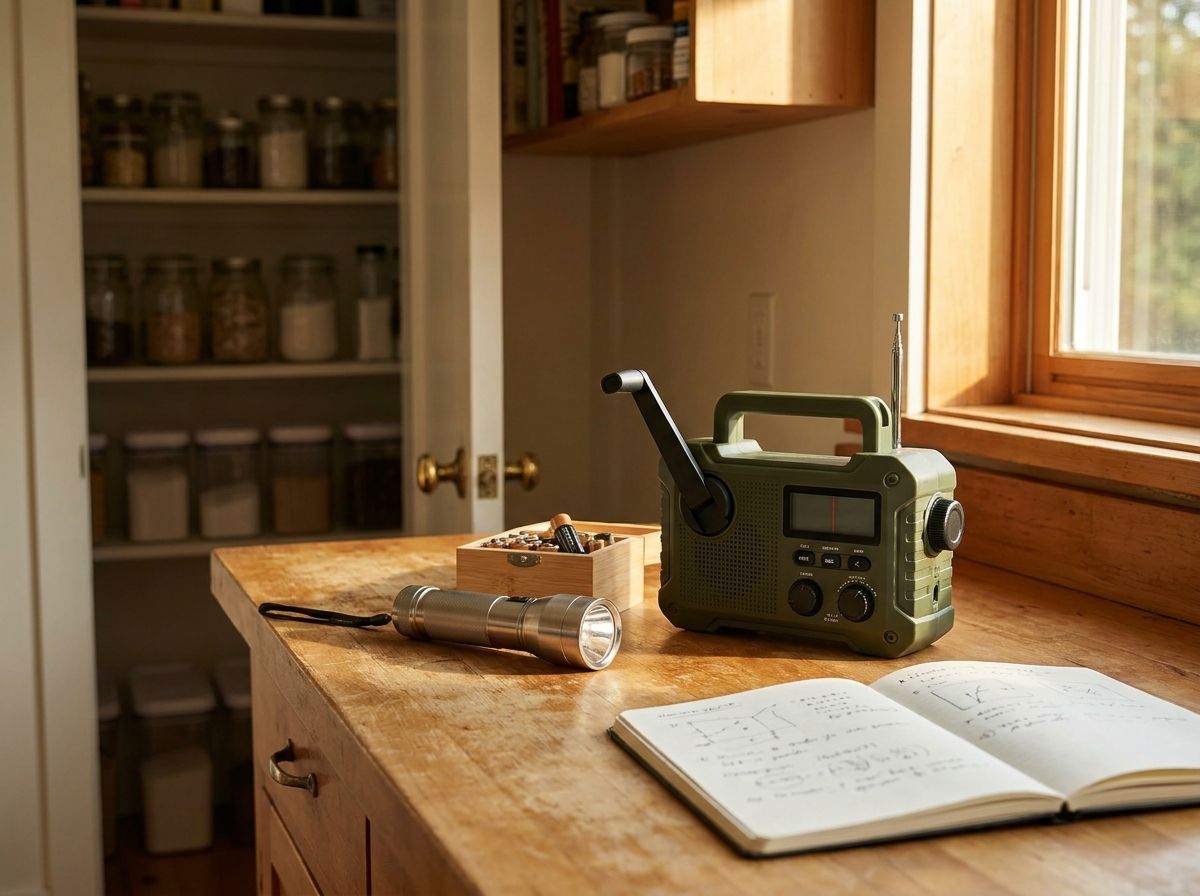
Store the radio with the items that make listening practical:
- A small flashlight with tested batteries.
- A printed list of local broadcast frequencies and county names.
- A pen and index cards for recording times, instructions, and road closures.
- Spare batteries or the correct charging cable.
Keep the printed information current. A household may move, a radio station may change its format, or a weather transmitter may use a different frequency than the one you remember. Write down the local NOAA Weather Radio frequency after checking the National Weather Service website for your county.
For example, the Wills household in western Pennsylvania keeps its radio in a hallway cabinet above the basement stairs. June Wills can reach it during a nighttime warning without crossing the kitchen. The cabinet also holds a flashlight and a paper card with the county name, local station, and the household meeting location. It is not elaborate. It is easy to find.
Avoid sealed bins that require a tool, locked cabinets, and containers with no label. You want protection from dust and moisture, not a treasure hunt. If you store the radio in a go-bag, make sure the household knows that location and checks the bag on its own schedule.
Learn how to use a weather radio
Knowing how to use a weather radio takes one short practice session. Start by turning it on during calm weather, when you have time to learn the controls without a warning tone in the background.
Set the radio to your local NOAA Weather Radio channel. If it has SAME programming, enter the county code listed by your local National Weather Service office or select the county through the radio's menu. Follow the manual closely because button sequences differ between models.
Then set the alert mode. Some radios use a tone alarm, a voice alert, or both. The tone may be loud and abrupt. That is intentional. The radio is designed to get attention when a warning affects the programmed area.
Use this practice sequence:
- Turn the radio on and confirm the local station name or frequency.
- Listen for a clear voice at a volume you can understand.
- Check the alert indicator and confirm the correct county is selected.
- Test the battery or power status.
- Write down the steps for changing the channel.
A watch means conditions could support a hazardous event. A warning means the event is occurring, imminent, or detected near the warned area. Your response depends on the hazard and local instructions. For a tornado warning, move to the lowest practical level and place as many walls as possible between you and the outside. For a flash flood warning, move to higher ground and never drive through flooded roads.
The National Weather Service uses the phrase "Turn around, don't drown" because moving water can hide washed-out roads and carry vehicles. The radio delivers the message. It does not decide the safest room, route, or action for your specific property.
On March 31, 2023, tornadoes affected parts of the Midwest and South, including Little Rock, Arkansas. Households that heard changing warnings had to make decisions based on their exact location, not on a general regional forecast. Keep a local map and household plan near the radio so a warning leads to a known action.
Test the whole setup, not just the buttons
A radio test should answer a practical question: can someone in the household receive and act on a useful message right now?
Run a monthly test on a regular date. The first Saturday morning works for many households, but any repeatable time is fine. Take the radio to its normal storage location and operate it there. Testing it on a kitchen counter does not tell you how well it works in a hallway cabinet or basement bedroom.
Use a short test record with these details:
- Date and time of the test.
- Broadcast station or frequency received.
- Signal quality and speaker clarity.
- Battery or charging status.
- Any repair, replacement, or location change needed.
Try the radio with the lights off once every few months. You should be able to locate it, identify the power button, and tune the station without turning the room upside down. Keep the flashlight nearby, then confirm both devices still work together.
Ask another household member to operate it. Sam Wills may know the radio well, but Rosa Wills should not need Sam's memory to find the power button or local station. A household tool has passed its test when more than one person can use it without coaching.
Listen for reception changes as seasons shift. Trees, storms, building materials, and local interference can all affect a marginal signal. If reception is poor, try the radio near a window, extend the antenna, or compare the signal from a second location. Do not place the radio next to a large power adapter or other device that generates interference.
Once a year, review the storage plan. Confirm the local county, transmitter frequency, battery type, household contacts, and the radio's operating instructions. If the test fails, fix the specific problem that day. A dead battery label is not a maintenance plan.
Make the radio part of household communication
An emergency radio supplies outside information. It does not replace a household communication plan. You still need to know who checks on whom, where everyone goes, and which information deserves action.
Write a short radio procedure for the household. Keep it near the device. It can say who turns on the radio, who records official instructions, and how the household confirms that everyone is accounted for. Keep the language plain enough to read during a power outage.
Your written procedure can include:
- The local NOAA Weather Radio frequency and county.
- The local AM or FM news station.
- The safest room for severe weather.
- The out-of-area contact or meeting location.
- The date of the next radio test.
Use official sources for decisions that affect movement or shelter. The National Weather Service, local emergency management office, local public safety agencies, and utility provider may each issue different kinds of updates. A social media post can point you toward information, but it should not be the only source for a fast-moving warning.
Consider the household's actual limits. A person with hearing loss may need visual alerts or a phone notification in addition to a radio. Someone who works overnight may need the radio's alarm function enabled. A household with a dog, such as Scout in the Wills home, should keep the animal's carrier or leash plan separate from the radio procedure. The radio gives information. The plan turns information into a safe household action.
Keep notes factual. Record the warning time, the affected area, and the instruction you followed. Avoid guessing about causes or repeating unverified reports. During a long outage, calm information management is a useful skill, and a notebook prevents memory from becoming the weakest link in the chain.
FAQ
What is the best emergency radio for home?
The best emergency radio for home receives AM, FM, and NOAA Weather Radio broadcasts, has clear controls, and offers dependable battery power. SAME location alerts, a visible battery indicator, and a replaceable battery compartment are useful additions. Choose the model you can test and operate easily in the place where it will be stored.
How often should I test an emergency radio?
Test the radio monthly, including its reception, speaker, power source, and storage location. Review the local frequency and household instructions at least once a year. Test again after moving the radio, replacing its batteries, or changing your household location.
How do I use a weather radio during a storm?
Turn on the radio, confirm the local NOAA Weather Radio channel, and listen for the warning area and instructions. A watch means conditions could support hazardous weather, while a warning means hazardous weather is occurring, imminent, or detected nearby. Follow the specific guidance from the National Weather Service and local officials.
Are hand-crank emergency radios reliable?
A hand crank can provide backup power, but output depends on the radio design and how long you crank it. Treat it as one power option rather than the only one. Keep the correct disposable batteries or a tested rechargeable setup with the radio.
Where should I store an emergency radio?
Store it where someone can reach it quickly, with a flashlight, spare power, and written local frequencies. Keep it away from heat, moisture, flood-prone areas, and locked containers. The location should match the radio's job, such as a bedroom drawer for overnight weather alerts or a central cabinet for outage information.
The next step is small: take the radio you already own, find its manual, and turn it on in its intended storage location. Confirm the local NOAA Weather Radio frequency, check the batteries, and write the test date on a card beside it. If the radio fails any part of that check, replace or repair it before it becomes the household's only voice from outside.
Want this handled automatically? See the Mainstay membership.
Subscribe to comment
Join the Mainstay newsletter to leave a comment — and get new field notes in your inbox.
Get new field notes in your inbox
Practical, calm preparedness — one useful note at a time.