Emergency supplies storage ideas for small homes
Small homes can hold the supplies that matter. Use zones, honest quantities, and overlooked spaces to build household preparedness storage without losing your living space.
June Wills was kneeling in the hallway with one hand under the sofa and the other holding a flashlight. A storm had knocked out the power, and the only working light in the room was the beam from her phone. She found a loose battery, two dog treats, and a dust bunny with what looked like a personal grudge.
The water containers were in the coat closet. The first aid kit was in the bathroom. The lantern was somewhere near the camping gear, which had become an archaeological site.
The best emergency supplies storage ideas for a small home don't begin with buying more bins. They begin with assigning each supply a sensible home, keeping essential items reachable, and using the space you already have without making daily life harder.
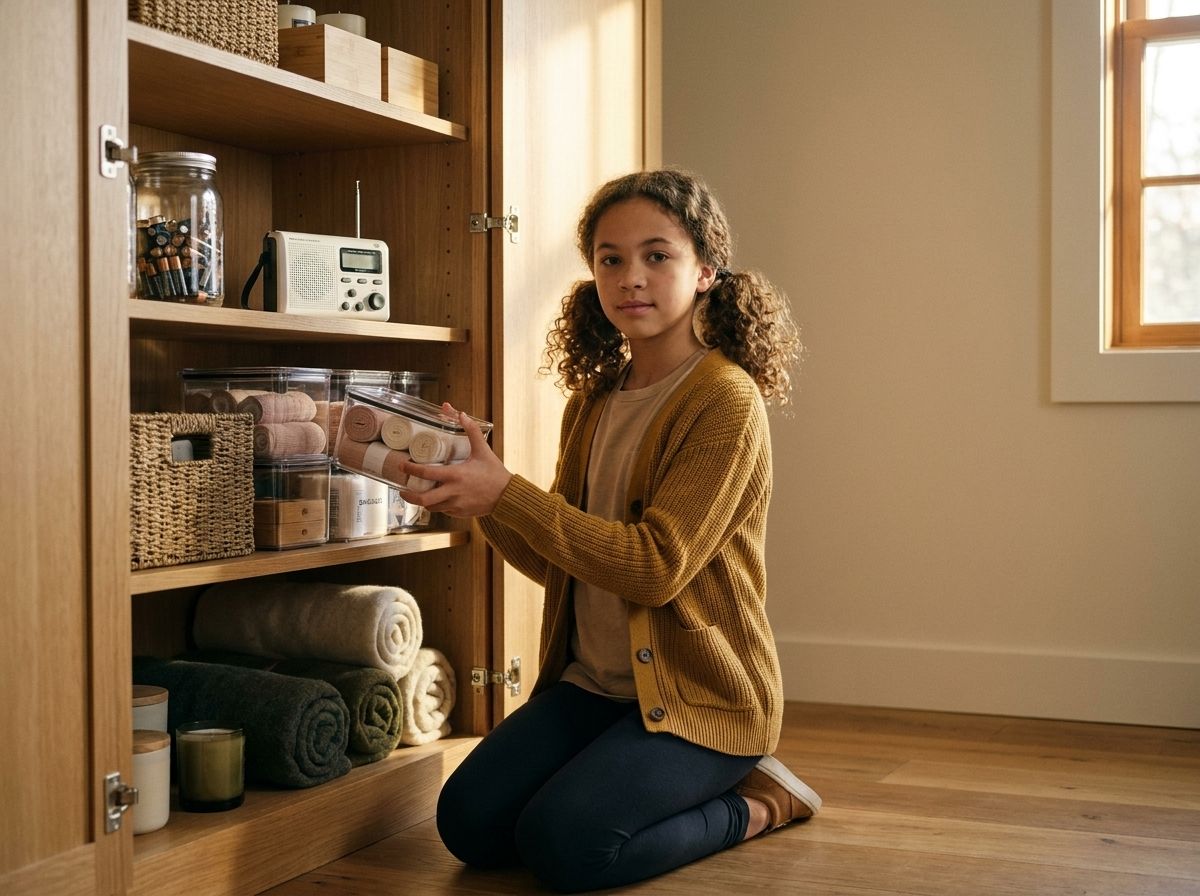
Small homes have real limits. A narrow closet, one kitchen cabinet, and a garage shelf may need to hold cleaning supplies, food, tools, seasonal clothing, and the ordinary clutter that appears when people live actual lives. That doesn't make household preparedness storage impossible. It means your plan has to fit the home you have.
Start with a storage map, not a shopping cart
Walk through your home with a notebook or your phone. Record the places that can hold supplies safely, then note what each space is already doing. You're looking for capacity, access, temperature, moisture, and security.
A useful storage map includes:
- Kitchen cabinets and pantry shelves
- Hall closets and entryway storage
- Space under beds and sofas
- The back of a sturdy bathroom or utility cabinet
- A garage, basement, attic, or outdoor storage area if conditions allow
- The trunk or interior storage area of a vehicle
Don't treat every empty gap as usable storage. A spot beside a furnace may be empty, but heat is rough on food, batteries, medication, and many plastics. A damp basement corner may fit several boxes while quietly damaging cardboard and metal. A high shelf may look efficient until someone needs a flashlight at 2 a.m.
For each possible location, ask four plain questions:
1. Can you reach it without moving six other things?
2. Will heat, freezing temperatures, moisture, or pests damage what is stored there?
3. Can every adult in the household identify the location?
4. Can you remove one item without starting a small avalanche?
If the answer to several questions is no, that space is not a good home for essential supplies. It may still work for backup items you rarely need, but don't put your main water, lighting, medication, or communication supplies there.
Then divide your home into practical zones. A small home usually works better with a few clear zones than with one giant emergency cabinet.
- The living zone holds lighting, charging supplies, blankets, and basic comfort items.
- The kitchen zone holds water treatment supplies, shelf-stable food, a manual can opener, and cooking tools that match your plan.
- The care zone holds first aid, medication information, hygiene items, and protective equipment.
- The exit zone holds shoes, outer layers, copies of key documents, and items you may need to take with you.
This isn't about making your home look like a supply warehouse. It's about cutting the number of decisions you have to make when the house is dark, noisy, or already inconvenient.
Match each supply to the right part of the home
The question "where to store emergency supplies" has a practical answer: store them where you're most likely to use them and where conditions won't ruin them.
Lighting belongs near the rooms where people spend time and near exits. Keep a flashlight or lantern in a known spot on each level of the home if your layout allows it. A single light in a high cabinet is technically present, but it's not much help when the power fails and your phone is at 8 percent.
Keep lighting supplies together with their batteries, but don't leave batteries loose against metal objects. Use the original packaging or a small container that prevents contact. Test everything on a regular schedule so you don't discover a dead lantern during the next outage.
Water storage needs a stable, clean location away from direct sunlight and extreme temperatures. If floor space is limited, use a few manageable containers rather than one oversized jug that's difficult to move. Store drinking water where you can inspect and rotate it without emptying half the room.
Food storage works best in a cool, dry area you already visit. The back of a pantry shelf works well if you move older items forward and use them during ordinary meals. A low shelf is often easier to reach than an overhead cabinet, especially when the supplies are heavy.
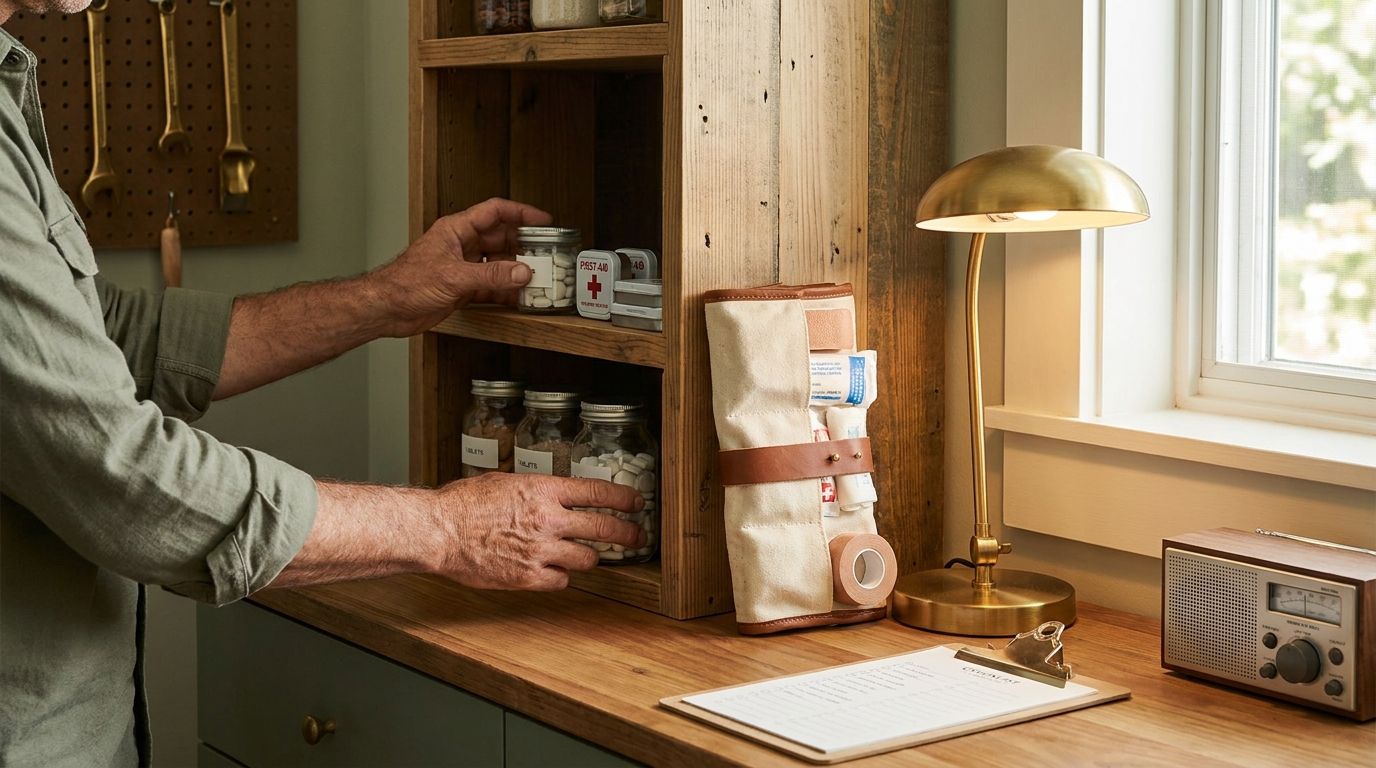
Keep medical and first aid supplies dry and visible. A bathroom cabinet is convenient, but humidity from showers can shorten the useful life of some items (this is the one most households figure out only after they've found a rusted tin of bandages). A hall cabinet, bedroom dresser drawer, or labeled box in a dry closet may serve the household better.
Cleaning and sanitation supplies should stay separate from food, medication, and drinking water. Put them where a leak won't spread across the entire storage area. A shallow plastic bin can catch small spills and makes the whole category easier to move when you need to clean around it.
Fuel, matches, and equipment that produces heat need special care. Follow the storage instructions for each item, keep combustibles away from ignition sources, and never bring fuel-burning equipment into a living space unless the product is specifically designed and approved for that use. Storage convenience is not a reason to ignore the label.
Use small-home storage without creating daily friction
The best small-home emergency storage is storage you can actually maintain. If every item requires a ladder, a furniture shuffle, or a negotiation with the closet door, the arrangement will eventually fall apart.
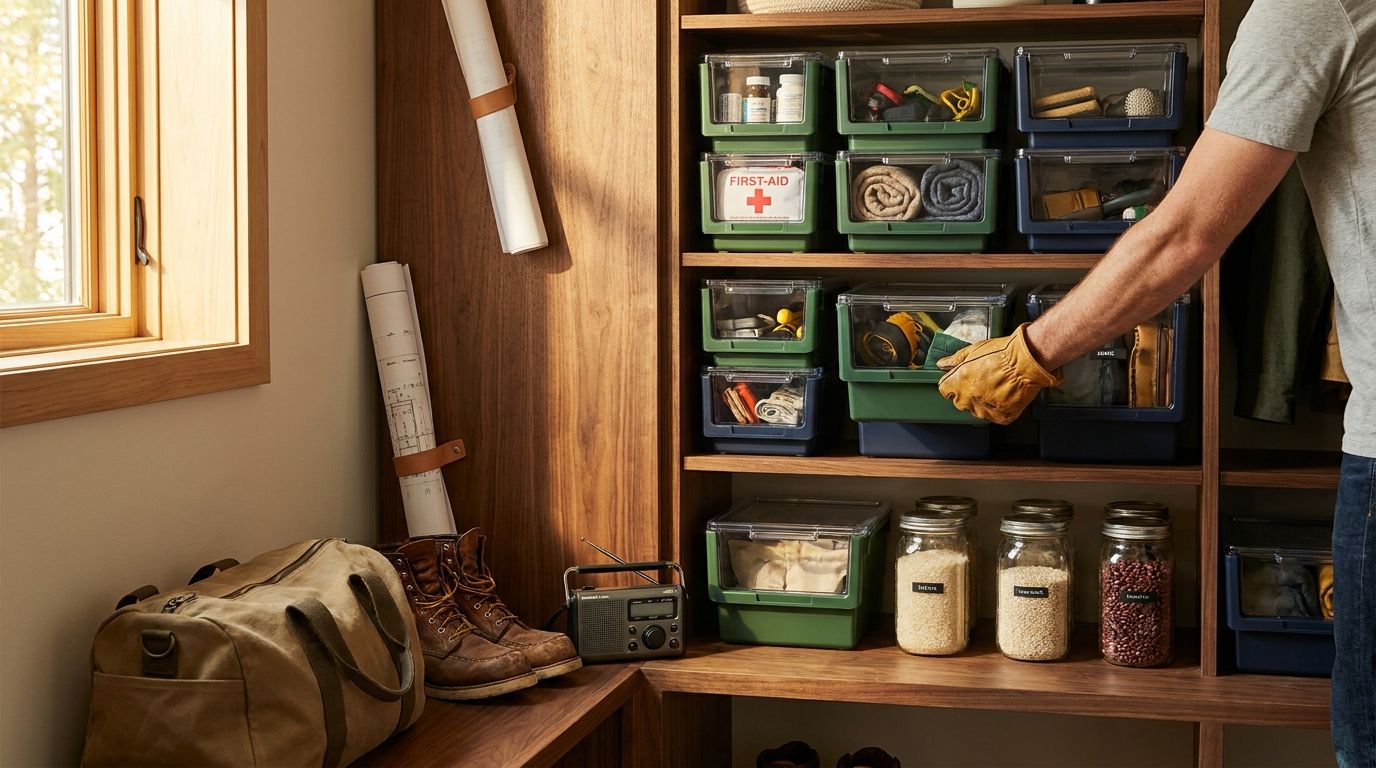
Start with containers that fit your home instead of buying a set of large bins and hoping they find a purpose. Measure the shelf, the under-bed clearance, or the cabinet opening. A container that's two inches too tall is not a clever storage solution. It's a future argument with gravity.
Use shallow containers for categories that need frequent access. They let you see the contents without unloading the entire cabinet. Reserve deeper containers for lightweight items or supplies you use less often.
A simple label should tell you what's inside and when you last checked it. You don't need a complicated coding system. Write the category in large letters, then add a short note for anything with a date or special handling requirement.
Useful labels include:
- Lighting and charging
- Water treatment
- Food to use next
- First aid and medication information
- Hygiene and sanitation
- Documents and contacts
- Pet supplies
Scout's supplies deserve their own small category if a dog is part of your household. Keep food, medication details, a leash, waste bags, and a bowl together so you're not searching through general supplies while managing a worried animal at the same time. The best location is one you can reach quickly but that doesn't interfere with ordinary feeding and walks.
Use vertical space carefully. A narrow shelf, over-door organizer, or wall-mounted rack can add real capacity, but don't place heavy containers above head height. Keep frequently used items between waist and shoulder level when possible. Heavy water containers belong low and stable.
Under-bed storage is useful for flat, lightweight items: blankets, spare clothing, paper copies, some hygiene supplies. It's less useful for anything you might need immediately if reaching under the bed means pulling out three storage tubs and a forgotten winter boot.
Furniture can help, too. An entry bench with internal storage can hold shoes, flashlights, and outer layers. A bedside drawer can hold a small light, a charging cable, and glasses. These choices work because they connect a supply to a real habit rather than hiding it in a remote corner.
Build a plan that survives a small space
Storage is only one part of household preparedness. You also need to know what you have, who uses it, and what needs attention. A compact home benefits from a short plan that everyone can follow.
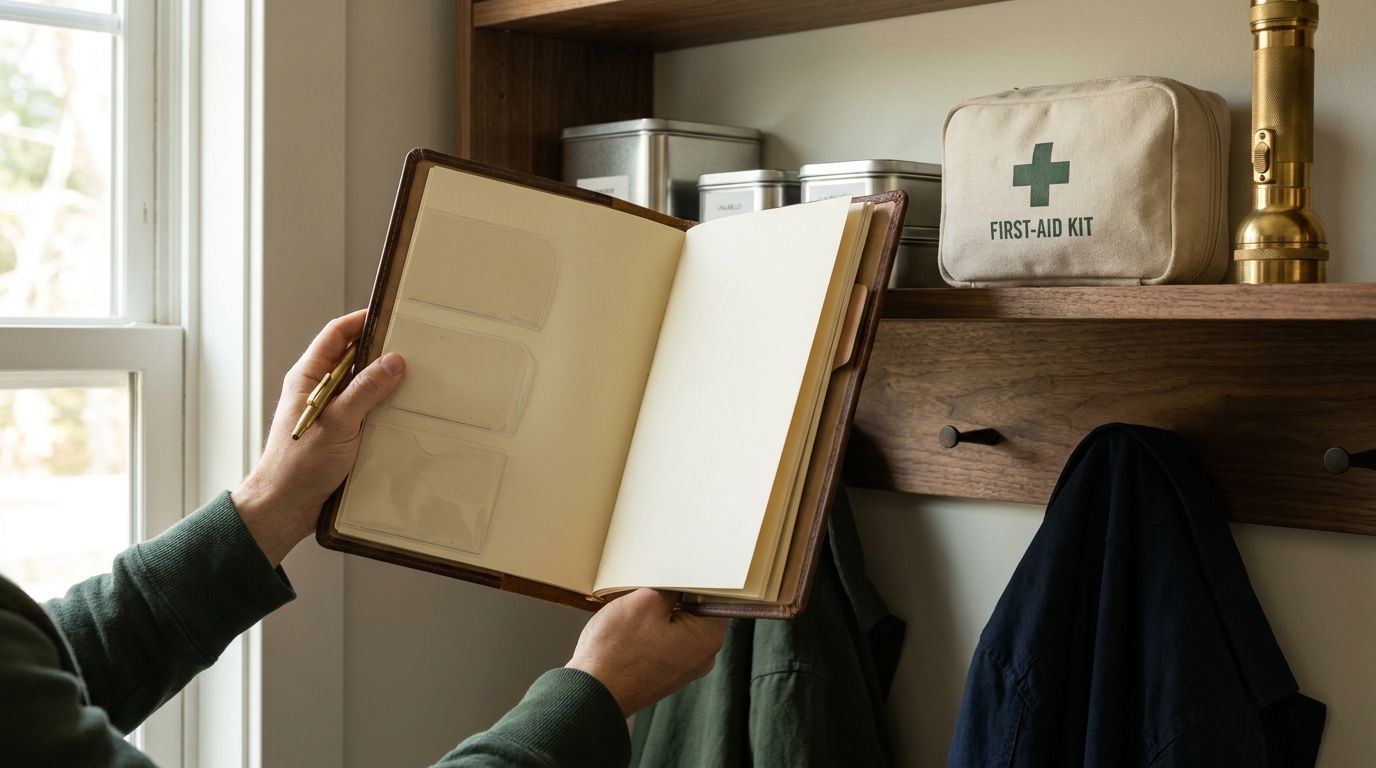
Write down the location of the main supplies. Keep a paper copy somewhere accessible, and store a digital copy where the household can find it without relying on a single phone. The note can be simple:
- Water is stored on the lowest pantry shelf.
- Lights and chargers are in the entry cabinet.
- First aid is in the dry hall cabinet.
- Pet supplies are in the lower kitchen drawer.
- Important documents are in the protected file box.
Review the arrangement after you use it. June's flashlight search revealed more than a missing battery. It showed that the household had stored items by category but not by the way people actually moved through the home. The new setup put lights near the entry and living area, moved first aid out of the humid bathroom, and gave the dog supplies one clear drawer.
That's the kind of adjustment worth making. You don't need a perfect setup on the first attempt. You need a setup that improves when real life gives you information.
Keep an inventory of what you already have before you fill another shelf. Mainstay can help you keep that inventory current alongside your household profile and preparedness plan, but a paper list works too. The tool matters less than having one dependable place to check quantities, dates, and missing items.
A compact inventory can track:
- Item and quantity
- Storage location
- Expiration or replacement date
- Household member or pet who relies on it
- Reorder point
- Notes about batteries, sizes, allergies, or instructions
Set a short review rhythm. Once a month, open the containers that hold dated or frequently used items. Check water containers, food, medication information, batteries, pet supplies, and anything exposed to temperature changes. Use older items in normal life when appropriate, then replace them on the next grocery or household order.
Don't let limited space push you toward excessive supplies. Store what your household can use, rotate, and protect. A smaller amount that's current and easy to reach is more useful than a larger amount buried behind holiday decorations.
What should stay outside the main storage area?
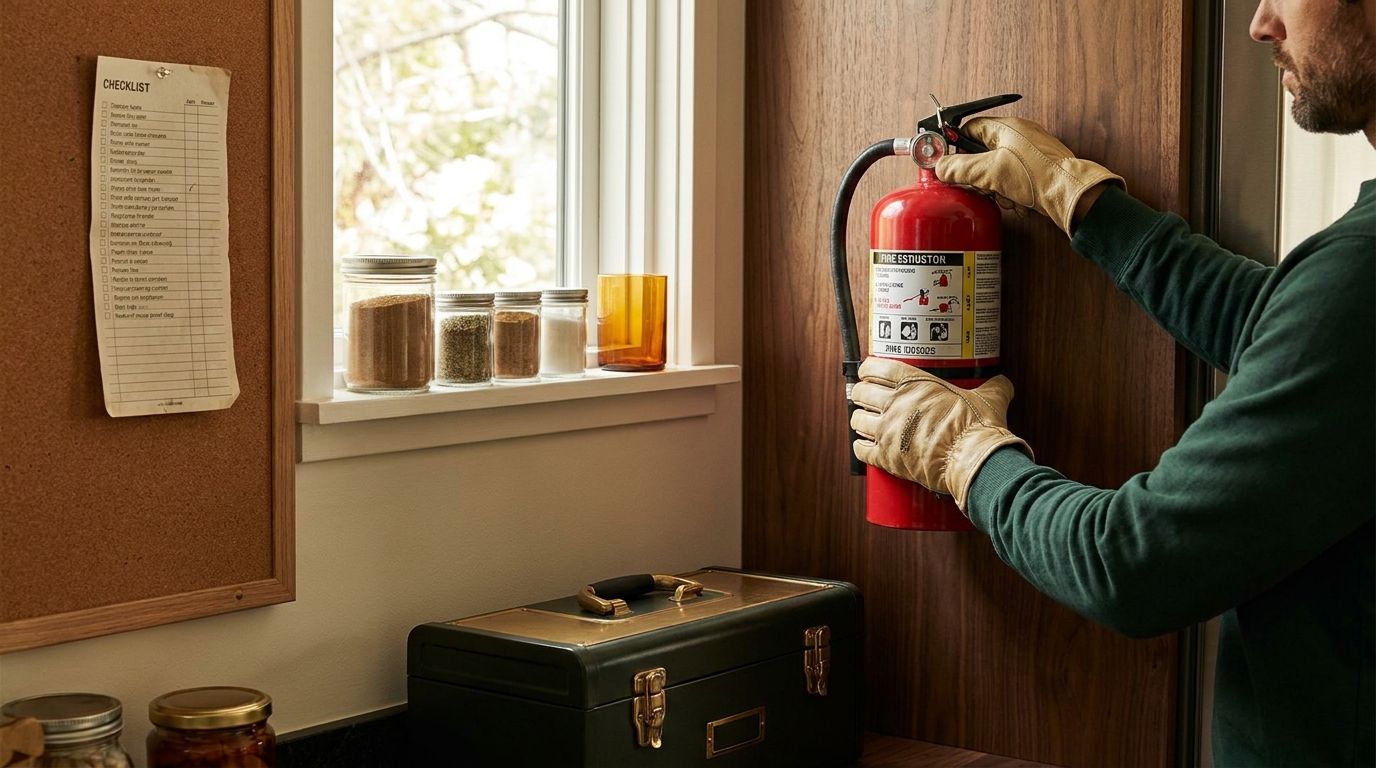
Some supplies should remain in their normal places because moving them creates risk or confusion. Keep fire extinguishers where you can reach them quickly, keep smoke and carbon monoxide alarms installed in their proper locations, and keep medication that someone takes daily according to the prescribing instructions.
You can store backup versions in your household supply zones, but don't hide the items that protect daily life. The goal is a clear home, not a secret-stash hunt.
How much space do you really need?
You can begin with one shelf, one cabinet, or a set of low containers under a bed. The right amount of space depends on your household size, local risks, health needs, pets, and the length of time you want to cover.
Start with the basics you can maintain. Then add supplies when you have a defined gap, a safe storage location, and a plan to check the item. This keeps a small home from becoming crowded with things you can't find or remember to replace.
Make the next ten minutes count
Choose one storage area today. Empty it, wipe it down, and put back only the items that belong there. Group supplies by use, not by the store where you bought them.
Then write three notes on paper: what's stored there, what's missing, and what needs a date check. Take a photo of the finished space if that helps everyone remember the arrangement.
Ask the people in your household to find the light, first aid supplies, water, and pet supplies without coaching. If someone can't locate an item, the storage plan needs a clearer label or a better location. That's useful information, not a failure.
And you're allowed to work with a narrow closet, a rented apartment, a crowded kitchen, or a home that has never had a dedicated storage room. Most households do. Good storage isn't about having more room than everyone else. It's about making the room you have do honest, reliable work.
FAQ
Where should I store emergency supplies in a small apartment?
Use a few accessible zones instead of one hidden stockpile. Keep lighting and charging supplies near the living area or exit, food and water in a cool dry kitchen location, medical supplies in a dry cabinet, and documents in a protected file box.
Can I store emergency water under a bed?
Yes, if the containers are designed for water, remain sealed, and are protected from heat, freezing temperatures, pests, and direct sunlight. Choose containers you can move safely and inspect without dismantling the room.
What emergency supplies should not go in a garage or attic?
Avoid storing medication, batteries, food, and temperature-sensitive items in spaces with major heat, freezing temperatures, or moisture. Check each product's storage instructions, and move sensitive supplies into a stable indoor location.
How do I organize emergency supplies when I have almost no storage space?
Track what you already own, remove duplicates, and choose compact containers that fit your existing shelves or furniture. Prioritize supplies tied to water, lighting, communication, health, sanitation, food, and household-specific needs, then rotate them through normal use.
Pick one shelf before the day ends. Give it a job, label it plainly, and make sure someone else can find what you put there. That small change is enough to start turning a crowded home into a home that supports you.
Want this handled automatically? See the Mainstay membership.
Subscribe to comment
Join the Mainstay newsletter to leave a comment — and get new field notes in your inbox.
Get new field notes in your inbox
Practical, calm preparedness — one useful note at a time.