Everyday readiness for new houses: your first 30 days of inventory without overbuying
Your new home does not need a shopping spree. It needs a clean household inventory checklist, a simple expiration rotation system, and a home supplies organization plan you can keep.
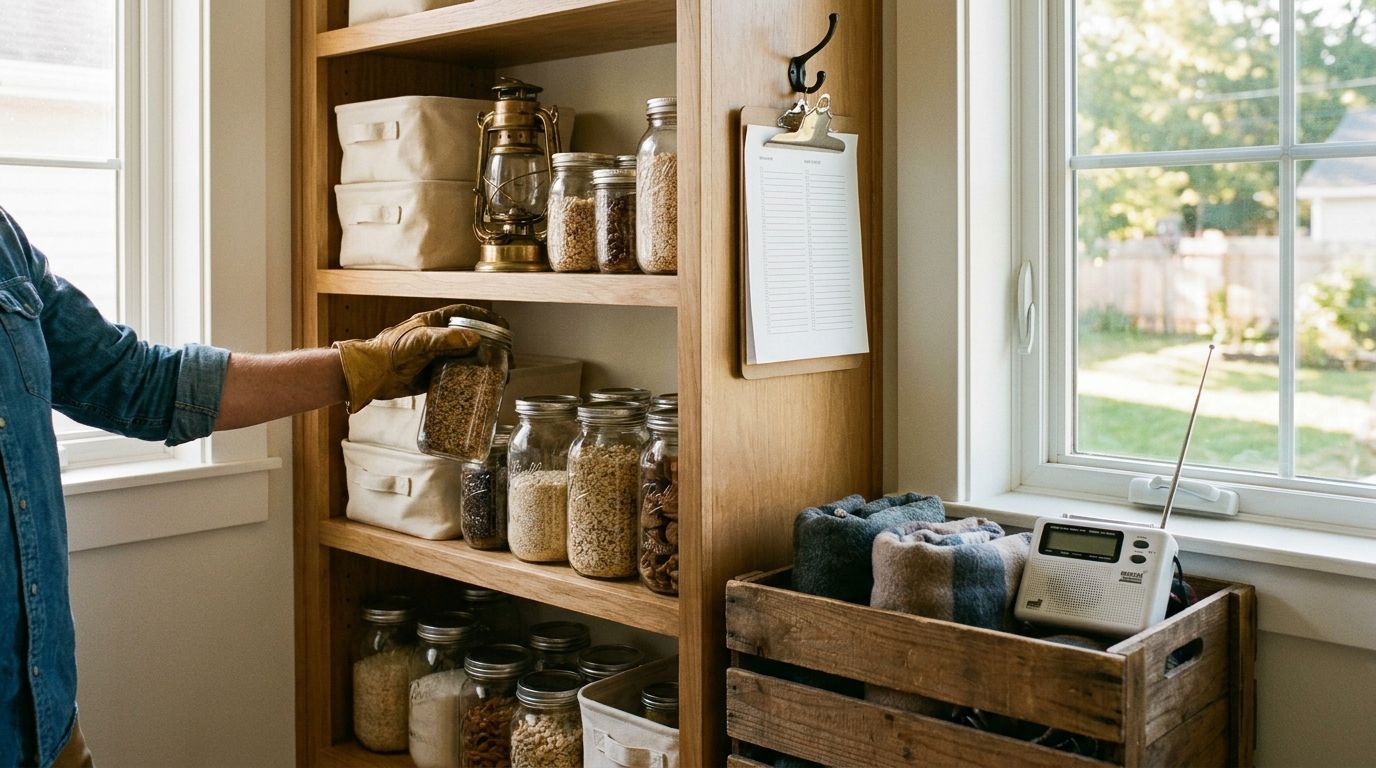
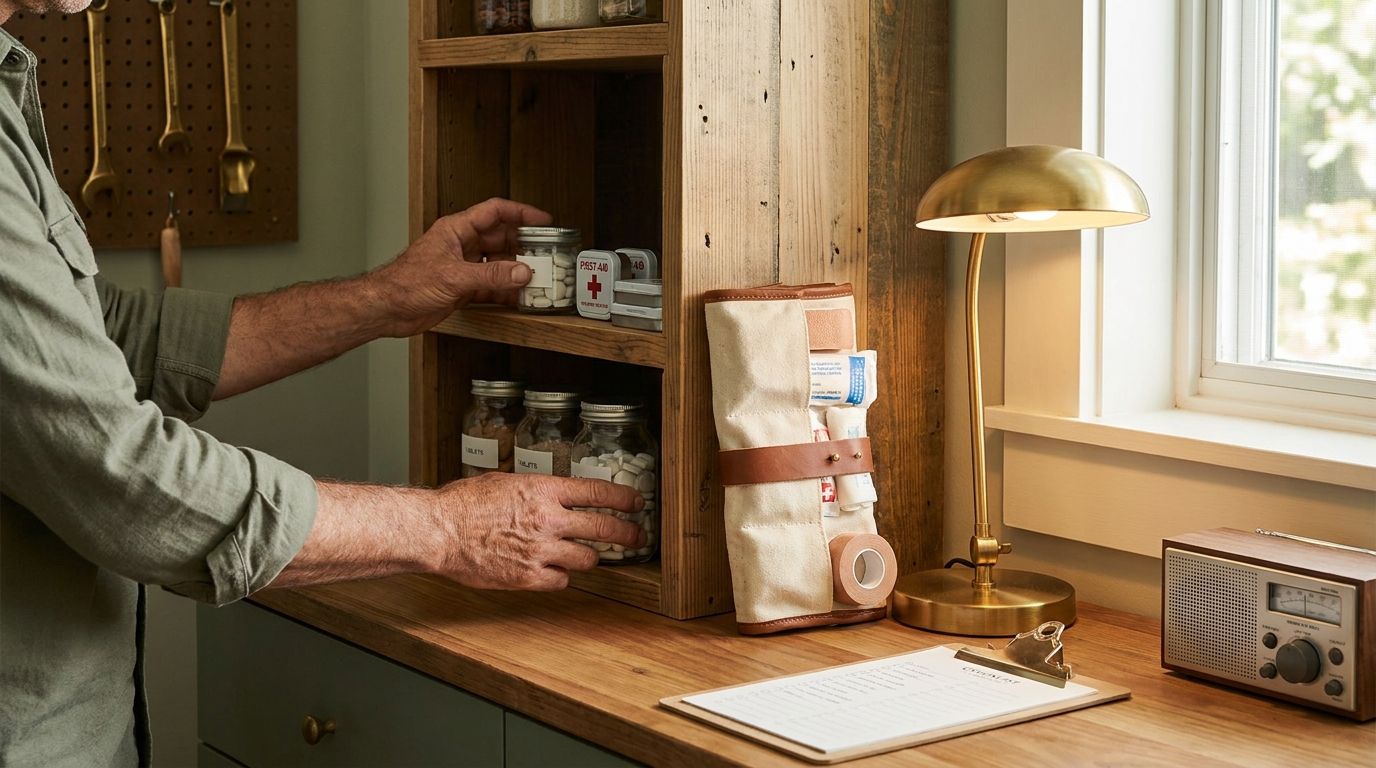
The day you sign the closing papers, your kitchen still has boxes in the corner and your pantry has holes you can't see yet. That's where the first 30 days make or break you. You build a household inventory checklist that covers what you actually use every day, then you add only what you truly need, with an expiration rotation system that never slips.
On moving day, you don't need heroic levels of stock. You need a steady method: inventory what you have, label what matters, and rotate what you buy. With Mainstay's adaptive learning system, you can keep the plan calm and repeatable, even when unpacking turns your life into a pile of "where does this go?" questions.
The thesis: inventory first, buy last
If you start by buying everything, you end up with duplicates, expired items, and a home supplies organization system you don't trust. Start with the inventory, and you buy with your eyes open.
Here's the scene that usually decides it. You're in the garage with a headlamp on, hunting for tape and trash bags. You find one roll of tape and one sad bag. You go to the store and come back with twelve rolls, a new brand of bags, and a couple of "just in case" items you didn't need. That's the overbuying trap.
So you do the opposite: inventory first, then buy in small batches tied to actual gaps.
Your first 30 days readiness plan has three jobs:
- Identify gaps in everyday categories (cleaning, hygiene, cooking basics, batteries, paper goods).
- Set up home supplies organization so you can find things without thinking.
- Put an expiration rotation system in place so items leave your shelves in the right order.
You are not trying to predict disasters. You're trying to stop the slow drift from "we had that somewhere" to "we don't have it at all."
A quick reality check: the average household runs on routines, not on inventory fantasies. Keep your routines fed, and your preparedness stays normal. That's what everyday readiness actually looks like.
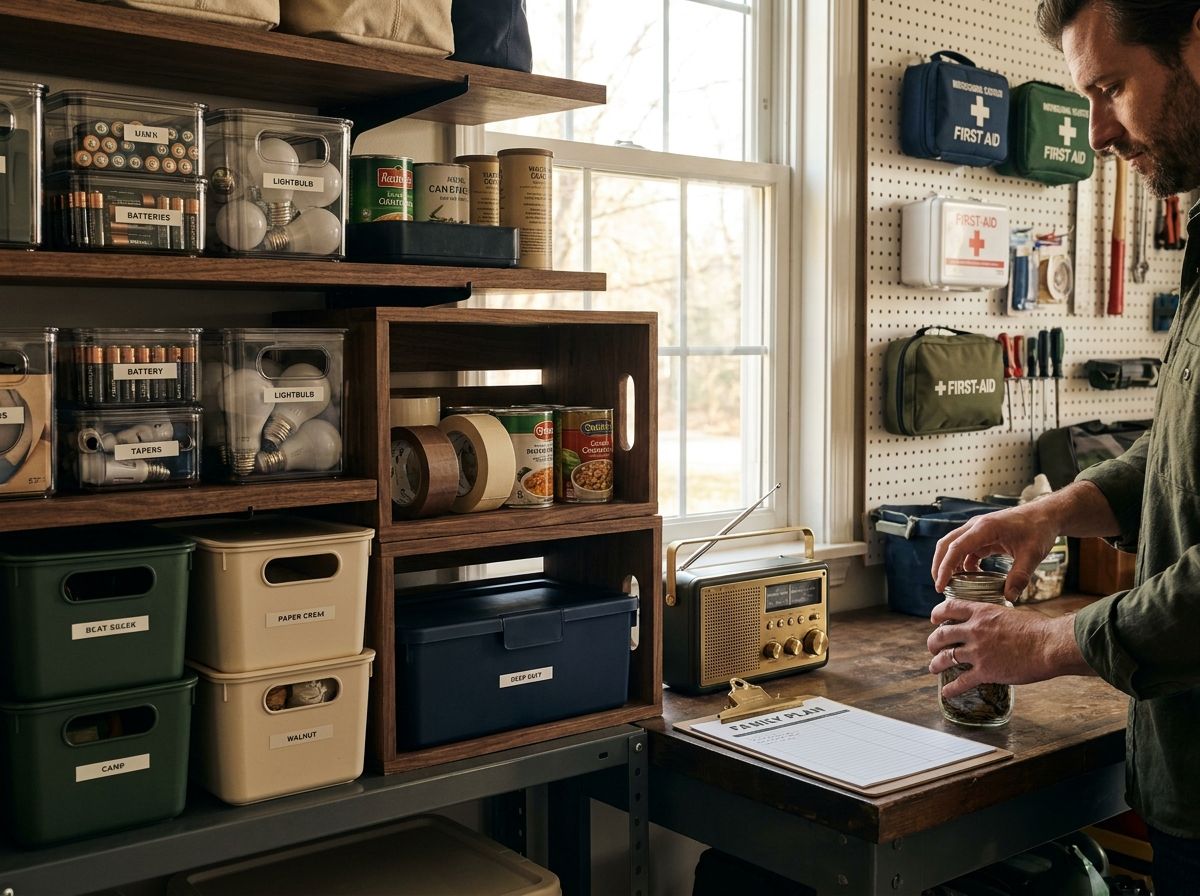
Days 1-7: run the "gap scan" and set your organization zones
In the first week, you don't unpack everything. You set up zones that make daily life work while the rest of the house catches up.
Pick 5 zones you'll use every day:
1) Kitchen essentials (food storage, trash bags, dish soap, foil, paper towels)
2) Bathroom essentials (toothpaste, soap, shampoo, toilet paper backup)
3) Laundry essentials (detergent, stain remover, trash bags for hampers)
4) Cleaning tools (sponges, cleaner concentrate, gloves, scrub brush)
5) Utility basics (batteries, light bulbs, tape, zip ties)
Then run a household inventory checklist pass through each zone. You're not counting every item. You're checking categories and quantities.
Write down three things for each zone:
- What you have (and where it is)
- What is missing (the exact category)
- What you will need to buy in week two
Now the organization part. You want a system that holds up when you're tired and distracted, which is most of moving week.
Use one "working bin" per zone. The working bin holds what you use this week. Put extras behind it or above it. When something runs out, you pull from the back. That's the start of your expiration rotation system. You're already doing it, you just need to make it visible.
Concrete example: Rosa Wills is unpacking the kitchen while Theo Wills is asking where the scissors are. She sets up a working bin under the sink with dish soap, sponges, and gloves. The backup cleaning spray goes in a labeled tote on the top shelf. When she uses the working bin, she refills it from the tote, not from the store.
Concrete example: Scout, the dog, keeps turning up near the trash can. Sam Wills uses that as a cue. He puts trash bags and extra liners in a labeled drawer near the can, so the "we ran out" moment doesn't require a whole search.
Days 8-14: build your expiration rotation system without spreadsheets
Your new home comes with a mix of items: unopened packages, partially used bottles, and random "this might still be good" leftovers. The goal is not perfection. The goal is order.
Expiration rotation system basics are simple:
- Use the oldest items first.
- Store new items behind older items.
- Label what matters so you can rotate in under a minute.
You don't need a spreadsheet on day 8. You need a label method you can repeat.
Here's a practical rotation system you can set up in 20 to 30 minutes:
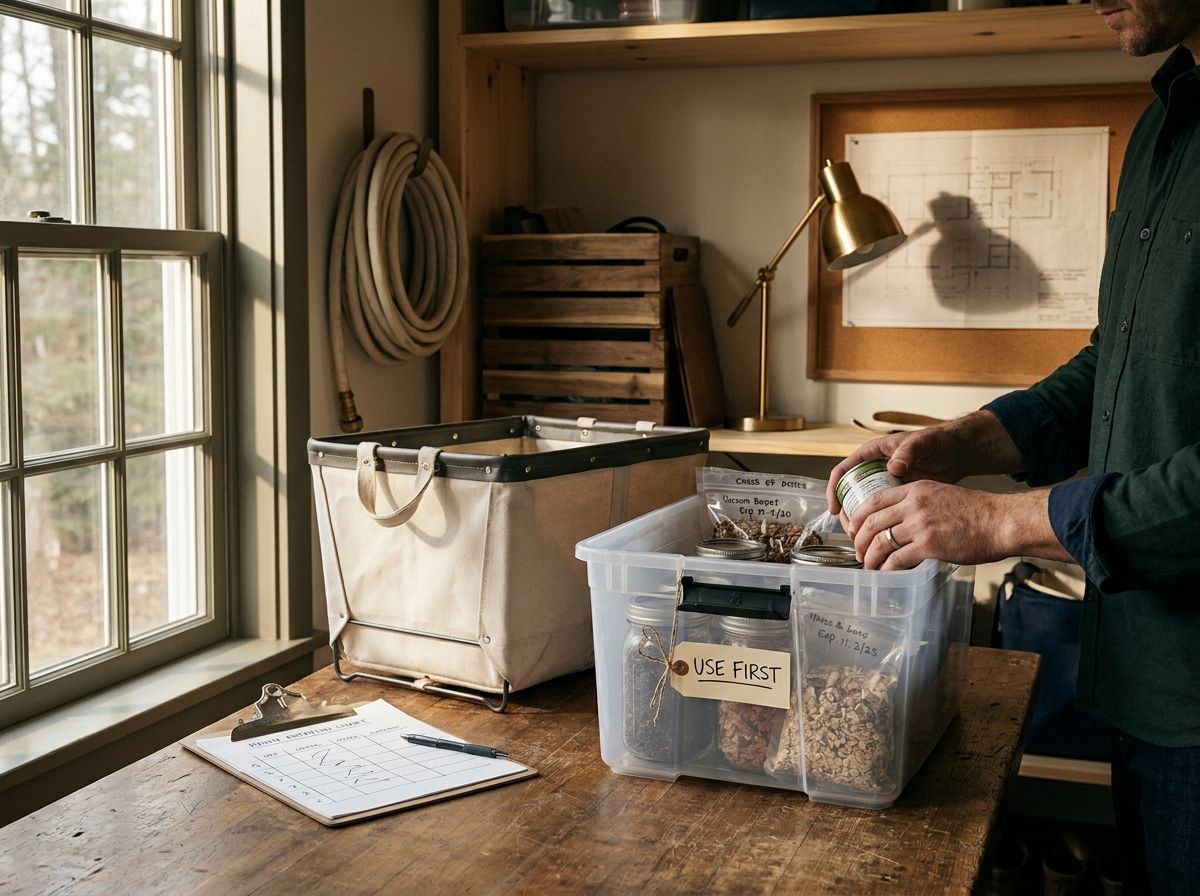
- Create three labels: Opened, Backup, and Use First (for items with dates).
- For items with a clear date, write the date you will use first on a small label and stick it on the container or box.
- For items without a date, mark them "Opened" when you start using them.
If you buy a pack of batteries, don't open the whole pack to "check." Open only what you need for the week, and keep the rest as Backup.
If you move in with a partially used bottle of cleaner, put it in the working bin and label it Opened. Next time you buy, the new bottle goes behind it.
Research note, without the science lecture: the U.S. Food and Drug Administration and most manufacturers treat "use by" and "best by" labels as guidance based on safety or quality windows. Quality can drop before safety does, especially for foods. For household items like soap, detergents, and paper goods, dates often track quality more than safety, but rotation still prevents you from buying twice.
Concrete example: June Wills finds a box of dish pods in a pantry cabinet. The box has a "best by" date printed on the side. She moves that box to the front of the working shelf and labels it Use First. When she later buys a new box, it goes behind it.
This is also where you set up home supplies organization for the long run. You choose one consistent place for "Use First" items. A shelf corner, a drawer, doesn't matter. It just has to be the same place every time.
Days 15-21: complete the everyday categories you will actually use
After two weeks, you know what your daily life looks like in the new house. Now you fill the gaps you discovered, not the gaps you imagined.
Use your household inventory checklist to complete everyday categories in a single pass. You're aiming for "enough to run," not "enough to never buy again."
A good first 30 days readiness target is coverage for the next 2 to 4 weeks of normal use. For most households, that means:
- One working supply in active use
- One backup supply stored in your zone
- A small buffer so you don't run out mid-week
You can treat certain items differently:
- Paper goods: keep a backup you can see
- Hygiene: keep two weeks worth, then rotate monthly
- Cleaning concentrates: keep one backup bottle plus refills
- Batteries: keep a small pack in a labeled drawer
Concrete scenario: Sam Wills realizes the new home has a different trash setup. The kitchen can holds a different liner size. He checks his household inventory checklist, notes the missing category, and buys the correct liner size only once. The next time he buys, he adds a backup liner, not a second brand.
Concrete scenario: Rosa Wills and Theo Wills do a "morning reset" in the bathroom. They discover the new shower needs a different cleaner than the old one. She makes one purchase for that specific task, labels it Backup, and stores it in the cleaning tools zone, not in a random cabinet.
If you want a simple rule for avoiding overbuying, here it is: buy the size you need, then store a backup of the same size. Don't buy a "better deal" size because it feels efficient. If you can't rotate it, it becomes clutter.
Also, resist the urge to buy every scent, every brand, every version. Everyday readiness is about function. Your nose can survive a little less variety.
Days 22-30: document what you did and lock in the reorder points
You now have enough lived experience to document your inventory without guessing. No estimating, no wishful thinking.
This is where new home preparedness becomes durable. You write down what you actually use and where it lives.
Start with a one-page home supplies organization sheet. Print it and keep it in a kitchen drawer, or save it as a note on your phone. Either works fine.
Include:
- Zone map: where each working bin is
- Top everyday categories: what you keep in Backup
- Expiration rotation system rules: where Use First items go
- Reorder triggers: what "run out" means for each category
Reorder triggers are your anti-overbuying tool. They stop you from buying early because you're anxious.
Set reorder points as "when the working bin hits half" or "when the backup is at one unit." For example:
- Dish soap: reorder when working bin is low and backup is one bottle
- Toilet paper: reorder when you have one spare pack
- Batteries: reorder when you use the last pack from the drawer
Research reference you can trust: retailers and inventory systems use reorder points and lead-time assumptions because it prevents both stockouts and excess. You're using the same logic at household scale.
Concrete example: June Wills keeps a small labeled jar for tape, batteries, and light bulb replacements. When the jar drops to one item, she reorders that category on the next store run. Fewer emergency stops, fewer "why did I buy this twice?" moments.
Now lock in the habit with a short inventory-on-autopilot routine. Once a week, five minutes.
A five-minute checklist:
- Look at your working bins
- Note any category that is at reorder point
- Confirm "Use First" items still sit where you left them
That routine becomes your first 30 days readiness foundation. Simple enough to actually do on a Tuesday night.
Common overbuying traps in new houses (and how to dodge them)
You're not weak for overbuying. The brain does it because it wants certainty, and new houses feel uncertain.
Here are the traps that show up in the first month and the fix that keeps you calm.
Trap 1: buying "one of everything" before you know your routines
Fix: wait until you run your morning and evening routines at least three times. Then buy what those routines prove you need.
Trap 2: storing backups in random places
Fix: backups live in the same zone every time. Your home supplies organization should be boring.
Trap 3: skipping labels because "it will be obvious"
Fix: label Use First and Opened. Your future self is busy, not clairvoyant.
Trap 4: buying the biggest pack because it feels like a deal
Fix: buy the pack you can rotate in 30 to 90 days for consumables. For items like paper goods and batteries, keep it to a backup you can use before you move again.
Trap 5: forgetting partially used items
Fix: if it's opened, it goes in the working bin and gets an Opened label. If it has a date, it gets Use First.
But what about items with no date? You still label them. Opened items rotate by "when you start using them," not by an imaginary timeline.
One more note: your dog and your kids (if you have them) will test your organization. Scout may nudge a trash can or steal a sock. That's fine, build your bins where they survive real life.
When you keep your inventory system tied to everyday movement, you stop overbuying because you stop panicking.
FAQ
What is a household inventory checklist for a new home?
A household inventory checklist is a simple list of everyday categories and how much you keep in working and backup amounts. For a new house, it focuses on what you use weekly, not on rare items. You update it during your first 30 days readiness window so it matches your actual routines.
How do I set an expiration rotation system without tracking every item?
Use a "Use First" label for items with clear dates and an "Opened" label for partially used products. Store Use First items in one visible spot, and keep new backups behind older ones in your zone. This keeps rotation automatic even when unpacking is chaotic.
What does first 30 days readiness look like in practice?
It looks like zones set up for kitchen, bathroom, laundry, cleaning tools, and utilities. It also includes buying only the gaps you discover after you run daily routines. You finish the month by documenting zone locations and reorder triggers so you don't have to think later.
How much should I buy in the first month so I do not overbuy?
Aim for coverage for 2 to 4 weeks of normal use in each category. Keep one working supply and one backup supply, plus a small buffer so you don't run out mid-week. If you can't rotate it, you've bought too much.
Where should I put home supplies organization labels?
Put them where you store supplies, not where you store paperwork. Your working bins and backup totes should have labels like Use First, Backup, and Opened. That way, the label is part of the storage system, not a separate project.
Next step you can do today
Pick one zone, usually the kitchen or bathroom. Do a household inventory checklist pass for that zone, set up one working bin and one backup spot, and label any dated items with Use First. When you do that for one zone today, the rest of your first 30 days readiness becomes straightforward, and you keep your new home stocked without turning your garage into a warehouse.
Want this handled automatically? See the Mainstay membership.
Subscribe to comment
Join the Mainstay newsletter to leave a comment — and get new field notes in your inbox.
Get new field notes in your inbox
Practical, calm preparedness — one useful note at a time.