Expiration date you can trust: how to read labels like a pro
That moment you find a pantry item with a date that feels confusing? This guide turns expiration dates into a clear, usable system.
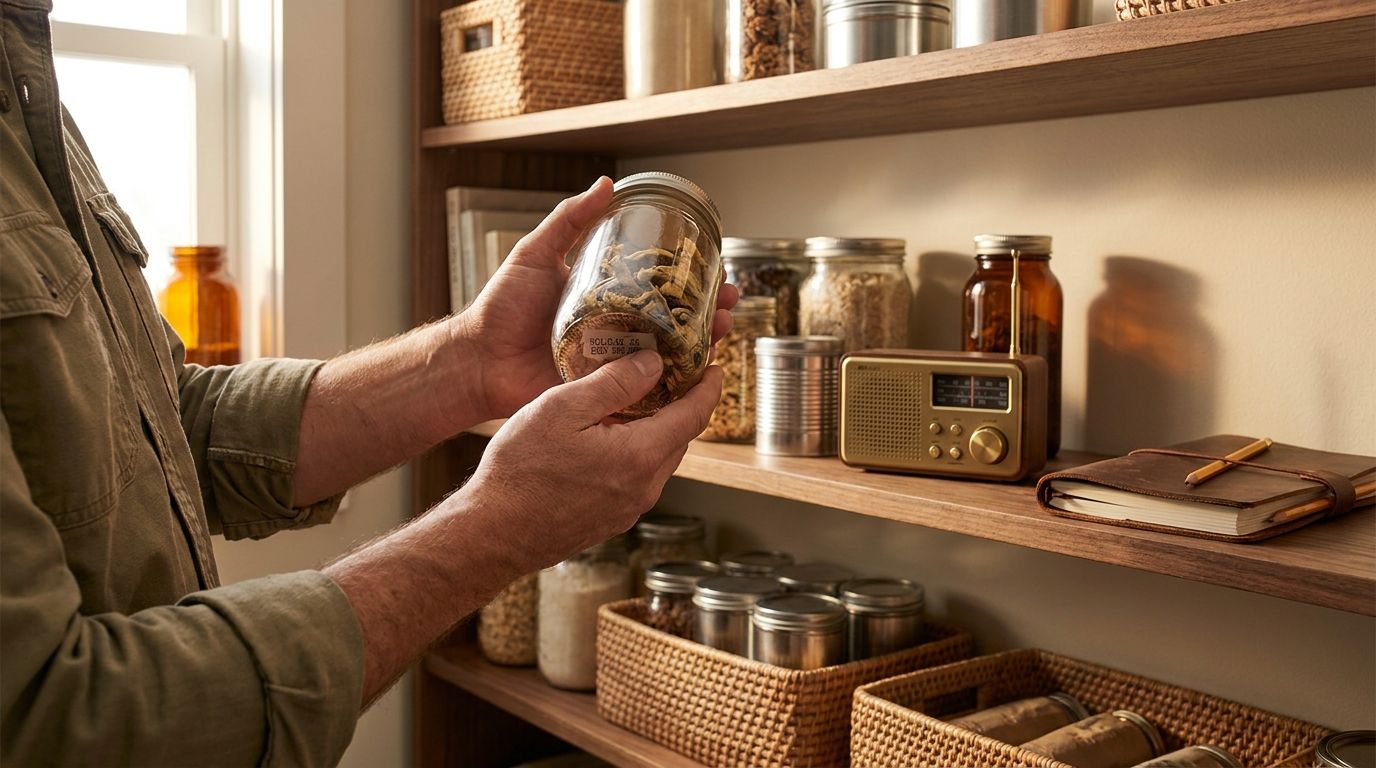
Rosa Wills is holding a bag of rice over the kitchen sink, squinting at the printed numbers like they owe her money. Sam is already reaching for the next shelf bin, the one with the handwritten label from last year. June calls out from the doorway, "Is that an expiration date vs best by thing, or am I about to gamble dinner?"
That confusion is more common than people admit. Labels look similar. Dates look official. Your brain still has to decide what to trust. The good news is you can learn to read them accurately, and you can do it without turning your kitchen into a food-science lab.
With Mainstay's adaptive learning system, you can turn those dates into shelf-life tracking you actually keep up with, not a one-time project you abandon by February.
Start with the label you can control
You do not need to become a food scientist to make good calls. You need a repeatable way to interpret what the label says, then a simple way to track it.
Most of the stress comes from one thing: expiration date vs best by. People treat them like the same promise. They are not.
Here's what you can assume most of the time:
- "Expiration date" usually signals a safety limit for certain foods.
- "Best by" usually signals peak quality, and it may be safe after that date depending on the product.
- "Use by" often functions like an expiration date in practice.
The tricky part is that labels are not standardized the way people wish they were. Different products, different regulations, different manufacturers. So your goal is not to memorize every label. Your goal is to learn the pattern for the foods you actually store.
A quick reality check you can do today
Pick one shelf category you touch often: rice, canned tomatoes, peanut butter, or granola bars. Then do this:
1) Locate the printed date.
2) Identify whether it says expiration, best by, or use by.
3) Check storage instructions on the label.
4) Note any "keep refrigerated" or "once opened" instructions.
Do this for five items and you build a working map in your head. You stop guessing. You start making decisions based on the label plus your actual storage conditions.
How to read labels like a pro (without overthinking)
Let's walk through the parts of a label that actually matter for food storage labeling.
1) Date words: expiration date vs best by
When your label uses "expiration date," treat it as a hard stop for that product. When it uses "best by," treat it as a quality target.
That does not make "best by" meaningless. It means your judgment has a role. Smell, look, and texture still matter, especially for dry goods.
But some foods are more sensitive than others. A "best by" on a shelf-stable item is usually more forgiving than the same words on refrigerated dairy. Your label reading has to match the food's actual risk level.
2) "Once opened" instructions
A date on a sealed package is one thing. A date on a product you cracked open three weeks ago is another thing entirely.
A lot of people check the printed date, then ignore the "once opened" instruction because it feels like extra work. It is extra work, but it is also the difference between "still fine" and "why does this smell like sadness?"
If the label says something like:
- "Consume within X days after opening"
- "Refrigerate after opening"
- "Use within X days"
...then you need shelf-life tracking that starts when you open it, not when you bought it.
3) Storage conditions: cool, dry, refrigerated
Food storage labeling is not just the date. Storage conditions decide how fast a product changes.
If a label says "store in a cool, dry place," your pantry is doing its job. Store that same item near a heat source and the printed date becomes less trustworthy.
Make it simple: assign each category a home shelf that matches the label. Dry goods live away from the oven. Refrigerated backups get a dedicated spot in the fridge or freezer.
4) Codes you might not recognize
Some packages print a clean date. Others print a lot code that looks like it was generated by a 1987 barcode machine. You do not have to decode it perfectly to stay organized.
Use a practical approach:
- If you can find a "best by" or "use by" date in any readable form, trust that.
- If you only have a lot code, write the date you bought it and the date you plan to rotate it out.
That second option still creates shelf-life tracking. It just uses your purchase date as the anchor, which is fine.
5) The "sell by" vs the "you" dates
"Sell by" is for retailers. You are not a retailer. Use it as a clue about freshness, but do not build your household plan around it.
For your pantry, focus on the consumer-facing label: expiration date, best by, use by, and any "after opening" instruction.
Make your shelf-life tracking match how you actually live
Here's where most systems fail. People label everything once, then life happens. A label without follow-through becomes decoration.
So you need shelf-life tracking that fits the way your household already moves.
Use a "date you can act on"
For any item with a date, pick one date that you act on. For example:
- If the label says "expiration date," that is your action date.
- If the label says "best by," choose a conservative action date you can keep up with.
- If the label says "use by," treat it like expiration.
Conservative does not mean paranoid. It means you pick a date that matches how long you tend to keep things before you notice them.
If you eat rice within a month, you can be more relaxed. If you forget the back of the pantry until a quarterly inventory check, you need to rotate faster.
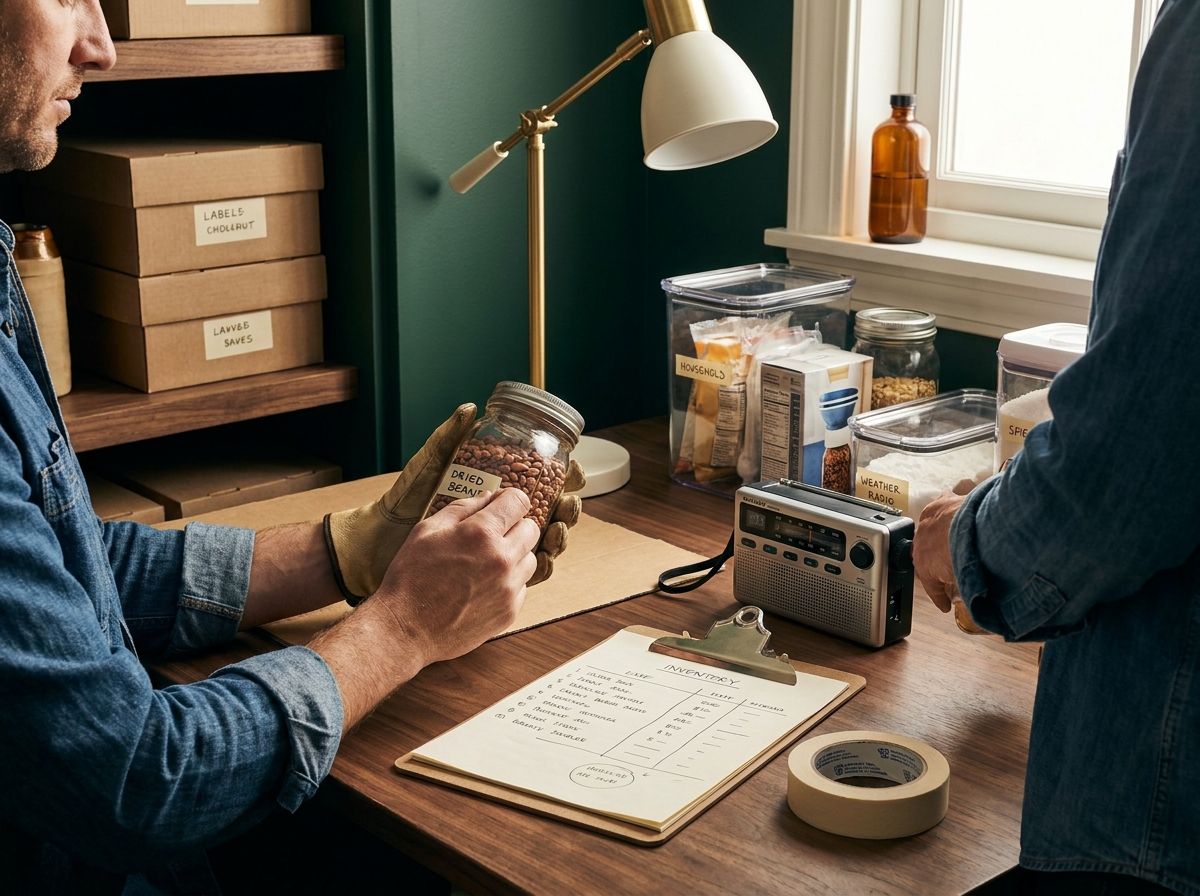
Build a small labeling routine
Community preparedness is not about having perfect labels. It is about staying steady.
So build a routine you can repeat even on a busy week. Try this for food storage labeling:
- Put a small label sticker on the bin, not the entire package.
- Write the action date range for the bin contents.
- Update it when you rotate.
When you can see the action date range at a glance, you stop digging for printed codes. You stop playing "guess the year" with your groceries.
Rotate with a rule that feels fair
You do not need dramatic rotation. You need a consistent one.
Pick a rotation rhythm you can maintain:
- Monthly for high-turn items you use often
- Every 2-3 months for dry goods you store longer
- Seasonal for backups you store for winter or storms
Then rotate based on action dates, not on the day you feel guilty about it.
Track what you opened, not just what you bought
If you only track "best by" dates printed on sealed packages, you miss the real clock for many items.
A lot of shelf-stable foods change quickly after opening, even if they do not spoil fast. Oils go stale. Peanut butter turns flat. Opened sauces pick up fridge odors within days. So for things you open, track:
- Date opened
- Action date after opening, based on label guidance or your household rule
This is how you make expiration date vs best by stop being a guessing game.
Common label traps (and what to do instead)
You are not failing if labels confuse you. The traps are real.
Trap 1: Treating "best by" as an expiration date
If you throw out everything at "best by," you will burn through supplies faster than you want and create waste that makes the whole system feel pointless.
What to do: use "best by" as a quality target. Decide your action date based on storage conditions and your household pace. Then check the product before using it. If it smells off, looks wrong, or tastes stale, you stop. That decision is still using your brain, not ignoring safety.
Trap 2: Ignoring "refrigerate after opening"
This one is sneaky. You might buy something shelf-stable, open it, and store it like everything else out of habit. The label says refrigerate. Your counter does not refrigerate.
What to do: treat "after opening" instructions as a separate category of tracking. Write the open date on the container, then follow the label guidance.
Trap 3: Storing items where the label never intended
If your pantry runs warm, dates shift. If your "cool, dry place" is actually near a heating vent or a west-facing window, you are accelerating the clock on everything stored there.
What to do: move the items most sensitive to heat and moisture. Keep your shelf-life tracking honest by keeping your storage consistent.
Trap 4: One date for everything in a bin
Bins are convenient. They are also where mistakes hide.
If you put ten packages in one bin and write one action date, you create a single point of failure. One old package quietly drags down your whole plan.
What to do: keep bins organized by purchase batch or action date range. Even a simple "front half expires sooner" approach works well.
Trap 5: Not writing anything down
Printed dates fade. Ink smears. Boxes get moved. Your future self is capable, but they are not psychic.
What to do: add your own action date sticker at the time you store the item. Shelf-life tracking is only as strong as the information you can actually see.
Build an "expiration date you can trust" habit
At this point, you might be thinking, "Okay, but how do I make this stick?"
You make it small and repeatable. That's it.
A labeling system that takes minutes, not hours
You can handle this in one pass when you stock supplies:
- Check the label for expiration date vs best by.
- Find any "after opening" rules.
- Write an action date on the bin or container.
- Note storage requirements you can actually meet.
Then audit on a schedule that matches your household. If you already have a weekly routine for household tasks, attach this to it. If not, choose one day a month when you handle pantry restocking anyway.
The emotional part: you are not behind
Most people who get confused by labels are not careless. They are busy. They are doing life. Rosa Wills found a can once with a date that looked like a typo, and her first reaction was pure annoyance, not panic. She slowed down, checked the label words, and made a call. That is the whole point. You do not need to be perfect. You need to be steady.
FAQ
What is the difference between expiration date vs best by?
An expiration date is often treated as a safety limit for that product. "Best by" usually points to peak quality. For many shelf-stable foods, it may still be fine after "best by" if storage conditions were good and the food passes your senses. When in doubt, follow the more conservative interpretation for that specific food.
Do I have to throw out food right on the expiration date?
If a label says expiration date, you treat it as the date you stop using the product. For "best by" items, you use a quality judgment plus your storage conditions. If the food shows signs of spoilage or smells wrong, you discard it. If it looks and smells normal, you can decide based on how you track shelf-life tracking.
How do I label preparedness supplies so I can rotate them?
Write an action date you will act on for each bin or container. If the label says "use by" or "expiration date," use that date. If it says "best by," choose a conservative action date that matches your household pace. Also track "once opened" rules by writing the open date on the container.
What should I do if the label only has a code?
If you cannot find a clear expiration date vs best by date, anchor your shelf-life tracking to your purchase date. Write the date you stored it and a rotation date you will follow. Keep storage conditions consistent with the label so your action date stays meaningful.
Why does my pantry feel like it keeps getting out of date?
Because labels are printed once, but your household uses things at different speeds. If you do not create an action date you can see, you end up relying on memory alone. A small labeling routine and a consistent audit day fix that. It turns "out of date" into a manageable list instead of a surprise.
Closing: make the next label easy
The next time you find a bag of rice or a familiar can on the back shelf, you will still feel a small pause. That pause is normal. It is your brain checking for the information it needs.
Your job is to give it that information in a form that feels calm. Read the label words. Pick the action date you will follow. Track what you open. Then rotate on a schedule you can keep.
You are not behind. You are building a system that stays functional, like tools that get maintained before they fail. The calm part is the point. The next label will take seconds, not minutes.
Want this handled automatically? See the Mainstay membership.
Subscribe to comment
Join the Mainstay newsletter to leave a comment — and get new field notes in your inbox.
Get new field notes in your inbox
Practical, calm preparedness — one useful note at a time.