First aid restock checklist without guessing: a CDC-style home kit audit
You do not need to guess what your home first aid kit needs. Use a CDC-style restock checklist that turns “maybe” into a clean, dated refill plan.
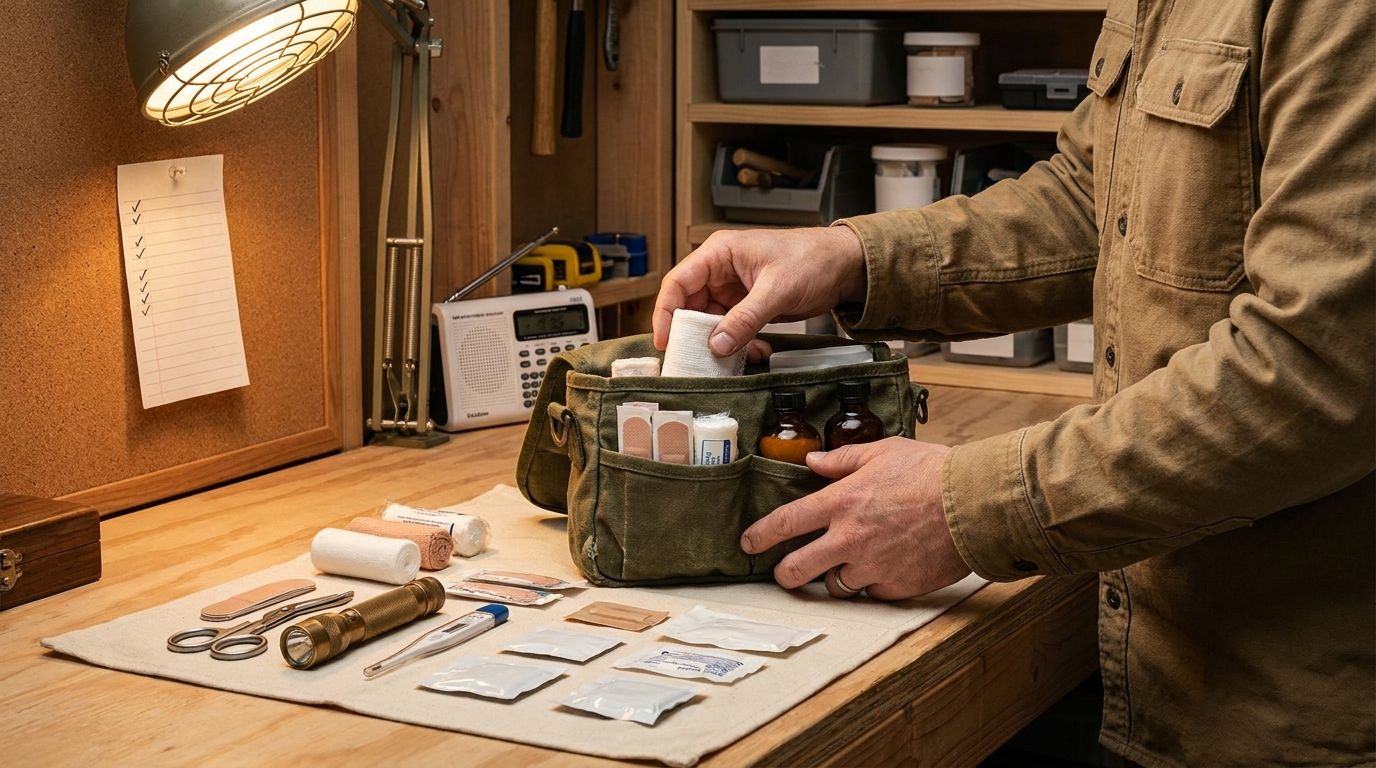
The moment you slice a finger wrestling open a stubborn clamshell package, you find out exactly what your home first aid kit is actually missing. Not what you hoped was there. This guide gives you a restock checklist built like CDC-style guidance: clear categories, common-use items, and a simple way to replace what you used without rummaging or guessing.
That means less "I think we had gauze somewhere," more "we used 2 pads, so we reorder 2 pads, then log the date." With Mainstay's adaptive learning system, you can keep the home first aid kit stocked the same way you keep tools maintained: methodically, without drama.
Start with the rule: restock only what changed
In a home first aid supplies audit, the biggest mistake is treating the kit like a mystery box. You open it, see a few items, and assume the rest is fine. Then the next scrape happens and you're back to improvising.
Instead, you restock based on what changed. That is the core of a restock checklist: usage drives the refill decision.
Here's the practical approach you will use every time:
- After any event that uses first aid supplies, you do a quick "used-item check" while the moment is still fresh.
- You note what was used, what ran low, and what was missing.
- You restock within a set window, like the next day or the next weekend.
- You record dates and quantities so you do not repeat the same guessing cycle.
This aligns with how public health guidance thinks about first aid readiness: keep supplies accessible, keep them in working condition, and replace items that are used or expired. CDC first aid guidance is built around practical use, not theory. The same mindset works for your home first aid kit.
One small example: last winter, a "quick" ice scrape on the garage steps left a minor cut, but the kit had no antiseptic wipes. The bandages were fine. The restock decision was not "refill everything." It was "replace antiseptic wipes and add a note for future refills."
Build your home kit categories around common use
A restock checklist works when it matches how your household actually uses first aid supplies. That is not the same thing as buying a giant kit and hoping it covers everything.
CDC-style guidance focuses on basic, high-likelihood needs: cleaning, covering, controlling bleeding, and supporting common injuries until care is available. For home use, you want categories that let you quickly check and reorder.
Use these categories as your restock checklist backbone.
1) Clean and protect
This is the "stop the mess from becoming a problem" section.
- Antiseptic wipes or antiseptic solution
- Soap and water supplies are fine for many minor injuries, but wipes are faster
- Alcohol prep pads (useful for skin prep before applying certain bandages)
- Gloves (nitrile or similar)
Why it matters: a wound that is cleaned and covered properly heals better than one that stays dirty. You do not need medical-grade supplies for every household cut, but you do need something that makes cleaning easy.
2) Cover and cushion
This is the "keep it protected and comfortable" section.
- Bandages in multiple sizes (including small fingertip sizes)
- Gauze pads in at least two sizes
- Adhesive tape (paper tape or medical tape)
- Elastic wrap (for sprains and compression)
- Non-stick pads (for wounds that need less sticking)
3) Control bleeding
Minor bleeding is common. Moderate bleeding is less common but still possible.
- Sterile gauze rolls or pads
- Pressure bandage or wrap
- A tourniquet is a specialized tool. For most home kits, you focus on gauze and pressure first. If you train on tourniquet use, store it separately with instructions.
4) Support and monitor
This is what helps you keep an injury stable.
- Instant cold packs
- Splinting supplies (a simple rigid splint or SAM-style splint if you already own one and know how to use it)
- Oral thermometer
- Emergency contact card and a simple injury log sheet
5) Pain and fever basics
You do not store medicine "just in case" without a plan.
- Acetaminophen and/or ibuprofen (only if your household can use them)
- Antihistamine for allergic reactions (follow your clinician's advice)
- Any prescription items your household needs
A quick reality check: if your household does not use a category, you still keep the essentials, but you do not overbuy. The goal is a usable home first aid kit, not a museum.
Use a CDC-style restock checklist after every event
Now you turn categories into action. This section is the part you can print, tape inside the lid, or store in your phone.
The trick is to restock from the "used list," not from memory.
The restock checklist you run after an incident
When something happens, you write down what you used. Then you compare it to your kit.
Use this checklist template.
1) Bleeding and wound care
- [ ] Used antiseptic wipes or solution: replace the number used
- [ ] Used bandages: replace by size
- [ ] Used gauze pads: replace the exact pads opened
- [ ] Used tape: replace the tape if the roll is partly used
2) Gloves and hygiene
- [ ] Gloves used: replace the box if you are down to fewer than 2 pairs
3) Comfort and support
- [ ] Used cold pack: replace within 7 days
- [ ] Used elastic wrap: replace or check if it is stretched out
- [ ] Used splint: check for straps or missing parts
4) Fever and allergy supplies
- [ ] Used pain/fever medicine: replace the next dose count
- [ ] Used antihistamine: replace and review the allergy plan
5) Missing items flag
- [ ] Missing something that should have been there: add it to the reorder list
If you want this to feel painless, pick a standard reorder window. "Within 48 hours for anything wound-related" is a good rule to start with, it keeps you from leaving a gap in the kit.
Scenario: the "small cut" that becomes a restock
Picture Rosa Wills in the kitchen, rinsing berries, when one slips and she gets a paper cut on the knuckle. The cut stops quickly. The bandage stays on for the day.
In the moment, she notes two things: antiseptic wipes were missing, and the bandage size was wrong. That becomes the restock decision.
- Replace antiseptic wipes
- Add a box of fingertip or knuckle-sized bandages
No guesswork. No random "maybe we should buy more gauze."
Scenario: the garage scrape with a "where is the tape?" moment
Sam Wills is working on a bike in the garage. He scrapes a knee, cleans it, and then realizes the kit has gauze but not enough adhesive tape to secure it.
The restock checklist catches it.
- Replace the adhesive tape roll (not just "add more bandages")
- Check that tape is easy to open with one hand
That one fix prevents the same problem next time.
Scenario: the school-day blister and the cold pack check
Theo Wills comes home with a blister after a long walk. The kit has bandages, but no blister-specific dressing, and the instant cold pack is expired.
This is a restock checklist win because it turns a "next time we'll handle it" thought into a logged replacement.
- Replace expired cold packs
- Add blister dressings or hydrocolloid bandages if your household uses them
Scenario: when allergies show up as a kit audit
Scout the dog does not trigger the plan, but the household allergy plan still matters. If anyone uses an antihistamine during the season, you restock based on what was used and confirm the kit has the correct dose.
For home readiness, the best time to update allergy supplies is right after use. That is when you know what ran low.
Check expiration and condition like you check tool wear
Restocking without guessing is not only about what you used. It is also about what you can still use.
Many first aid supplies degrade over time. Some items expire. Others become less reliable because the packaging is damaged or the contents have dried out. (I have found more than one brittle antiseptic wipe that was basically decorative at that point.)
This is why your restock checklist should include a quick condition check each time you restock, and a fuller audit on a schedule.
What to check every time you restock
- Expiration date on medicines and cold packs
- Seal integrity on wipes, ointments, and sterile dressings
- Tape stickiness (if it feels dry or brittle, replace it)
- Bandage package integrity (no torn wrappers)
- Gloves: check for dryness and quantity
A simple schedule that does not steal your life
A mini audit monthly and a deeper check quarterly works well for most households. If you want a single rule: "every time you open the kit, look at the dates." That alone catches the most common failures.
Here's where research helps you stay grounded. A 2013 review in the journal Prehospital Emergency Care looked at expiration practices for emergency supplies and found that expiration dates for many medical products exist for a reason, especially for sterile items and medicines. The point is not to panic about every date. The point is to respect the expiration system.
And the FDA and manufacturers base those dates on stability testing. So when you swap out an expired cold pack, you are not just being tidy. You are using what you actually paid for.
Use a "red tag" method for anything questionable
If an item is near expiration, damaged, or unclear, you tag it in place.
- Put a small note on the inside lid: "verify before use"
- Replace on your next restock window
This prevents the classic home first aid kit pattern: discovering the problem mid-incident.
Organize so you can restock in under 10 minutes
If your home first aid kit is hard to open, restocking becomes a chore. Hard to see inside, you guess. Not labeled, you forget.
So you make the kit easy to audit.
Set up your "restock zones"
Create zones in the kit.
- Wound care zone: wipes, antiseptic, gauze, bandages
- Bleeding and pressure zone: gauze rolls, pressure wrap
- Support zone: elastic wrap, cold packs, splint
- Medicine zone: pain/fever and allergy basics
- Hygiene zone: gloves and hand wipes
Even if you use a single box, small pouches or zip bags do the job. Each zone gets a quick inventory line.
Keep a spare supply drawer or pocket
A home first aid kit is not a single container. You need a small backup set.
For example, keep:
- A small refill pouch for bandages
- A refill pack of gauze pads
- A mini box of antiseptic wipes
When you use the main kit, you restock from the spare immediately. Then you reorder later. That reduces downtime.
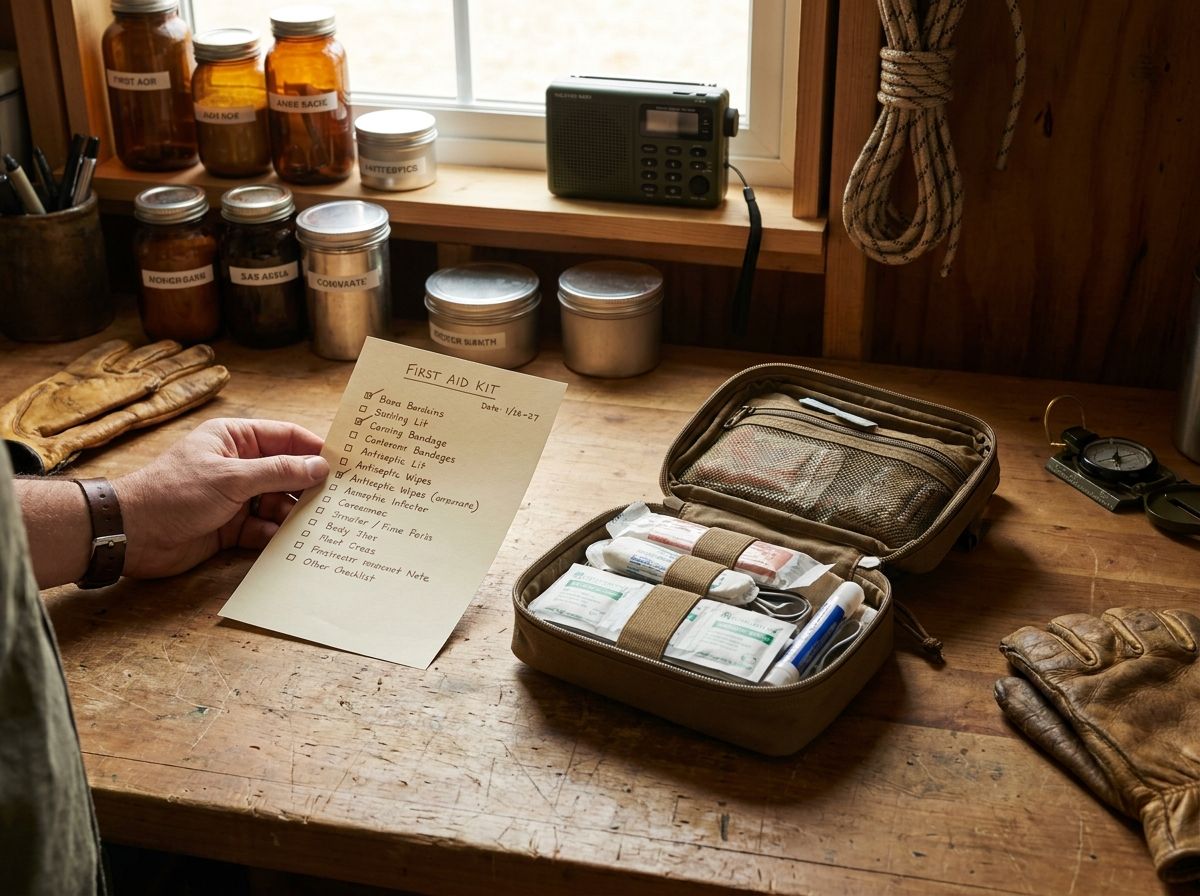
Put a restock checklist card inside the lid
Use a card with checkboxes. Keep it simple.
- Used wipes: yes/no, quantity
- Used bandages: yes/no, size
- Used gauze: yes/no, pad count
- Used tape: yes/no
- Used cold pack: yes/no, expired or not
- Gloves used: yes/no
- Medicine used: yes/no, dose count
This is how you avoid "I think we used something." You write what happened.
Where to store it in real life
Keep the home first aid kit where it is accessible. Kitchen cabinet is common. Hallway closet works too. Avoid the laundry room if it gets damp, and avoid the top shelf if reaching it requires a step stool.
The best location is the one you can reach one-handed.
Keep the kit in one place and the refill pouch in the same place. That way, restocking is a repeatable routine, not a scavenger hunt.
Reorder points that match your household, not the internet
A restock checklist is only half the system. The other half is knowing when to reorder.
You do this with reorder points. Pick a threshold per category and reorder when you hit it.
This is where Mainstay's inventory thinking fits naturally. You do not guess. You set rules.
A practical reorder point method
Pick a number based on your household's likely use. Here are starting points that work for many households.
- Antiseptic wipes: reorder when you are down to 1 small pack
- Bandages: reorder when you have fewer than 10 bandages total across sizes
- Gauze pads: reorder when you have fewer than 6 sterile pads
- Adhesive tape: reorder when you have fewer than 1 full roll
- Gloves: reorder when you have fewer than 2 pairs
- Cold packs: reorder when you have fewer than 2 usable packs
- Pain/fever medicine: reorder when you have fewer than 5 doses left
These are starting points, not mandates. Adjust them to fit how your household actually runs.
Example: the "one kid, lots of knees" household
If Theo Wills is active, you will see bandages and gauze used more often. Move your reorder points up for wound care. If your household rarely uses medicine, you can keep medicine reorder points lower, but keep expiration checks higher.
Example: the "seasonal allergy spike" household
If allergy season hits hard, antihistamines can run down faster than you'd expect. You reorder based on doses used, not on the calendar.
Example: the "garage kit" that needs a different threshold
A smaller kit in the garage gets used differently than the kitchen kit. Tape runs out. Gauze gets opened. Keep separate reorder points for each kit.
That is how you stop guessing across locations.
FAQ
What does "CDC-style" mean for a home first aid kit restock checklist?
It means the checklist follows the same practical priorities CDC guidance uses: cleaning, covering, controlling bleeding, and monitoring common minor injuries, then keeping supplies accessible and usable. You still tailor quantities to your household, but you restock based on what you used and what is expired or damaged.
How often should I restock my home first aid supplies?
You restock after any incident that uses supplies, and you do a scheduled audit for expiration and condition. Many households do a quick monthly check and a deeper quarterly audit, but the "check dates whenever you open the kit" rule catches a lot.
Do I need a fully stocked first aid kit for every room?
Not every room. One well-stocked home first aid kit plus a small backup pocket for high-use items is usually enough. If you keep a garage kit, set reorder points separately because usage patterns differ.
What is the easiest way to avoid guessing what to buy?
Write down what you used during the incident, then compare it to your restock checklist card. Replace by quantity and size, not by memory. That turns restocking into a repeatable process.
Should I replace items right after they expire, even if they were not used?
Yes. Expired sterile dressings, cold packs, and medicines lose reliability over time. Your goal is to keep the home first aid kit stocked with items you can actually trust when you reach for them.
Take the next step: print your restock checklist card and run one audit
Pick one day this week, open your home first aid kit, and spend 10 minutes checking expiration dates and packaging integrity. Then add a restock checklist card inside the lid with checkboxes for wound care, bleeding control, support items, and medicine.
When the next cut, scrape, or blister happens, you will restock what you used, not what you guess you might need. That is the calm, competent version of readiness.
Want this handled automatically? See the Mainstay membership.
Subscribe to comment
Join the Mainstay newsletter to leave a comment — and get new field notes in your inbox.
Get new field notes in your inbox
Practical, calm preparedness — one useful note at a time.