Food storage for small spaces: a practical household organization guide
Build a compact food reserve without turning your kitchen into a warehouse. Use zones, containers, labels, and a rotation routine that fits real homes.
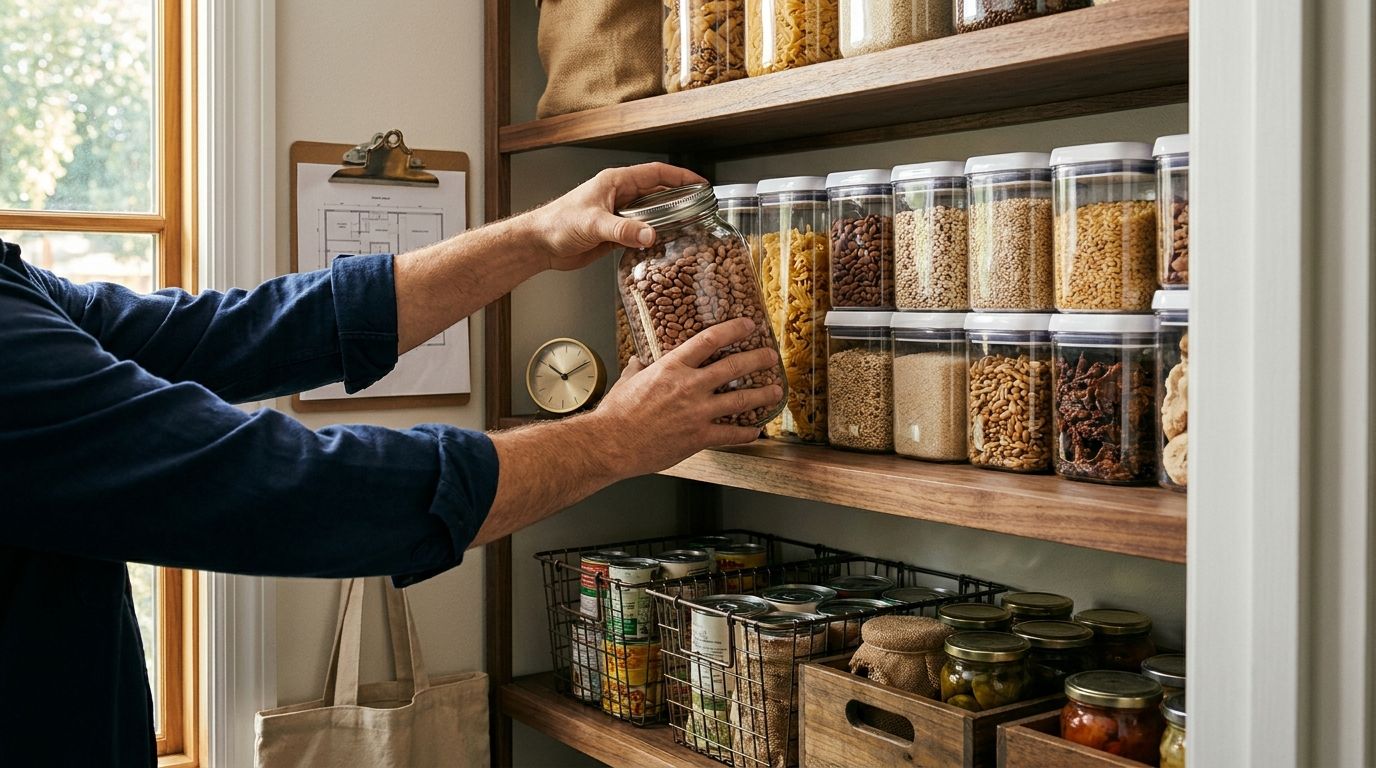
At 7:10 on a Tuesday morning, June Wills opens the narrow cabinet beside her refrigerator and finds three half-empty rice bags, a dented can of peaches, and a box of pasta hiding behind the coffee filters. The food is useful. The storage system is not.
Food storage for small spaces works when every item has a job, a location, and a visible date. You don't need a basement pantry or a wall of shelves. You need a compact household supply system that lets you find food quickly, use older items first, and add only what your home can actually hold.
The goal is not to make a small kitchen look like a warehouse. It is to make the food you already own easier to see and easier to use.
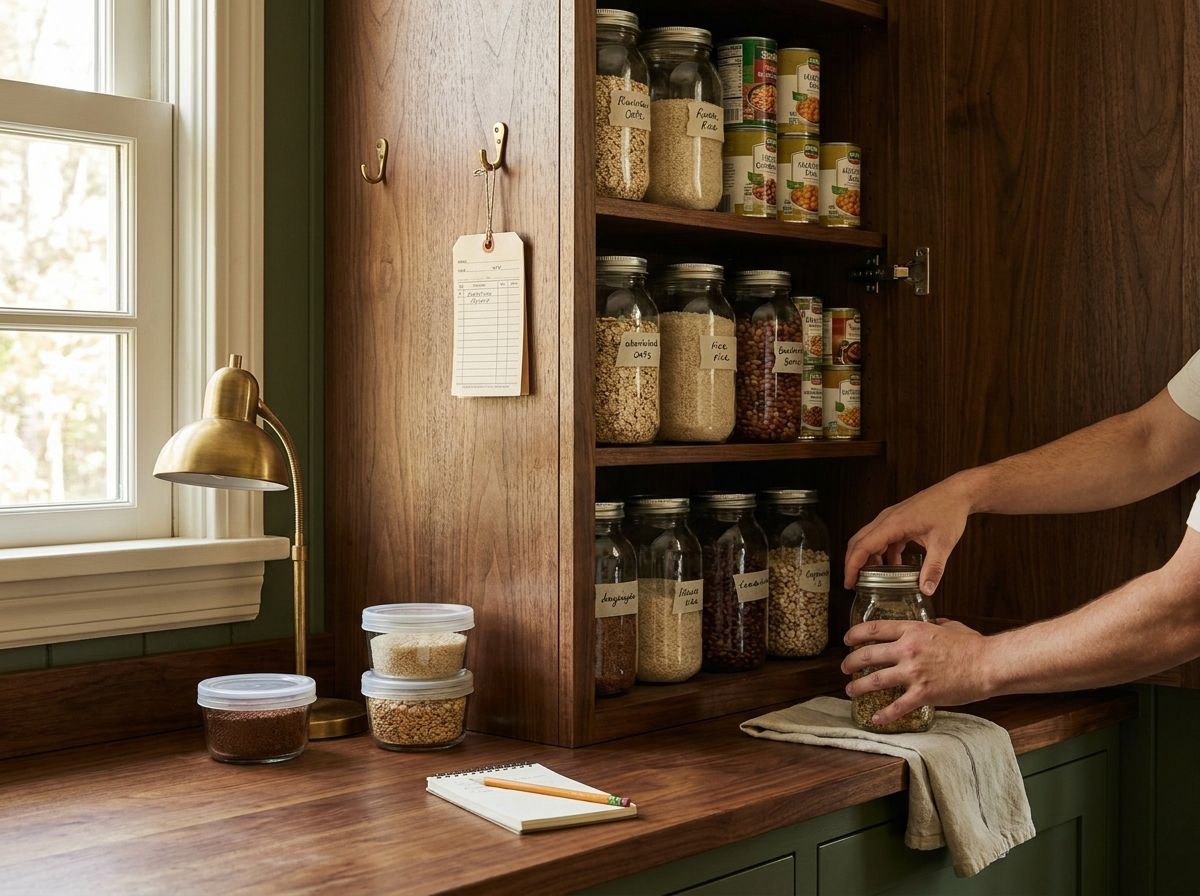
Start with the space you actually have
Measure before you buy a container. This sounds obvious, yet a surprising amount of household organization begins with a trip to the store and ends with a bin that cannot fit through the cabinet door. Measure the usable height, width, and depth of each storage area and write the numbers in your phone.
Look for overlooked storage rather than forcing more food into one crowded cabinet. The top shelf of a hall closet may hold dry goods, a shallow drawer may hold seasoning packets and bouillon, and a rolling cart can use a narrow gap between the refrigerator and the wall. Under-bed containers can hold sealed, low-use supplies if the room stays dry and temperature controlled.
A small apartment often has more storage than it appears to have, but the storage is scattered. That is manageable when you assign each area a category.
- The kitchen cabinet holds daily staples such as rice, oats, pasta, and canned vegetables.
- The hall closet holds sealed backup food that you use less often.
- A rolling cart holds breakfast items and snacks that need quick access.
- A refrigerator bin holds opened items that need to be used soon.
Avoid storing food beside cleaning chemicals, under a sink with a history of leaks, or near a heater. The USDA advises keeping dry goods in a cool, dry place, and that advice matters more in a small home because one bad leak can affect the whole supply.
Take a photo of each storage zone after you set it up. The photo gives you a reference when the cabinet starts to drift, and it helps you spot a problem without pulling every container onto the counter. (Your future self will appreciate this, especially before coffee.)
Build a small pantry organization system by use
Sort food by how you use it, not only by what it is. A cabinet arranged by strict categories can look tidy while making dinner harder. If rice, canned beans, spices, and broth are ingredients for the same meal, keep them close enough to function as a unit.
Use four practical zones: daily use, backup staples, quick meals, and use soon. These zones work in a kitchen cabinet, a studio apartment, or a single shelving unit.
Daily-use food belongs at eye level. Put the items you reach for several times a week in a bin or on a shelf that does not require a step stool. Backup staples can go higher or farther back, but only if you can still see the labels. Quick meals should be grouped together so you can assemble food when the stove is unavailable or time is short.
The use-soon zone is the small piece most households skip. Put opened crackers, dated leftovers, dented cans, and products near their quality date in one clearly marked area. This turns food rotation into a normal kitchen task instead of a quarterly excavation.
For a household of two in Boise, a single 24-inch-wide shelving unit might hold breakfast foods on one shelf, shelf-stable meal ingredients on another, and backup staples on the bottom. The arrangement does not need to resemble a grocery store. It needs to answer one question quickly: what can you make with what is here?
Use bins only when they solve a specific problem. A bin can keep small packets from spreading across a shelf, but it can also hide every packet you own. Choose open-front bins or clear containers when visibility matters. Leave a little room around each group so you can remove one item without unloading the shelf.
Choose containers that protect food and save room
Good containers protect food from moisture, pests, light, and accidental spills. They also make the available space easier to stack. The right choice depends on the food, how often you use it, and whether you need to see the original label.
For dry staples, use food-grade containers with tight lids. A square or rectangular container usually uses shelf space more efficiently than a round one. Do not transfer food into an unmarked container. Copy the product name, purchase date, and best-by date onto a label before the original package disappears into the bin.
Keep some foods in their original packaging. Cans, sealed pouches, and boxed meals already carry cooking instructions and ingredient information. Put them into a shallow bin if you need to move the whole group, but do not remove labels simply to make the shelf look uniform.
Useful container choices include:
- Stackable square containers for flour, oats, rice, and dry beans.
- Open bins for seasoning packets, drink mixes, and small snack packages.
- Wire risers that lift rear cans so you can read every label.
- Airtight pet-food containers for larger quantities, placed away from heat and sunlight.
Do not buy oversized containers because a bulk package was cheaper per ounce. A 20-pound bag of rice is not a bargain if it sits open, absorbs moisture, or takes up the only clear section of your pantry. Buy the quantity you can protect and rotate.
A useful test is simple. Remove one container with one hand, read its label without moving another container, and return it without rearranging the shelf. If you cannot do all three, the container or the layout needs work.
Use vertical space without creating a hazard
Small-space storage becomes more useful when you think upward, but height has limits. Heavy cans should stay low. Glass belongs where it cannot fall onto a child, a pet, or a bare foot. Items you use daily should not require balancing on a chair.
A narrow shelf riser can create a second level for cans. An over-the-door organizer can hold lightweight packets, instant meals, or spices. A pegboard mounted to a wall can hold measuring tools and small kitchen equipment, leaving cabinet space for food. Use wall storage only where the wall can support the hardware and the setup does not block a doorway or appliance vent.
For renters, tension shelves and freestanding carts can add capacity without drilling. Test a fully loaded cart before placing it near a walkway. A cart that rolls when you reach for a can is not an organization system. It's a slow-motion practical joke.
Keep a clear path around every storage area. The Occupational Safety and Health Administration has long treated blocked walking routes as a household and workplace hazard. Your kitchen is not a warehouse, but the same principle applies: access matters as much as capacity.
A compact vertical plan might look like this:
- Upper shelf: lightweight backup foods in sealed containers.
- Eye-level shelf: daily staples and the use-soon bin.
- Lower shelf: cans, jars, and heavier packages.
- Floor space: one lidded, washable bin for overflow only.
Leave at least a little visual space between groups. That empty space is not wasted. It gives you room to check dates, remove a container, and notice when a supply is running low.
Make emergency food organization part of ordinary meals
Emergency food organization is strongest when it uses the same food you already eat. A supply of unfamiliar meals creates a second problem: you must learn whether your household likes the food before you rely on it. Start with familiar ingredients that work in more than one meal.
Build around meal components rather than dramatic quantities. Rice can support a bowl, a soup, or a side dish. Canned tomatoes can support pasta sauce, chili, or a quick stew. Oats can become breakfast, a baking ingredient, or a thickener. Shelf-stable milk can support cereal, mashed potatoes, or baking.
For a two-adult household in a Phoenix apartment, heat changes the storage plan. Foods that tolerate warm conditions still need a cool interior cabinet, away from the stove and direct sunlight. A large chocolate supply is not a practical staple there unless the household has a dependable cool spot. The climate should shape the inventory.
Write down five meals that use your normal supplies. Then check whether each meal has the pieces it needs.
- A rice bowl needs a grain, protein, sauce, and a shelf-stable vegetable.
- Tomato pasta needs pasta, sauce, seasoning, and a protein option.
- Oatmeal needs oats, a liquid, and toppings that store well.
- Soup needs broth, vegetables, a starch, and a way to heat it.
The exact meals will vary. The point is to identify gaps before you buy more of the item you already have. This is where a household profile helps. Note dietary restrictions, allergies, preferred flavors, cooking equipment, and foods that nobody will touch.
With Mainstay's inventory system, you can record those household preferences alongside quantities and dates instead of relying on a note buried in a drawer. A paper list works too. The tool matters less than having one dependable place to check.
Label, rotate, and set a practical limit
Labels should answer three questions: what is it, when did you buy it, and when should you check it? A best-by date is generally about quality, not an automatic safety deadline. Canned foods can remain usable beyond that date when the can is intact and storage conditions are good, but quality can decline. Discard cans that are swollen, leaking, badly rusted, or deeply dented along a seam.
Use a simple rotation rule. Put new food behind older food, or place the newer package on the right and take from the left. Pick one direction and keep it consistent. You do not need a complicated spreadsheet for six cans of soup.
Once a month, spend ten minutes on the storage zones. Check for damaged packaging, move older items forward, and add anything used during the month to the shopping list. The FoodKeeper app from the USDA, FDA, and Cornell University offers storage guidance for many foods and can help when a product date is unclear.
Set a quantity limit for each category. You might keep no more than one backup case of canned vegetables, two unopened bags of rice, or one shelf of quick meals. The number should reflect your household size, available space, diet, and ability to rotate the food.
A useful inventory record includes:
- Item and package size.
- Quantity on hand.
- Best-by or use-by date.
- Storage zone.
- Reorder point.
The reorder point is the number that tells you to buy more. If canned beans reach four cans, add them to the next grocery list. This prevents both empty shelves and accidental stockpiling. In a small home, limits are a form of control, not a shortage.
Create a household supply storage routine that lasts
The best household supply storage plan is quiet. It does not require a weekend project every month. It fits into the normal rhythm of shopping, cooking, and wiping down the shelves.
Choose one repeatable check day. The first Saturday of the month works for some households, a grocery-order day works for others. During that check, open each food zone, review the use-soon area, and look for one storage problem to fix. Do not reorganize the whole kitchen because one bag of flour moved.
Use a short checklist:
- Remove empty packages and damaged containers.
- Move older food to the front.
- Record new purchases and dates.
- Check the floor, shelf, and cabinet for moisture or pests.
- Add low-stock items to the grocery list.
Rosa Wills uses a small card inside the pantry door for this task. She writes the date of the last check and the two items that need attention. That card is less impressive than a color-coded dashboard, but it survives busy weeks because it takes less than five minutes to update.
If you share a home, make the system obvious to everyone who uses the kitchen. A label that says "quick meals" is more useful than a private filing system only one person understands. Store allergy-sensitive foods in a clearly marked area and explain the location during a calm household conversation, not a formal meeting. Just a conversation.
Keep the system flexible. A new job, a baby, a move, or a change in diet can alter what your home needs. The storage plan should change with the household instead of becoming another rule you feel obligated to maintain.
Start today with one cabinet. Remove everything, wipe the shelf, group the food by use, label the oldest items, and return only what fits without blocking access. Then put the next check date on your calendar. That small reset is enough to turn food storage for small spaces from a recurring annoyance into a household system.
FAQ
How much food should I store in a small home?
Store an amount your household can use, protect, and rotate. Begin with familiar foods for several meals, then set category limits based on cabinet space, dietary needs, and cooking equipment. A smaller supply that stays visible and current is more useful than a larger supply hidden behind clutter.
What is the best place to store food in an apartment?
Use a cool, dry, dark interior cabinet or shelf away from heaters, plumbing leaks, and cleaning products. Heavy cans belong on lower shelves, while lightweight dry goods can use higher storage. Check temperature and moisture before using a closet, garage, or under-bed area.
How do I organize canned food without a pantry?
Use a shallow bin or shelf riser so labels remain visible. Keep older cans toward the front and group them by meal use or food type. Check cans monthly and discard any that are swollen, leaking, badly rusted, or deeply dented along a seam.
How often should I rotate stored food?
Do a quick check once a month and rotate food whenever you shop. Move newer packages behind older ones, use the oldest suitable item in normal meals, and record dates when you bring food home. This routine keeps emergency food organization connected to everyday cooking.
Can I store food in a garage or shed?
Only when the space stays dry and within a suitable temperature range for the food. Heat, freezing temperatures, moisture, and pests can damage packaging and reduce quality. An interior cabinet is usually a better choice for dry staples and canned goods.
Before your next grocery trip, measure one storage zone and write down what it can hold. Then choose one category, set its limit, and label the oldest item. That is the practical next step: not more food, but a place and a process for the food already in your care.
Want this handled automatically? See the Mainstay membership.
Subscribe to comment
Join the Mainstay newsletter to leave a comment — and get new field notes in your inbox.
Get new field notes in your inbox
Practical, calm preparedness — one useful note at a time.