Fuel planning for a 72 hour clean cooking setup: wood, pellets, and fire starters
A practical fuel planning method for a 72 hour plan. Learn how to calculate wood, pellets, and fire starter needs without guessing.
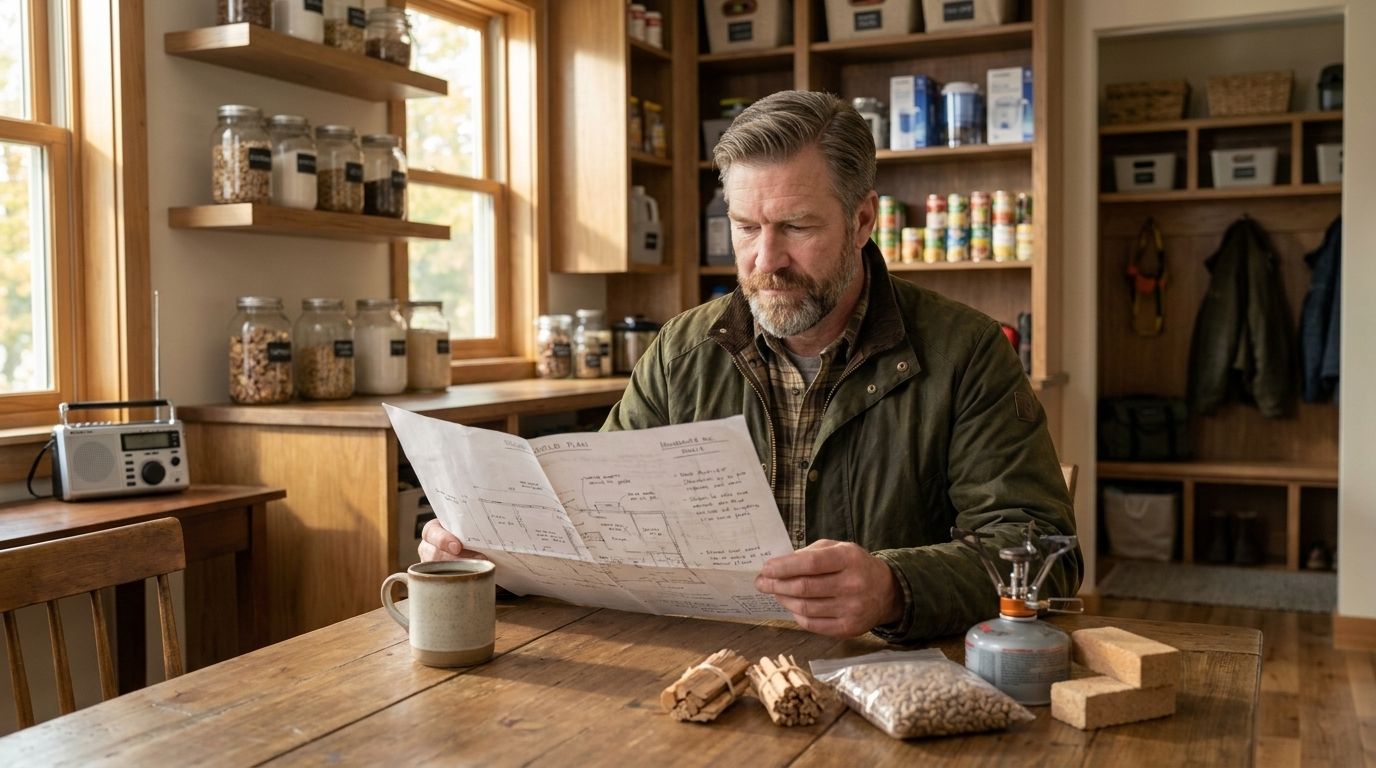
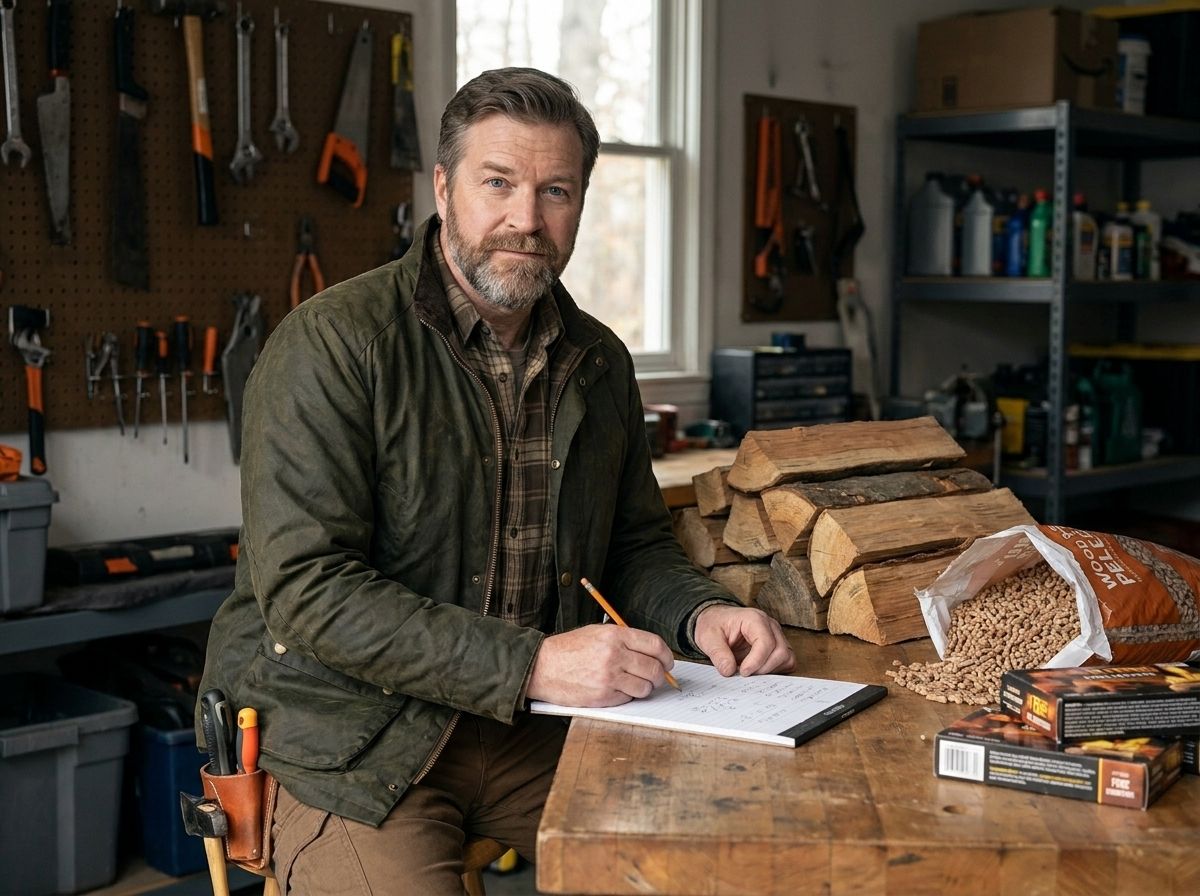
Sam Wills stands in his kitchen with a coffee he doesn't want and a notebook he does. The power flickered once, then the fridge went quiet. He's not panicking. He's doing that calm, slightly nerdy thing he always does when he wants his prep to feel real: turning cooking needs into fuel numbers.
If you've ever stared at a stack of firewood or a bag of pellets and thought, "How much is enough for 72 hours?" - this is for you. Clean cooking fuel planning is where good intentions meet math. The good news is that the math is simple enough to do at your kitchen table, not in a lab.
In this post, you'll build a fuel estimate for a 72 hour plan using three inputs: how many cooking sessions you need, what fuel each session burns, and how much starter you go through to get the fire going. With Mainstay's adaptive learning system, you can keep those numbers organized so you know exactly what to restock and when.
Start with your 72 hour cooking reality
Before you calculate wood supply or pellets, you need a cooking picture that matches how you actually cook.
When Sam planned his first 72 hour setup, he assumed he'd cook like he does on weekdays: hot breakfast, a simmering pot at lunch, dinner that takes attention. Then he remembered that stress changes habits. People move slower. Water takes longer to boil. You burn more fuel when you keep lifting the lid to check.
So pick a plan style that fits your household and your honest comfort level.
Use these prompts to nail down your cooking sessions:
- How many meals will you cook with heat instead of eating cold or no-cook food?
- How many times per day will you boil water for coffee, tea, or cooking?
- Are you cooking one pot at a time, or trying to run multiple things on the same fire?
- What cooking method are you using: wood stove, pellet stove, grill, rocket stove, or a dedicated camp setup?
Write your answers as a simple schedule. Not perfect. Honest.
Here is a format that works:
- Day 1: boil water 2 times, cook 2 meals
- Day 2: boil water 2 times, cook 2 meals
- Day 3: boil water 1 time, cook 1 meal
If you already have a 72 hour food plan, reuse the same meal count and mark which meals need heat.
Why this matters for fuel planning
Fuel planning fails when you skip the cooking schedule. Wood supply math looks right on paper, then falls apart when you realize you planned for three meals and end up doing one.
Fuel consumption also shifts with your setup. A small stove with a tight door burns differently than an open fire. Pellets behave differently than split hardwood. You want your estimate to reflect your gear, not some stranger's camp video.
Estimate fuel per cooking session (wood and pellets)
Now comes the part that feels like homework. Really it's just turning experience into numbers.
You're estimating fuel per cooking session, not total fuel for the universe. That mindset shift matters.
A cooking session is one "mission" like:
- Bring a pot of water to a boil
- Simmer soup for 20 to 30 minutes
- Cook rice or pasta in a covered pot
Session length matters. A quick boil burns less fuel than an hour of simmering. Simple as that.
A practical way to measure your own burn rate
The most accurate method is to measure one session with the fuel you actually have.
Pick a normal meal you make at home. Use the same pot size and same heat source you plan to use during the 72 hour plan.
Do this once, even if it feels a little over the top:
1. Weigh a starting amount of pellets (or weigh wood if you can) before your cook.
2. Run the session exactly like you would during an outage.
3. Weigh what's left after the session.
If you can't weigh wood, estimate using volume. Count splits or use a known measure from your storage system. The point is to learn your household's pattern, not someone else's.
Default fuel estimates you can start with
If you don't want to measure yet, start with reasonable baseline numbers and adjust after your first test.
These aren't perfect, but they keep you from underbuying:
Wood (hardwood splits)
- Boil session (covered pot): about 1 to 2 small armfuls of split wood
- Simmer session (covered pot, 20 to 30 minutes): about 2 to 3 small armfuls
Smaller stoves and efficient methods like a rocket stove will put you at the lower end. A setup that leaks heat, or a habit of uncovering the pot, pushes you toward the higher end.
Pellets
Pellets are easier to estimate because they're uniform.
- Boil session: about 1 to 1.5 pounds of pellets
- Simmer session: about 1.5 to 3 pounds of pellets
Pellet consumption also depends on stove design. A stove that cycles on and off burns more total fuel than one that holds a steady, consistent heat.
Build the fuel equation
Once you've mapped your session types, the math becomes straightforward.
For each day in your 72 hour plan:
- Count boil sessions
- Count simmer or cook sessions
- Multiply by your estimated fuel per session
- Add a buffer for learning curve and messy weather
A simple total formula looks like this:
- Total wood = (boil sessions x wood per boil) + (cook sessions x wood per simmer) + buffer
- Total pellets = (boil sessions x pellet per boil) + (cook sessions x pellet per simmer) + buffer
Add a buffer that does not wreck your budget
Sam's first instinct was to add a massive buffer. He wanted to feel covered. Then he realized that oversized buffers turn into ignored inventory. Buy too much, and you stop checking it.
So add a buffer that matches real life:
- Add 15% to 25% for wind, damp fuel, and slower cooking
- Add 10% to 15% if you already know your burn rate from a test
If your wood supply sits outdoors and gets damp, your buffer needs to be on the higher end. Damp wood burns slower and throws less heat.
Plan fire starters like they are fuel too
Fire starters are where most fuel planning gets sloppy. People count wood or pellets and forget the ignition costs that quietly stack up.
Sam learned this the hard way. He had plenty of fuel. Not enough reliable starting material. The first attempt dragged. The second took more effort. By the time the fire was stable, he'd burned extra fuel just getting going.
Plan fire starter needs with the same seriousness as wood supply or pellets. No exceptions.
Count ignition events, not just days
Your fire might need to be started:
- Once per cooking session
- Once per day if you keep a steady burn
- Once after fuel runs out or you need a stronger flame
In a 72 hour plan, most households rack up more ignition events than they expect. Start conservative.
A simple approach:
- Plan one ignition event per cooking session
- Reduce that count later, after you've actually tested it
Estimate starter quantity per ignition
Fire starter needs depend on what you use.
Here are practical planning ranges:
- Fire starters like waxed fire logs or commercial cubes: 1 starter per ignition event
- Tinder bundles (dry lint, small dry shavings): 1 bundle per ignition event
- Kindling-only ignition: you still need a reliable tinder source, plus extra kindling
You also want a backup ignition mindset. Even when your starter works, you might lose a batch to moisture.
So set aside:
- 1 extra starter per day
- Extra tinder in a waterproof container
That way, a damp pocket or a failed first attempt doesn't force you to burn through your main fuel supply.
Keep starters dry like it is your job
Not about being fancy. This is storage discipline.
Use a sealed container for tinder, and keep it inside another bag or bin if your storage area gets humidity. If your fuel plan includes pellets, store those dry too. Pellets absorb moisture and lose performance fast.
Want a simple system? Label a container "starter only" and put nothing else in it. You'll thank yourself later.
Combine wood, pellets, and starter into one restock list
Now you take your estimates and turn them into an inventory plan you can actually maintain.
Sam's notebook had numbers for days. It also had a restock list, and that restock list is what made the whole plan usable.
Turn your totals into restock targets
For each fuel type, you want:
- Quantity needed for 72 hours
- Quantity you currently have
- Quantity you'll replenish by a specific date
If you already track inventory, this is a natural next step. If you don't, start with a single sheet kept near the storage area.
Here is a quick restock template:
- Wood: need X armfuls or Y splits, have Z, restock by date
- Pellets: need X pounds or Y bags, have Z, restock by date
- Fire starters: need X ignitions worth, have Z, restock by date
Use your schedule to plan rotation
Fuel planning is not a one-time task. It's a cycle.
If you rotate pellets by using them for normal cooking, you get two benefits: reduced waste and a real-world burn rate. Both useful. If you rotate wood, pull the driest splits first. Keep the damp stuff for later or for lower-stakes tasks when you can manage the slower burn.
And yes, you'll still end up with a mystery pile sometimes. Sam has one. Honestly, we all do. The trick is writing down what you do with it so it stops being a surprise next time.
A simple test that improves every estimate
Do one controlled session every season.
Pick a short cook: boiling water for soup, reheating pre-cooked rice. Same pot, same stove. Measure leftover fuel if you can, then update your fuel-per-session numbers in your notebook.
That's how your wood supply and pellets plan becomes personal. It stops being generic prepper cooking advice and becomes your household's actual reality.
Common mistakes that waste fuel (and how to fix them)
Fuel planning gets derailed by a handful of predictable problems.
You probably already know some of these, but it helps to see them laid out plainly.
Mistake 1: Planning for meals but not timing
If you plan dinner at 6 pm and it becomes 9 pm, you burn more fuel. Cooking time stretches under stress, every time.
Fix: build in a little extra simmer time in your schedule, or keep a "fast cook" option in reserve for at least one meal.
Mistake 2: Assuming "one fire" lasts the whole day
You might keep a fire going, but you might also have to restart after running out of a specific fuel size or letting the fire drop too low.
Fix: count ignition events. Your fire starter planning should match them.
Mistake 3: Storing fuel where moisture wins
Damp wood and damp tinder turn your ignition into a chore.
Fix: store tinder dry, keep starters sealed, and check wood dryness before you rely on it.
Mistake 4: Underestimating covered-pot efficiency
Open pots bleed heat. You compensate by burning more fuel.
Fix: use lids. Even a cheap lid helps. Covering a pot genuinely changes the fuel math.
FAQ
How much wood do I need for a 72 hour plan?
It depends on how many sessions you plan to cook with heat. A conservative baseline is about 1 to 2 small armfuls for a covered boil session and 2 to 3 small armfuls for a covered simmer or cook session, then add a 15% to 25% buffer for dampness and slower cooking.
How many pellets should I store for 72 hours?
Pellets are easier to estimate because they're uniform. Plan roughly 1 to 1.5 pounds per boil session and 1.5 to 3 pounds per simmer or cook session, then add a 15% to 25% buffer. If your stove cycles a lot, lean toward the higher end.
What fire starters should I include in a clean cooking setup?
Pick starters that work reliably when conditions are slightly damp. Many people keep a sealed tinder source plus a simple commercial starter or wax-based option as backup. Store tinder in a waterproof container and keep at least one extra starter per day in your 72 hour plan.
Should I plan one ignition per day or per meal?
Plan per cooking session unless you've tested your stove and fuel combination. In real outages, you restart more often than expected, due to fuel size, temperature drops, and busy hands. After one test, you can tighten the estimate.
Your next step
Tonight, grab your 72 hour food plan and highlight the meals that need heat. Then write a simple schedule of boil sessions and simmer or cook sessions across three days. From there, you can estimate wood supply or pellet needs and add fire starter quantity based on ignition events.
Do it imperfectly. Then test one session and adjust. That's how fuel planning goes from a source of stress to something you actually trust.
Want this handled automatically? See the Mainstay membership.
Subscribe to comment
Join the Mainstay newsletter to leave a comment — and get new field notes in your inbox.
Get new field notes in your inbox
Practical, calm preparedness — one useful note at a time.