Home emergency lighting: how to choose, store, and test flashlights and lanterns
A practical home emergency lighting plan helps you find the right light quickly, protect your batteries, and keep power outage lighting ready.
At 9:17 on a winter evening, June Wills was carrying a basket of laundry when the house went dark. The flashlight was somewhere in the kitchen. The spare batteries were somewhere else. The lantern, naturally, had chosen that exact night to become a decorative object on a high shelf.
The best home lighting setup is simple: keep a reliable flashlight within reach, place stable lanterns where your household gathers, store the right batteries nearby, and test every light on a schedule you actually follow. Good power outage lighting does not need to be expensive or complicated. It needs to work when the room is dark and your patience is shorter than usual.
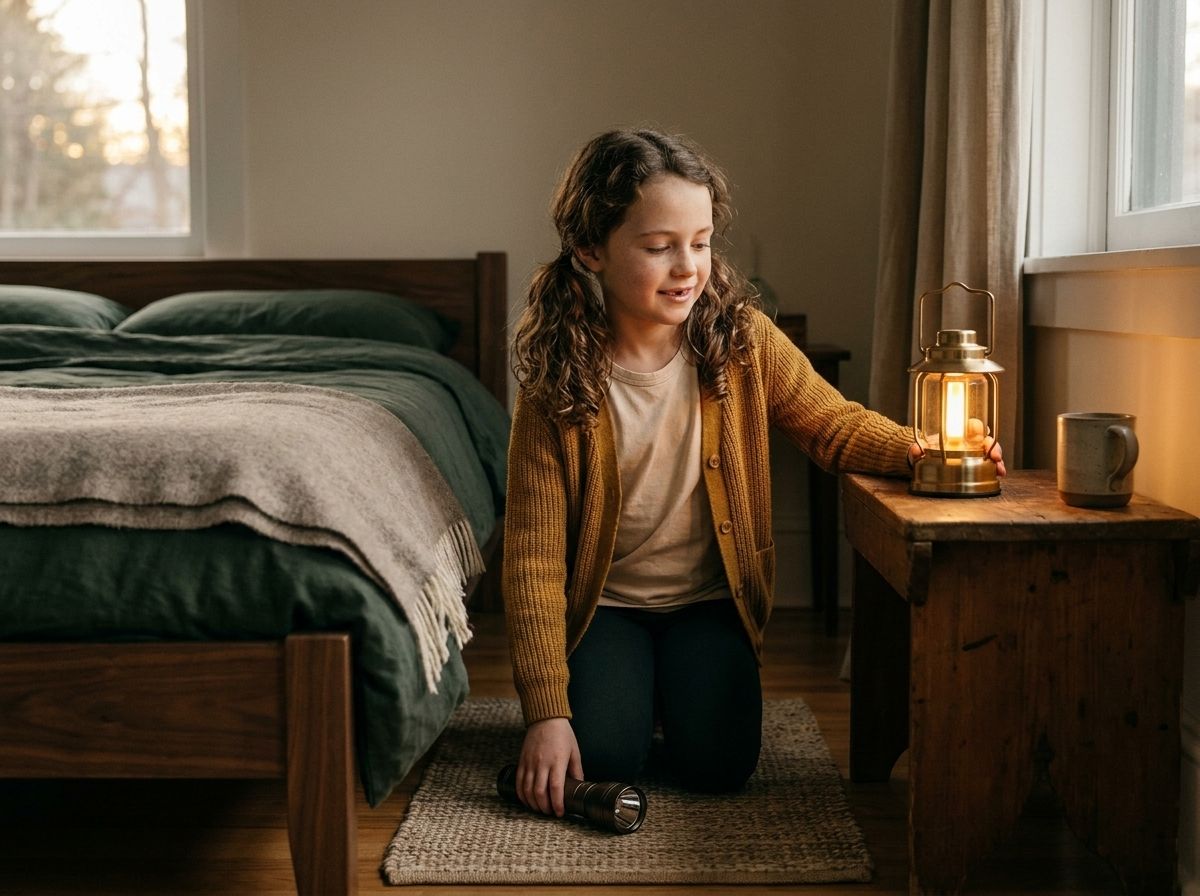
Start with the light your household will actually use
A flashlight is personal lighting. It lets you move through a hallway, check a breaker panel, walk to the garage, or look under a sink without lighting the whole room. A lantern is area lighting. It gives a kitchen, bedroom, or living room enough glow for people to sit, sort supplies, or move around without holding something in one hand.
You need both types. A flashlight cannot do a useful job lighting a dinner table, and a lantern is awkward when you are checking a dripping pipe behind the washing machine.
Begin with locations, not shopping. Walk through your home after sunset and identify the places where someone would need light quickly:
- The primary bedroom or sleeping area
- The kitchen or main living room
- The hallway between bedrooms and exits
- The garage, utility area, or breaker panel
- The car, if you may need to leave the house in poor weather
Keep one flashlight beside each bed. Store at least one lantern in the main household area, where everyone can reach it without a chair, ladder, or heroic furniture climb. Put another light near the utility area if your electrical panel, water shutoff, or furnace is not close to the living space.
A household with several people should have more than one handheld light. You do not want the person checking the basement to take the only flashlight from the person walking a child to the bathroom. A spare also helps when the first light has a dead battery, a cracked switch, or an unfortunate meeting with a puddle.
A practical baseline looks like this:
- One flashlight per regular sleeper
- One spare flashlight in the main living area
- One lantern for each primary gathering area
- One compact light in each frequently used vehicle
- One headlamp for work that requires both hands
This is not a contest. If your home is small, you may need fewer lights. If you have stairs, an older household member, pets, or a long walk to the electrical panel, you may need more. The point is to remove the one-light bottleneck.
Scout, the Wills family dog, does not contribute much to the lighting plan, though he is very committed to standing exactly where someone needs to walk. Keep pet movement in mind when you place lanterns. A stable light on a wide surface is safer than a narrow ledge where a leash, tail, or sleeve can knock it down.
How to choose the best emergency flashlights and lanterns
The best emergency flashlights are not always the brightest ones on the shelf. A powerful beam can be useful outside, but too much brightness at arm's length can make a dark room harder to navigate. Look for a flashlight that is easy to switch on, comfortable to hold, and powered by batteries you can replace or recharge with equipment already in your home.
For most household use, an LED flashlight is the sensible starting point. LEDs draw less power than older incandescent bulbs and usually handle ordinary bumps better. A model with several brightness levels gives you a low setting for moving through a bedroom and a higher setting for outdoor checks.
Pay attention to the switch. A complicated button sequence is a poor match for a middle-of-the-night task. If you have to click through four flashing modes before reaching steady light, choose a simpler model, or practice until the controls are second nature.
Useful flashlight features include:
- A steady low setting and a brighter working setting
- A textured grip that stays secure with wet hands
- A pocket clip or flat tail that keeps it from rolling away
- Water resistance for rain, leaks, and damp utility spaces
- A battery indicator that does not require a phone app
- A lanyard or wrist strap for stairs and outdoor use
Lumens measure light output, but the number does not tell you everything. Beam shape, lens quality, battery condition, and runtime all matter. A small flashlight in the 100 to 300 lumen range is often enough for indoor movement. A brighter model can help outside, but check its runtime at the setting you expect to use. A flashlight that produces impressive light for twenty minutes is not useful for a long outage unless you can recharge it.
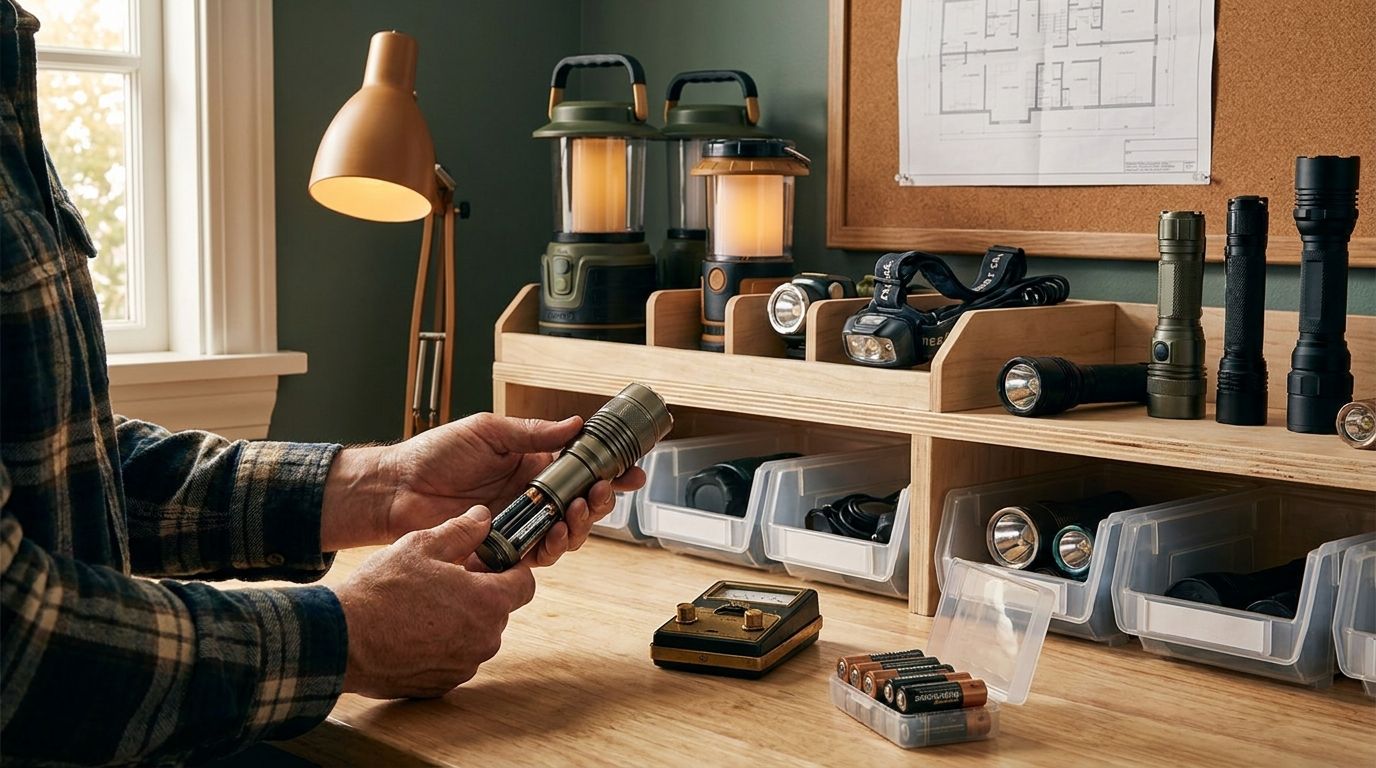
Headlamps deserve a place in the kit. They leave both hands free for checking a fuse, carrying water, opening a stuck door, or helping someone on stairs. Choose one with a comfortable strap and a button that is easy to find by touch. Store it with the household lights, not buried in a tool bag you rarely open.
For lanterns, stability matters more than style. A broad base, a handle that stays secure, and a diffuser that spreads light instead of creating one harsh glare. A lantern that can sit in the center of a table is usually more useful than one that only hangs from a hook.
Look for these lantern features:
- A low setting for overnight use
- A brighter setting for cooking, cleaning, or repairs
- A battery compartment that closes firmly
- A charge indicator or clear battery status
- A base that will not tip when bumped
- A handle that is strong enough to carry the lantern one-handed
Rechargeable lanterns can reduce battery waste and work well if you have a reliable charging method. Battery-powered lanterns are easier to keep ready for long outages because you can store replacement batteries right beside them. Many households use both: rechargeable lights for regular use and a few replaceable-battery lights as a backup.
Fuel-burning lanterns require more care. Follow the manufacturer's instructions, keep them away from curtains and flammable materials, and never use a fuel-burning device indoors unless it is specifically approved for that setting. Carbon monoxide is an invisible, odorless danger from fuel-burning equipment. Battery-powered lighting is the simpler, safer choice inside the home.
With Mainstay's household profile and inventory tools, you can record where each light lives, what batteries it uses, and when you last tested it. A note on a shelf works too. The system matters less than being able to answer one question quickly: where is the light?
Store power outage lighting so it is ready to grab
A flashlight buried in a junk drawer may as well be on another planet when the lights go out. Store lighting by function and location. Bedside lights stay at the bedside. Utility lights stay near the utility area. The main lantern stays in a known, reachable place.
Avoid storing every light in one large plastic bin in the basement. Central storage sounds tidy until the basement is dark, the stairs are blocked, or the outage happens while someone is already on another floor. Distributed storage is easier to use.
Put a small label on each flashlight or storage pouch with the battery type and the location where it belongs. You do not need a complicated catalog. A simple note like "AA, upstairs hall" can save a surprising amount of time.
An emergency lantern checklist should cover the light, its power source, and its surroundings:
- Flashlight or lantern turns on
- Bright and low settings work
- Batteries match the label
- Spare batteries are present
- Rechargeable units have a useful charge
- Cords and charging plugs are with the device
- The lens is clean and uncracked
- The switch is not loose or sticky
- The storage location is reachable in darkness
- The light is not next to heat, water, or leaking chemicals
Store disposable batteries in their original packaging or a case that keeps the terminals from touching metal. Do not toss loose batteries into a junk drawer with keys, coins, or tools. Short circuits can create heat and damage the batteries.
Keep batteries in a cool, dry place. Avoid leaving them in a hot vehicle, on a furnace shelf, or in direct sun. Extreme temperatures can shorten battery life and may cause leakage. If a battery leaks, use gloves to remove it, clean the compartment according to the manufacturer's instructions, and replace the damaged light if corrosion has reached the contacts.
Rechargeable batteries need a clear routine. Put the charging cable beside the lantern, not in a separate mystery drawer. If the lantern charges through a proprietary cable, consider keeping a spare cable with it. A dead lantern and a missing cable are a familiar household pairing, right up there with the lid that fits no container.
Do not rely on a phone as your only light. A phone flashlight is useful, but that battery also supports calls, messages, maps, and important information. Save it for communication and use dedicated lights for routine movement around the house.
Test every light before you need it
Testing is where a lighting plan becomes dependable. Set a recurring monthly check, perhaps on the same day you review smoke alarm batteries or rotate household supplies. The check can take ten minutes if everything is stored in sensible places.
Turn on each flashlight and lantern. Work the controls. Inspect the battery compartment. For rechargeable models, unplug them and run them for several minutes. You are checking more than whether a bulb glows, you are checking whether the device still fits the job.
Use this short test routine:
- Turn on every light at its lowest setting
- Test the brightest useful setting
- Check for flickering, heat, or a weak switch
- Inspect batteries for swelling, corrosion, or leakage
- Confirm spare batteries are present and unexpired
- Recharge units that need it
- Return each light to its assigned location
Do not wait until an outage to learn that a lantern's high setting drains its battery in two hours. Check the manufacturer's runtime information and test the light at the brightness you actually use. If a device has a removable battery pack, inspect the contacts and make sure the pack locks into place.
Once each season, do a short dark-room walk-through. Turn off the lights at night and retrieve the nearest flashlight from each sleeping area. Can you find it without turning on another device? Can you carry it down the stairs? Can you reach the lantern without moving a box?
Ask household members to locate the lights themselves. A plan that only one person understands is less useful when that person is outside, asleep, or handling a separate problem. June can show Rosa and Sam where the main lantern is, while Theo can practice using the headlamp and returning it to its spot. Keep the instruction plain: take the light, move slowly, tell someone where you are going.
Do not test by draining every battery completely. Short, regular checks are enough. Replace batteries when the light dims, the device signals low power, or the manufacturer's guidance says to swap them. Mark the month of the last full check on a small piece of tape if that helps you remember.
If a flashlight fails, do not keep it in the active supply. Move it to a repair box with a note about the problem, then put a working replacement in its place. A broken light in the correct drawer creates false confidence.
Build a lighting plan that feels calm
A good lighting setup does more than help you see. It reduces the number of decisions your household has to make when the power stops. Someone can reach the bedside light. Someone else can bring the lantern to the kitchen. Another person can check the hallway without taking the only working flashlight.
Keep the first move simple. When the power goes out, turn on a nearby dedicated light, confirm that everyone is accounted for, and place one lantern in the main gathering area. Then decide what the household needs next. You do not need to solve the whole outage from the dark.
A few habits make the plan easier to live with:
- Keep exits and stairways clear of boxes and loose cords
- Use lanterns on stable surfaces away from sinks and stovetops
- Keep a small flashlight in the car and check it during vehicle maintenance
- Teach every household member where the main lights are stored
- Record battery types and light locations in your inventory
If a child, older adult, or pet has trouble moving in low light, adjust the plan around that reality. Add a night-light, place a lantern lower on a stable surface, or use glow markers to identify the light cabinet. There is no prize for making the setup harder than it needs to be.
Mainstay's dashboard can hold a simple view of your household lighting inventory alongside supplies, documents, and maintenance dates. But a paper list taped inside a cupboard works just as well. Write down the light location, battery type, and next test date. Then follow the list.
You are allowed to build this gradually. Start with the bedrooms and main living area. Add the garage, vehicles, and headlamps when the budget or schedule allows. The goal is not a perfect collection of gear. It is a household where people can see, move, and help one another without waiting for one person to find everything.
FAQ
How many flashlights should a household have?
Start with one flashlight per regular sleeper, one spare in the main living area, and one light near the utility area. Add more for stairs, separate buildings, vehicles, pets, or household members who need extra time and visibility to move safely.
What is the best emergency lantern for indoor use?
A battery-powered LED lantern with a stable base, low and high settings, a secure battery compartment, and a clear charge or battery indicator is a strong indoor choice. Avoid fuel-burning lanterns indoors unless the product is specifically approved for indoor use and you follow every manufacturer instruction.
How often should I test emergency flashlights?
Test every flashlight and lantern once a month, then do a dark-room location check at least once each season. Replace or recharge power sources when the light dims, the battery shows damage, or the device no longer runs for the time you need.
Should I use rechargeable or disposable batteries?
Both can work. Rechargeable batteries reduce waste and suit lights you use often, while disposable batteries are convenient to store for longer outages. Choose the system you can maintain, and keep the correct spares or charging cable beside each device.
Tonight, take five minutes and pick up the nearest flashlight. Turn it on. Put it where you would reach for it when the room is dark. Then place one spare set of batteries beside it.
That small action counts. You are not trying to create a showroom full of equipment. You are making the next difficult moment a little easier for the people who live there, including you.
Want this handled automatically? See the Mainstay membership.
Subscribe to comment
Join the Mainstay newsletter to leave a comment — and get new field notes in your inbox.
Get new field notes in your inbox
Practical, calm preparedness — one useful note at a time.