Household emergency kit checklist: the core supplies every home should cover
Build a household emergency kit that supports water, food, first aid, light, communication, sanitation, and daily care without filling every closet.
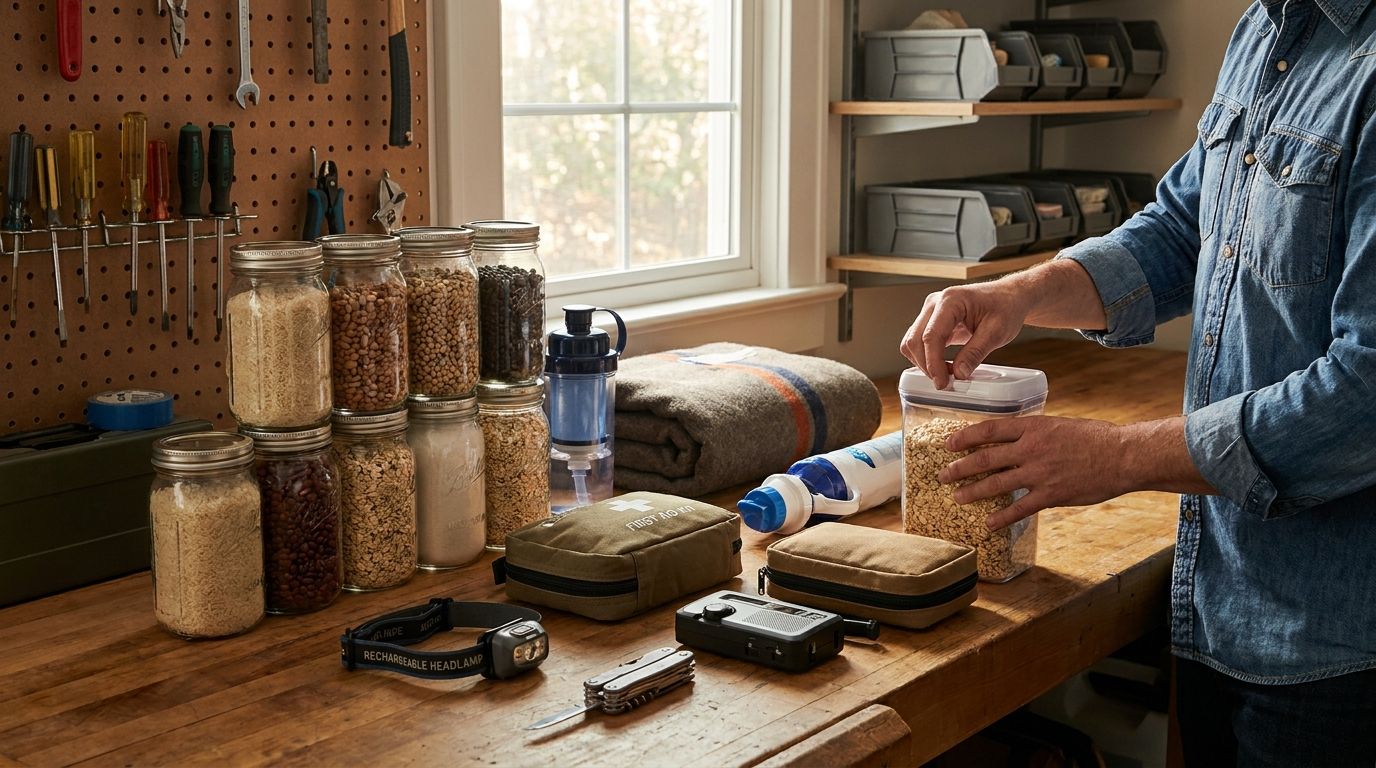
At 9:14 p.m., the power goes out while dinner is still on the stove. The kitchen goes dark, the router shuts down, and someone asks where the flashlights are. A good household emergency kit checklist answers that question before the room gets quiet: store the basics where you can find them, track what expires, and match the supplies to the people and pets who live in your home.
The core kit is not a pile of survival gear. It is a working household system built around water, food, first aid, light, communication, sanitation, documents, and personal needs. Start with a 72-hour baseline, then adjust for weather, medical needs, local hazards, and however long you may be without normal services.
What belongs in a basic emergency kit
A basic emergency kit supports ordinary household functions when water, electricity, transportation, or stores are unavailable. The Federal Emergency Management Agency recommends keeping enough supplies for several days, while the American Red Cross emphasizes water, food, first aid, tools, personal items, and information. Those categories hold up because they track what you actually do each day.
Use one central checklist, then split the supplies between a home kit, a portable grab bag, and vehicle supplies if your household needs all three. Don't buy a dramatic-looking box of equipment and assume the job is finished. A kit that lacks water, prescription medication, or a way to open food is mostly an expensive container.
Your household emergency kit checklist should cover:
- Drinking water and a way to carry or treat additional water
- Shelf-stable food that fits household diets and can be eaten with little cooking
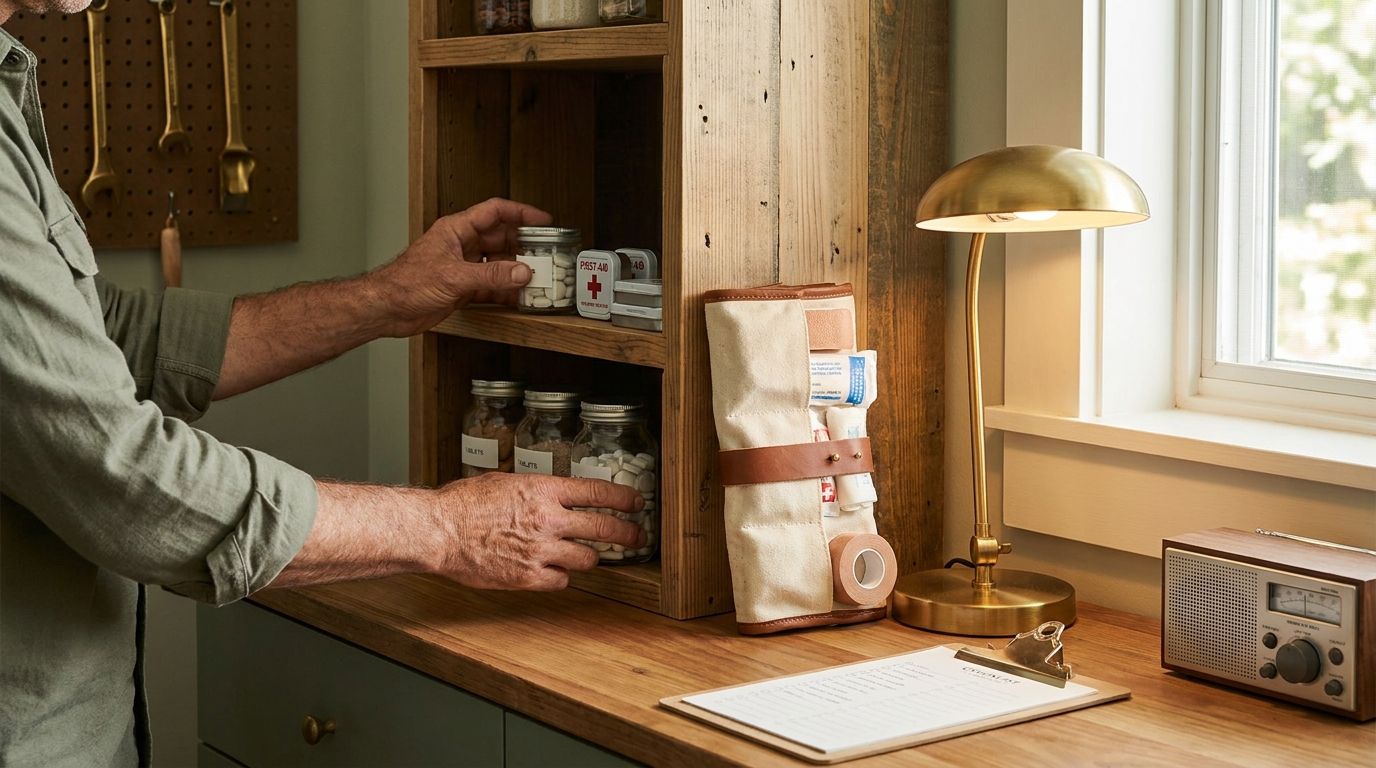
- First aid supplies and a written list of current medications
- Flashlights, spare batteries, lanterns, and charging equipment
- A battery or hand-crank radio, plus a printed contact plan
- Soap, toilet supplies, waste bags, wipes, and other sanitation items
- Warm layers, blankets, sturdy shoes, and weather-specific clothing
- Copies of key documents, cash, basic tools, and household keys
- Supplies for infants, older adults, people with disabilities, and pets
Keep the central kit in a dry, accessible location. A basement corner may be convenient until water enters the basement. A high shelf keeps supplies away from children but becomes useless if you can't safely reach it during a power failure. Choose a spot near an exit or on the main living level, then label the container in plain language.
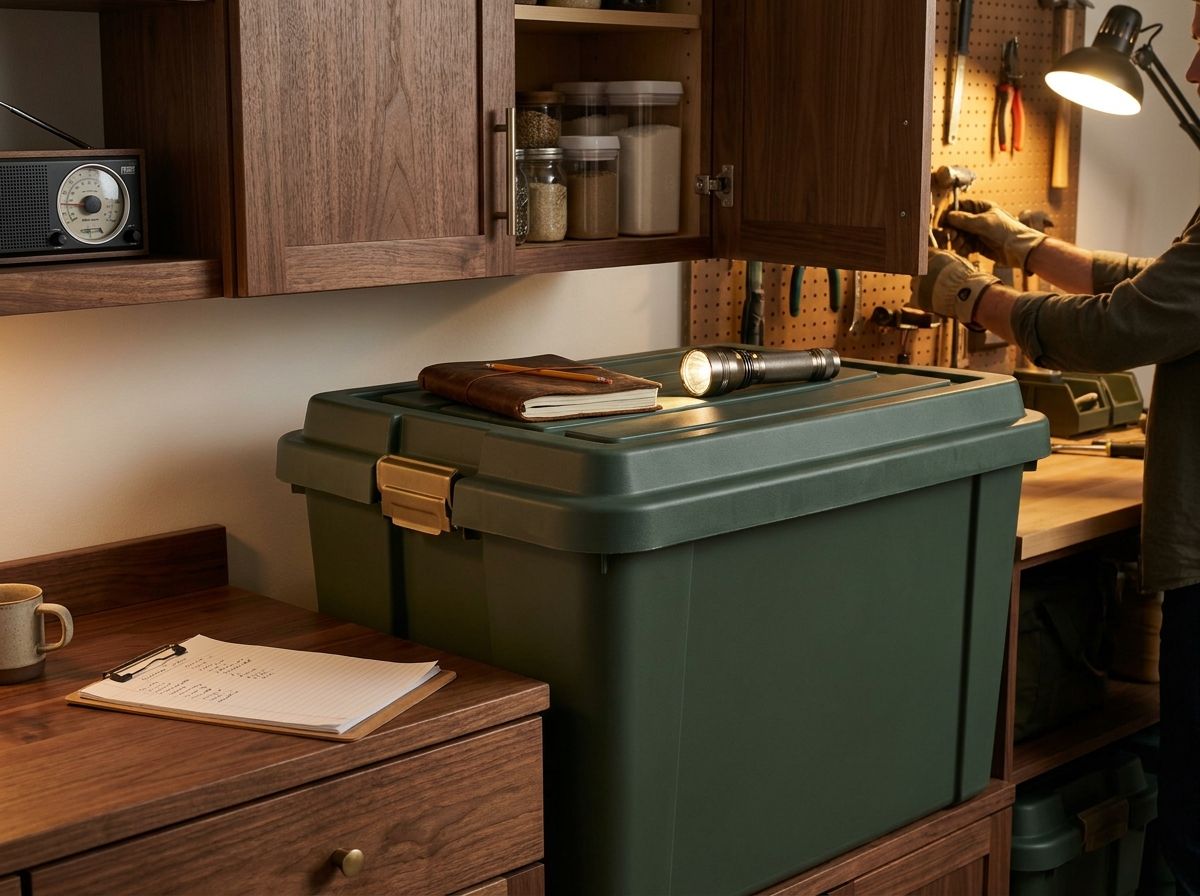
The point is retrieval. If you need a flashlight, you should not have to remember which holiday storage bin contains it. Put a small light near the kit, keep the kit inventory on paper and digitally, and mark any item that needs regular replacement.
Water and food: cover the household's real needs
Water is the starting point for home emergency supplies because people need it for drinking, cooking, medications, and basic hygiene. The Federal Emergency Management Agency commonly uses one gallon per person per day as a planning baseline. That figure is not a guarantee that every household will thrive on exactly that amount. Heat, illness, pets, pregnancy, physical work, and sanitation can all push demand higher.
For a three-person home, a 72-hour baseline means at least nine gallons for drinking and basic use. Store more if you can do so safely. Use commercially packaged water or food-grade containers, label the purchase date, and keep containers away from sunlight, fuel, cleaning chemicals, and freezing temperatures. Inspect stored water during your normal household supply check rather than waiting for an obvious reminder.
Food needs the same practical treatment. Pick items your household already eats, then test the opening and serving process. Canned beans are useful only if someone has a manual can opener. Dry food is less helpful if it requires a stove and several cups of water when the power is out.
A workable emergency food shelf can include:
- Ready-to-eat canned meals and vegetables
- Nut butter, crackers, dried fruit, and shelf-stable protein
- Infant formula, medical nutrition products, or allergy-safe foods
- Pet food that matches the animal's normal diet
- Disposable utensils, paper towels, and a manual can opener
- Water for cooking if the food needs rehydration
Consider a January ice storm in Columbus, Ohio. The food is still safe, but the kitchen has no electricity and the grocery store is closed. A household with canned chili, shelf-stable milk, a can opener, and water can eat without turning the situation into a cooking project. A household with only dry rice has supplies, technically, but not a useful meal plan.
Store food by expiration date. Put the items with the shortest shelf life in front, use them during normal meals, and replace them on the next grocery trip. That small rotation keeps your emergency preparedness list connected to daily life instead of turning it into a forgotten box.
Light, power, and information when the house goes quiet
Darkness changes simple tasks. Finding the bathroom, checking a breaker, reading a medication label, and comforting a nervous pet all become harder when every phone battery is at 18 percent. Your basic emergency kit needs lighting that works without the wall outlet and charging equipment that matches your devices.
Store at least one flashlight for each regular household member who can use one safely, plus a lantern for a shared room. Headlamps help when both hands need to stay free, but they should supplement rather than replace ordinary flashlights. Keep spare batteries in their original packaging or in a protected container. Check battery condition during your routine inventory.
A sensible power and information setup may include:
- LED flashlights and a room lantern
- Spare batteries in the sizes your devices use
- Power banks charged on a regular schedule
- Vehicle charging cables that fit current phones
- A battery-powered or hand-crank radio
- Extension cords only when they are rated for the intended load
- A written list of household contacts and local information sources
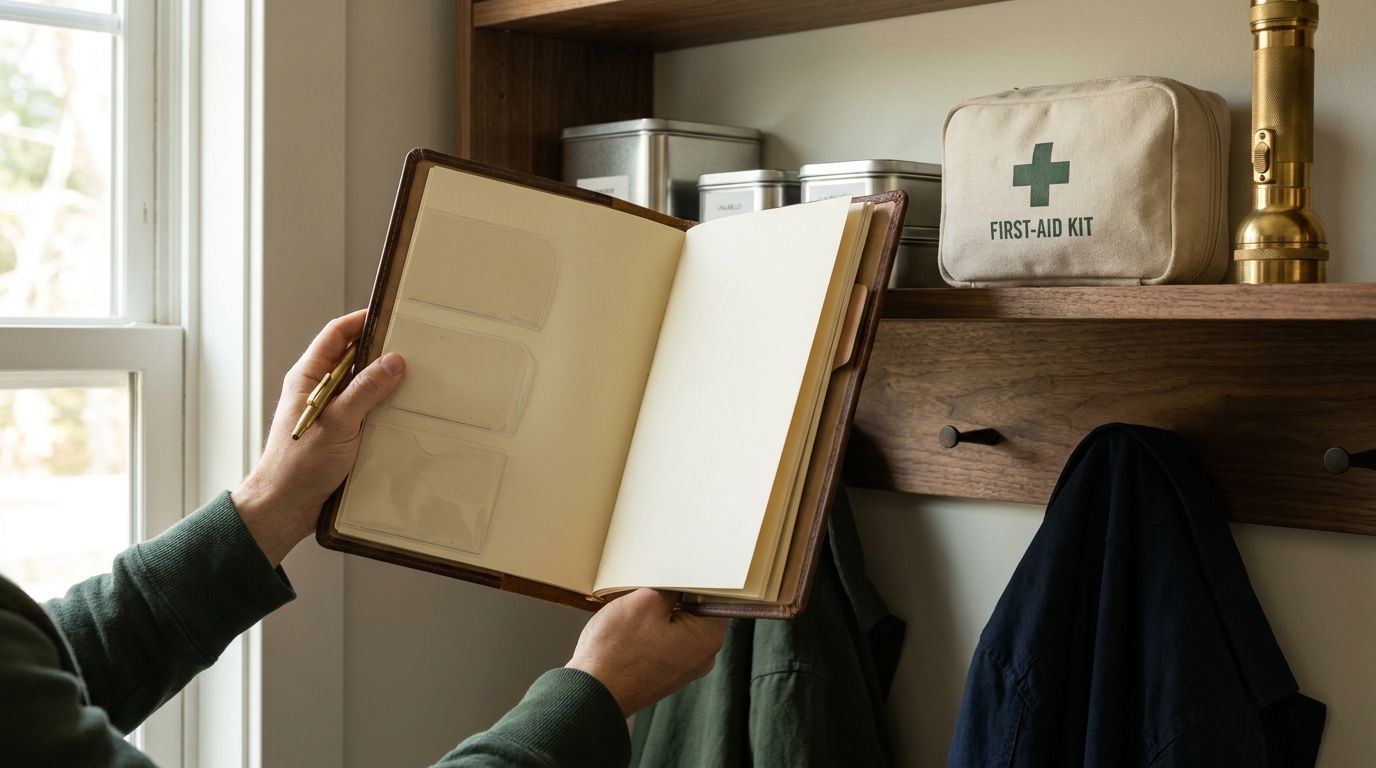
Don't assume your phone will solve every problem. Cell towers can become congested, home internet can stop, and a dead battery does not care how important your group chat is. Print key phone numbers, addresses, medical information, and meeting locations. Keep a small pencil with the list so you can add changes.
June Wills keeps the household's charging cables in one pouch rather than letting them migrate into desk drawers and the back seat of the car. That is not a complicated system. It is simply easier to check one pouch than to search five rooms while the smoke alarm chirps and everyone is asking questions.
Store light at the bedside, near the main exit, and with the central kit. Test each item in the place where you plan to use it. A flashlight that works on the kitchen counter but can't be found upstairs has failed its real test.
First aid, medications, and personal care
A home first aid kit should handle ordinary injuries while helping you manage the gap before professional care is available. It should not try to replace professional medical treatment. Include adhesive bandages in several sizes, sterile gauze, medical tape, gloves, antiseptic supplies, scissors, tweezers, a digital thermometer, and any items recommended by your clinician.
The medication section deserves a separate check. Keep a current medication list with names, doses, prescribing offices, and pharmacy information. Ask your pharmacist about refill timing and safe storage. Never move temperature-sensitive medication into a kit without confirming the correct storage conditions first.
Your household may also need:
- Spare eyeglasses or contact lens supplies
- Hearing aid batteries or charging equipment
- Mobility device accessories
- Menstrual products
- Infant diapers, wipes, and formula
- Incontinence supplies
- Allergy treatments or prescribed rescue medication
- Copies of relevant medical instructions
A first aid pouch buried inside a large tote can be hard to reach when everything has been packed tightly. Keep the medical supplies in a clearly marked container that adults can find quickly. Separate everyday medication from backup supplies, and record the date when you last checked both.
For a household with a dog, include enough familiar food, water, waste bags, a leash, a carrier or travel restraint, and a copy of veterinary information. Scout's supplies should not depend on someone remembering them while carrying a flashlight and a phone. Attach a spare leash to the pet kit, then keep the kit near the exit you would normally use.
Think about the person who has the hardest time with disruption. If Sam Wills needs glasses to read labels, spare glasses matter more than an additional novelty tool. If Rosa Wills relies on a specific hygiene product, that product belongs in the inventory. Preparedness becomes useful when it follows the actual household, not an imaginary average person.
Sanitation, warmth, and the supplies people forget
Water and food get most of the attention, but sanitation affects comfort and health quickly. If a toilet cannot flush, garbage collection stops, or clean water is limited, your household needs a simple way to manage waste and wash hands. Store heavy-duty bags, smaller waste bags, toilet paper, soap, hand sanitizer, disinfecting wipes, paper towels, and disposable gloves.
Add a temporary toilet solution that fits your home and local guidance. Some households use a lined bucket with a secure lid, others have access to a portable toilet. Whatever you choose, store the instructions with the supplies and think through where it would be used, how waste would be sealed, and how hands would be washed afterward.
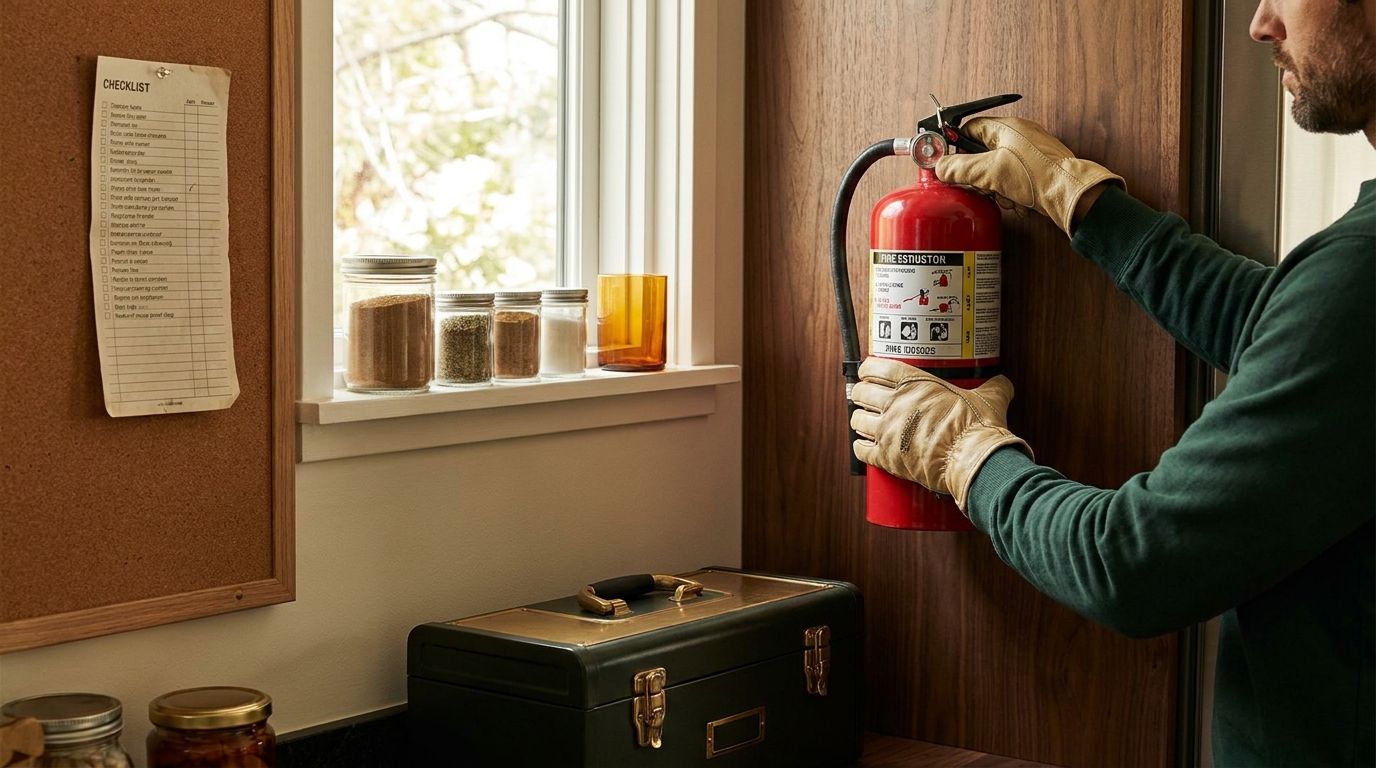
Comfort supplies reduce poor decisions. Keep sturdy shoes and a coat where you can reach them before walking through a dark room. Add blankets, work gloves, dust masks, basic eye protection, and weather-appropriate layers. A whistle can help attract attention, while duct tape and cord can solve minor household problems without turning the kit into a hardware store.
Do not overlook small daily needs:
- Tissues and moist wipes
- Toothbrushes and toothpaste
- Infant or personal care items
- Spare clothing and socks
- Earplugs and comfort items for children
- A few paper plates and reusable bottles
- Cleaning supplies for spills and broken containers
In coastal Maine, a winter storm can leave a household dealing with cold floors, wet clothing, and limited water at the same time. In Phoenix, Arizona, a summer outage creates a different priority: extra water, shade, cooling options, and a plan for checking on people who are sensitive to heat. The basic categories stay similar, but the quantities and specific items shift considerably.
Store sanitation and warmth supplies where they will stay dry. Review them when the seasons change. Winter gloves that fit last year may not fit now, and a child's clothing size has an irritating habit of changing without filing the proper paperwork. (Ask any parent who has discovered this at the worst possible moment.)
Documents, tools, and household-specific additions
A useful emergency preparedness list includes information, not just objects. Keep printed copies of identification, insurance details, prescriptions, property information, and important phone numbers in a waterproof folder. Store digital copies in a secure location you can access without relying on one device.
The document set should be limited to what helps you make decisions or prove ownership and coverage. Don't place irreplaceable originals in a tote that may be carried outside. Keep the folder updated when policies, addresses, medications, or household contacts change.
Basic tools can help with simple tasks, but choose tools based on your home. A multipurpose tool, adjustable wrench, pliers, screwdrivers, work gloves, duct tape, cord, and a manual can opener cover many ordinary needs. Keep a small amount of cash in a secure place, with denominations that local businesses can accept if card systems are unavailable.
Before adding specialized equipment, ask four questions:
- What problem does this solve in my household?
- Who knows how to use it?
- Where will it be stored?
- How will I inspect, recharge, or replace it?
That filter keeps spending tied to function. A complicated water device that no one has tested is less useful than a clearly labeled supply of safe water. A tool that needs a missing adapter is not a complete tool.
With Mainstay's household inventory system, you can track what you already have, record expiration dates, and connect supplies to a preparedness plan instead of relying on memory. A dashboard view can show gaps without requiring you to empty every cabinet onto the floor. The free tier can support a basic inventory, while the $8.95 per month Pro membership adds broader planning features for households that want more structure.
Use the system or a plain spreadsheet. The method matters less than the habit. Record the quantity, location, purchase date, replacement point, and any instructions someone else would need.
Build, place, and test the kit without overbuying
Start with a room-by-room walk-through. Note where the household already has useful supplies, then identify the gaps. You may discover three flashlights but no spare batteries, plenty of canned food but no opener, and several blankets stored behind boxes that have not moved since the last decade.
Build the kit in passes. Put the water and food baseline in place, add light and communication supplies, then address first aid, sanitation, warmth, documents, pets, and personal needs. This order helps you fund the essentials before buying specialized gear.
Use a simple location plan:
- Main kit: accessible, dry, and known to every adult
- Bedroom supplies: flashlight, shoes, glasses, and needed medication information
- Kitchen supplies: manual opener, food, water, and basic cleanup items
- Exit or vehicle kit: portable supplies for leaving the home
- Pet kit: food, water, leash, records, and comfort items
Test the kit with a short household drill. Turn off the lights for ten minutes. Ask someone to locate the flashlight, contact list, first aid pouch, and water without help. Try opening one meal. Check whether the radio works and whether the power banks hold a charge.
Do this calmly, during a normal weekend. A test is not a performance review. It is how you find the missing cable before the missing cable matters.
Review the kit every quarter and after major household changes. Replace expired food, update documents, recharge batteries, resize clothing, and adjust supplies for a new pet, medication, baby, roommate, or mobility need. Mainstay can hold the inventory and dates, but you still decide what belongs in your home.
Tonight, choose one storage location and write down the people, pets, and conditions it must support. Then buy or gather the largest missing category. A household emergency kit becomes dependable one verified item at a time.
FAQ
How much water should a household emergency kit contain?
Use one gallon per person per day as a common starting point, with a 72-hour baseline for short disruptions. Add more for heat, illness, pets, cooking, hygiene, or anyone with higher fluid needs. Store water in food-grade containers and check the storage conditions regularly.
What are the most important home emergency supplies?
Start with drinking water, ready-to-eat food, first aid supplies, medication information, flashlights, batteries, charging equipment, sanitation supplies, and a printed contact list. Add clothing, documents, tools, and pet or medical supplies based on your household. The most important item is the one you can find and use quickly.
Should I keep my emergency kit in one place?
Keep a central kit in one accessible, dry location, then place small supporting supplies where you use them. A bedside flashlight and shoes, a kitchen can opener, and a pet kit near the exit can save time. Record each location so another adult can retrieve the supplies.
How often should I check a basic emergency kit?
Review it at least once each quarter and whenever your household changes. Check expiration dates, water containers, batteries, medication information, clothing sizes, documents, pet food, and power banks. Seasonal checks are useful because winter and summer create different household demands.
Do I need a separate emergency kit for my car?
A vehicle kit is useful if your household drives in severe weather or travels through remote areas. Keep it separate from the home kit and tailor it to the route, climate, vehicle, and passengers. Include water, food, lighting, warmth, first aid, phone charging, and basic roadside supplies without assuming the car will remain nearby.
The next step is simple: set a 15-minute timer, locate your current supplies, and write down every gap you notice. Put the list where you will use it, buy the highest-priority missing item, and schedule the next check before the new kit disappears into the back of a closet.
Want this handled automatically? See the Mainstay membership.
Subscribe to comment
Join the Mainstay newsletter to leave a comment — and get new field notes in your inbox.
Get new field notes in your inbox
Practical, calm preparedness — one useful note at a time.