Home first aid kit essentials: a practical household checklist
Stock a home first aid kit that handles cuts, burns, sprains, and everyday injuries without turning one drawer into a medical junk pile.

At 7:18 on a Saturday morning, June Wills catches her forearm on the sharp edge of a sheet pan while unloading breakfast. The cut is small, but the kitchen towel is not clean and the nearest bandages are somewhere in the upstairs bathroom. Home first aid kit essentials matter because minor injuries get harder to manage when supplies are scattered, expired, or missing the one item you actually need.
A useful household first aid kit covers wound cleaning, cut and scrape care, burn cooling, sprain support, symptom checking, and getting help. You do not need a wall-sized cabinet or a dramatic supply haul. You need the right basics in one known location, checked on a simple schedule.
This guide covers what to stock, how to use it for common injuries, and how to recognize when home treatment has reached its limit.
Build the kit around common household injuries
The best basic first aid kit checklist starts with the injuries that actually happen in your home. Paper cuts, kitchen cuts, blisters, splinters, small burns, twisted ankles, and headaches account for far more real use than cinematic disasters. Build around those moments, then add items for the people, pets, activities, and hazards specific to your household.
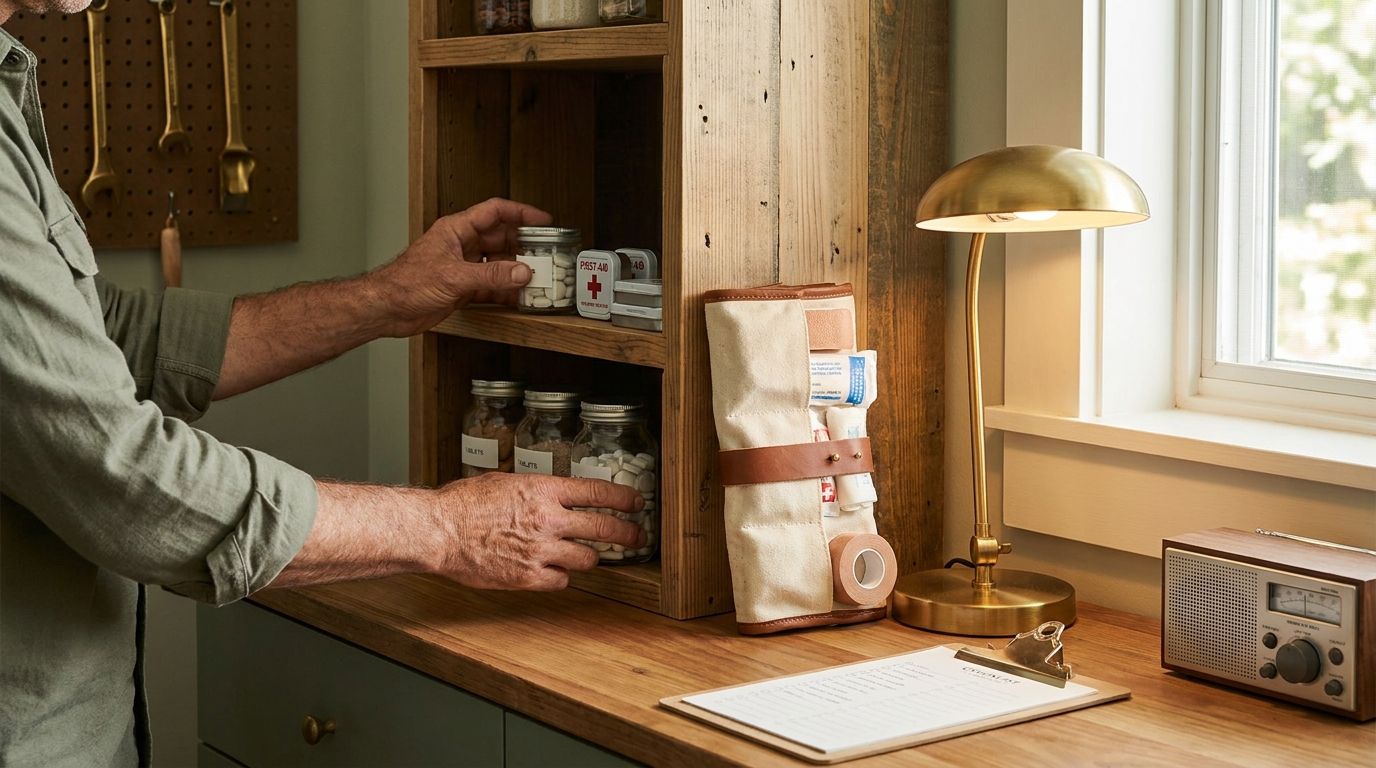
Keep the main kit in a cool, dry, easy-to-reach spot. A high kitchen cabinet may keep supplies away from children, but it is a poor choice when you need a stool while holding a bleeding hand. A secured bathroom shelf, hall closet, or labeled utility cabinet usually works better. Keep one smaller kit in the car if your household spends regular time on roads, trails, sports fields, or worksites.
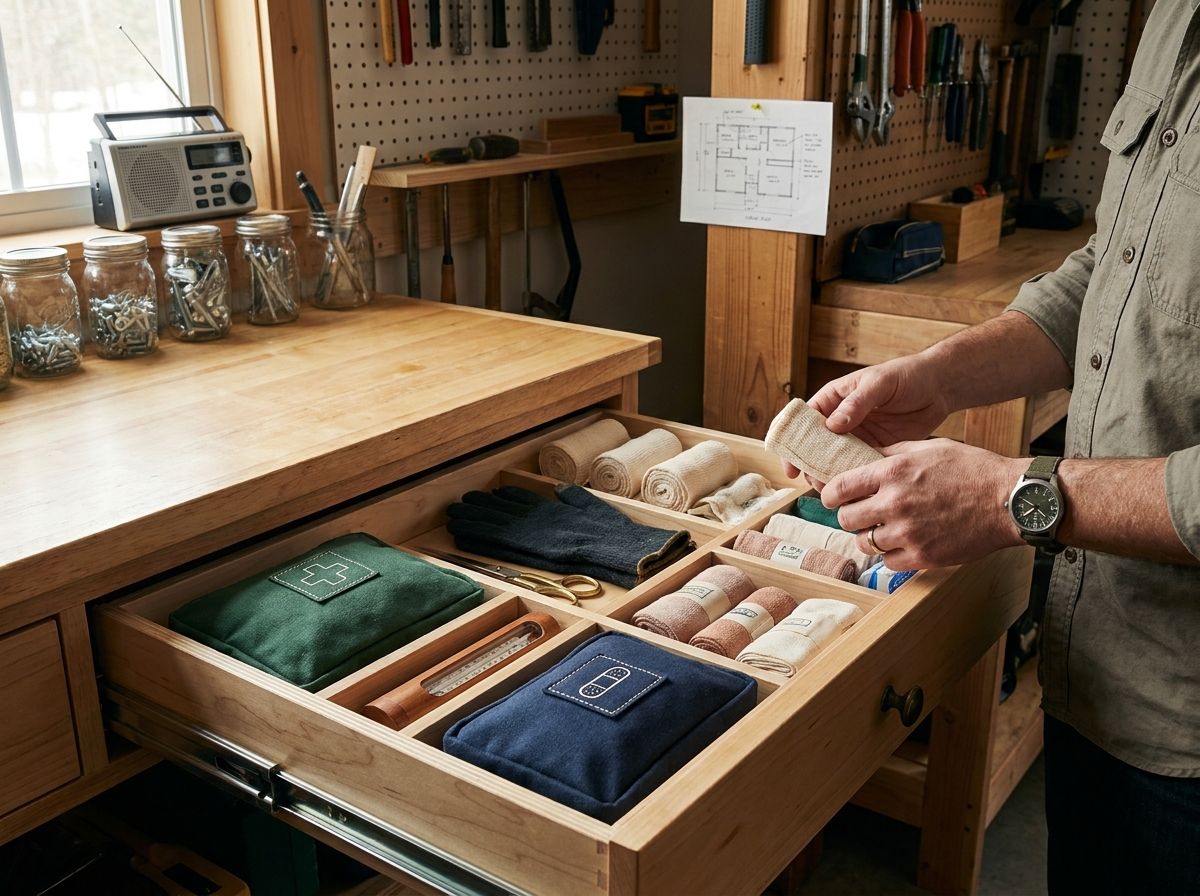
Core household first aid supplies include:
- Adhesive bandages in several sizes, including fingertip and knuckle shapes
- Sterile gauze pads, rolled gauze, and medical tape
- Nonstick wound pads for scraped or burned skin
- Disposable nitrile gloves in more than one size
- Antiseptic wipes and clean saline for rinsing wounds
- Tweezers, small scissors, and a digital thermometer
- Instant cold packs, elastic bandages, and triangular bandages
- A CPR face shield, emergency blanket, and flashlight
- Pain relievers and allergy medicine that your household already uses safely
- A printed list of allergies, regular medicines, and important phone numbers
The American Red Cross recommends checking first aid supplies regularly and replacing items after use. That sounds obvious until you discover the gauze was used to wrap a leaky pipe last winter. Put the kit on your household inventory, record quantities, and set a reorder point for items like gloves, gauze, and bandages.
Do not store loose pills in unlabeled bags. Keep medicines in their original containers, follow the label, and separate adult products from products intended for children. The Food and Drug Administration advises checking expiration dates and disposing of medicines through an accepted take-back option when available.
Handle cuts, scrapes, and punctures without overcomplicating them
For a small cut, wash your hands, put on gloves if available, and apply steady pressure with sterile gauze or a clean cloth. Hold pressure for several minutes without lifting the pad every few seconds to inspect the wound, since that habit can pull away the clot that is forming.
Once bleeding has slowed, rinse the wound under clean running water. Wash the surrounding skin with soap, but keep soap out of the wound itself. Remove visible grit with clean tweezers, pat the area dry, apply a thin layer of petroleum jelly if appropriate, and cover it with a sterile dressing. Change the dressing when it is wet, dirty, or loose.
A small scrape on Sam Wills's knee after a bicycle fall needs different attention from a deep cut caused by broken glass. For the scrape, Rosa Wills can rinse away grit, cover the area, and check it the next day. For broken glass, a wound that keeps reopening, or a cut with visible depth, home supplies are only the starting point.
Get urgent medical help when:
- Bleeding does not stop after firm, continuous pressure
- Blood is spurting or the wound is deep, wide, or on the face
- The injury causes numbness, loss of movement, or severe pain
- A nail, glass shard, or other object is deeply embedded
- An animal or person bite breaks the skin
- Redness, warmth, swelling, drainage, or worsening pain develops later
The Centers for Disease Control and Prevention recommends keeping tetanus vaccination current. Puncture wounds and dirty wounds carry more tetanus risk than clean, minor cuts, so check the injured person's vaccination record and contact a clinician when the status is unknown or overdue.
Skip hydrogen peroxide and rubbing alcohol for routine wound cleaning. They can irritate tissue and slow healing. Clean water, mild soap around the wound, a suitable dressing, and consistent observation are less exciting but more useful.
Treat small burns quickly and cool them correctly
A first aid kit cannot make a serious burn minor. What it can do is help you respond correctly to a small thermal burn while you decide whether the injury needs medical care.
Move away from the heat source and remove clothing or jewelry near the burn, unless it is stuck to the skin. Cool the area under clean, cool running water for about 20 minutes. The American Red Cross and other major first aid organizations advise cool running water rather than ice, butter, grease, or adhesive dressings placed directly over the injury.
Ice can damage already injured tissue. Butter does not pull heat out of skin. Neither belongs in a burn kit, regardless of what an old relative once insisted while waving a frying pan (that one gets repeated in a lot of households and it is always wrong).
After cooling, cover a minor burn loosely with a sterile, nonstick dressing or clean plastic wrap if that is the only clean option available. Do not break blisters. Over-the-counter pain medicine may help if the person can take it safely and the label directions fit their age and medical history.
For a small kitchen burn, your kit should make these steps easy. Keep nonstick pads, sterile gauze, gloves, clean water access, and pain medicine nearby. A tube of burn gel can be a useful addition, but it does not replace cooling the burn and should not be the only burn supply you stock.
Seek prompt medical care for burns that:
- Are larger than the person's palm
- Involve the face, hands, feet, genitals, major joints, or an area that wraps around a limb
- Look white, brown, black, leathery, or deeply blistered
- Were caused by electricity, chemicals, or an explosion
- Affect a person who is very young, older, medically fragile, or unable to describe symptoms
Chemical burns require special care. Brush away dry chemicals before flushing if the product instructions say to do so, remove contaminated clothing, and call poison control or emergency services for specific guidance. Keep product labels or photographs available for the call. Your kit helps, but the product information matters more than guessing.
Support sprains, strains, and possible fractures
A twisted ankle at the park, a strained back while moving a storage bin, or a jammed finger can leave you genuinely unsure what to do next. Start by stopping the activity. Check for severe pain, obvious deformity, numbness, skin color changes, or an inability to use the limb.
For a mild sprain or strain, support and comfort are the immediate goals. A cold pack wrapped in cloth can reduce pain and swelling for short periods. An elastic bandage can provide light support, but it should not cause tingling, numbness, increasing pain, or pale or blue fingers and toes. Remove it and seek advice if those signs appear.
Elevating the injured area may help with swelling. Do not force a joint back into position, test it repeatedly, or use massage during the first hours when swelling and pain are still climbing. A triangular bandage or sling can make transport easier, but it is not a diagnosis.
When Theo Wills slips on a wet step and lands on his wrist, a cold pack and comfortable support may be reasonable while the family assesses the injury. If the wrist is visibly bent, rapidly swelling, numb, or too painful to move, the household should treat it as a possible fracture and arrange medical evaluation rather than trying to straighten it themselves.
Your sprain and strain section of the basic first aid kit checklist should include:
- Two or more elastic bandages in different widths
- Instant cold packs stored where they will not be punctured
- A triangular bandage or commercial sling
- A rigid splint option, such as a padded board or approved splint
- Medical tape and soft padding
- A written note to remove tight wraps when circulation changes
Call emergency services for a limb that is badly deformed, cold, blue, numb, or associated with severe bleeding. Seek medical advice when pain or swelling is significant, weight bearing is impossible, or the injury is not improving as expected.
Add the overlooked items that solve real problems
A household kit becomes more useful when it handles the small problems that interrupt ordinary life. A splinter, blister, nosebleed, allergic reaction, or eye irritant may not look serious, but the wrong response can make it worse.
Stock clean tweezers for shallow splinters, blister pads for hot spots, saline or sterile eyewash for rinsing, and a small magnifying glass if household members have trouble seeing small debris. For a nosebleed, sit upright, lean slightly forward, and pinch the soft part of the nose continuously for 10 to 15 minutes. Do not tilt the head backward and swallow blood.
For an eye exposure, flush with clean lukewarm water for at least 15 minutes and follow product-specific instructions for chemicals. Do not rub the eye or try to remove an embedded object. Pain, vision changes, a penetrating injury, or a chemical exposure all need professional guidance.
Allergy supplies require special care. If someone has a prescribed epinephrine auto-injector, keep it with their medicines and make sure household members know where it is and how to use it according to the prescription instructions. Trouble breathing, swelling of the lips or tongue, faintness, or widespread symptoms after an exposure require emergency medical help, fast.
Include these often-missed supplies:
- Saline eye rinse and clean eye pads
- Blister cushions and moleskin
- Instant glucose or other approved treatment for a household member with diabetes
- A rescue inhaler stored according to its prescription
- A waterproof notepad and pencil for recording symptoms or treatment times
- A small trash bag for used gloves, dressings, and contaminated materials
Keep emergency numbers specific to your location. In the United States, Poison Control is available at 1-800-222-1222. Save local urgent care, veterinary, and primary care numbers as well. Scout, the family dog, does not need to share supplies with the people in the house, so keep pet-specific items and veterinary instructions in a separate labeled pouch.
With Mainstay's household inventory approach, you can track first aid items alongside food, water, documents, and other supplies without turning the kit into a forgotten box in the back of a cabinet. The goal is visibility, not collecting every product on the pharmacy shelf.
Organize, label, and check the kit on a schedule
A first aid kit works under stress when the layout is familiar. Use clear pouches or small containers labeled by task: wound care, burns, support, medicines, and tools. Keep gloves and gauze near the top. Put less frequently used supplies below them, but do not bury scissors, tweezers, or the thermometer.
Create a one-page basic first aid kit checklist and tape a copy inside the lid. Record the quantity and expiration date for medicines, cold packs, burn products, and anything that can dry out. Sterile dressings usually remain usable until their package is damaged or the labeled date passes. Replace any package that is wet, torn, dirty, or open.
A practical monthly check takes about five minutes:
- Open the kit and confirm that the main supplies are present
- Check medicines, ointments, wipes, and sterile packaging
- Replace anything used, expired, leaking, or damaged
- Confirm that emergency contacts and medication notes are current
- Return every item to its labeled location
Do a deeper review twice a year. Match medicine choices to the people who actually live in the home now. Check that child dosing tools are present if children use medication. Review allergies, prescriptions, contact lenses, and vaccination questions with a clinician rather than relying on memory.
Keep a second kit in the car only if you can protect it from extreme temperatures. Heat can damage medicines and some medical products, while freezing can affect liquids and cold packs. A small travel kit should include gloves, gauze, bandages, tape, wipes, tweezers, a cold pack, and a flashlight. It should not become a storage place for loose tablets.
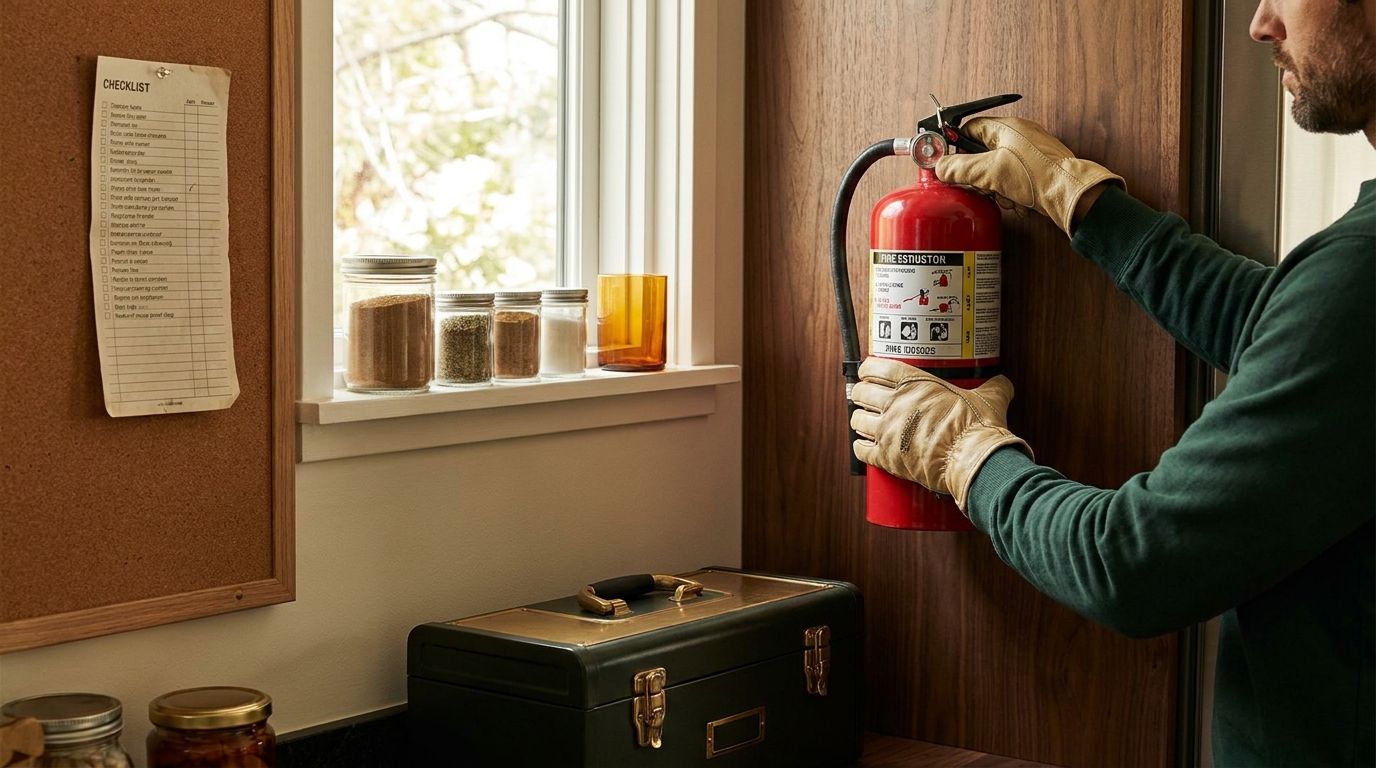
Write the kit's location on your household plan. Tell every capable household member where it is and what to do when an item is missing. A kit that everyone can find beats a larger kit known only to the person who bought it.
Know when the kit is not enough
Good first aid includes knowing when to stop treating at home. A kit supports immediate care, but it does not replace professional evaluation for severe or uncertain injuries.
Call emergency services for trouble breathing, severe bleeding, loss of consciousness, a suspected spinal injury, a severe allergic reaction, a major burn, or a limb that has lost normal color or sensation. Do not move someone after a serious fall unless leaving them in place creates immediate danger.
For less urgent problems, use a nurse line, primary care office, urgent care clinic, or poison control service. Describe what happened, when it happened, what the injury looks like, and what you have already done. That information helps the clinician give useful direction quickly.
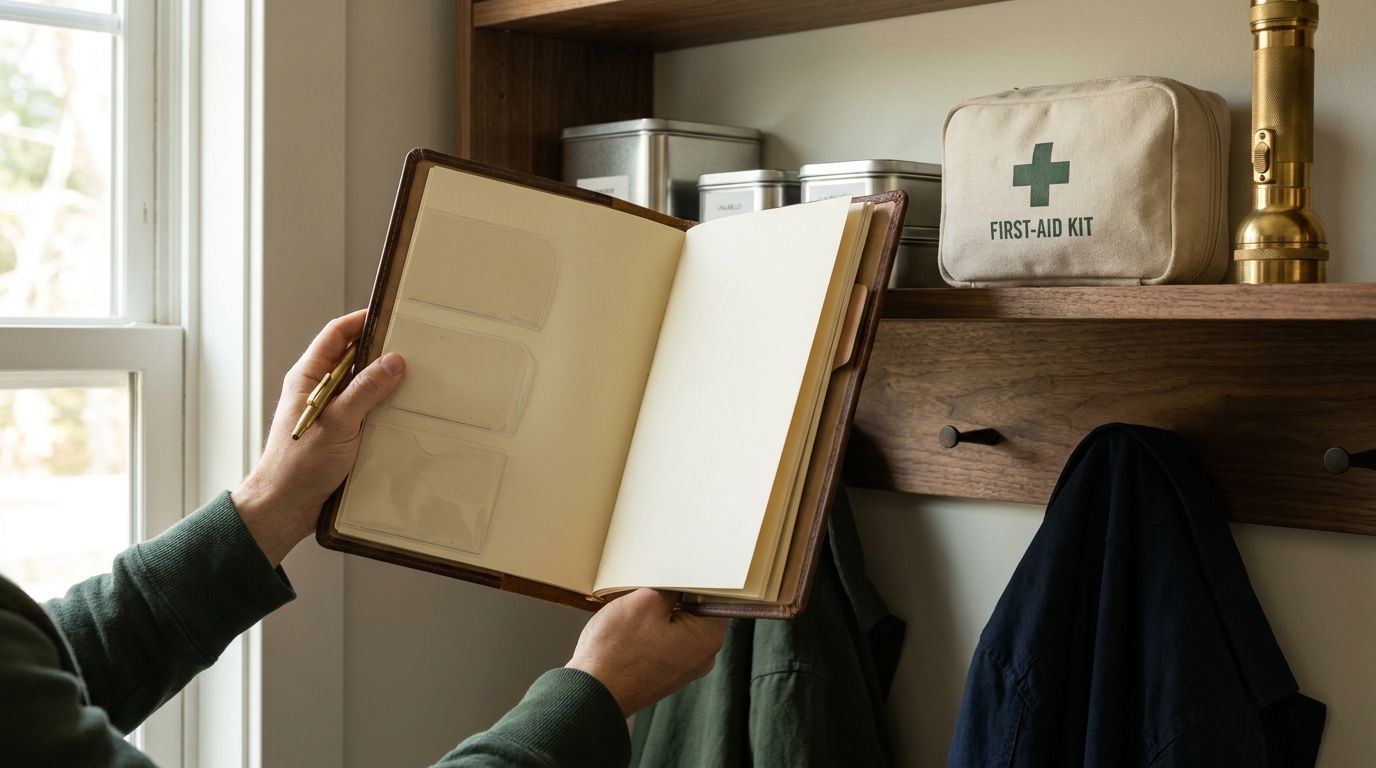
Keep a written household health page near the kit, not inside a locked document vault that nobody can reach under pressure. Include:
- Full names and dates of birth
- Allergies and serious medical conditions
- Regular medicines and prescribing clinician
- Emergency contacts and preferred medical facility
- Insurance information and vaccination questions
- Pet veterinary contact information if the home includes animals
Do not use a first aid kit to delay care because you are hoping an injury will look better by morning. If your judgment says the problem is beyond a small cut, mild burn, or manageable sprain, that judgment deserves attention.
The most useful next step is simple: set a five-minute timer today, gather your existing household first aid supplies, and place every item on the checklist. Mark what is missing, expired, or damaged. Restock the gaps, then put the finished kit where June, Rosa, Sam, Theo, and any other capable person in the household can find it without asking.
FAQ
What are the most important home first aid kit essentials?
Start with gloves, gauze, adhesive bandages, medical tape, wound-cleaning supplies, nonstick pads, tweezers, scissors, a thermometer, cold packs, elastic bandages, and a printed health information sheet. Add medicines and specialty supplies based on the people, pets, activities, and medical needs in your household.
Where should I store a household first aid kit?
Store it in a cool, dry, clearly labeled location that adults and older children can reach quickly. Avoid damp bathroom cabinets and places exposed to high heat. If you keep a kit in the car, protect medicines and temperature-sensitive products from extreme temperatures.
How often should I check a home first aid kit?
Do a quick check every month and a more complete review twice a year. Replace supplies after use, and remove medicines or products that are expired, damaged, contaminated, or stored outside their recommended conditions.
Should I include prescription medicine in a first aid kit?
Keep prescribed medicines in their original labeled containers and follow the storage and refill instructions from the prescribing clinician or pharmacist. Do not place loose pills in the kit. A written medicine list can stay with the kit, while the medicines themselves should remain in their normal secure storage.
When should I seek medical help for a cut or burn?
Seek urgent help for uncontrolled bleeding, deep or gaping cuts, loss of sensation, bites, embedded objects, major burns, chemical or electrical burns, and burns involving the face, hands, feet, genitals, or major joints. For any injury that is worsening instead of improving, contact a clinician promptly.
Want this handled automatically? See the Mainstay membership.
Subscribe to comment
Join the Mainstay newsletter to leave a comment — and get new field notes in your inbox.
Get new field notes in your inbox
Practical, calm preparedness — one useful note at a time.