Household emergency inventory template: what to track and why
Build a household emergency inventory that tells you what you have, where it is, when it expires, and what needs attention next.
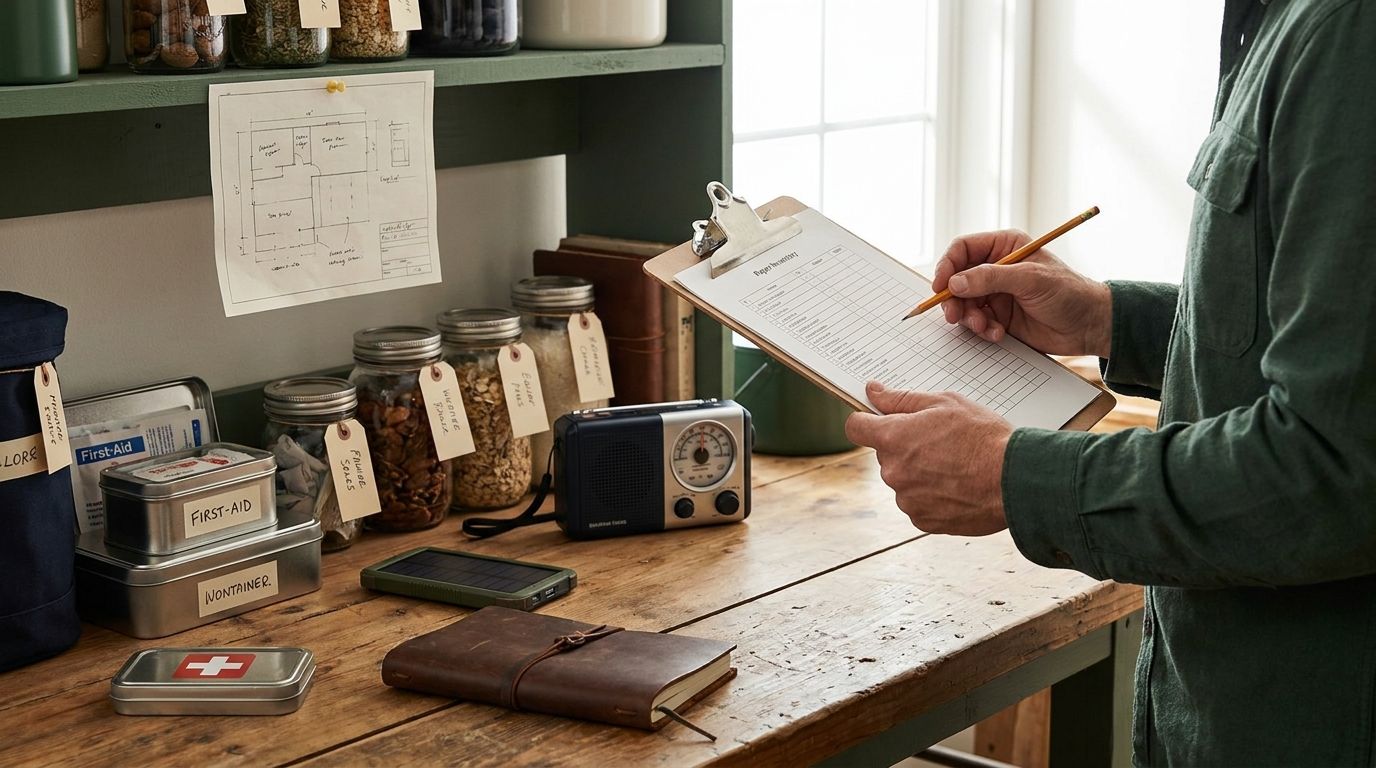
At 7:10 on a Saturday morning, the kitchen counter is covered with batteries, canned beans, two flashlights, and a bottle of children's fever medicine. You bought most of it at different times, so now you're trying to remember what's current and what's been sitting in the back of the cabinet since the last move.
A household emergency inventory template turns that guesswork into a clear working record. Track each supply, its quantity, condition, location, expiration or replacement date, and the next action required. That record helps you find gaps before a storm, outage, evacuation, or household illness makes a simple shopping trip a real problem.
The goal is not to own a warehouse. It is to know what your household can use today, what needs rotation, and what to purchase next. A useful inventory is a maintenance tool, much like the list you keep for air filters, vehicle oil changes, or tool batteries.
Build the template around decisions, not possessions
A weak inventory records objects. A useful one supports decisions. "Flashlights" is not enough information if you have four units but only one has working batteries. "Canned food" is too broad when two cans are dented, one is past its best-by date, and nobody in the household will eat the contents anyway.
Start with one row per supply or supply group. Use a group only when the items share the same use, location, and review date. A case of bottled water can be one row. A mixed drawer of medications should have separate rows because each item has a different expiration date and refill schedule.
Your basic household emergency inventory template should include these fields:
- Item or category
- Quantity on hand
- Unit of measure
- Minimum quantity you want available
- Storage location
- Condition or packaging status
- Expiration date or replacement date
- Last checked date
- Next action
The minimum quantity matters because it gives you a reorder point. If your household wants 12 gallons of stored water and the current count falls to 9, the inventory tells you to refill rather than relying on memory. The same approach works for propane, prescription medication, pet food, sanitation supplies, and spare charging cables.
Use plain names that another adult can understand in a hurry. "AA alkaline, unopened, hall closet" is more useful than "power supplies." If an item needs a special instruction, put that instruction in the notes field. A water filter, for example, may need a replacement cartridge even when the filter body looks fine.
You can keep the template on paper, in a spreadsheet, or inside a household dashboard. The tool matters less than the habit. Mainstay helps you keep household information, supplies, and plans current in one place, but a clipboard works if you will actually check it.
What belongs in an emergency supply inventory
Track supplies by household function rather than by store aisle. This keeps the list focused on what you need to do when normal services are interrupted. A practical emergency supply inventory usually covers water, food, health, sanitation, light and power, communication, documents, tools, transportation, and pet care.
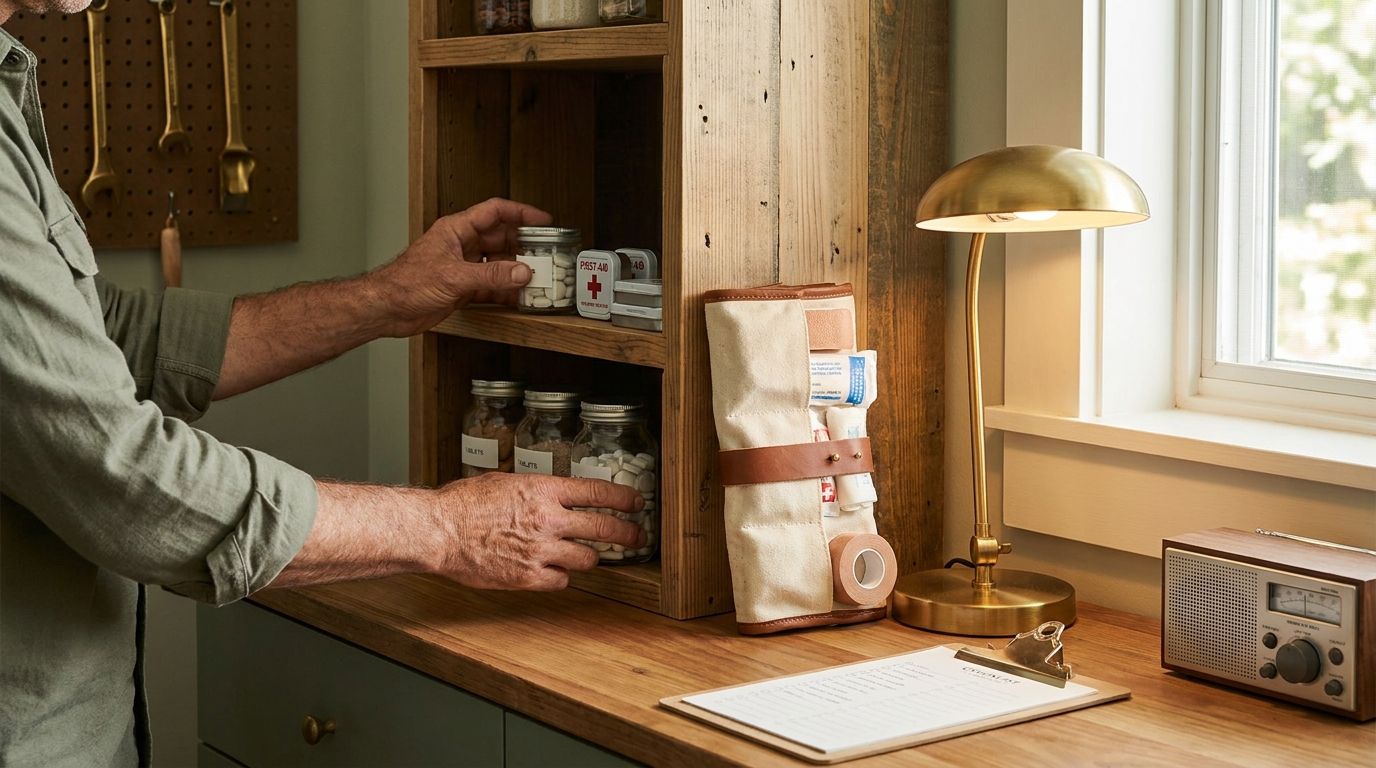
For each category, record the item that performs the task. Under light and power, list flashlights, lanterns, batteries by size, charging cables, and any backup power equipment. Under sanitation, record soap, toilet supplies, disinfectant, trash bags, gloves, and personal hygiene products. Under health, include first aid materials, prescription medicines, over-the-counter medicine, glasses, hearing aid supplies, and medically necessary equipment.
A category review can use these prompts:
- Water: How much drinking and basic-use water is available, and what containers need inspection?
- Food: Which foods are ready to eat, compatible with household diets, and within rotation dates?
- Health: Can each person access current medicines, glasses, medical supplies, and care instructions?
- Sanitation: Could the household manage waste, hand cleaning, and personal hygiene without normal plumbing?
- Power: Which devices need charging, fuel, batteries, or a manual alternative?
- Communication: Are contact information, radios, chargers, and written instructions available?
- Documents: Can you reach insurance, identification, medical, and financial records if the internet is down?
The Centers for Disease Control and Prevention commonly uses one gallon of water per person per day as a planning baseline for drinking and sanitation, while household needs vary with climate, age, health, and activity. Record your actual target rather than copying a number without thinking about the specific people and animals in your home.
Pets belong in the inventory too. Scout's food, medication, leash, waste bags, carrier, and vaccination records carry the same practical weight as any household supply. A record that ignores an animal creates a gap, not a smaller plan.
Track quantity in a way that survives a stressful day
Quantity errors are common because people count containers rather than usable supply. Write the unit beside every number. "Six" could mean six cans, six meals, six liters, or six cases. "Water: 18 gallons" is immediately useful. "Batteries: 8 AA, 4 AAA, 2 D" is better than "14 batteries."
Separate unopened stock from opened or partially used supplies when the distinction affects reliability. An opened package of batteries may still work, but it should not be counted as equivalent to a sealed package if you have not tested it. A half-full propane cylinder needs a different note from a full one. A medication bottle with ten doses remaining should show the dose count and refill timing.
Set a household minimum based on actual use, not a dramatic number pulled from a generic checklist. In Eugene, Oregon, Marcus might set a 10-day pet food minimum because the nearest specialty store is far away. In Miami, Leah might keep extra water and cooling supplies because a summer outage creates a heat problem fast. The right number depends on household size, health needs, climate, transportation, and the disruptions that are plausible where you live.
Use a simple quantity formula when you are setting a target:
- Daily use multiplied by the number of people or animals
- Add the number of days you want covered
- Add a small working margin for spills, visitors, or unusual use
For example, a household with four people and one dog might record drinking water separately from stored water for cooking and hygiene. If the household target is four gallons per person per day for three days, the people-only target is 12 gallons. Pet water and additional sanitation water need their own line, not a vague note in the margin.
Do not inflate the numbers just to make the inventory look strong. A precise count that reveals a shortfall gives you something to fix. An impressive count with unclear units gives you false confidence.
Add dates, condition, and replacement triggers
An expiration date is only one part of supply quality. Some items have a printed date that matters. Others need a condition check, a test, or a replacement interval. Your template should distinguish food best-by dates, medication expiration dates, battery replacement dates, filter service dates, fuel age, and equipment inspection dates.
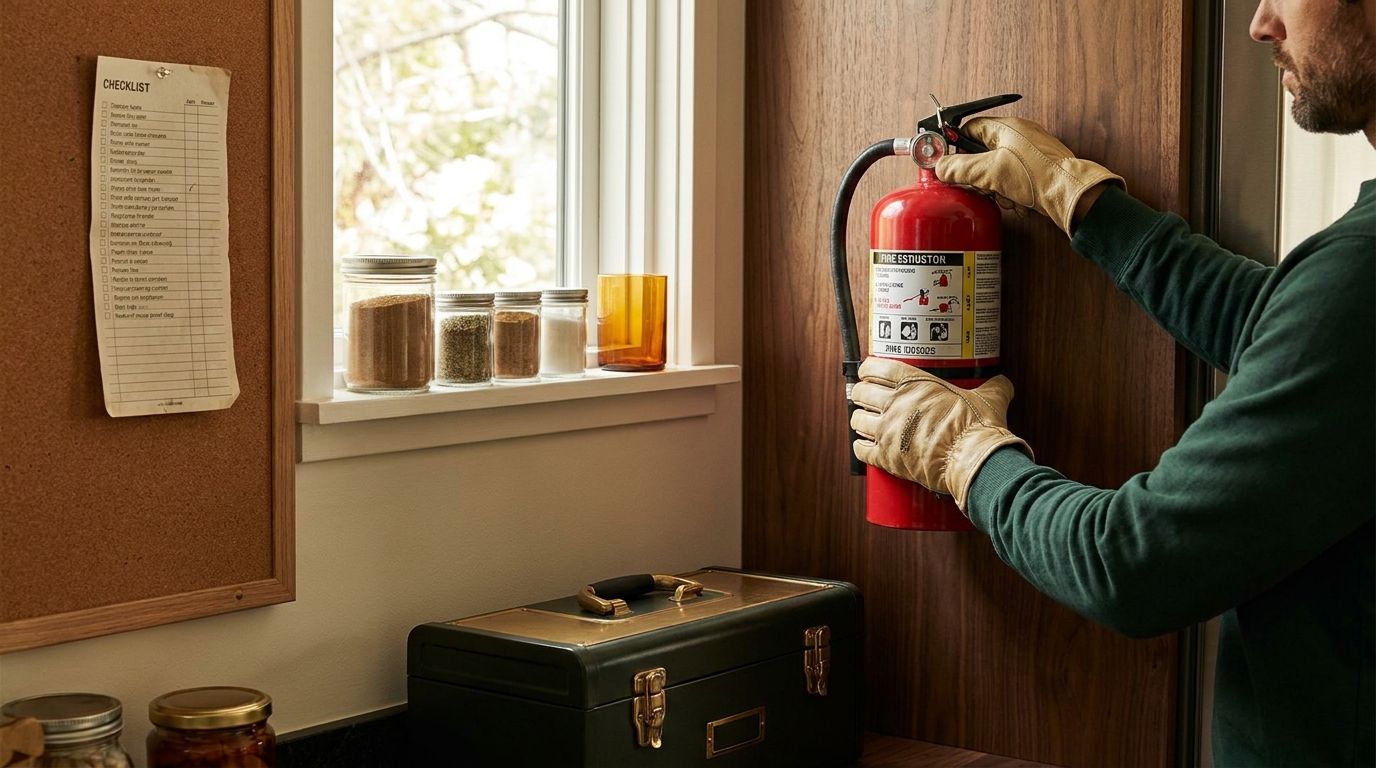
Use the date that controls the next decision. For canned food, record the printed date and rotate the item through normal meals before quality declines. For a first aid dressing, inspect the wrapper for damage and record the expiration. For a fire extinguisher, note the inspection indicator and service requirement rather than treating it like a food product.
Condition deserves its own field because a dated item can still be unusable. Check for leaking containers, swollen cans, torn packaging, corrosion, cracked plastic, moisture damage, pest evidence, and missing parts. The U.S. Department of Agriculture advises keeping a refrigerator closed during a power outage and notes that a full freezer generally holds temperature longer than a partly full one. Your inventory can record freezer contents and the time a power interruption began, which makes later decisions less subjective.
Use action labels that are easy to scan:
- Keep: current, accessible, and in working condition
- Use soon: still usable but nearing a rotation date
- Test: function is uncertain and needs a check
- Replace: expired, damaged, empty, or unreliable
- Move: stored somewhere the household cannot reach quickly
A good review does not require throwing out everything with an old date. Follow the product guidance for medicines, chemicals, filters, and fuel. Food quality dates are not all safety dates, but damaged packaging, spoilage, and unsafe storage change the calculation. When you are unsure about a high-consequence item, replace it or consult the manufacturer's guidance.
Record location and access, not just ownership
A supply that nobody can find is only partly useful. Your inventory needs the actual storage location, not merely "the house." Write "hall closet, top shelf, blue bin" or "garage cabinet, left side, lower shelf." If an item requires a key, ladder, combination, or tool to reach, record that access detail in the notes.
Consider the conditions in that location. Water, canned food, medicine, batteries, fuel, and paper documents do not all belong in the same environment. Heat, freezing temperatures, humidity, sunlight, pests, and flooding can shorten useful life. A garage may be convenient for tools but wrong for temperature-sensitive medication. A basement shelf may be dry today and vulnerable during heavy rain.
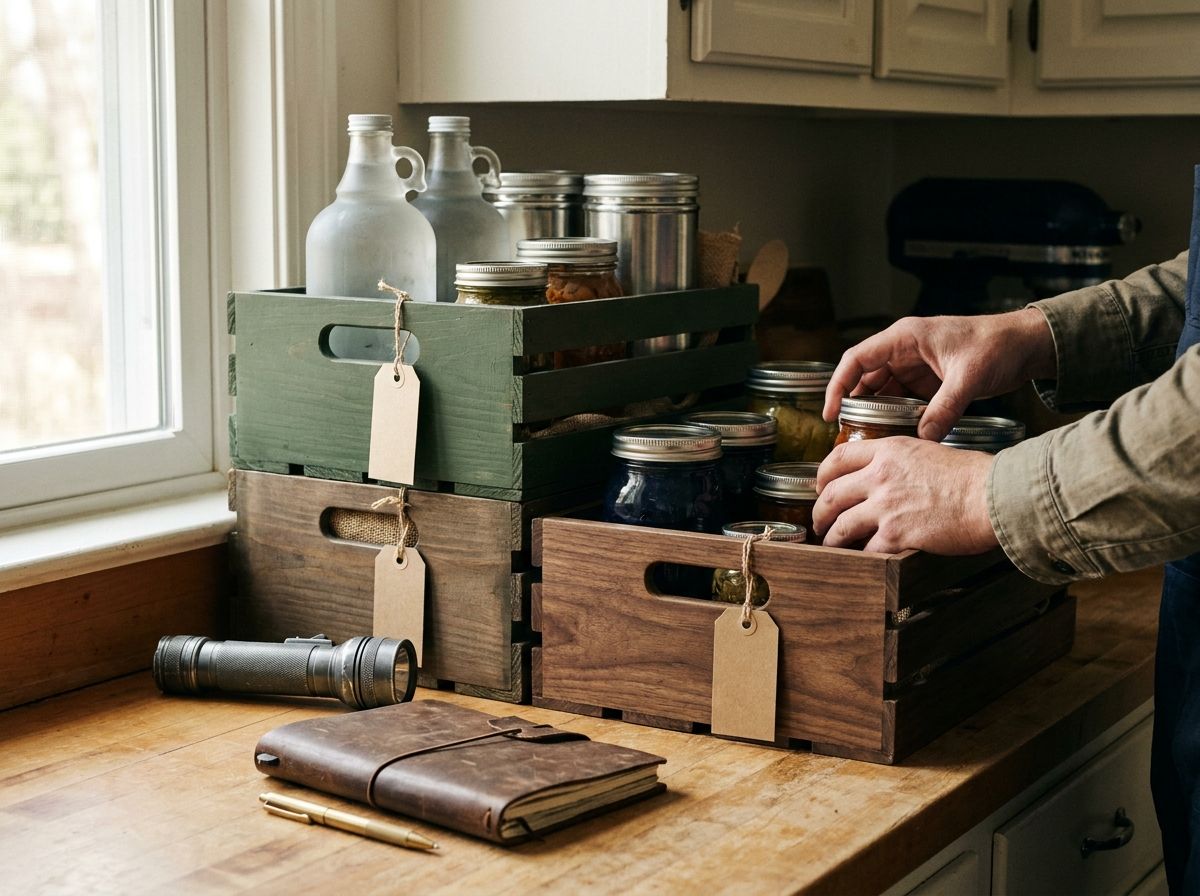
Keep high-use items where you can reach them without moving half the room. Store backup supplies together when that makes sense, but do not create one large box that becomes impossible to carry. A household may need a small first-use container for immediate access and a larger reserve stored elsewhere.
Rosa Wills can write a location that makes perfect sense to her, but the real test is whether another adult can find the item without calling her. Ask someone who did not create the inventory to locate the water filter, first aid kit, and document folder. If they cannot, improve the label or location before you improve the spreadsheet.
Your emergency inventory should also identify the person responsible for a category when that matters. A supply does not need a permanent owner, but someone should know who checks prescriptions, rotates food, tests equipment, and updates pet records. Keep the information available offline if the digital version depends on power or internet access.
Turn the inventory into a review rhythm
A template becomes useful when it creates a repeatable check. You do not need to inspect every item every week. Match the review interval to the item's risk, shelf life, and rate of use.
A short weekly check can cover obvious changes: missing flashlights, low bottled water, opened food, depleted medicine, or a used sanitation item. A monthly review can cover quantities, dates, equipment tests, and location. A seasonal review can account for winter heat, summer cooling, storm supplies, wildfire smoke, travel, school schedules, and pet needs.
Set the next action while you are looking at the item. "Check batteries" is vague. "Test AA flashlight on October 12" gives you a task and a date. Same problem with "buy more water" versus "add four 1-gallon containers to the next grocery trip." One is specific enough to finish.
A practical review sequence looks like this:
- Open the inventory and filter for items due this month
- Find the item and compare the recorded quantity with the actual count
- Check condition, date, and storage location
- Rotate usable items into normal household use
- Record the replacement, purchase, test, or relocation action
- Update the last checked date before putting the item away
Keep a short purchase list generated from the review. That stops every audit from becoming an expensive shopping spree. It also makes gaps visible when money or storage space is limited, so you can handle the most important shortfall first.
Do not wait for a perfect system. On October 4, open a note and record the supplies that would cause the most trouble if missing. Add five more categories during the next review. A rough inventory that you maintain will outperform a beautiful template that you abandon after one weekend.
A household emergency inventory template you can copy
Use the following columns in a spreadsheet, notebook, or printed sheet:
| Item | Category | Quantity | Unit | Minimum | Location | Condition | Expiration or replacement date | Last checked | Next action |
|---|---|---|---|---|---|---|---|---|---|
| Stored water | Water | 12 | gallons | 12 | Pantry, lower shelf | Sealed | Review October 2026 | October 4, 2026 | Inspect containers |
| AA batteries | Light and power | 8 | batteries | 8 | Hall closet, blue bin | Sealed | Replace October 2028 | October 4, 2026 | Keep |
| Dog food | Pet care | 10 | days | 10 | Pantry, sealed tub | Current | Use by January 2027 | October 4, 2026 | Rotate oldest bag |
| Prescription medicine | Health | 30 | doses | 14 | Bedroom cabinet | Current | Refill October 20, 2026 | October 4, 2026 | Request refill |
| Water filter cartridge | Water | 1 | cartridge | 1 | Utility shelf | Sealed | Replace October 2027 | October 4, 2026 | Keep |
You can expand the template with cost, supplier, model number, weight, or special instructions. Keep those additions only if they help you make a decision. Too many fields turn a household check into clerical work, and nobody needs another unpaid office job in the garage.
If your household has medical equipment, mobility needs, dietary restrictions, children, older adults, or animals, add a notes field for the specific requirement. Record the item and the action, not private details that do not belong in a general inventory.
The strongest template has a clear owner, a visible next action, and a review date. It tells you what to buy, what to use, what to test, and what to move. That is the difference between a pile of supplies and a maintained household resource.
FAQ
What should a household emergency inventory track?
Track the item, quantity, unit, minimum amount, location, condition, expiration or replacement date, last check, and next action. Include supplies for water, food, health, sanitation, power, communication, documents, tools, transportation, and pets.
How often should I update my emergency supply inventory?
Do a quick check weekly for items that are used often, a more complete review monthly, and a seasonal review when weather or household routines change. Review high-consequence items such as medicines, fuel, filters, and safety equipment according to their product guidance.
Should I use paper or a digital household emergency inventory template?
Use the format you will maintain. Digital records are easy to sort and update, while paper remains available without power or internet. Many households benefit from a digital master copy plus a short printed list of locations, contacts, and priority supplies.
How do I track emergency supplies with expiration dates?
Record the relevant date beside each item, then add a next action such as rotate, test, replace, or request a refill. Dates should be paired with condition checks because damaged packaging, heat, moisture, and missing parts can make an item unreliable before the printed date.
What is the fastest way to start a home preparedness inventory checklist?
Walk through your home and record the supplies that would create the biggest problem if missing. Count them, write down where they are, set a minimum, and schedule one next action for each gap. Add lower-priority categories during later reviews.
Open a blank page today and inventory one cabinet, shelf, or closet. Record the quantity, location, condition, and next action for every useful item you find. Then set a date for the next review. That small record is enough to start turning household supplies into a system you can trust.
Want this handled automatically? See the Mainstay membership.
Subscribe to comment
Join the Mainstay newsletter to leave a comment — and get new field notes in your inbox.
Get new field notes in your inbox
Practical, calm preparedness — one useful note at a time.