How much food should a household store for an emergency?
Use a simple household food preparedness formula to decide how much to store, what to buy, and how to keep your supply useful.
June Wills stood in the kitchen with the freezer door open, a flashlight clenched between her teeth and three bags of frozen vegetables slowly warming on the counter. The power had been out since dinner. Her household had plenty of food, technically. It was just the wrong food for a dark kitchen with no working stove.
The practical answer to how much emergency food to store is this: start with three days of food for every household member, then build toward two weeks if your space and budget allow. Calculate household food preparedness by multiplying the number of people by the number of days, then adjust for calories, dietary needs, cooking limits, and pets.
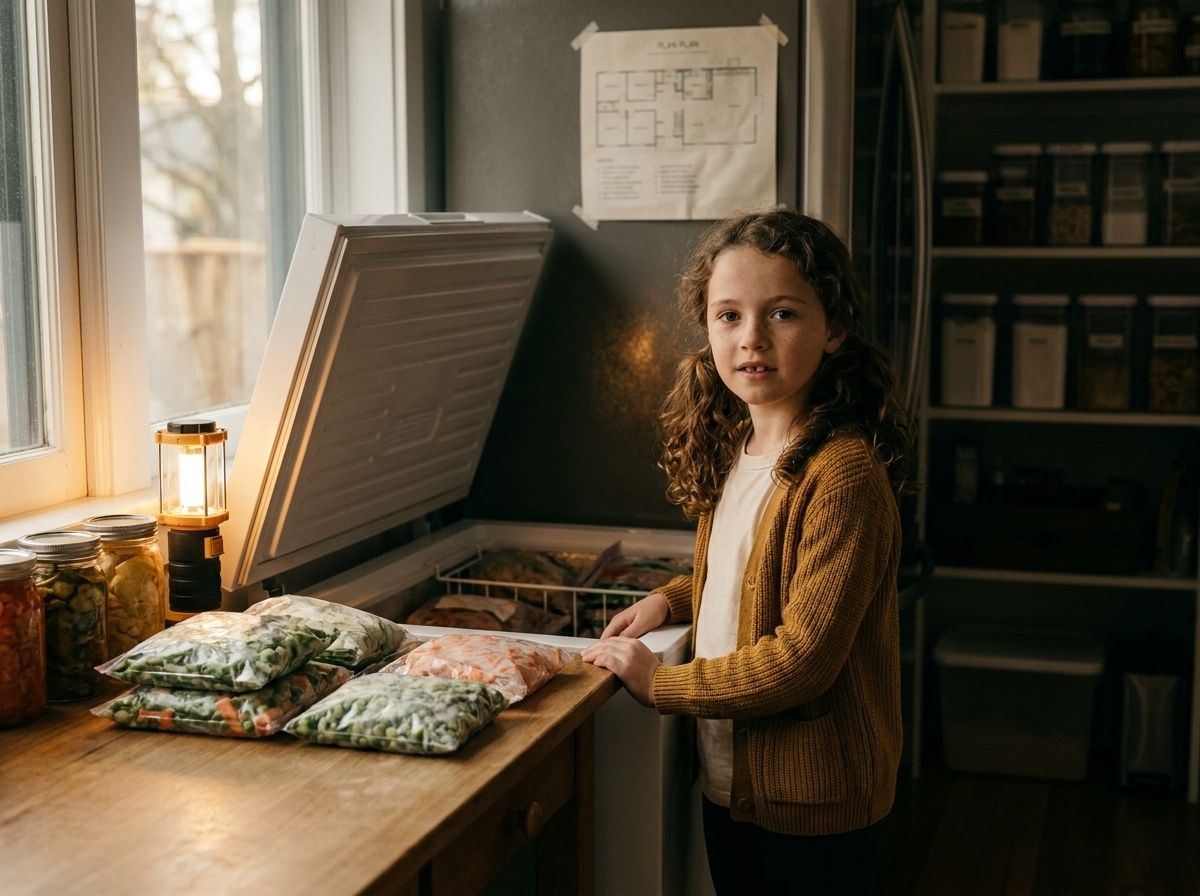
June had made a familiar mistake. She had bought food for ordinary life, not food her household could actually use during a power outage. That is not a character flaw. Most of us shop around meals, schedules, and appetite, and a disruption exposes the gaps fast.
The goal is not to fill a basement with military rations. It is to build a calm, usable food reserve that actually matches the people who live in your home.
Start with people, days, and calories
A useful emergency food supply calculator does not need to be complicated. Begin with three numbers:
- The number of people in the household
- The number of days you want to cover
- The approximate calories each person needs per day
The Food and Drug Administration uses 2,000 calories per day as a general reference for nutrition labels. That number is not a personal prescription. Children, teenagers, older adults, pregnant people, active workers, and people with medical needs may all land somewhere different.
For a household of two adults, one teenager, and one younger child, a three-day baseline might look like this:
- Two adults at roughly 2,000 calories per day
- One teenager at roughly 2,400 calories per day
- One younger child at roughly 1,400 calories per day
- About 23,400 calories for the household across three days
That total gives you a planning target. It does not tell you to buy 23,400 calories of crackers and peanut butter and call the job finished. Calories are only the first check. The food also needs to be edible, familiar, safe for the household, and practical to prepare.
A simple formula looks like this:
People x days x daily calories = approximate household calorie target.If you are building a 14-day supply for two adults who each average 2,000 calories, the starting target is 56,000 calories. If one adult has diabetes, one person cannot eat gluten, and your cooking setup runs on electricity, the shopping list needs to reflect those facts.
How many days should you cover?
Three days is a reasonable starting point. It gives you a basic buffer for a power outage, storm, water interruption, or short access problem. Ready.gov and the American Red Cross both encourage households to keep several days of food and water available.
Two weeks is a stronger household baseline when you have storage room and a steady rotation habit. It can make a longer outage less frantic, especially if roads are difficult or local stores are running thin.
You do not have to jump from an empty pantry to a 14-day supply. Add a few shelf-stable meals during each normal grocery trip. Progress counts, even when the pantry is built one can at a time.
Turn calories into actual meals
A calorie target is useful on paper. Your household still needs breakfast, lunch, dinner, snacks, drinks, and food that people will willingly eat when the day is already strange.
Build your emergency food quantities around familiar meal parts rather than buying one category in bulk. A supply that contains only canned soup may meet part of the calorie target, but it will get old quickly and may not deliver enough protein, fat, or variety.
A practical food reserve can include:
- Ready-to-eat proteins such as canned tuna, chicken, beans, lentils, and shelf-stable meat
- Filling carbohydrates such as oats, rice, pasta, crackers, tortillas, and boxed cereal
- Fats and calorie-dense foods such as peanut butter, nuts, seeds, olive oil, and shelf-stable spreads
- Fruits and vegetables such as canned peaches, applesauce, dried fruit, canned tomatoes, and vegetables
- Comfort foods such as coffee, tea, cocoa, shelf-stable milk, and a few familiar snacks
The exact mix depends on whether you have a safe way to boil water or cook. Rice and dry beans are efficient pantry staples during ordinary life, but they require water, heat, and time. Canned beans and ready-to-eat grains cost more per serving, yet they tend to be far more useful when the power is out.
For each day you plan to cover, sketch out meals before you buy. Assign breakfast, lunch, dinner, and two snacks. Then check whether every meal requires an appliance, a can opener, refrigeration, or more water than you can spare.
This is where many food plans get real. A can of soup is not a meal plan until you know how you will heat it, open it, serve it, and replace the calories your household needs.
What does a household food plan need to account for?
Write down the details that change what your household can eat:
- Food allergies and intolerances
- Medical diets and texture needs
- Infant formula or baby food
- Foods that children will actually accept
- Caffeine, sweeteners, and familiar comfort foods
- Pet food and any required medications mixed with food
If someone relies on a specific product, store the product they already use. A sudden switch is hard on the household and may be unsafe for some people. The same principle applies to pets. Scout does not need a gourmet menu during a disruption, but Scout does need enough regular food to avoid an unnecessary diet change while the household is already working through other problems.
The Red Cross advises households to consider special dietary needs when building emergency supplies. That sounds obvious, but it is easy to overlook when the shopping cart is full of generic items nobody normally eats.
Use a realistic emergency food supply calculator
Online calculators can give you a starting number, but no calculator knows your kitchen. The most useful calculator is one you can audit against your actual household.
Use this process:
1. Count every person who may rely on your food supply, including regular visitors who may be present during a disruption.
2. Choose a starting period, such as three days, seven days, or 14 days.
3. Estimate daily calories using age, activity, health needs, and normal eating patterns.
4. Convert the calorie target into meals, snacks, drinks, and cooking requirements.
5. Subtract food already stored that is shelf-stable, familiar, and within its usable date.
6. Buy the gaps, then record what you added and when it should be rotated.
That last step matters. Household food preparedness is not a one-time shopping trip. Food disappears. A teenager finds the granola bars. Someone takes the canned chili to work. The olive oil becomes part of dinner. Nothing went wrong. Your inventory simply changed.
A useful pantry count tracks more than containers. Record the food type, quantity, best-by date, storage location, and whether it needs cooking. If an item has a short shelf life, note the month you plan to use it.
Mainstay can help you keep this current by giving you a place to track inventory, household details, and the plans connected to your supplies. The tool is not the plan. Your decisions are the plan. A current record just makes those decisions easier to see.
How much food should you store per person?
There is no single container count that works for every person. Calorie needs vary, and food packaging varies widely. A better benchmark is to store enough for your chosen number of days, then confirm that the supply includes complete meals.
For a rough starting point, one adult may need around 6,000 calories for three days if their daily intake is near 2,000 calories. A seven-day supply would be about 14,000 calories. Use those figures as planning markers, not medical advice.
A seven-day food shelf for one adult might include:
- Seven breakfasts with oats, cereal, fruit, or shelf-stable milk
- Seven lunches with canned protein, beans, crackers, tortillas, or ready-to-eat meals
- Seven dinners with a protein, carbohydrate, and vegetable or fruit
- Seven or more snacks with enough calories to fill gaps
- Drinks, seasonings, and foods that require little or no preparation
The numbers will shift for children and older adults. A physically active adult may need more food than the label reference suggests, and your own normal pantry use is often more accurate than a generic chart.
Store food so it stays useful
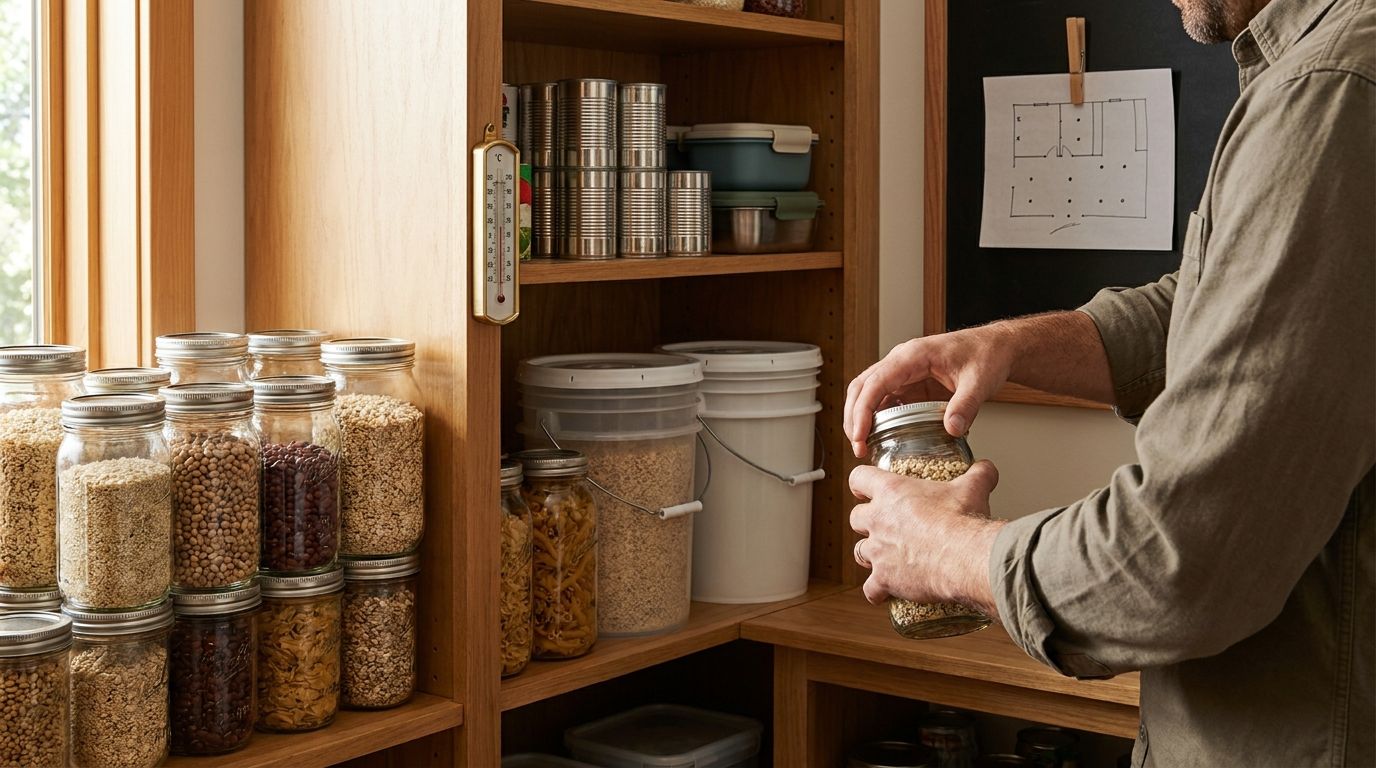
The best emergency food quantities are wasted if heat, moisture, pests, or forgotten dates ruin them. Store food in a cool, dry, dark area whenever possible. Keep it off the floor and away from chemicals, fuel, and cleaning products.
The USDA FoodKeeper tool offers storage guidance for many common foods. Use the manufacturer's date and storage instructions, but also inspect the package. A swollen can, leaking container, broken seal, or severe rust belongs in the discard pile. Full stop.
Use the food you already know. Put newer items behind older ones, and bring older items into ordinary meals before they reach the end of their useful window. This is not a perfect warehouse system. It is a pantry that turns over.
A simple rotation routine can happen once a month:
- Check five to ten items for damage or leaks
- Pull older food forward
- Compare the shelf with your inventory record
- Replace anything used, expired, or no longer accepted by the household
Keep a manual can opener with the food. Store disposable utensils, paper towels, and a few sturdy containers nearby. If you use a camping stove or other cooking equipment, follow its safety instructions and keep fuel separate from food.
Water deserves its own calculation. Cooking dry rice, washing a pot, and mixing powdered drinks all use water beyond what you drink. The CDC commonly recommends storing at least one gallon of water per person per day for drinking and sanitation, with more needed in hot weather or for medical needs. Food planning without water planning leaves a large hole in an otherwise solid setup.
Make the plan fit your household
Maybe your budget only supports three days right now. Maybe your apartment has one narrow cabinet and no cool basement. Maybe your household has allergies, a picky eater, or a dog whose stomach objects to every sudden change. These are planning facts, not failures.
Choose the next useful step:
- Add one shelf-stable dinner for each person
- Replace one food item your household will not eat
- Calculate the calories already on your shelves
- Store the missing cooking tool
- Add pet food to the same rotation check
June's freezer problem had a small solution. The following week, she added canned beans, tuna, crackers, shelf-stable milk, fruit cups, peanut butter, and meals her household already liked. She also bought a hand-crank can opener, which is less exciting than a new kitchen gadget but considerably more useful when the kitchen has no power.
The point was not to create a perfect supply. It was to make the next meal obvious.
Your household does not need a dramatic stockpile to feel more steady. Start with the people at your table, count the days you want to cover, and buy food that still makes sense when the lights are off. Then write down what you have and use it often enough that it stays current.
FAQ
How much emergency food should I store for a family of four?
Start with three days of food for four people, then work toward seven to 14 days if your space and budget allow. Calculate each person's approximate daily calories instead of multiplying a generic container count. Include dietary needs, snacks, drinks, cooking limits, and pet food where relevant.
What is the best emergency food supply calculator?
The most useful calculator is people multiplied by days multiplied by approximate daily calories. Then convert the result into meals and subtract food you already have that is shelf-stable, familiar, and usable without unavailable equipment.
Should emergency food be ready to eat?
Include ready-to-eat food, especially if your household may lose power or have limited water and cooking access. Dry staples can be valuable, but they require fuel, water, time, and safe preparation.
How long does emergency food last?
Shelf life depends on the food, packaging, storage conditions, and manufacturer's guidance. Store food in a cool, dry place, inspect packages regularly, and rotate older items into ordinary meals so your supply does not quietly become a box of forgotten dates.
Want this handled automatically? See the Mainstay membership.
Subscribe to comment
Join the Mainstay newsletter to leave a comment — and get new field notes in your inbox.
Get new field notes in your inbox
Practical, calm preparedness — one useful note at a time.