How to build a household readiness maintenance schedule
A household readiness schedule keeps supplies current without turning preparedness into a second job. Build a simple calendar around inspections, rotation, and seasonal needs.
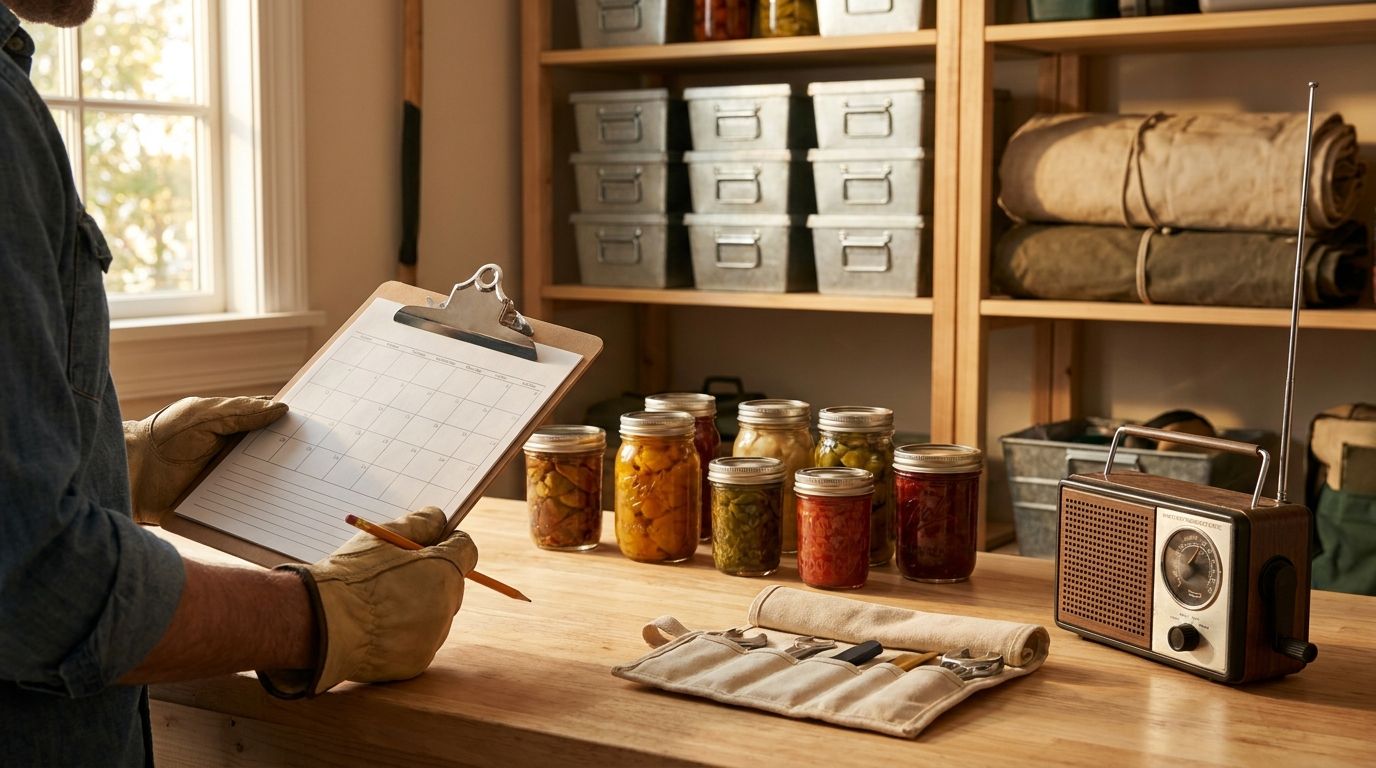
At 7:12 on a rainy Tuesday morning, Alex Mercer opened the kitchen cabinet for coffee and found three dead batteries, a can with no label, and a flashlight buried behind the paper towels. Nothing had failed dramatically. The household readiness schedule had simply never existed.
A useful schedule turns preparedness maintenance into ordinary household upkeep. You set a baseline, assign each task a reasonable interval, and put the dates somewhere you'll actually see them. The goal isn't to inspect every item every week. It's to make sure supplies, documents, equipment, and household plans stay current as the months pass.
The best home emergency checklist schedule has a short monthly check, a deeper seasonal review, and a yearly reset. That rhythm catches expired food, low batteries, missing documents, changing medical needs, and equipment problems before they become urgent. It also keeps the work small enough to actually finish.
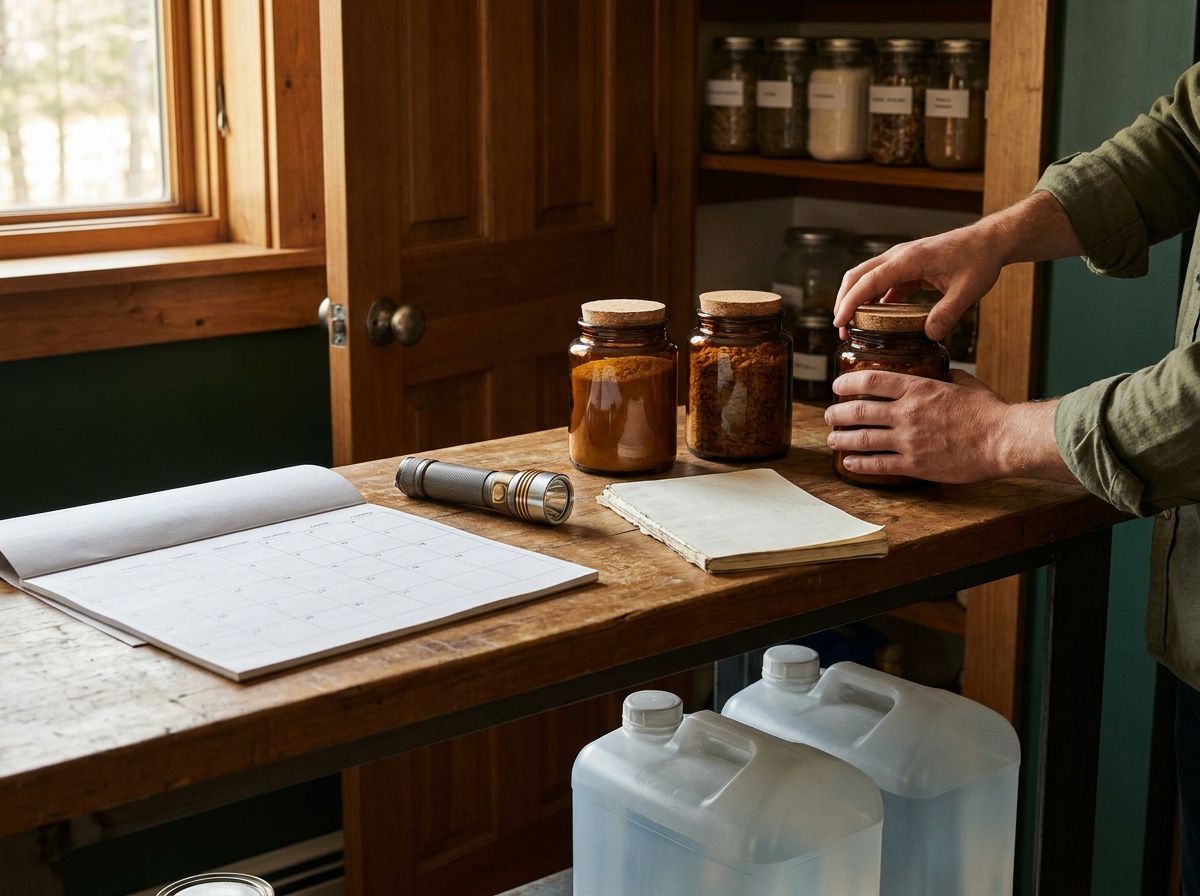
Build your schedule around maintenance intervals
A household readiness schedule works when each task has a natural reason to happen. Some items need frequent attention because you use them often. Others can sit for months but still need a deliberate look.
Start by sorting household readiness tasks into maintenance intervals. Use these as a starting point, then adjust them to fit your home:
- Weekly: glance at the household dashboard, note new needs, and return supplies to their assigned locations.
- Monthly: inspect water, food, lights, batteries, first aid, communication tools, and key documents.
- Quarterly: test equipment, rotate supplies, review contact information, and inspect storage conditions.
- Twice yearly: review seasonal clothing, heating or cooling needs, vehicle supplies, and outdoor equipment.
- Yearly: rebuild the household plan around current residents, pets, medications, finances, and home changes.
That doesn't mean you need five separate appointments. Combine related work into one short session. A monthly check might take 15 minutes. A seasonal review may take 45 because it includes equipment testing and a more detailed inventory.
The schedule should also match how your household actually operates. If the first Saturday of each month is already set aside for errands, add a supply check before you leave. If you manage household records on Sunday evenings, pull up the document vault at the same time. A calendar slot that already exists is easier to keep than a new ritual that depends on peak motivation.
Avoid pinning exact dates to items that don't need them. Use clear intervals instead: "check each month" or "review every October." The point is reliable maintenance, not a beautifully formatted calendar that nobody follows.
Start with a baseline audit
Before you build a preparedness maintenance calendar, find out what you already have. A schedule can't fix an unknown starting point, it only gives you a regular way to revisit the unknown.
Walk through the home with a notebook or your phone. Record each supply category, its location, its quantity, its condition, and its next action. Don't aim for perfect detail on the first pass. You're building a working baseline, not writing a museum catalog.
Check the places where supplies tend to disappear from view:
- Kitchen cabinets and pantry shelves
- Garage, basement, attic, and outdoor storage
- Vehicle glove boxes and cargo areas
- Bathroom cabinets and first aid locations
- Desk drawers, document folders, and bedside storage
- Pet supply areas and medical storage
During the audit, sort findings into four simple labels: current, low, expired, and unknown. "Unknown" matters most. If you can't tell when something was purchased, whether a battery still holds a charge, or where a document is filed, that item needs attention even if it looks fine.
Alex in Portland, for instance, found two unopened water containers in a garage cabinet. One had a cracked lid. The other had no purchase date and sat next to a can of paint thinner. The audit didn't create a dramatic moment, but it turned up a storage problem, a labeling problem, and a replacement task. Three concrete fixes.
Record the next action beside each issue. "Replace," "test," "move," and "confirm" are more useful than a vague note like "check supplies." If a task will take longer than 20 minutes, split it into a smaller appointment. A schedule survives when each entry tells you exactly what to do.
Match the calendar to the way supplies age
Not every item becomes unreliable for the same reason. Your preparedness maintenance plan should account for expiration dates, physical wear, changing household needs, and storage conditions.
Food needs date checks and rotation. Water containers need inspection for leaks, damage, and unsuitable storage. Batteries need testing and replacement based on their type and use. A first aid kit needs both expiration checks and a review of what your household has actually used up.
Create a record with fields that answer practical questions:
- What is the item?
- Where is it stored?
- How many are available?
- What date matters?
- What condition is it in?
- What is the next action?
For supplies with printed dates, record the earliest date in the group rather than cataloging every identical item. Put newer stock behind older stock. When you use something, update the quantity during the next monthly check instead of trusting your memory. Memory is a poor inventory system, especially for items you rarely reach for.
Storage conditions belong in the schedule too. Heat, moisture, sunlight, pests, and freezing temperatures can degrade supplies well before a printed expiration date arrives. A quarterly review is a good time to inspect the actual storage area. Look for damp cardboard, swollen cans, rust, cracked plastic, and signs of insects or rodents.
Medical supplies require extra care. Review prescription refill timing with your pharmacist or clinician, follow label instructions, and don't assume an old medication is still usable just because it looks unchanged. The Centers for Disease Control and Prevention recommends keeping medication information current and storing medicines according to their directions.
Mainstay can help you keep the household profile, inventory, preparedness plan, and documents connected to the same review rhythm. The tool matters less than the habit: one record should tell you what you have and what needs attention next.
Use monthly checks and seasonal reviews
A monthly check is the engine of your household readiness schedule. Keep it short enough that you'll complete it even during a packed month. Ten to 20 minutes is usually enough when the baseline is already clear.
Use the same route each time. Start at the main storage area, then move through the kitchen, utility spaces, vehicles, and document storage. Consistency reduces skipped areas and makes changes easier to notice.
A practical monthly check can include:
- Confirming the household contact list and current phone numbers
- Checking that flashlights, radios, and chargers are in their assigned locations
- Reviewing food and water quantities after normal use
- Looking for damaged containers, leaks, pests, or moisture
- Noting medication, hygiene, and pet supply needs
- Confirming that important documents remain accessible
Every season deserves a deeper question. Before winter, check heat sources, blankets, gloves, vehicle traction supplies, and fuel storage rules. Before summer, inspect fans, shade supplies, water containers, cooling plans, and vehicle fluids. Before storm season in your region, review outdoor items, drainage, roof access, and local alert systems.
The Federal Emergency Management Agency recommends revisiting household plans as circumstances change. That's practical advice, because households do change. A new job can alter commute routes. A move can shift weather risks. An older relative may need a different medication plan. A dog may need more food, a carrier, or an updated vaccination record.
Write seasonal reviews on a real calendar. "Spring" is too loose. Pick a month that gives you time to correct problems before the season turns demanding. If severe winter weather typically reaches Boise in November, do the cold-weather review in October, not during the first snowstorm.
Make every check easy to complete
The schedule should reduce decisions, not create another administrative project. Give each task a clear owner, a location, and a finish line. If several adults share the work, assign categories based on access and familiarity rather than making everyone inspect everything.
Use a one-page checklist for recurring work. Keep the full inventory elsewhere, but make the monthly visit simple. A useful checklist says "test the radio," "count stored water," or "review the vehicle kit," not "maintain communications readiness." Plain language wins here, every time.
Set a rule for unresolved items. If you can't fix something during the check, record the next step and a due date. "Buy a replacement lantern" is actionable. "Lantern issue" will sit there forever, quietly becoming part of the furniture.
Use a small status system:
- Green means current and usable.
- Yellow means usable but due for attention soon.
- Red means missing, damaged, expired, or untested.
Don't let the colors become a hobby. Status is useful only when it leads to an action. A red water container creates a replacement task. A yellow document creates a printing or renewal task. That's the whole point.
The household dashboard can show the current state at a glance, while a document vault keeps insurance records, identification copies, medical information, and property details together. Keep printed copies somewhere you can reach without internet access, and review them after major changes.
Test the schedule for one month before adding more tasks. If it takes an hour and leaves you irritated, simplify it. A smaller routine that runs every month is worth more than an ambitious system that collapses after one inspection.
Review the plan after real events
The most useful updates often come from ordinary disruptions. A two-hour power outage can reveal that the flashlight is in the wrong room. A road closure can show that the vehicle kit lacks a paper map. A minor kitchen injury can surface the fact that first aid supplies are technically present but difficult to open in a hurry.
After an event, write down what actually happened while it's fresh. Ask direct questions:
- What did we reach for first?
- What took too long to find?
- What was missing or hard to use?
- Which information was out of date?
- What would make the next response simpler?
In February 2025, a family in Flagstaff discovered during a short outage that their backup lights worked fine but the charging cables didn't match the devices everyone used. Their next monthly review added a cable check and a labeled charging pouch. That small change came from experience, not speculation.
Review the household readiness schedule after a move, renovation, new vehicle, birth, death, job change, major purchase, or new medical need. These events change the plan even when the supplies themselves haven't moved.
Once a year, remove tasks that no longer help. A calendar can collect habits long after the reason for them disappears. Keep the tasks that protect supplies, access, health, communication, and household continuity. Drop the rest.
The final step: schedule the next check before you finish the current one. Put it on the calendar, set a reminder, and leave the checklist where the work starts. Make the right action the easy action.
FAQ
How often should I review a household readiness schedule?
Review the core supplies once a month and complete a deeper seasonal review twice a year. Review the full household plan annually and after major changes such as a move, new medication, or change in household members.
What belongs on a home emergency checklist schedule?
Include supplies, equipment tests, expiration dates, documents, contact information, medical needs, vehicle kits, pet supplies, and seasonal risks. Each entry should have a location, an interval, and a clear next action.
How do I maintain preparedness without spending every weekend on it?
Use a short monthly check and combine related tasks into seasonal reviews. Track only information that changes decisions, such as quantity, condition, location, date, and next action.
Should I use paper, a spreadsheet, or an app?
Use the format you'll actually update. Paper works well for a short checklist, while a spreadsheet or Mainstay inventory can handle larger collections and recurring changes. Keep important household information available in a physical format as well.
What should I do if I miss a scheduled check?
Don't try to catch up by staging a giant inspection session. Complete the highest-value checks first, record what remains, and return to the normal monthly rhythm at the next available date.
Your next step is simple. Choose one date this month for a 20-minute baseline audit. Walk through the storage areas, record what's current or missing, and schedule the next monthly check before you put the notebook away. That's how a household readiness schedule becomes part of the home instead of another unfinished project.
Want this handled automatically? See the Mainstay membership.
Subscribe to comment
Join the Mainstay newsletter to leave a comment — and get new field notes in your inbox.
Get new field notes in your inbox
Practical, calm preparedness — one useful note at a time.