How to organize emergency supplies by category, location, and use
A practical household emergency storage system that helps you find, rotate, and use supplies without turning your home into a warehouse.
June Wills was standing barefoot in the kitchen at 6:18 a.m. when the power went out. She found a flashlight in the junk drawer, batteries in the garage, and the battery-powered radio somewhere in a closet that hadn't been opened since the last move. The supplies existed. The system did not.
The simplest way to organize emergency supplies is to sort them by category, place each category where you will use it, and label supplies by the job they perform. Your household emergency storage does not need to look perfect. It needs to help you find water, light, first aid, food, communication tools, and comfort items without emptying every cabinet onto the floor.
That is a low bar, but it is a useful one. Most households are not failing because they lack a heroic amount of gear. They are losing time because the right item is buried under unrelated items, split between three rooms, or missing the one small part that makes it useful.
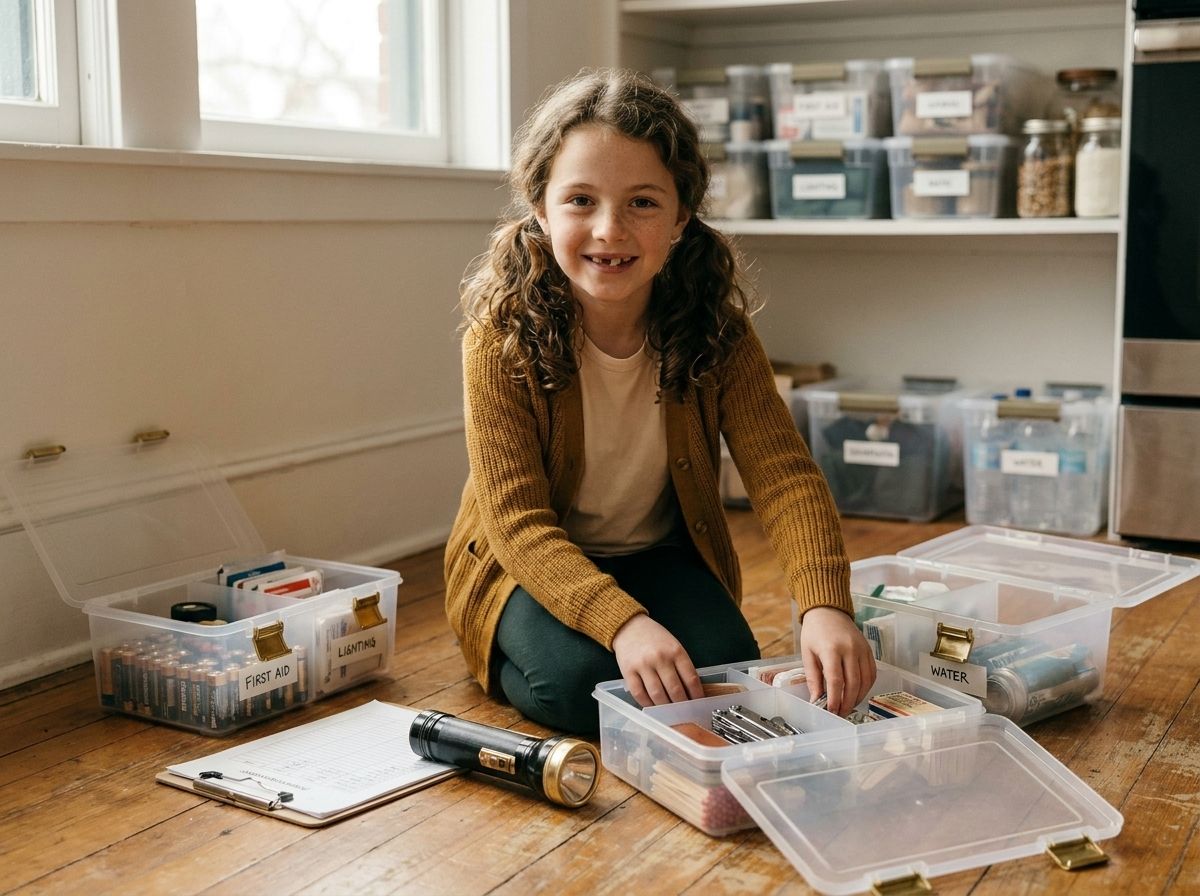
Build categories around the jobs your household needs done
A preparedness inventory system works best when each category answers a plain question: what problem does this group of supplies solve? "Miscellaneous" is not a category. It is where organization goes to take a nap.
Start with the household jobs that matter during a disruption. A useful set of categories includes:
- Water and water treatment: stored water, containers, filters, disinfecting supplies, and a simple way to measure what remains.
- Food and cooking: shelf-stable meals, snacks, manual can openers, fuel, cookware, and utensils.
- Light and power: flashlights, lanterns, batteries, charging cables, power banks, and extension cords.
- First aid and health: bandages, medicines, gloves, masks, hygiene supplies, and personal medical information.
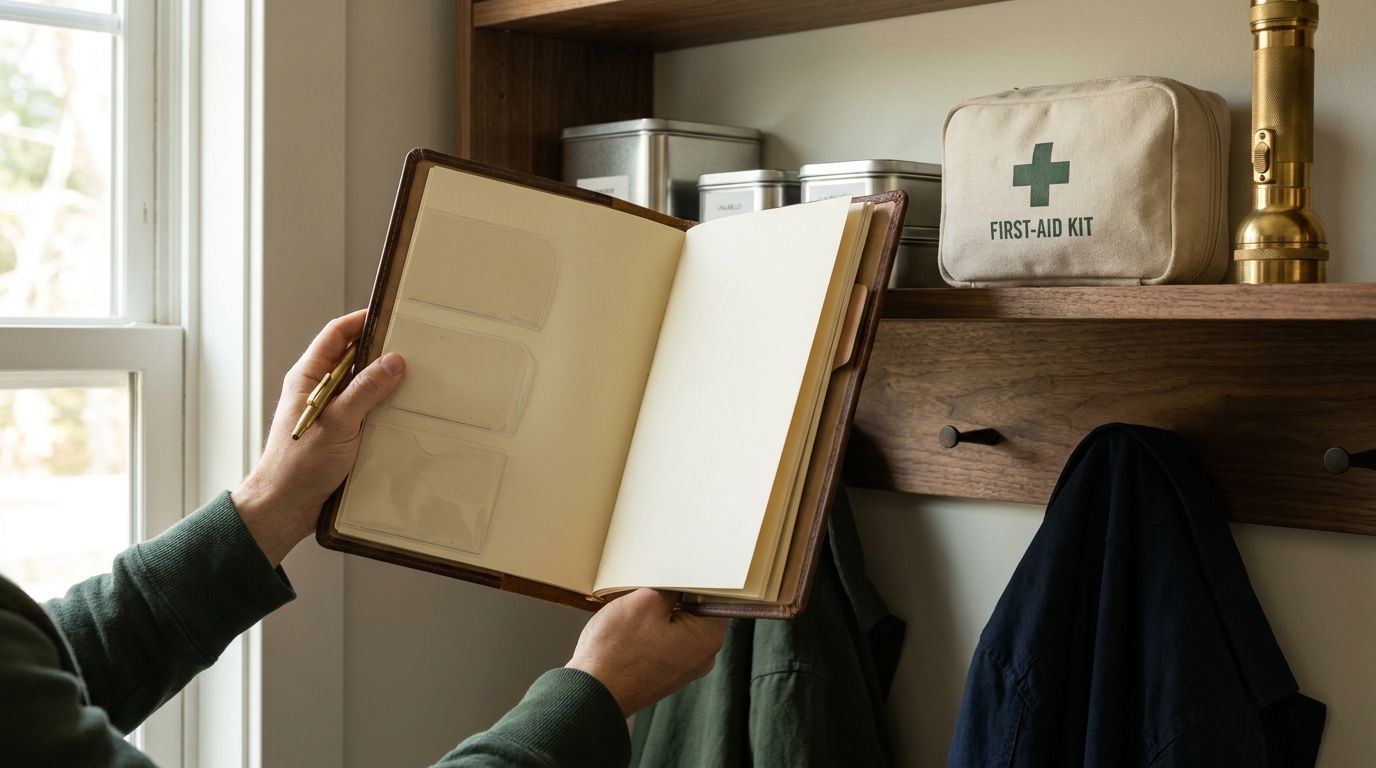
- Communication and information: radios, printed contacts, chargers, backup batteries, and a small notebook.
- Warmth and shelter: blankets, sleeping bags, tarps, hand warmers, rain gear, and spare clothing.
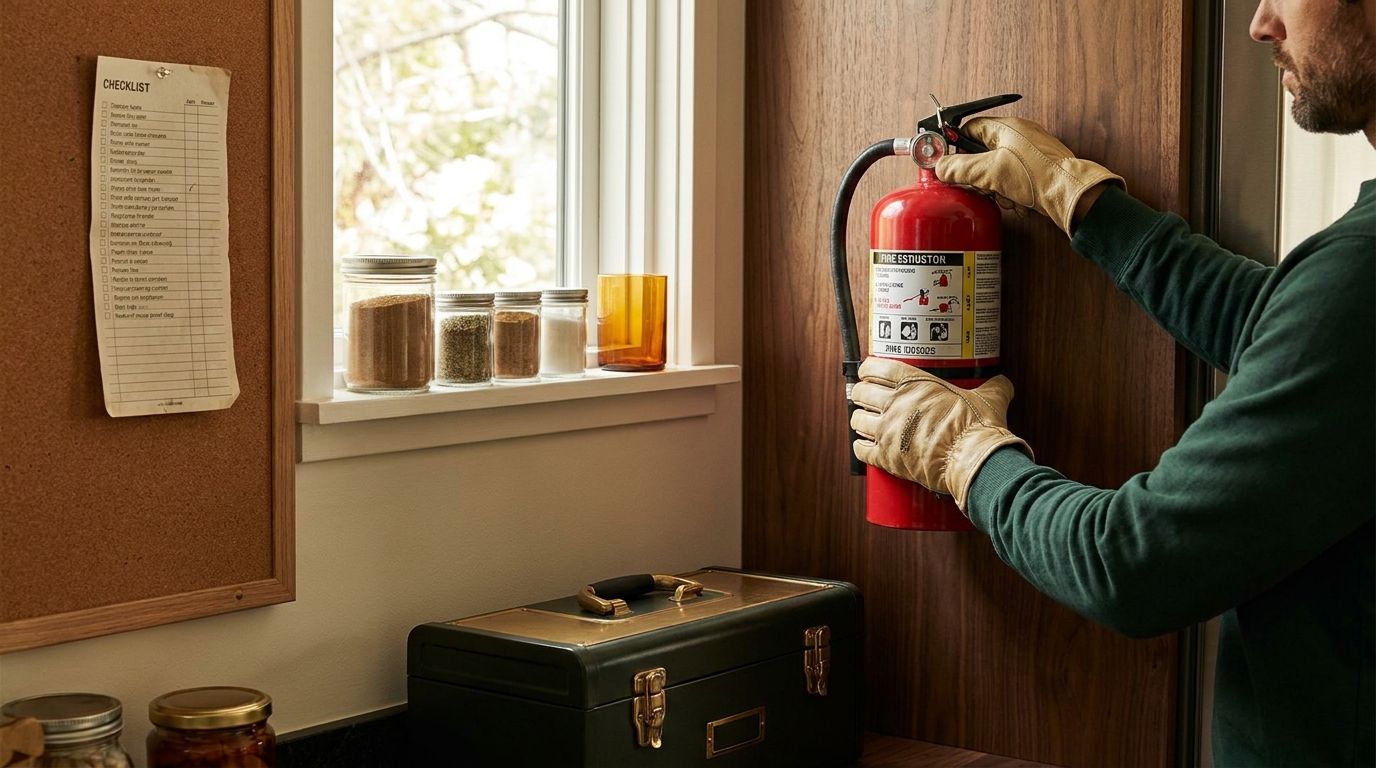
- Tools and household repair: work gloves, duct tape, a multipurpose tool, shutoff tools, and basic hardware.
- Documents and cash: identification copies, insurance information, prescriptions, account details, and small bills.
- Pet supplies: food, water, medication, leash, waste bags, and a recent photo or care note for Scout.
You do not need to create a special shopping trip for every category. Walk through your home and collect what you already own. A camping stove belongs in food and cooking. A spare phone charger belongs in light and power. A roll of heavy plastic belongs in shelter or household repair, depending on how you expect to use it.
Then write down the gaps. Keep the list boring and specific. "More supplies" is not useful. "One manual can opener" is useful. So is "two spare batteries for the radio" or "seven days of prescription medication tracking."
Ready.gov's basic kit guidance includes water, food, a flashlight, a first aid kit, a radio, and extra batteries. Your categories can go further because your household has its own needs, routines, medications, pets, and equipment.How many categories should you use?
Use enough categories to find an item quickly, but not so many that every shelf becomes its own department. Six to nine categories usually gives a household useful detail without creating a filing system for granola bars.
A category is working when you can answer these questions quickly:
- What does this supply help me do?
- Where is the main supply stored?
- What needs to be checked or replaced?
- What would I grab if I had only two minutes?
If a supply belongs to two categories, assign it a primary home and record the other use in your notes. A battery bank may support communication, lighting, and charging. Store it with power, then note that it also supports the radio.
Put supplies where the work happens
Location is the part many organization plans skip. A category tells you what something is. A location tells you whether you can reach it when the kitchen is dark, the garage is blocked, or everyone is moving quickly.
Use a two-layer layout: distributed essentials in the rooms where they are needed, plus a central reserve for tracking and replenishment.
Keep a small working kit in each key area
A kitchen kit might hold a flashlight, batteries, a manual can opener, disposable gloves, and a lighter stored safely away from children and heat. It should not hold the entire household inventory. It only needs to cover the tasks that happen in that room.
A bedroom or hallway kit can hold a flashlight, sturdy shoes, a dust mask, spare glasses, and a whistle. Store those items where you can reach them without walking across broken glass or searching beneath a bed that has become a temporary storage unit for everything else.
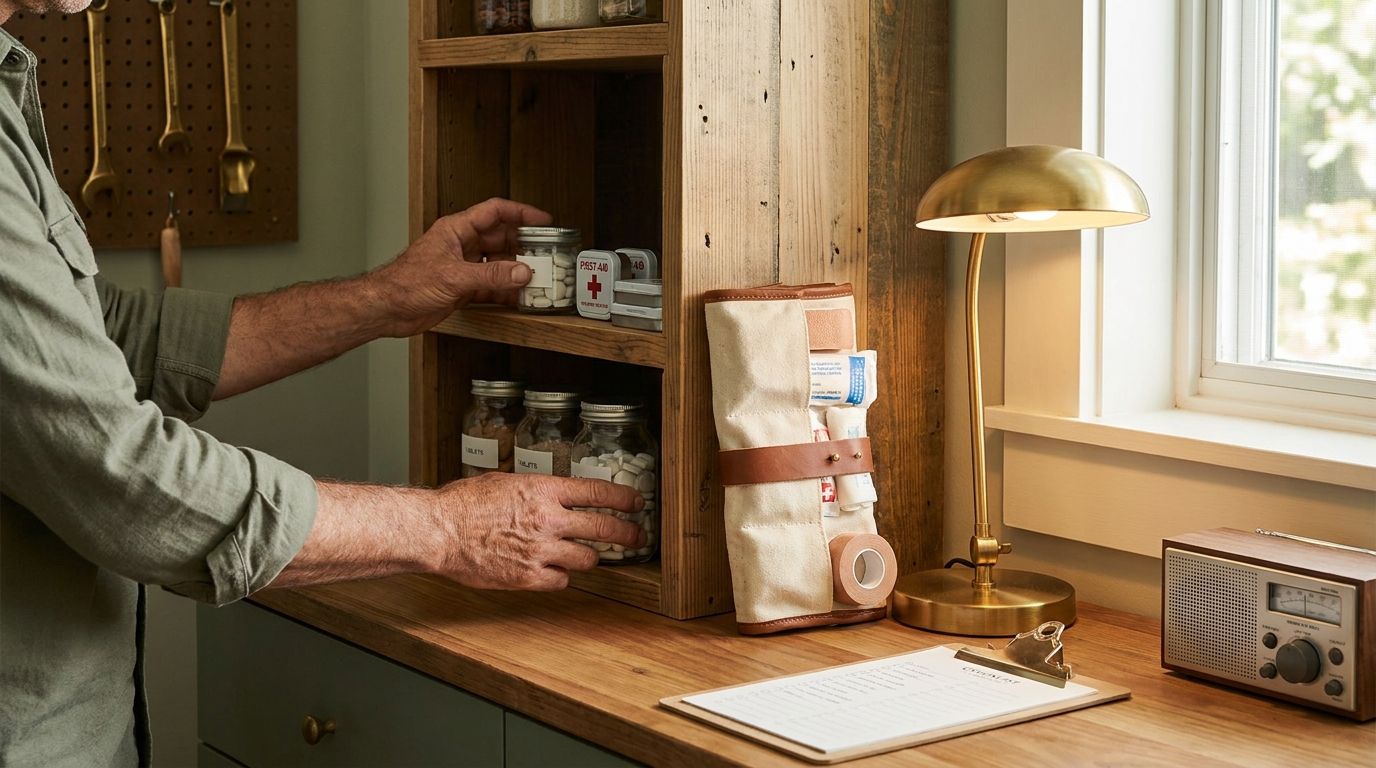
A bathroom or health kit can hold hygiene supplies, basic first aid, medication instructions, and backup toiletries. Keep prescription medication plans separate from ordinary supplies because replacement timing and storage rules may be different.
A vehicle kit belongs in the vehicle, not on a shelf near the front door. Include water appropriate for your climate, seasonal clothing, a light, charger, first aid supplies, work gloves, and items that support a long wait. Check the vehicle kit after major temperature changes because heat and cold can shorten the life of some products.
Store the reserve in one known place
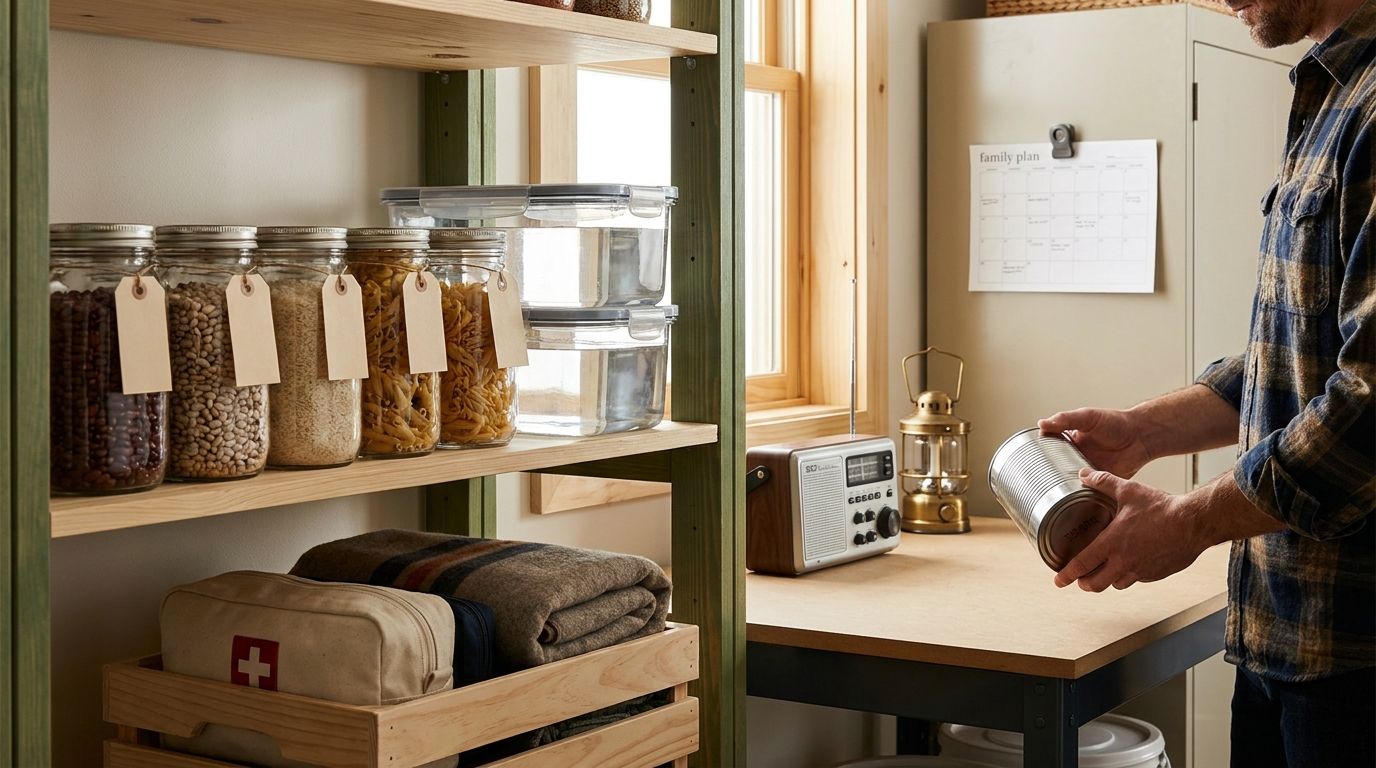
The reserve can live in a hall closet, basement cabinet, utility room, or a set of labeled bins. Choose a location that stays dry, avoids extreme heat, and remains accessible when the household is busy.
Do not store all supplies in one vulnerable spot. A basement may be cool but unreachable during flooding. A garage may offer space but can get punishingly hot in July. A high shelf keeps supplies away from children but leaves them useless to an adult with a shoulder injury.
Use sturdy containers that match the location. Clear bins work well for visual checks. Opaque bins protect light-sensitive items. Shelves make rotation easier than a deep pile on the floor. If you use large containers, keep them light enough for one adult to move without straining.
Label the front and the lid. Add the category, the intended use, and the date of the next check. For example: "Light and power, household reserve, check October 2026." A label should answer a question before you open the bin.
Organize by use, not just by ownership
A supply can be present and still fail the household if no one knows how to use it. Group the items that work together, even when they come from different stores or product types.
Create grab-ready kits for tasks that need several items at once. Useful examples include:
- Light kit: flashlight, spare batteries, headlamp, small lantern, and charging cable.
- Water kit: stored water, treatment instructions, clean containers, and a marker for recording opened containers.
- No-power cooking kit: manual can opener, stove or alternate cooking method, fuel, pot, utensils, and a safe cooling area.
- First aid kit: dressings, tape, antiseptic supplies, gloves, scissors, pain reliever, and a written list of important health details.
- Communication kit: radio, batteries, power bank, charging cables, printed contacts, and a pencil.
- Pet kit: Scout's food, water, leash, medication, waste bags, towel, and a familiar comfort item.
The purpose of a grab-ready kit is not speed for its own sake. It reduces the number of decisions you have to make when the household is tired. It also helps reveal missing links. A flashlight without batteries is not a lighting kit. A stove without fuel is a compact sculpture.
Use color only as a support, not as the whole system. A blue label might mean water, a yellow label might mean light, and a red label might mean first aid. Add words because colors look different in low light and can be difficult for some household members to distinguish.
Write short instructions on the inside of each container. Include how to start the radio, where the charger belongs, how to treat stored water, or which tool shuts off the main gas valve. You are not writing a manual for an engineering course. You are leaving yourself a useful note for a long day.
Make the system easy to check and maintain
An emergency supply organization system should reduce maintenance, not create another household obligation that quietly judges you from a clipboard. Build the check into routines you already have.
Use a simple inventory record with five fields:
- Item and quantity.
- Category and location.
- Expiration or replacement date.
- Minimum amount you want to keep.
- Next action, such as rotate, replace, test, or buy.
A spreadsheet works. So does a printed sheet taped inside a closet door. Mainstay's inventory feature can serve as a central record when you want household supplies, locations, and review dates in one place. The tool matters less than having one reliable source of truth.
Set reorder points instead of waiting until something is gone. If the household minimum is four flashlights and you have four, the next replacement belongs on the list now. If you open the last spare battery pack, record the purchase before the empty package disappears into the recycling.
Use dates for action, not decoration. A date label should lead to a decision:
- Use soon: move the item into normal household use.
- Test: check that the item works and that its parts are together.
- Replace: buy a new item and remove the old one according to local disposal guidance.
- Keep: confirm that storage conditions and quantity still fit the household.
Rotate food into ordinary meals. Put the older cans at the front. Use the older batteries in everyday devices and place fresh ones into the reserve. Check medications according to the instructions from your pharmacist, since heat, moisture, and expiration can affect them differently.
Run a monthly ten-minute location check. Open each main bin, confirm the label, test one piece of equipment, and compare the physical supply with your record. Then run a deeper seasonal check when clothing, heating supplies, vehicle equipment, or outdoor cooking needs change.
Rosa Wills found that the hardest part was not labeling bins. It was agreeing on what "easy to find" actually meant to each person in the house. June wanted everything centralized. Sam wanted a flashlight in every room. They solved it with distributed working kits and one reserve inventory. Nobody got the perfect arrangement. Everyone got a better one.
What if your home has very little storage space?
Use vertical space, under-bed containers, the backs of closet doors, and narrow shelves. Keep the most frequently used supplies in smaller kits and store reserve quantities together elsewhere. A small home does not require a smaller plan. It requires fewer duplicate containers and better labels.
Avoid packing supplies so tightly that you cannot see or remove them. Leave a little working space. The goal is not to win a storage competition, it is to find the water filter before you start dismantling the linen closet.
A practical reset you can do this weekend
You can reorganize emergency supplies without emptying the entire house. Set a timer for 45 minutes and choose one area with a clear boundary, such as one closet, one cabinet, or the vehicle trunk.
Follow this order:
- Pull out only supplies related to household readiness.
- Group them by category and remove obvious trash or broken items.
- Separate working kits from reserve stock.
- Choose a location for each group and label it in plain words.
- Record quantities, dates, and the next action.
- Put one missing item on your shopping list, not twelve.
Then ask another household member to find four items without help. If they cannot locate them, the system needs a clearer label or a better location. That test is kinder and more accurate than admiring your own bins.
Write the location map on paper and keep a copy near the main reserve. Note the vehicle kit, first aid supplies, water storage, documents, tools, and pet supplies. If the map changes, update it immediately. An old map is worse than no map because it gives you confidence in the wrong answer.
You do not have to finish the whole house this weekend. A working light kit and a visible water reserve are meaningful progress. So is knowing what you already own, what needs replacing, and where the next useful item belongs.
FAQ
What is the best way to organize emergency supplies?
Sort supplies by household job, place them near the location where that job happens, and keep reserve stock in one clearly labeled area. Record the quantity, location, and replacement date in a single inventory system. This makes supplies easier to find and easier to maintain.
Should emergency supplies be stored together or spread throughout the house?
Use both methods. Keep small working kits in key rooms and the vehicle, while storing reserve quantities in a central, accessible location. Distributed essentials help when one area cannot be reached, and a central reserve makes inventory checks simpler.
How do I organize household emergency storage in a small home?
Choose compact categories, use vertical and under-bed storage, and avoid duplicate containers. Keep frequently used items in small grab-ready kits, label the front and lid, and store heavier supplies where one adult can safely reach them.
How often should I check an emergency supply inventory?
Run a short monthly check for quantities, locations, and equipment that needs testing. Add a deeper seasonal review for food, medications, vehicle supplies, clothing, heating items, and anything affected by temperature or weather.
The next useful step is small: choose one shelf and make it make sense. Put the light kit together. Label the water reserve. Record the item you always forget to replace. Your household does not need a magazine-ready storage room. It needs a system that respects your time, works when you are tired, and lets you be the steady person without having to search the garage in bare feet.
Want this handled automatically? See the Mainstay membership.
Subscribe to comment
Join the Mainstay newsletter to leave a comment — and get new field notes in your inbox.
Get new field notes in your inbox
Practical, calm preparedness — one useful note at a time.