How to store emergency food safely: temperature, moisture, and pest control
Learn how to store emergency food at home so it stays safe, usable, and easy to rotate without turning your pantry into a science project.
At 9:14 on a Tuesday night, June Wills opened the pantry looking for a can of tomatoes. She found the tomatoes, a bag of rice with a torn corner, and three boxes of crackers that had quietly absorbed the smell of the laundry room. The pantry had become a museum of good intentions.

The safest way to store emergency food is to keep it cool, dry, dark, sealed, and easy to inspect. Store shelf-stable food off the floor, away from heat and moisture, then label it with purchase dates and use older items before newer ones.
If your food storage area looks less like a neat supply room and more like a crowded cabinet that has seen some things, you are not failing. Most households build food storage one grocery trip at a time. A few extra cans land on a shelf. A bulk bag gets tucked behind the paper towels. Then six months pass.
The fix is not a dramatic pantry overhaul. It is a storage setup that respects how your home actually works, including the warm garage, the damp basement, the curious dog, and the fact that you have other jobs to do.
How to store emergency food in the right place
Location does most of the work. A good storage area protects food from heat, water, sunlight, and repeated handling. It also lets you see what you own without moving six containers and a small avalanche of snack bars.
Aim for a space that stays below 75 degrees Fahrenheit when possible. The USDA advises keeping dry storage areas cool and dry, and high temperatures shorten the quality life of many packaged foods. A closet inside the living area usually works better than an uninsulated shed or attic, where summer heat can climb well past room temperature.
Choose a shelf or cabinet with these qualities:
- It stays away from furnaces, boilers, water heaters, and cooking appliances.
- It has no history of leaks, condensation, or standing water.
- It keeps food at least several inches above the floor.
- It has enough light for you to read labels during an inspection.
- It is easy to reach without stacking heavy cans overhead.
A garage can work, but only if the temperature remains fairly stable and the food is protected from vehicle fumes, pests, moisture, and freezing conditions. Canned food exposed to repeated freezing and thawing can lose quality, and swollen or leaking cans need to be discarded.
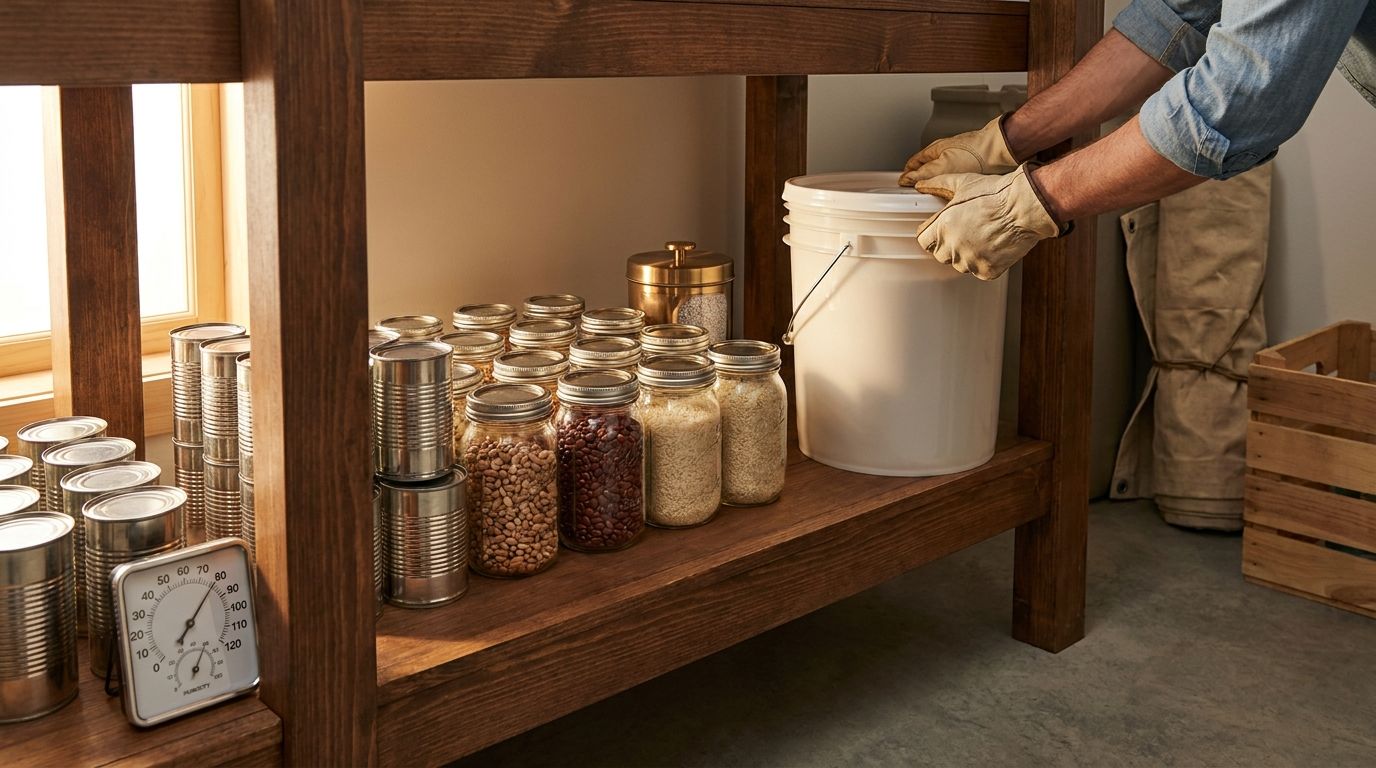
Basements require a little more judgment. The basement may feel cool, but cool does not cancel out humidity. Put food on a metal or plastic shelf, not directly on concrete. Keep cardboard cases away from walls where condensation can form, and leave space around containers so you can spot a leak before it spreads.
The same rule applies to a closet under the stairs. If you smell mildew, see water marks, or find silverfish near the baseboards, fix the room before you expand the food supply. Long term food storage at home works only when the storage environment is doing its part.
What temperature does stored food need?
Most commercially canned and dry shelf-stable foods do well in a cool room, ideally below 75 degrees Fahrenheit. Refrigerated foods should stay at 40 degrees Fahrenheit or below, and frozen foods should remain at 0 degrees Fahrenheit, according to the USDA.
Do not use a shelf-stable label as permission to store food anywhere. "Shelf stable" describes the unopened product under suitable conditions. It does not mean the package will hold up in a hot attic or beside a water heater.
Keep these foods in the coolest suitable part of your home:
- Cooking oils and nut products, which can develop stale flavors faster in heat.
- Whole-grain flour, brown rice, and other foods with natural oils.
- Chocolate, protein bars, and soft snack foods that soften or melt.
- Dehydrated meals and powdered mixes, especially after opening.
If your home has large seasonal temperature swings, store a smaller amount indoors and rotate it regularly instead of buying a large quantity for an unstable space. That approach costs less than discovering that your entire supply has spent two summers baking in a shed.
Control moisture before it damages the food
Moisture causes several problems at once. It weakens cardboard, encourages mold, rusts metal cans, clumps dry ingredients, and creates an inviting environment for insects. A single damp package can also make a shelf look cleaner than it really is until you pull everything out.
Start with the packaging. Check every item before it goes into storage. Do not store packages with holes, crushed seams, broken seals, or damp spots. A small tear in a bag of flour is not a minor cosmetic issue, it gives moisture and pests a direct way in.
For dry staples, use containers made for food storage. A tight-fitting food-grade bucket or container can protect rice, oats, pasta, beans, and flour from humidity and insects. Keep the original label or write the food name, purchase date, and use-by guidance on the outside. Mystery grains are not a useful household system.
A sound moisture-control routine looks like this:
- Wipe shelves completely dry before loading them.
- Leave air space between containers and exterior walls.
- Use a raised shelf in a basement, garage, or utility room.
- Inspect lids and seals after major weather changes.
- Replace cardboard boxes that have softened, stained, or warped.
Desiccant packets can help with some packaged products, but they are not a substitute for dry storage. Use only packets labeled for the intended food contact or packaging purpose. Do not confuse a desiccant, which manages moisture, with an oxygen absorber, which reduces oxygen inside a sealed package. They do different jobs.
Oxygen absorbers can be useful for certain dry foods when paired with appropriate food-grade packaging and careful instructions. They are not suitable for every food, though. Moist foods, foods with high oil content, and improperly sealed packages can create safety and quality problems. If you use them, follow the package directions and use a tested storage method rather than improvising with a random bag and a vacuum sealer.
How do you know if moisture has ruined stored food?
Discard food with visible mold, unusual odors, wet or swollen packaging, severe rust, or a compromised seal. Do not taste questionable food to decide whether it is safe.
For cans, reject products with bulging ends, leaks, deep dents along the seam, heavy rust, or spurting liquid when opened. A small surface mark is different from damage that affects the seam or seal. When the condition is unclear, discard the item. No can of beans is worth negotiating with your stomach.
Damp dry food may show clumping, discoloration, insects, or a stale smell. If moisture has reached the food, do not simply dry it out and return it to the shelf. Clean the storage container and inspect nearby packages, because pests and moisture rarely respect one package at a time.
Keep pests out without making your pantry miserable
Pest control begins with sanitation and sealed packaging. You do not need to turn the pantry into a laboratory. You do need to remove easy food sources and make inspections routine.
Store dry goods in containers with tight lids. Thin bags and folded cardboard are not reliable barriers against pantry moths, beetles, mice, or a determined dog. Keep pet food sealed too, since an open bag of kibble can pull pests straight toward the same storage area as your household supplies.
Use this quick pest-control check when you restock:
- Look along shelf edges, corners, and the underside of containers.
- Check for webbing, small holes, droppings, shed skins, or live insects.
- Wipe up crumbs and remove damaged packages immediately.
- Empty recycling and trash from the area before it accumulates.
- Seal cracks around baseboards where practical.
Do not spray insecticide around food unless the product label specifically allows that use and you can follow all instructions. Food storage and chemical storage should have separate homes. Pesticide fumes do not improve dinner.
If you find pantry pests, isolate the affected item in a sealed bag before carrying it through the house. Inspect nearby packages, including unopened cardboard boxes. Pantry moth larvae can spread farther than the original package suggests, and some insects enter homes inside food purchased from a store.
Clean the shelf with soap and water, then dry it fully. Depending on the pest, freezing an infested dry product may kill insects and eggs, but the product may still be unpleasant or contaminated with webbing and waste. When you are unsure, throw it out and record the loss so you can adjust your buying habits.
A simple inspection every month catches problems before they become a full pantry event. Set a reminder for the same week you check batteries or review household documents. With Mainstay's inventory tools, you can record what you have, note dates, and keep a visible rotation list instead of relying on memory after a long workday.
Build a rotation habit that fits real life
Food storage is not a bunker project. It is a household grocery system with a little more intention. The most useful supply is food you recognize, know how to prepare, and will actually eat.
Keep newer items behind older ones. Mark the month and year of purchase on cans and packages with a removable label or marker. Use the oldest acceptable item during normal meals, then replace it on your next grocery trip. Simple enough to stick to.
A practical rotation check can take 10 minutes:
1. Pull forward items with the earliest dates.
2. Check seals, dents, moisture, and pest signs.
3. Remove food your household no longer eats.
4. Add replacement items to the back of the shelf.
5. Update your inventory after the shelf is settled.
Best-by dates usually describe peak quality, not an automatic safety deadline for every unopened shelf-stable food. Still, dates matter because quality declines, and damaged packaging changes the decision. Use the manufacturer's guidance, inspect the package, and follow food-safety advice from the USDA when a product requires more specific handling.
Make the food visible. Group cans by broad use rather than building a complicated system that collapses during a busy month. Keep canned proteins, vegetables, fruit, grains, snacks, and cooking ingredients where you can identify them quickly. If you have dietary restrictions, mark those items clearly and store them where cross-contact is less likely.
Plan for opening and using the food, too. Keep a manual can opener nearby. Store a few seasonings and familiar cooking ingredients with the food rather than assuming you will remember them later. If the supply includes dry staples, include the water and cooking method those foods require in the household plan.
Rosa Wills once found that the family had plenty of rice but no way to make it without burning through the last of the cooking fuel. That is the sort of small mismatch a calm review catches. Food quantity matters, but so do water, fuel, utensils, and the time required to prepare it.
Use these questions during a household food review:
- Can you find the oldest items without unloading the whole shelf?
- Can you identify what needs refrigeration after opening?
- Can you prepare the food with the cooking method you have available?
- Does the supply include food for allergies, medical needs, and normal preferences?
- Would your household recognize the food as a meal rather than a punishment?
You do not need to replace everything at once. Start with one shelf. Remove damaged packages, move the food away from heat, label what remains, and add a reminder for the next check. That is enough for one evening.
FAQ
What is the best place to store emergency food at home?
The best place is a cool, dry, dark area inside the living space, away from appliances, pipes, direct sunlight, and floor-level moisture. A stable indoor closet or pantry is usually more reliable than an attic, shed, or uninsulated garage.
How long can canned food be stored?
Commercially canned foods can remain safe beyond their best-by dates when they are stored properly and the cans are undamaged, but quality declines over time. Discard cans that leak, bulge, spurt, have deep seam dents, or show heavy rust.
Should I use oxygen absorbers for long term food storage at home?
Oxygen absorbers can help preserve some properly packaged dry foods, but they are not appropriate for every product. Use a tested method, food-grade packaging, and the absorber manufacturer's directions, and do not use them as a general fix for damp or poorly sealed food.
How do I keep stored food fresh?
Keep food cool, dry, dark, sealed, and off the floor. Rotate older items into regular meals, inspect packages monthly, and replace food that has absorbed moisture, developed pests, or lost its seal.
June did not need a perfect pantry. She needed one shelf that worked, a marker, a dry container, and a date on the calendar. You can start the same way.
Pick the shelf that causes the least trouble. Check the packages. Move the food away from heat and dampness, then use one older item this week. Small, repeatable work is how a household supply becomes something you can actually trust.
Want this handled automatically? See the Mainstay membership.
Subscribe to comment
Join the Mainstay newsletter to leave a comment — and get new field notes in your inbox.
Get new field notes in your inbox
Practical, calm preparedness — one useful note at a time.