How to use a battery power station safely during a home power outage
A battery power station can keep essential devices running without fuel or fumes. Learn how to place it, connect it, monitor it, and use its stored power wisely.
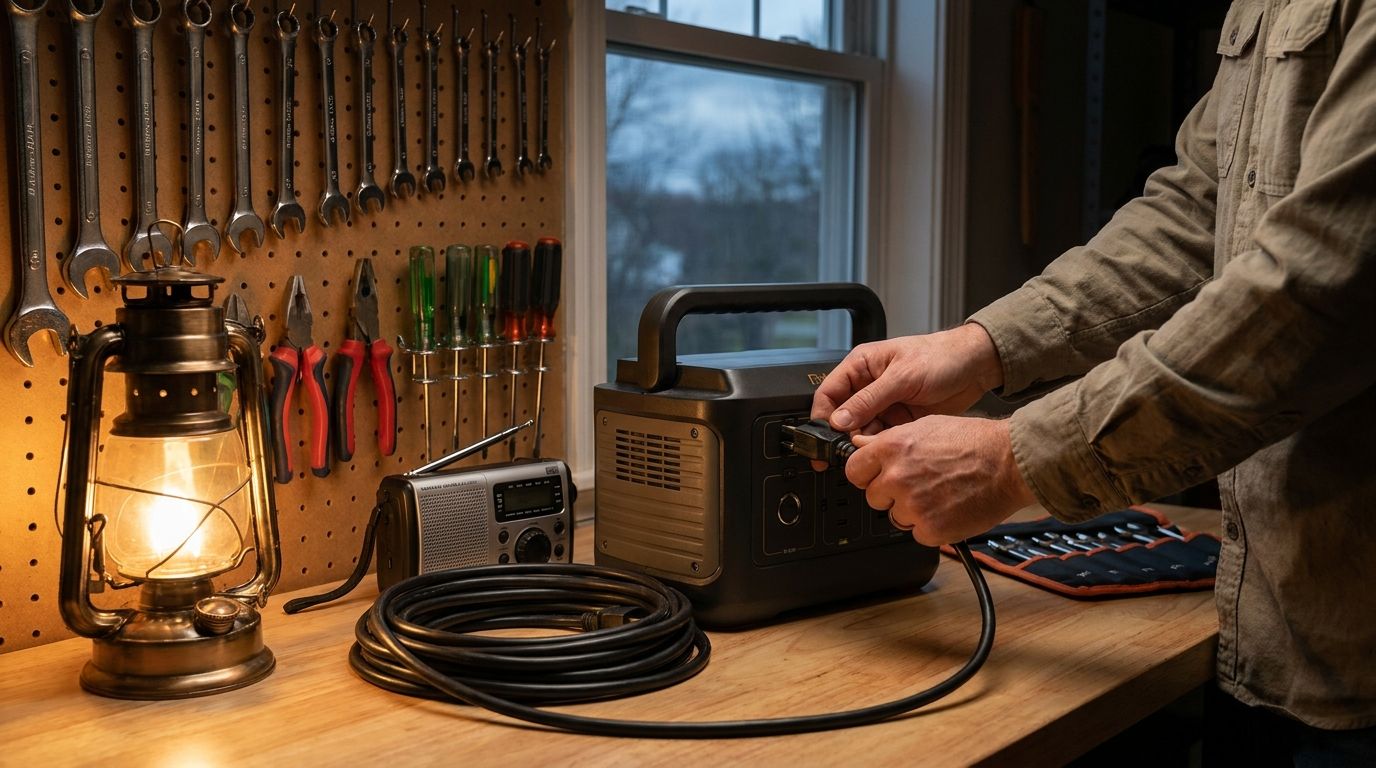
June Wills was standing in the kitchen with a flashlight between her teeth when the refrigerator clicked off. Sam was at the table, trying to finish a work call on a phone with a shrinking battery, while Scout paced near the dark hallway. The power had gone out quietly. The house had not.
A battery power station can keep essential devices running during a home power outage, but battery power station safety depends on placement, the correct cables, careful load choices, and regular checks before the lights go out. Unlike a fuel-burning generator, a battery station produces no exhaust while it supplies power, but it still stores substantial electrical energy and needs respectful handling.
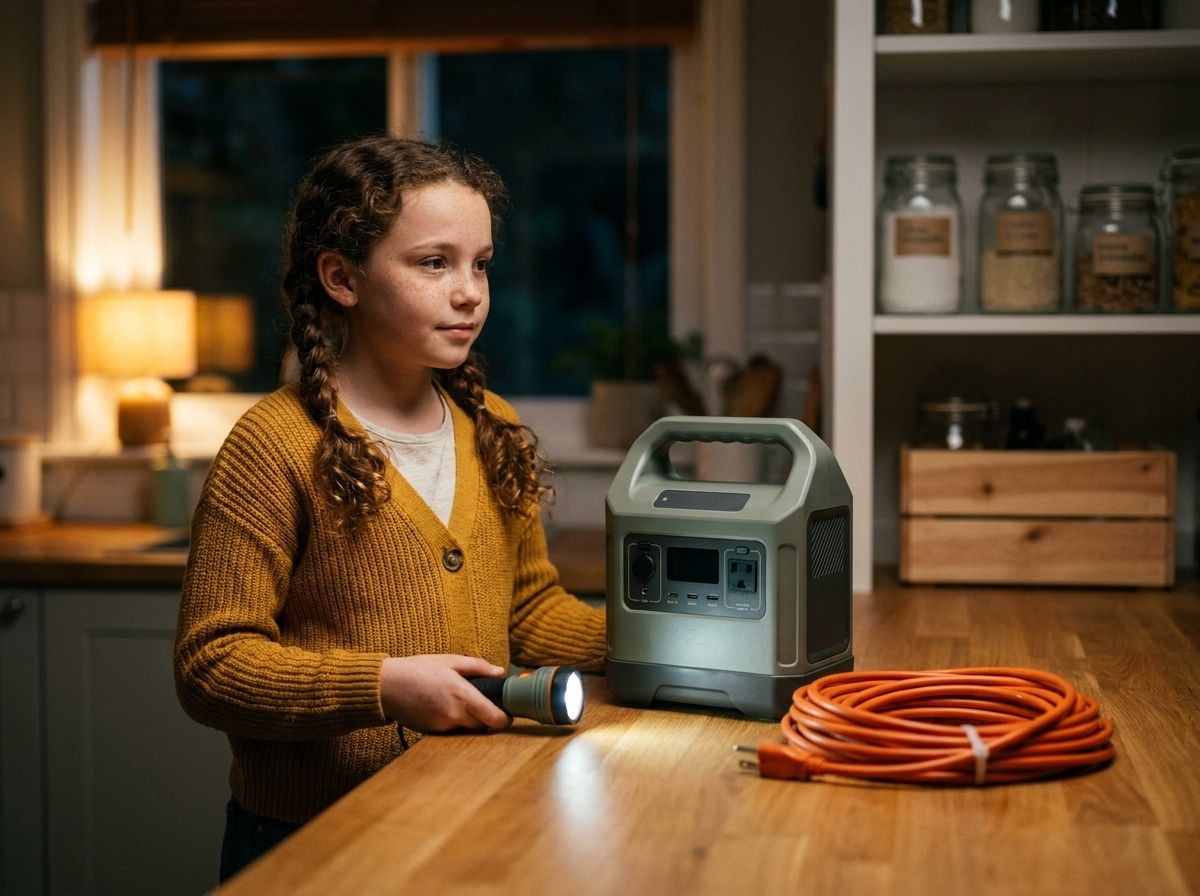
That moment is familiar to most households. You are not dealing with a dramatic disaster scene. You are trying to keep food cold, find a charger, check on a neighbor, and stop the dog from investigating every shadow in the hallway. A power station helps most when you already know what matters and what can wait.
What a battery power station can and cannot do
A portable battery backup for home is a rechargeable battery enclosed in a portable case, usually fitted with household-style outlets, USB ports, and a charging input. Some models recharge from a wall outlet, a vehicle, or compatible solar equipment. The label and manual are the authority for what your specific model supports.
The station is not a substitute for household wiring. Do not connect its outlet to a wall receptacle or attempt to energize the home through a dryer outlet, range outlet, or improvised cable. That can send power into wiring that other people believe is shut off, and it can damage equipment or injure someone working on the electrical system.
Use the station as a local power source. Put it near the device you need to run, then connect that device directly to the station with an intact cable. If you need a device powered in another room, plan the cable path before the outage. Keep cords away from walkways, door hinges, hot surfaces, and places where Scout might decide they are excellent chew toys.
A station is useful for:
- Charging phones, radios, tablets, and other small electronics.
- Running selected lamps and low-power lighting.
- Supporting medical equipment only when the equipment maker and the power station maker confirm compatibility.
- Powering a refrigerator for limited periods, with careful attention to startup demands and remaining battery capacity.
- Keeping a router or communication device available when local service still works.
It is usually a poor choice for heating a home or running several high-draw appliances at once. Space heaters, kettles, hair dryers, and toaster ovens can consume stored power fast. Some also draw more power at startup than they do once they settle into steady operation. Check the station label for its continuous output and surge rating, then compare those figures with the device label.
That comparison is not busywork. It is how you avoid the discouraging beep, shutdown, or overloaded outlet that arrives exactly when you need the station most.
Is a battery power station safe indoors?
A battery power station is generally designed for indoor use while discharging, provided the manufacturer allows it and the unit is placed on a stable, dry, ventilated surface. It does not burn fuel, so it does not create the carbon monoxide hazard associated with a gasoline generator, camp stove, or charcoal grill.
The station still needs airflow around its vents. Do not cover it with a blanket, tuck it into a closed cabinet, or set it beside a radiator or wood stove. Stop using it if the case is swollen, cracked, unusually hot, wet, smoking, leaking, or producing a sharp chemical smell. Move people away from the area and follow the manufacturer's instructions for damaged batteries.
Power station carbon monoxide safety is still worth understanding, because outages often lead households to mix equipment. A battery station does not make a fuel-burning generator safe indoors. FEMA says, "Generators, camp stoves or charcoal grills should always be used outdoors and at least 20 feet away from windows." Keep those fuel-burning devices outside, away from windows and doors, even if the battery station is operating inside.
Set up your station before the outage
The best time to learn a power station is when the house is bright, the manual is easy to read, and nobody is asking where the phone charger went. June keeps her station in a dry storage area with its cables together, not hidden behind a pile of seasonal decorations, because a supply you can't reach in the dark is just a very expensive paperweight.
Before the next outage, check these points:
- Read the manual for charging, storage, temperature limits, warning lights, and shutdown procedures.
- Inspect the case, ports, plugs, and cables for damage.
- Charge the station according to the manufacturer's instructions.
- Confirm that the included charging cable fits the station and the intended power source.
- Test a small lamp or charger so you know how the controls work.
- Record the model, capacity, and warranty information with your household inventory.
- Store the station where moisture, direct heat, and falling objects cannot reach it.
Do not leave a damaged battery connected to a charger. Do not use a cable with exposed wires, bent contacts, scorch marks, or a loose fit. Do not assume every USB-C cable or power adapter can safely charge every station. A connector can fit while the power requirements do not.
Keep the instruction manual with the station, either in the storage location or in your document vault. Mainstay can help you keep the station, cables, device priorities, and household notes together in your inventory and preparedness plan, so the useful information is not trapped in somebody's memory.
A small test also gives you practical data. You may learn that the refrigerator starts without complaint, that one particular lamp draws less power than another, or that the station's display uses terms you would rather decode now than during a dark kitchen conversation. Write those findings down.
How to use a portable power station during a power outage
When the power fails, pause before plugging in everything you can find. Look around the house. Check for fallen lines, sparking equipment, water near outlets, or a burning smell. The Red Cross says to stay at least 35 feet away from fallen power lines and anything they are touching. Never use the station to investigate a dangerous electrical situation.
If the area is safe, use this sequence:
- Confirm that the station is dry, intact, and at a safe temperature.
- Move it to a stable location with clear airflow.
- Decide which device has the strongest household need.
- Check the device's power requirements against the station's limits.
- Connect the device directly and watch the station's display.
- Keep the station's remaining charge available for later needs.
Start with communication, lighting, and health needs. A phone, lamp, radio, or medically necessary device will almost always matter more than entertainment. If the household depends on refrigerated medication, check the medication label and contact a pharmacist or prescribing clinician for specific guidance. FEMA says, "If the power is out for more than a day, discard any medication that should be refrigerated, unless the drug's label says otherwise."
Refrigeration takes planning because a power station may not run a refrigerator continuously. FEMA says, "The refrigerator will keep food cold for about four hours." The Red Cross says, "An unopened refrigerator will keep foods cold for about 4 hours." Keep the door closed, use the station only when its capacity and output support the refrigerator, and resist opening the door to check food by hand.
A full freezer has more insulation and stored cold. FEMA says, "A full freezer will keep the temperature for about 48 hours." The Red Cross gives the same guidance and says a half-full freezer will hold temperature for 24 hours if the door stays closed. Those timeframes apply to the food compartment, not to how long a particular power station can run the appliance.
Use a thermometer when you have one and make food decisions based on temperature and guidance from FEMA and the Red Cross. FEMA says, "Throw out food if the temperature is 40 degrees or higher." The Red Cross says, "Throw out food that has been warmer than 40 degrees F." FEMA also says, "Throw away any food that has been exposed to temperatures 40 degrees or higher for two hours or more, or that has an unusual odor, color or texture."
The safest habit is boring and effective: keep the refrigerator and freezer closed, write down when the outage began, and use the power station for the highest-value loads instead of treating it like a wall outlet that happens to be portable.
How does a portable battery backup differ from a generator?
A portable battery backup stores electricity and supplies it without burning fuel during use. A generator makes electricity by burning fuel, so generator placement and carbon monoxide controls are separate concerns that do not disappear because a battery station is also in the house.
Do not use a battery station as a reason to bring a generator, camp stove, or charcoal grill into a garage, basement, porch, or room. FEMA's outdoor placement guidance still applies to those fuel-burning devices. Keep smoke alarms and carbon monoxide alarms working, and follow the equipment maker's instructions for every device.
Manage the remaining charge without guesswork
The display on a power station can create a false sense of precision. A percentage may fall slowly while a small charger is connected, then drop sharply when a refrigerator compressor or other demanding appliance kicks on. Watch the load display, remaining charge, warning lights, and temperature.
Make a short priority plan for the household:
- Keep communication devices available.
- Provide dependable light in the rooms people use.
- Support medical equipment according to the equipment instructions.
- Protect food when the station has enough capacity and the connection is appropriate.
- Stop nonessential charging before the station reaches a low-charge warning.
There is no prize for draining the station to its final sliver. Leave capacity for a later phone call, a weather update, or a device that becomes more important as the outage continues. Sam learned this when he ran the station down powering his laptop, then found that the phone charger and lamp were the household's more useful tools all along.
If the station shuts down, do not repeatedly restart it without checking why. An overload, high temperature, low battery, poor connection, or internal fault may be involved. Disconnect the devices, check the manual, allow the unit to cool if the maker permits that step, and reconnect only after you understand the warning.
Recharge only with approved equipment and power sources. If the home power is unstable or the utility has instructed residents to wait, follow local guidance and the station maker's instructions. Never charge a wet or damaged unit. Keep charging cables out of wet areas and do not place the station where rain, condensation, or melting snow can reach it.
After the outage, inspect the station again. Note what worked, what failed, and which cable or adapter caused confusion. Replace damaged accessories. Return the station to its storage location with the manual and a short household note that says what it can support.
That note can include the devices to connect, the devices to leave alone, and the location of the spare cables. Mainstay's dashboard can keep that information alongside the rest of your household inventory, so the plan is visible instead of living in the head of whoever happened to be home when the lights went out.
Build a calm household power plan
A battery station is equipment. The household plan is what makes it useful. Talk through the basics when everyone is rested. Decide who checks the station, who checks on family members, who monitors food, and who keeps the path to the bathroom clear. Include pets. Scout did not need a technical explanation; he needed a light, a familiar voice, and a safe place away from loose cables.
Keep non-perishable food and water available. The Red Cross says, "Store non-perishable food and water supplies for at least two weeks." That supply reduces the pressure to use stored electricity for cooking or refrigeration when another option is available.
Maintain the rest of the household around the power plan:
- The Red Cross says, "Test monthly" for smoke alarms.
- The Red Cross says, "Keep your car gas tank at least half full."
- Keep flashlights, chargers, and the power station in known locations.
- Keep doors, stairs, and paths clear of charging cables.
- Write down the utility contact method and the needs of household members.
- Recheck the plan after a move, new appliance, medication change, or major weather event.
The emotional part matters too. A dark home can make small problems feel like evidence that everything is falling apart. It is not. You are allowed to use the power station for a lamp before you solve the refrigerator question. You are allowed to call a neighbor and compare notes. Competence is not looking unbothered, it is making the next sound decision with the information you actually have.
What should you power first during an outage?
Start with communication, safe lighting, and medically necessary equipment. Add refrigeration only when the power station's capacity, output, cable, and the appliance's startup requirements are all compatible.
Then protect the remaining charge. Entertainment, convenience appliances, and heavy heating loads can wait when the household has more urgent needs. Your plan does not need to cover every device in the home. It needs to cover the devices that keep people informed, safe, and able to manage the next part of the outage.
FAQ
Can I use a battery power station indoors?
Usually, yes, if the manufacturer permits indoor operation and the station is dry, intact, stable, and properly ventilated. It does not create fuel exhaust while discharging, but stop using it if it becomes unusually hot, swollen, cracked, wet, smoky, or damaged.
Does a battery power station create carbon monoxide?
A battery power station does not produce carbon monoxide while it supplies stored electrical power. Fuel-burning generators, camp stoves, and charcoal grills do create a carbon monoxide risk, so FEMA says they belong outdoors and at least 20 feet away from windows.
Can I plug my house into a portable power station?
No. Do not connect a station to a wall outlet or use an improvised cable to energize household wiring. Connect approved devices directly to the station, or have a qualified electrician install equipment designed for safe backup power connection.
How do I know what my power station can run?
Read the station's continuous output, surge rating, capacity, and temperature guidance, then compare those limits with the device label. Test the intended devices while the power is on and record what worked before you need the station under pressure.
The next useful step is simple. Find the station, inspect the case and cables, read the manual, and test a small lamp. Write down the devices that matter most to your household. June's dark kitchen did not become easier because she owned more equipment. It became easier because she and Sam knew what to do with the equipment they had, and Scout had somewhere safe to settle.
You do not need a perfect backup system. You need a clear, tested plan that helps you make the next good choice when the house goes quiet.
Where this comes from
Want this handled automatically? See the Mainstay membership.
Subscribe to comment
Join the Mainstay newsletter to leave a comment — and get new field notes in your inbox.
Get new field notes in your inbox
Practical, calm preparedness — one useful note at a time.