Portable generator safety: fuel, carbon monoxide, and safe operation
A portable generator can keep a household steady during an outage, but only when fuel, carbon monoxide, placement, and operation are handled with care.
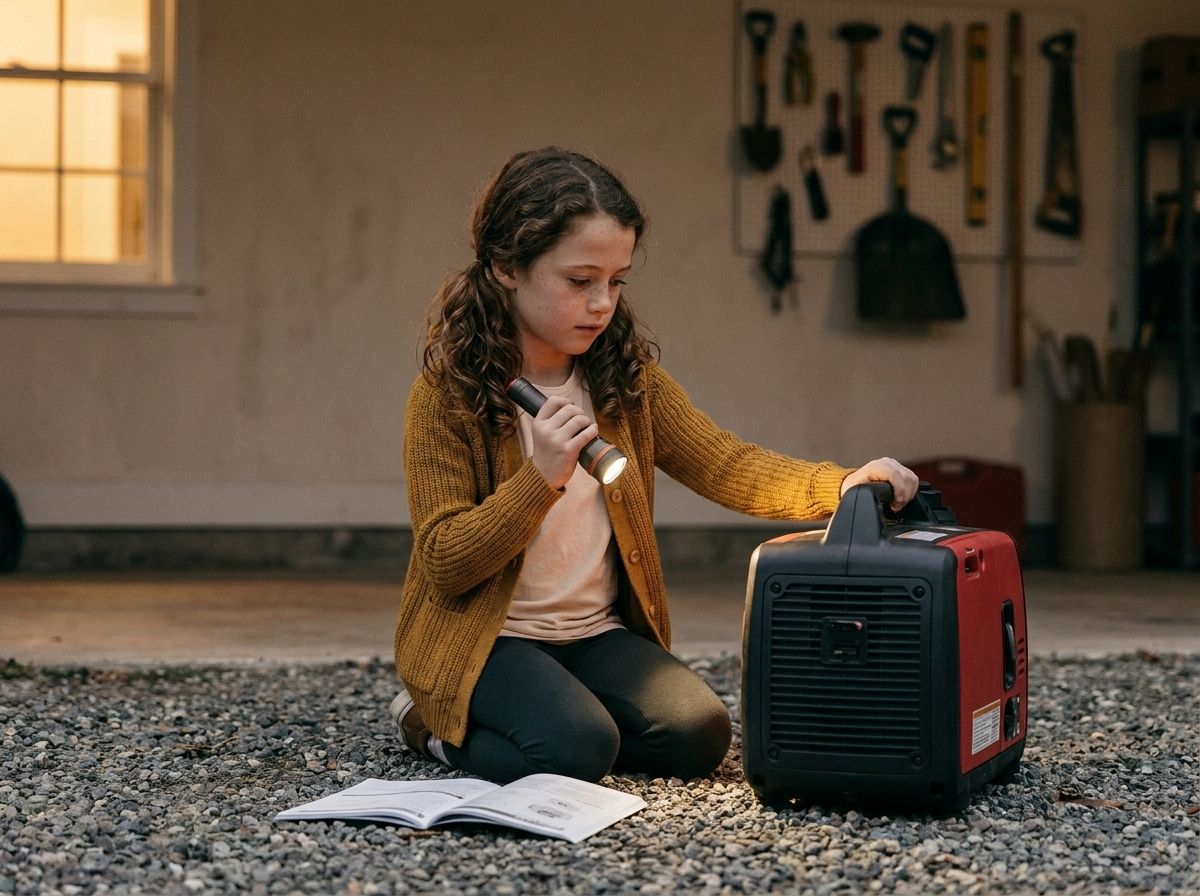
At dusk, June Wills stood in the driveway with a flashlight between her teeth while Rosa held the generator manual open against the wind. Scout paced near the garage door, deeply suspicious of the machine and its loud, uneven cough. The power had gone out, dinner was half-cooked, and nobody felt especially clever.
Portable generator safety comes down to a few steady habits: keep the generator outdoors and well away from openings, manage fuel according to the label, prevent carbon monoxide from entering the home, and connect equipment only in ways the manufacturer allows. You do not need to become an electrician to use a generator safely. You do need a clear routine before the weather turns rough.
That is the part people sometimes skip. A generator feels like a simple engine, but an outage changes everything around it. It may be raining. The ground may be dark. You may be tired, cold, or trying to keep a child from opening the refrigerator every few minutes, and a written routine gives you something dependable to follow when your attention is already stretched thin.
Portable generator safety starts with the location
The generator belongs outside. Never inside a home, garage, basement, crawl space, shed, or covered porch. An open garage door does not turn a garage into an outdoor location, and neither does a fan, a cracked window, or a hopeful sense that the fumes will drift away on their own.
The CDC says, "Only use generators outside, more than 20 feet away from any windows, doors, and vents." That distance applies to the generator's exhaust, not just the main body of the machine. Think about every opening that could carry exhaust toward the household, including windows above the generator and vents on the side of the house.
Before you need power, walk the property in daylight. Pick a firm, level spot more than 20 feet from windows, doors, and vents. Make sure the exhaust points away from the home, and check that rain, snow, or runoff cannot collect around the machine or its fuel.
A generator needs breathing room. Do not place it beneath a deck, beside stacked firewood, or against a wall where exhaust can pool and drift toward the house. Keep the area clear of dry material and make sure the cable route does not create a trip hazard.
If wind changes direction, reassess. The place that looked sensible in calm weather may not hold up when air is pushing exhaust toward a window. You are allowed to shut the generator down and move it after the engine cools.
A practical location check looks like this:
- Confirm the generator is outdoors, not in an attached or enclosed space.
- Measure the placement from every nearby window, door, and vent.
- Point exhaust away from the house and occupied areas.
- Keep the machine stable, visible, and clear of combustible materials.
- Check the setup again when wind, rain, or snow changes.
Generator carbon monoxide safety is a household issue
Carbon monoxide is a poisonous gas produced when fuel burns. No smell, no color, no taste. Your senses cannot serve as a warning system here. A generator can be operating outside and still create a dangerous exhaust path if the placement is poor.
The CDC says to install battery-operated or battery back-up CO detectors near every sleeping area in your home. The CPSC says, "Install one on every level and outside sleeping areas at home and check the batteries regularly." Follow the instructions for the detectors you own, and make sure everyone in the household recognizes the alarm sound.
The CDC also says, "Check CO detector batteries when you change the time on your clocks each spring and fall to be sure they are functioning properly." Replace your CO detector following the manufacturer's instructions or every 5 years. A detector is not a substitute for safe generator placement, but it gives the household another layer of protection.
If a CO alarm sounds, or if anyone develops a headache, dizziness, weakness, nausea, chest pain, or confusion while the generator is running, get everyone outside to fresh air and call emergency services. Do not stay inside to investigate the generator. Do not reenter until qualified help says it is safe.
You can also reduce carbon monoxide risk by keeping combustion appliances maintained. The CDC says, "Have your heating system, water heater, and any other gas, oil, or coal burning appliances serviced by a qualified technician every year." The CDC also says, "Have your chimney checked or cleaned every year."
Those tasks may feel separate from generator use, but they belong on the same household maintenance list. A home with several fuel-burning appliances needs clear maintenance records, working alarms, and a habit of taking unusual symptoms seriously.
Add the car or truck to that same review. The CDC says, "Have a mechanic check the exhaust system of your car or truck every year." Never run a vehicle in a garage, even with the garage door open.
Fuel handling rewards patience
Fuel is where a calm generator routine can turn careless fast. You may be rushing to restore refrigeration, charging, or a medical device. The engine is hot. The can is awkward. The driveway is wet. That is exactly when the written steps matter most.
Read the generator manual and the fuel container label before storing or adding fuel. Use only the fuel type the manufacturer approves. Do not guess from memory, and do not grab a different container because it is closer. Labels are the authority on storage, compatibility, and handling.
Shut the generator down before refueling and let the engine cool. Fuel vapors can ignite when they meet a hot engine, spark, flame, or other ignition source. Keep smoking materials, candles, grills, and open flames away from the generator and its fuel.
Handle fuel outdoors, in a clear area with good airflow. Keep containers closed when not in use, and store them where the manufacturer and local fire rules allow. A fuel container should not sit beside the generator while it runs, and it should not live in a bedroom, kitchen, basement, or other occupied interior space.
Do not overfill the tank. If fuel spills, stop and clean it up according to the label before starting the engine. If the smell of fuel remains strong, pause and find the source rather than treating the odor as part of normal operation.
A useful fuel check includes:
- Confirming the approved fuel type from the generator manual.
- Checking the container for damage, leaks, or a loose cap.
- Moving fuel away from heat, flames, and the running generator.
- Refueling only after shutdown and cooling.
- Cleaning spills before starting the engine.
- Tracking fuel condition and container details in your household inventory.
You do not need a complicated fuel station in the garage. A labeled storage spot, a readable manual, and a habit of inspecting containers are enough to remove most of the guesswork.
How to use a generator safely inside the household plan
Start with what the generator is actually meant to support. A refrigerator, freezer, lights, chargers, sump pump, or medical equipment may have different power demands and startup behavior. Read the ratings on the generator and each device, then stay within the manufacturer's limits.
Connect appliances directly with outdoor-rated extension cords that are in good condition and suitable for the load. Keep cords dry, protected from vehicle traffic, and routed where nobody will trip. Do not use damaged cords, indoor cords outdoors, or improvised connections.
Never connect a portable generator directly to a wall outlet. That can send electricity back through the home's wiring and create a serious hazard for utility workers and anyone near the electrical system. If you want the generator to supply household circuits, have a qualified electrician install the appropriate transfer equipment and follow the generator manufacturer's instructions.
Do not try to power every appliance at once. Turn equipment on gradually and listen for changes in the engine. If the generator struggles, shuts down, smells hot, or behaves differently from normal, disconnect the load and stop to consult the manual.
Keep children and pets away from the running generator, fuel, cords, and hot surfaces. Scout may have excellent instincts about suspicious machinery, but a dog does not understand an exhaust outlet or a live cable. Set a clear boundary and keep the area supervised.
Rosa's approach was simple after that difficult outage: she wrote the startup and shutdown sequence on a card and stored it with the manual. June added the generator location, fuel notes, cord inspection, and detector checks to the household plan. Nobody had to remember everything while tired, and that last part matters more than people expect.
With Mainstay's field skills library, you can keep that kind of practical guidance alongside your household inventory and preparedness plan. The point is not to collect impressive equipment. It is to know where the equipment is, what it supports, and what safe operation requires.
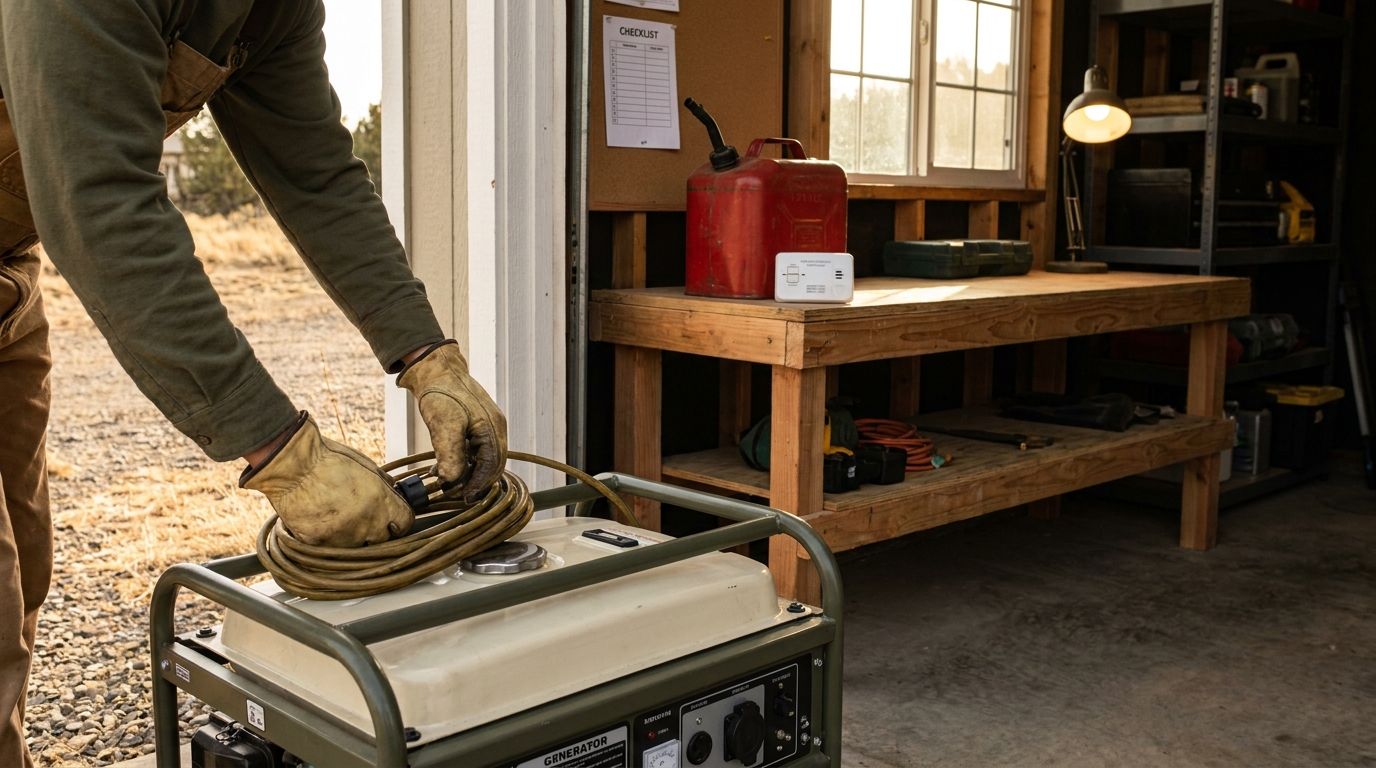
Use this generator safety checklist before every run:
- Read the manual for the specific generator and fuel type.
- Check the outdoor location, clearance from openings, exhaust direction, and ground conditions.
- Confirm CO detectors are present, functioning, and easy to hear.
- Inspect fuel containers, cords, plugs, and connections.
- Start with only the equipment the generator can support.
- Keep the generator, fuel, cords, children, and pets separated from normal household traffic.
- Shut down and cool the generator before refueling or storing it.
- Record any repair, unusual sound, spill, or fuel issue for later attention.
FAQ
Can I run a portable generator in my garage with the door open?
No. A garage is not a safe operating location, even when the door is open. The CDC says to use generators outside, more than 20 feet away from windows, doors, and vents, because carbon monoxide can enter the home and build to dangerous levels.
How do I use a generator safely during rain?
Keep the generator outdoors in a location protected from direct water while preserving open airflow and safe exhaust clearance. Follow the generator manufacturer's instructions for weather protection, and never handle electrical connections with wet hands or while standing in water.
How often should I check carbon monoxide detectors?
The CDC says to check CO detector batteries when you change the time on your clocks each spring and fall. The CDC also says to replace a CO detector following the manufacturer's instructions or every 5 years, while the CPSC says to check batteries regularly.
Can I plug a portable generator into a wall outlet?
No. Never connect a portable generator directly to a wall outlet. Use approved cords for individual appliances, or have a qualified electrician install transfer equipment for household circuits.
The next useful step is not buying another accessory. Walk outside with your manual and mark the generator location, then check the detectors near every sleeping area. If the plan would be hard to follow in the dark, rewrite it until it feels plain enough for a tired household to use.
Where this comes from
Want this handled automatically? See the Mainstay membership.
Subscribe to comment
Join the Mainstay newsletter to leave a comment — and get new field notes in your inbox.
Get new field notes in your inbox
Practical, calm preparedness — one useful note at a time.