Smoke and carbon monoxide alarm checks: a simple home safety schedule
A practical smoke alarm maintenance checklist and carbon monoxide detector testing schedule that keeps your household alarms working when they matter.
At 7:10 on a Saturday morning, the hallway alarm outside the kitchen sounds once. You're holding a mug, the toast is past saving, and your first thought is to pull the battery and deal with it later. That small decision is how a five-minute task becomes a missing layer of protection.
A reliable home alarm safety schedule is simple: test every smoke and carbon monoxide alarm once a month, inspect placement and power twice a year, and replace alarms according to the manufacturer's date. The schedule matters more than your memory, so tie it to a regular household task like the first Saturday of each month.
This smoke alarm maintenance checklist covers the work that keeps alarms useful: testing the button, checking the date, clearing dust, replacing batteries when required, and confirming each alarm is where it can actually do its job.
Build a schedule you will actually follow
A smoke and carbon monoxide alarm check should live on the calendar, not in the vague category of things you'll remember later. Pick one monthly date. The first Saturday works well because most households are awake, moving through the house, and less likely to be rushing out the door.
Put the date on a paper calendar, phone reminder, or household dashboard. Give the check a fixed name like "alarm test and date check." A useful reminder tells you what to do, not just when to do it. The difference between "check alarms" and "press test buttons, inspect dates, clear dust" is the difference between a task and a shrug.
Use this monthly routine:
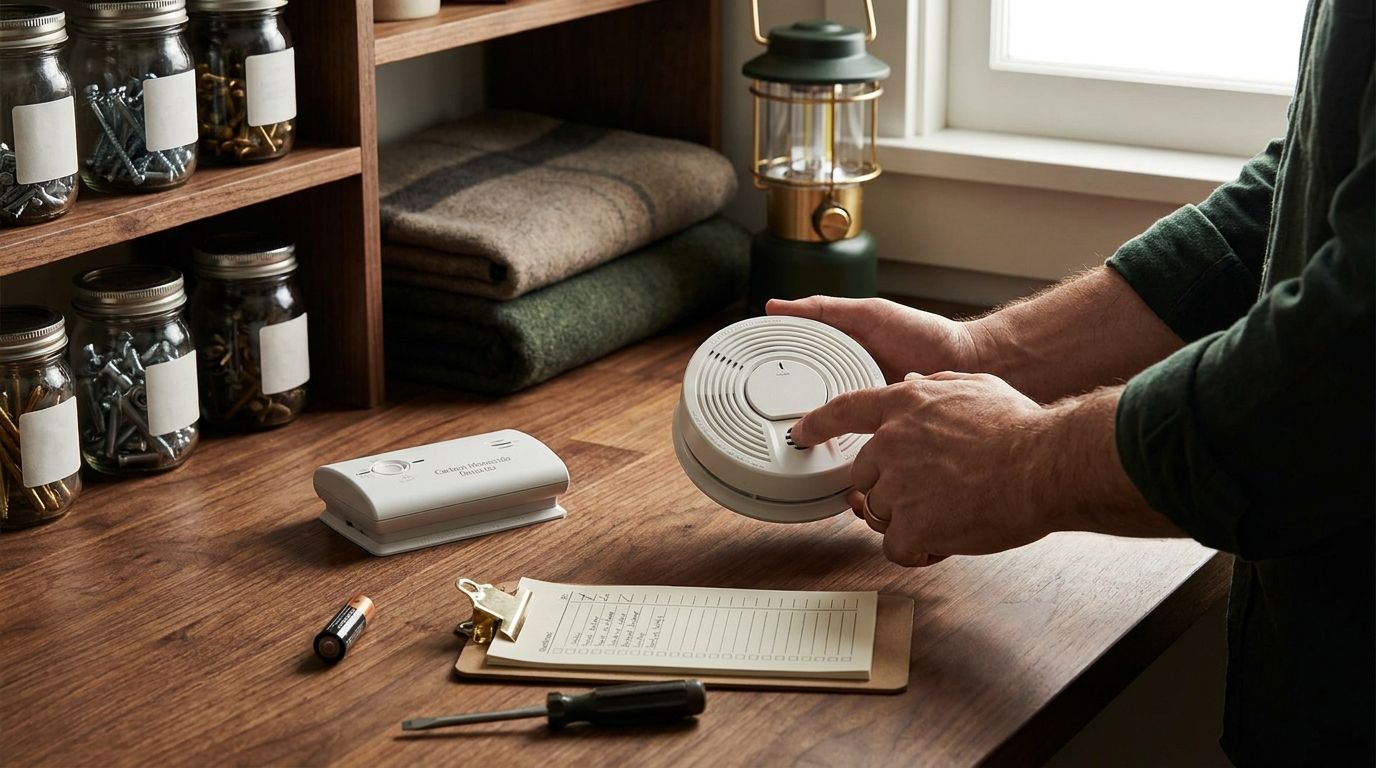
- Press the test button on every smoke alarm and carbon monoxide alarm.
- Listen for the full alarm sound, not a faint click or single tone.
- Check that the alarm is still attached firmly and has no visible damage.
- Confirm that the indicator light behaves as the manual describes.
- Record any failed test, missing battery, or replacement date.
Do not rely on an alarm's occasional warning tone as a test. A tone usually signals a low battery, sensor fault, or end-of-life condition. It does not prove the alarm will produce its full warning sound when it counts.
The National Fire Protection Association reported that smoke alarms were present in 74% of reported US home fires from 2017 through 2021, but only 52% operated. The leading reason for failure was a lack of power. A scheduled check targets that ordinary problem before it becomes a serious one.
If an alarm fails, treat it as a same-day repair. Replace its battery if the model uses a replaceable battery. If the alarm still fails after that, replace the unit rather than setting it back on the ceiling and hoping the next test goes better.
Use the test button the right way
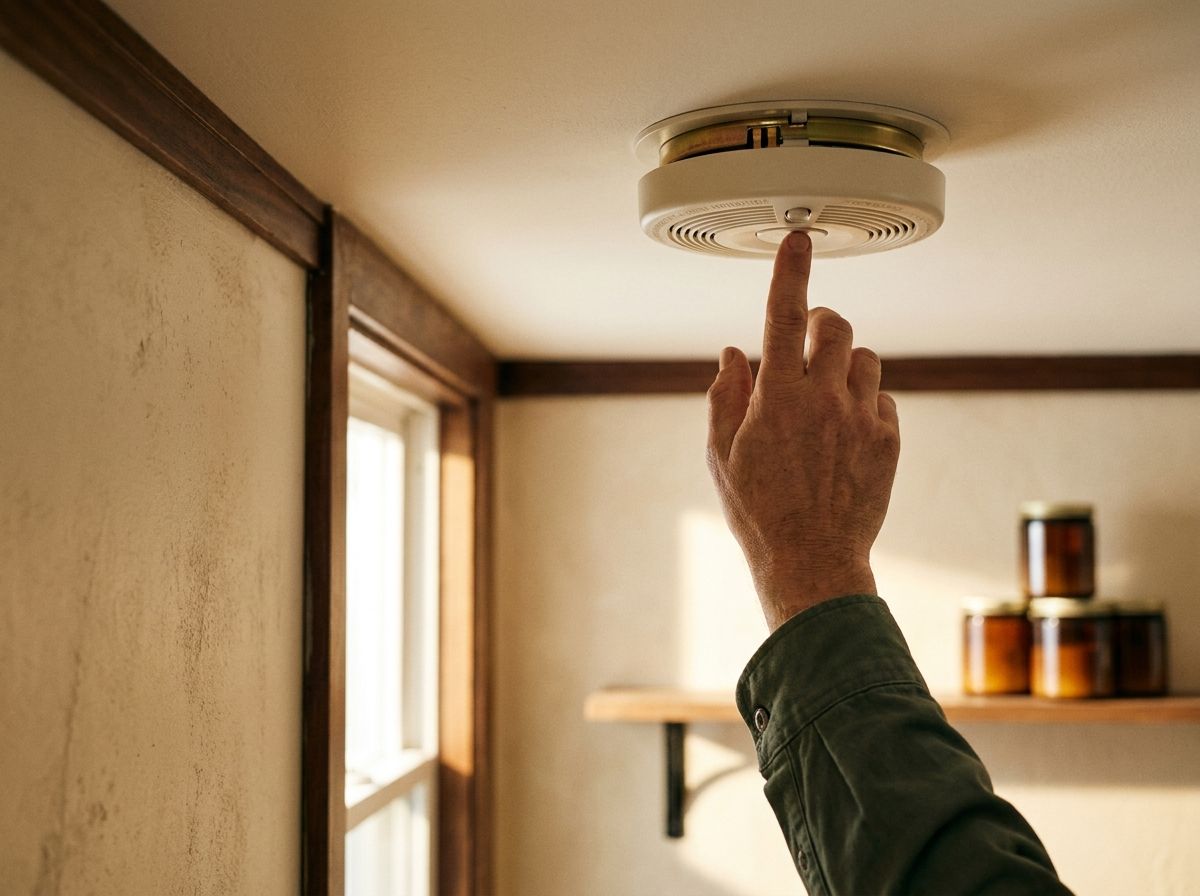
The test button is the right tool for routine carbon monoxide detector testing and smoke alarm checks. Press and hold it as the manual directs. The alarm should produce its loud test pattern, often in repeated bursts. Step into the next room so you can judge whether the sound carries through a closed door.
A working sound in the kitchen does not prove the bedroom alarm is working. Test each unit individually, then listen from sleeping areas and from the far end of the hallway. Ask yourself whether a person asleep with a closed bedroom door would hear it. If the answer is uncertain, relocate the alarm or add an interconnected unit that activates the others.
Never test an alarm by holding a candle, lighter, or burning paper near it. Open flame can damage the sensor and creates a fire risk. Commercial smoke aerosol is available for some maintenance work, but routine household checks should follow the manufacturer's instructions. The button test is enough for a monthly check unless the manual says otherwise.
A practical test log can fit on one index card:
- Room or location
- Alarm type
- Test date
- Battery or power result
- Manufacture date or replace-by date
- Repair needed
Say Jordan checks the basement, first-floor hallway, upstairs hallway, and bedroom corridor on March 2. The basement carbon monoxide alarm sounds normally. The upstairs smoke alarm gives one warning tone and fails the test. Jordan replaces its battery, tests it again, and writes the next date on the calendar. That's the whole repair, completed before the day gets crowded.
If a unit is interconnected, test the network according to the manual. Some systems make every alarm sound when one test button is pressed. Others require a particular sequence. Do not assume one loud alarm confirms every device in the house.
Place alarms where they can wake you
Good alarms in poor locations are not a good system. Smoke alarms should be inside each bedroom, outside sleeping areas, and on every level of the home, including the basement, following NFPA guidance. Install them on the ceiling when possible, or high on a wall when the manufacturer's instructions allow it.
Keep smoke alarms away from corners where air movement can be limited. Avoid placing them directly beside a cooking appliance, bathroom door, heating vent, or ceiling fan. Those locations can trigger nuisance alarms or expose the unit to moisture and residue. The answer to frequent false alarms is not always removing the battery. It may be moving the alarm a short distance while keeping the required coverage.
Carbon monoxide behaves differently from smoke, and its movement depends on the home's airflow and the source of the gas. Install CO alarms on each level and outside sleeping areas, with additional units near attached garages or fuel-burning equipment when the manufacturer or local code recommends them. Follow the instructions for height and distance from appliances. No universal placement rule overrides the product manual and local requirements.
Keep these placement checks on your twice-yearly list:
- Is every sleeping area covered?
- Is there an alarm on every occupied level?
- Can air reach the alarm without a door, cabinet, or heavy obstruction blocking it?
- Is the unit away from steam, cooking fumes, and direct airflow?
- Is it close enough to a sleeping area for the sound to wake someone?
In a two-story house in Cedar Rapids, a family had a smoke alarm in the downstairs hallway but none outside the upstairs bedrooms. The house wasn't missing equipment because of some complicated technical issue. The coverage had simply stopped where the original owner stopped installing units. A room-by-room walk made the gap obvious.
Check local building and fire codes when you add, move, or replace alarms. Requirements can differ by state, city, home age, and fuel-burning equipment.
Track batteries, power, and replacement dates
Power is the unglamorous center of alarm maintenance. A smoke alarm can have a clean sensor and a fresh-looking case, yet still fail because its battery is dead, loose, or missing. Write the battery type and replacement date in your home inventory, then keep the correct spares together in a known location.
Many newer alarms use sealed batteries designed to last up to 10 years. These units can reduce midnight warning tones and battery mistakes, but the entire alarm still needs replacement when its service life ends. A sealed battery is not a lifetime battery.
Alarms connected to household wiring usually have battery backup. Test them during a brief power interruption only if your manual permits it and you can do so safely. Pressing the test button confirms the alarm's test circuit, but a scheduled inspection should also confirm that the backup battery is present and not past its service life.
Use the manufacture date on the back or side of the alarm. Do not count from the day you moved into the house. If the date is missing, unreadable, or beyond the manufacturer's replacement interval, replace the unit. The US Fire Administration advises replacing smoke alarms every 10 years, while carbon monoxide alarm life varies by model and is commonly seven to 10 years. The label and manual control.
A twice-yearly power audit pairs well with daylight-saving time changes, though the calendar date of those changes can shift. During the audit:
- Remove dust with a vacuum attachment or soft brush as the manual permits.
- Check the battery compartment for corrosion or a loose connection.
- Confirm that the alarm is not painted, covered, or decorated.
- Read the replacement date on each unit.
- Replace any alarm that has damage, repeated faults, or an unclear age.
The old phrase about changing batteries when the clocks change is a useful anchor, but it's not the whole schedule. You still need a monthly test and a replacement date. A clock can be wrong. A written log is less moody.
Know what a carbon monoxide alarm can and cannot tell you
Carbon monoxide is a colorless, odorless gas produced when fuel burns incompletely. Common household sources include furnaces, fireplaces, gas ranges, water heaters, generators, and vehicles running in or near an attached garage. A CO alarm warns about the concentration pattern it detects. It does not inspect an appliance, vent, chimney, or garage.
That distinction matters. A silent alarm does not prove a furnace is safe. Have fuel-burning heating equipment inspected according to the manufacturer's schedule and local practice. Keep vents, flues, and outdoor exhaust paths clear. Never operate a portable generator inside a home, garage, basement, crawlspace, or enclosed porch.
The Centers for Disease Control and Prevention links unintentional carbon monoxide poisoning in the United States to more than 400 deaths and roughly 100,000 emergency department visits each year. The number is large, but the household action is plain: install working CO alarms near sleeping areas and maintain the fuel-burning equipment that can produce the gas.
Know the response before an alarm sounds. If a CO alarm activates, or if people have headache, dizziness, weakness, nausea, chest pain, or confusion, move everyone and pets outside to fresh air immediately. Call emergency services or the fire department from outside. Do not re-enter until qualified responders say it is safe.
If the alarm sounds once and stops, do not assume it was a nuisance. Record what happened, ventilate only if you can do so without delaying exit, and contact the appropriate professional or utility provider. A CO alarm is not a device to silence and investigate casually.
In January, a family near Pittsburgh heard their basement CO alarm after starting the furnace for the season. The alarm stopped before they reached the stairs. They still left the house and called for help. A blocked vent was found outside. The alarm did its job because the household hadn't treated a quiet house as proof that every system was fine.
Make the whole household part of the plan
Alarm maintenance is a household task, but one person should own the schedule. That person does not need to perform every repair. They need to know which alarms exist, where the records are, and what happens when a unit fails.
Walk through the house with the people who sleep there. Explain the alarm sound, the exit routes, and the rule that everyone leaves when a smoke or CO alarm sounds. Choose an outdoor meeting point that is away from the driveway and accessible from more than one route. Do not make the meeting point somewhere that blocks firefighters or keeps someone standing beside the building.
Older adults, young children, and anyone with hearing loss may need a different alert method. Consider interconnected alarms, bed-shaker devices, strobe alerts, or other products designed for the household member who may not hear a standard alarm. Test those features on the same monthly schedule.
A family check can cover these questions:
- Can everyone identify the smoke alarm sound?
- Can everyone identify the CO alarm sound if the models differ?
- Does each person know two ways out of the sleeping area?
- Can someone reach the outdoor meeting place without returning for belongings?
- Does anyone need a visual, vibrating, or louder alert?
At the Wills home, June keeps the alarm record with the household documents, while Rosa handles the monthly test and Sam checks replacement dates twice a year. The work is shared, but the record has one home. If a battery fails, nobody has to remember who noticed it last. (That detail sounds minor until it isn't.)
With Mainstay's household profile and inventory tools, you can record each alarm's room, type, power source, manufacture date, and replacement deadline in one place. The point is not to create a complicated project. It is to make the next check visible when the calendar gets crowded.
Keep a one-page alarm record
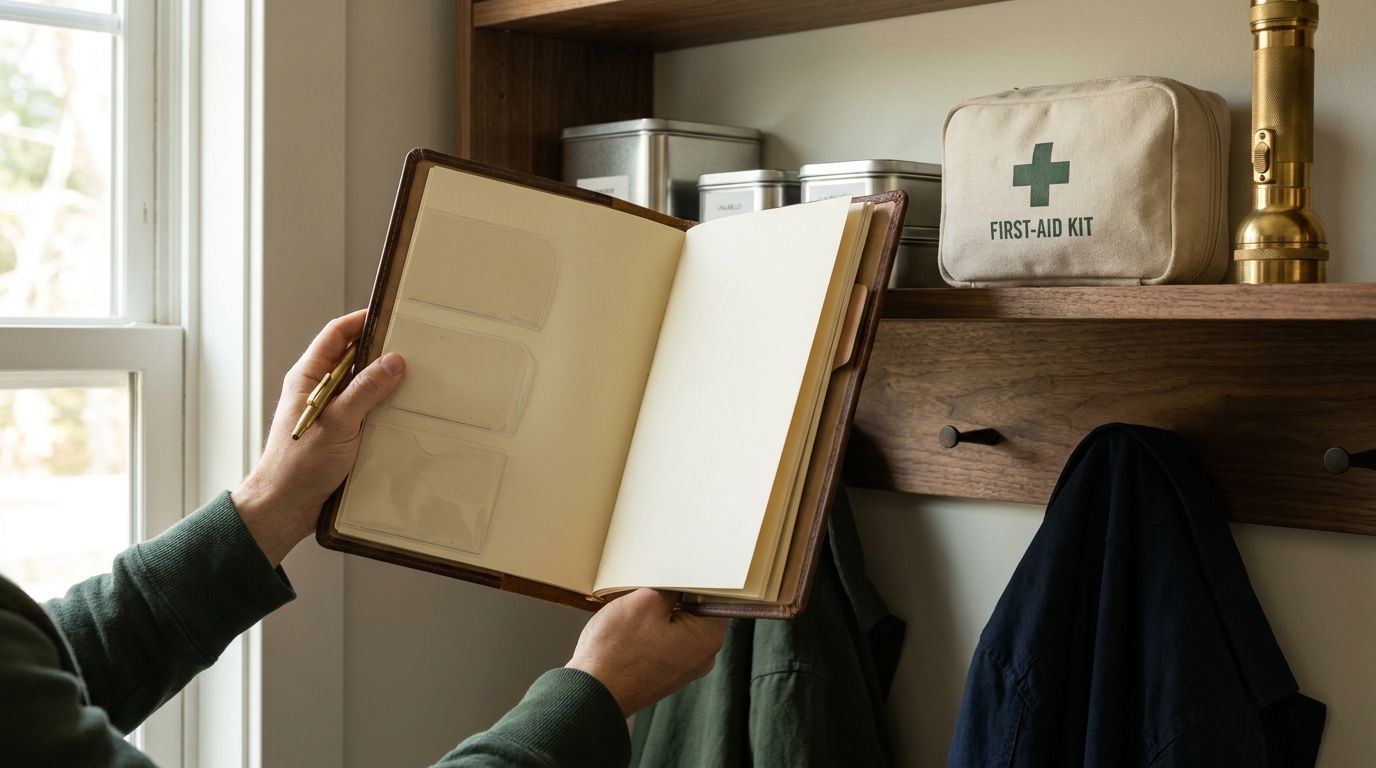
A written record turns scattered devices into a system. Start with a room-by-room inventory. Include every smoke alarm, every carbon monoxide alarm, and any combination unit. Note whether each is battery-powered, hardwired with backup, or connected to an alarm panel.
Record the information you will need when buying replacements:
- Room and floor
- Alarm type and model
- Power source
- Manufacture date
- Install date, if known
- Replace-by date
- Battery type
- Last monthly test
- Notes about sound, placement, or repairs
Use a simple status label: working, repair needed, or replace. Avoid writing only "good." That word loses its meaning after six months, while a date and a specific action stay clear.
Set two recurring reminders. The monthly reminder covers button tests and sound checks. The twice-yearly reminder covers cleaning, placement, battery compartments, and dates. Add a third reminder for each unit's replacement deadline, ideally 30 days before the date printed in the manual.
For renters, keep the same record even when the landlord owns the equipment. Report failed alarms in writing and keep a copy of the request. Do not remove or relocate a landlord-provided alarm without permission unless local rules allow it. If you install an additional alarm, make sure it does not create confusion about which devices cover which rooms.
On the first Saturday of next month, stand at the front door with your record. Walk every level, press every test button, and mark the result. Replace one failed battery before you sit down. Then schedule the next check. The system becomes dependable through that ordinary repetition, not through one heroic afternoon of organizing.
FAQ
How often should I test smoke and carbon monoxide alarms?
Test every smoke and carbon monoxide alarm once a month using the test button. Inspect placement, dust, battery compartments, and replacement dates twice a year, and follow the manufacturer's instructions for any additional testing.
How often should smoke alarms be replaced?
The US Fire Administration recommends replacing smoke alarms every 10 years. Check the manufacture date on the alarm, not just the installation date, and replace a unit sooner if it fails a test, has damage, or shows repeated faults.
How often should carbon monoxide detectors be replaced?
Carbon monoxide detector life varies by model, with many units rated for seven to 10 years. Use the replacement date in the manual or on the alarm, and replace the whole unit when a sealed-battery model reaches the end of its service life.
Where should carbon monoxide alarms be installed?
Install CO alarms on each level and outside sleeping areas, following the manufacturer's placement instructions and local code. Add coverage near attached garages and fuel-burning equipment when the product instructions or local requirements call for it.
What should I do if a carbon monoxide alarm sounds?
Move everyone and pets outside to fresh air immediately, then call emergency services or the fire department from outside. Do not re-enter until qualified responders say it is safe, even if the alarm stops.
Press the test buttons this month and write down the result before you walk away. If one alarm fails, replace or repair it the same day, then add its replacement date to your household record.
Want this handled automatically? See the Mainstay membership.
Subscribe to comment
Join the Mainstay newsletter to leave a comment — and get new field notes in your inbox.
Get new field notes in your inbox
Practical, calm preparedness — one useful note at a time.