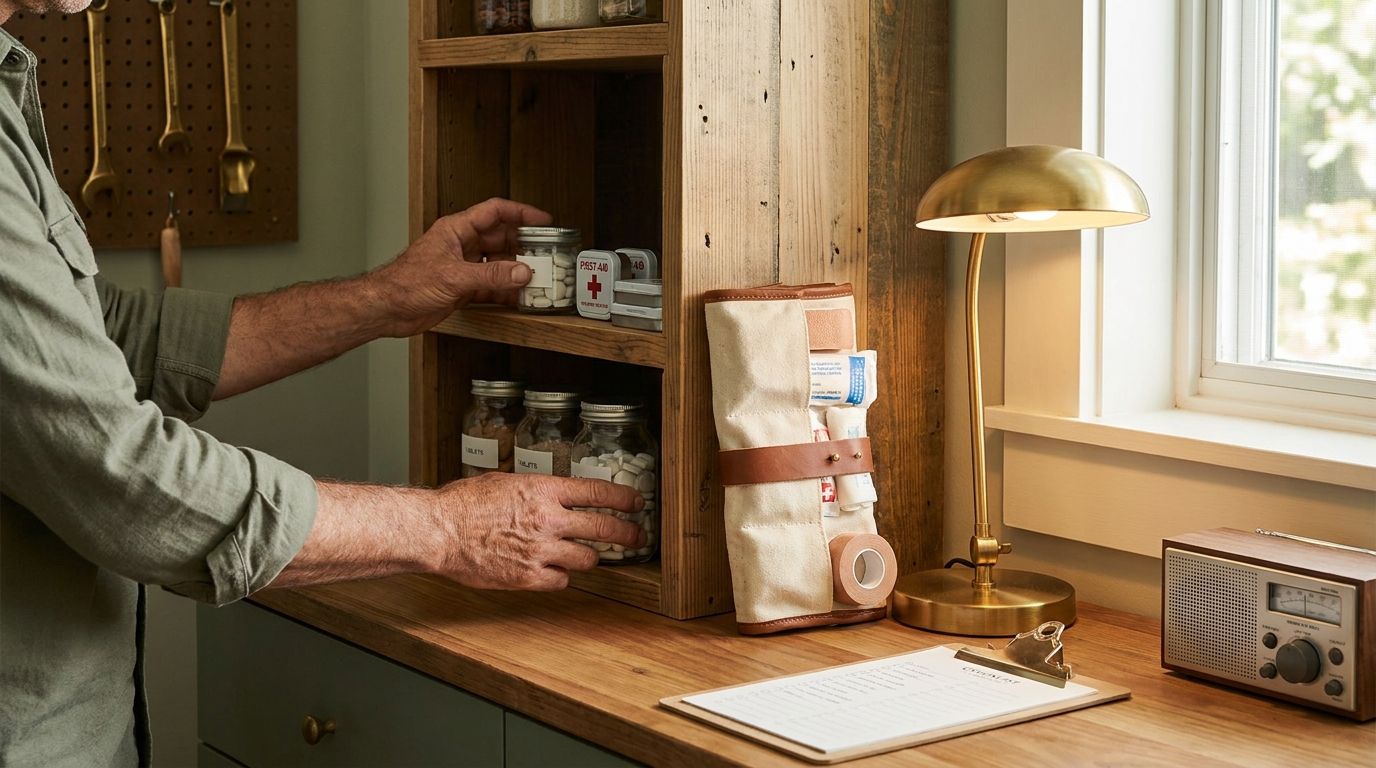
Straight talk: Do you really need a year of emergency supplies?
A year of supplies sounds responsible until you price it, store it, and rotate it. Here is how to decide what your household actually needs.
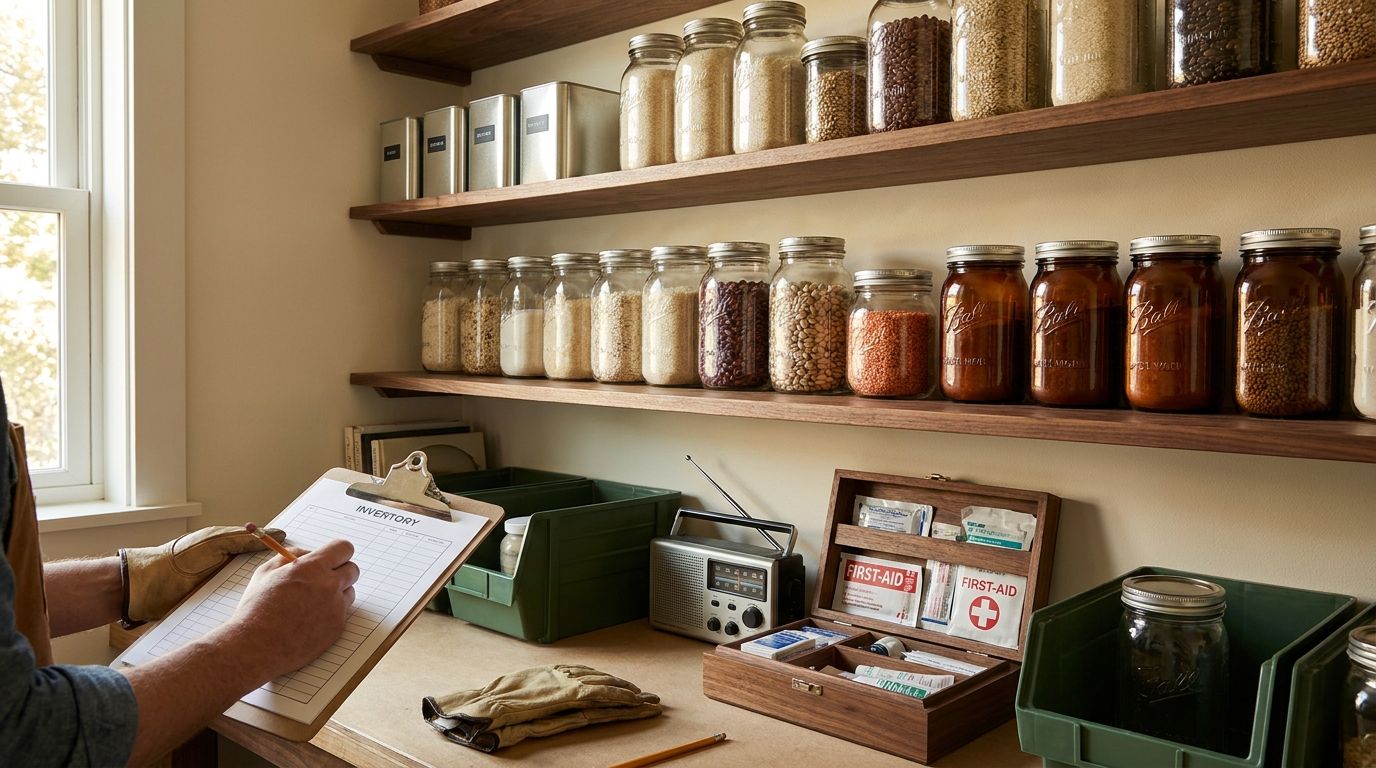
June Wills was standing in her kitchen with a grocery receipt in one hand and a calculator in the other. She had just searched "how much emergency food to store" and found advice that seemed to assume every household had a spare warehouse, a generous budget, and no strong feelings about powdered eggs. Her pantry had one narrow shelf available. Scout had already inspected it and found nothing worth stealing.
The short answer is no: most households do not need a full year of emergency supplies. A better target is a practical reserve that matches your household, local risks, storage space, budget, and ability to rotate what you buy.
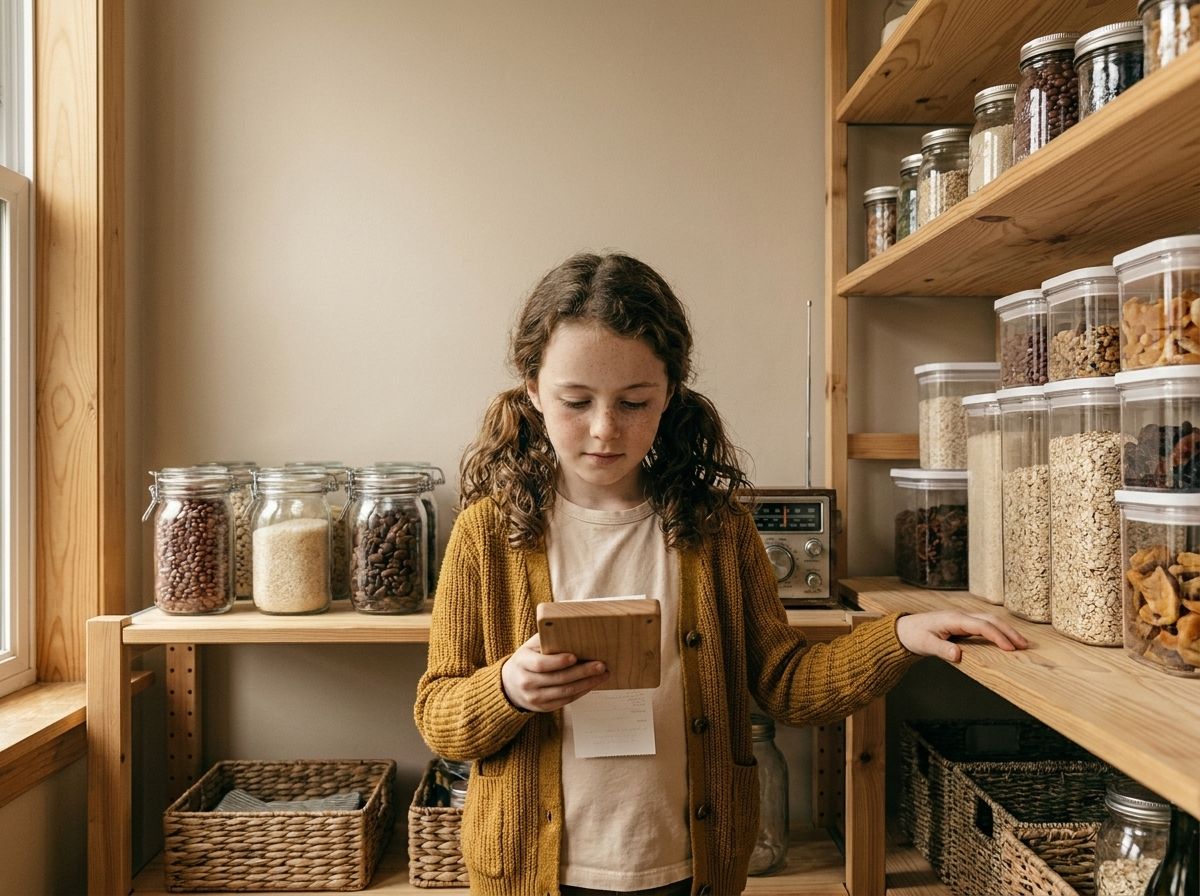
That answer may feel less impressive than stacking a year of food against the garage wall. It is also more useful. Preparedness works when you can afford it, find it, use it, and keep it current.
A year is a planning horizon, not a shopping order
The phrase "one year emergency supplies" sounds like a standard. It is not. It is a planning horizon, and it can make sense for households facing extended disruption, remote living, medical needs, or genuinely limited access to stores. For many households, it is an expensive goal that creates more stress than capability.
The right question is not "How much should I stockpile?" Ask this instead: "What could interrupt normal shopping in my area, and how long would my household need to operate before the next reliable resupply?"
That window could be days. It could be weeks. A rural household that loses road access during a hard winter makes a different calculation than an apartment household two blocks from three grocery stores. A household with an infant, a family member who needs specific foods, or a dog on a strict diet has different requirements still.
The Federal Emergency Management Agency commonly frames basic household readiness around several days of supplies. That is a starting point, not a ceiling. The U.S. Department of Agriculture also treats shelf-stable food as part of a broader food safety plan, not as a competition to collect the most cans.
You can choose a longer reserve without turning the project into a dramatic lifestyle change. Add a little during ordinary shopping. Use what you already eat. Replace items as they move into your normal pantry rotation. A reserve built this way has a better chance of surviving both a storm and your next budget review.
What changes the amount you need?
Your household size matters, but it is not the only factor. Review these questions before you buy anything:
- How many people and pets rely on the household pantry?
- How quickly can you reach a grocery store if roads or fuel access are limited?
- Which weather events have interrupted your area before?
- Does anyone need prescription food, infant formula, medical nutrition, or allergy-safe products?
- How much shelf, cabinet, or temperature-controlled storage do you actually have?
- What can your monthly budget absorb without creating debt or skipped essentials?
That list is not a test. It is a way to keep someone else's target from becoming your household's burden.
The emergency preparedness myths that make people overbuy
A few common ideas push people toward a year of supplies before they have covered simpler gaps. These myths are easy to understand. They are also expensive.
Myth: more food automatically means more readiness
A shelf full of food helps only if the food is safe, usable, and suited to the people eating it. Ten cases of something nobody likes may look impressive. They will not solve much when the power is out and everyone is already tired.
The USDA recommends following package directions for storage and paying attention to signs of spoilage. Heat, moisture, pests, damaged packaging, and poor rotation can reduce the value of a food reserve long before the printed date becomes a concern.
Keep foods your household already knows how to prepare. Include items that work with your available cooking setup. If you have no reliable way to boil water or heat a meal, a pantry full of dry ingredients just adds another problem to the pile.
Myth: the longest date is always the best choice
Shelf life matters, but it is not the only measure of value. A product with a long date may still be a poor fit if it requires ingredients you do not keep, a cooking method you cannot use, or a storage temperature your home cannot maintain.
Read the label before buying in quantity. Check serving size, allergens, preparation instructions, package condition, and the date. Then buy one or two units and let your household try them on an ordinary evening. This is how you discover that "family-size" can mean "one serving for a teenager who just got home from practice." (Ask me how I know.)
Myth: a large reserve replaces a household plan
Supplies do not tell anyone where the flashlight is, who picks up the dog, what number to call, or which medication needs attention. A household can have plenty of rice and still lose critical time because nobody knows how to shut off the water main or find the document with insurance information.
A capable plan usually covers:
- Who checks on each person and pet
- Where the household meets if it cannot stay home
- How the household receives local updates
- Which supplies need to move with you
- Who has access to important documents and account information
This is why Mainstay treats inventory, plans, documents, and practical skills as connected parts of household readiness. A reserve is easier to trust when you can see what exists and know what happens next.
How much emergency food to store without guessing
There is no single universal number, but you can build a useful estimate with a simple method. Start with the meals your household already eats over a normal week. Do not begin with an online bucket labeled for an unknown family size.
Write down the meals and snacks your household would realistically reach for during a disruption. Include breakfast items, drinks, easy lunches, dinners, and foods that require little preparation. Then note which ingredients are already in your regular pantry.
Use this process:
1. Count the people and pets who depend on your food supply.
2. Choose a starting coverage period that fits your local risks and budget.
3. Estimate the number of meals and calories your household uses during that period.
4. Match those needs to foods with familiar preparation and acceptable storage conditions.
5. Add items gradually while tracking dates and replacement points.
If numbers help, keep a household food log for seven days. Record what disappears from the pantry and refrigerator. You are not trying to run a nutrition study. You are learning what your household actually reaches for when nobody has time to make a complicated meal.
A practical reserve might begin with a few days of easy meals, then grow to a couple of weeks if that fits your circumstances. Some households may decide that a month is the right target. Others may stop at a smaller reserve and put the next dollar toward water containers, medication planning, fuel, or home repairs.
Those choices are not evidence that one household cares more than another. They reflect different homes.
Build the reserve in layers
A layered approach keeps you from treating a year as the only serious goal. One practical structure looks like this:
- Everyday buffer: foods you use regularly and replace during normal shopping
- Short disruption reserve: easy meals and basic ingredients for several days
- Extended reserve: additional shelf-stable foods chosen for a specific local risk
- Special-needs reserve: items for allergies, medical diets, infants, pets, or mobility limits
The layers should support each other. If the short disruption reserve contains foods that never get used, it will eventually become a disposal project. If the extended reserve depends on one cooking method, it needs a backup plan.
Keep a written count of what you have. A notebook works. A spreadsheet works. Mainstay's Inventory can help you track what is already in the household, while the Dashboard gives you one place to review categories that tend to drift out of sight. The tool matters less than the habit.
What to prioritize before chasing a year
A large food reserve is not always the most urgent gap. Walk through a normal day without electricity, water service, or a working phone and notice where the household would slow down.
You may find that the missing piece is not another case of soup. It may be a way to charge a phone, a safe method for preparing food, a backup for a necessary prescription, or a current list of household contacts.
Use this audit before expanding your stockpile:
- Can everyone get safe drinking water for the period you chose?
- Can you prepare the food you stored without relying on one fragile appliance?
- Can you keep critical medicines within reach and track refill timing?
- Can you locate lighting, sanitation supplies, first aid items, and pet food quickly?
- Can you explain the household plan to someone who is tired and distracted?
- Can you replace what gets used without starting over?
The last question matters most. A supply plan that cannot be maintained is not a stable plan. You do not need to buy every category at once. Pick the gap that would cause the most trouble, close it, then move to the next one.
And give yourself permission to stop. Preparedness is not a moral score. If your household has a week of food, a workable water plan, current medications, and a communication plan, that is meaningful progress even if the garage is not full.
When does a year make sense?
A year-long reserve can be reasonable when you have a clear reason, enough storage, and a rotation routine that will keep the supply usable. It may suit a household with long travel distances, repeated winter isolation, limited local services, or a genuine desire to reduce dependence on frequent shopping trips.
It makes less sense when the goal is vague, the budget is strained, or the food would sit untouched until it expires. Buying a large quantity of food because an online post made you feel behind is not a plan. It is a reaction, and reactions tend to collect clutter.
If you choose a year, divide it into manageable sections. Label the purchase month. Store heavier items where they can be moved safely. Keep a list of what needs rotation. Review the supply at a regular interval, perhaps when you pay a monthly bill or finish a seasonal household check.
You can also define "a year" by category rather than by every calorie. A household may keep a year of certain medications or pet food but only several weeks of meals. Another may have a deep grain supply but need to strengthen cooking fuel and water treatment. The plan should follow the real constraint.
A calmer way to decide your household target
June did not leave the kitchen with a warehouse order. She wrote down the people in the home, the foods they already used, the likely local disruptions, and the shelf space available. Then she chose a small, specific amount to add that month.
That approach has a quiet advantage. It builds confidence from evidence instead of trying to purchase confidence all at once. Each review tells you more about what the household actually needs.
Set your own target with these steps:
- Pick a coverage period you can fund without strain.
- Build around meals your household will actually eat.
- Add special needs before optional variety.
- Label dates and review the supply on a repeatable schedule.
- Record the next item to buy instead of relying on memory.
Your reserve can grow later. It does not have to prove anything today.
If you want a practical next step, spend ten minutes tonight checking one shelf. Count what is usable, pull forward the oldest items, and write down the gap that would matter most during a short disruption. That small record is more valuable than a grand plan you never revisit.
FAQ
How much emergency food should a household store?
Start with several days of food your household already eats, then expand toward a longer period if your risks, budget, and storage space support it. A week or month may be a better target than a year for many households. Track actual use instead of relying on a generic package size.
Is one year of emergency supplies necessary?
No. A year can be useful for some households, but it is not a universal requirement. Your target should reflect local access, household health needs, storage conditions, budget, and the disruptions you are most likely to face.
What should I stockpile before buying extra food?
Cover the gaps that would stop your household from using its supplies. Review drinking water, cooking ability, medication access, lighting, sanitation, communication, pet needs, and important documents before expanding into a larger food reserve.
How do I keep a large emergency food supply from expiring?
Store items according to their labels, protect them from heat and moisture, and use older items during normal meals. Record purchase dates and review the supply on a recurring schedule so rotation becomes part of household maintenance rather than a once-a-year scramble.
The shelf in June's kitchen did not get taller. Her plan got clearer. That is the part worth copying: choose a target you can maintain, make it fit the people who live with you, and let steady work do what dramatic buying never can.
Want this handled automatically? See the Mainstay membership.
Subscribe to comment
Join the Mainstay newsletter to leave a comment — and get new field notes in your inbox.
Get new field notes in your inbox
Practical, calm preparedness — one useful note at a time.