Straight Talk: What “Prepared for 72 Hours” Really Means for a Household
“72 hour readiness” is not a magic number. It is a household plan for the first few days when help is slower than you expect.
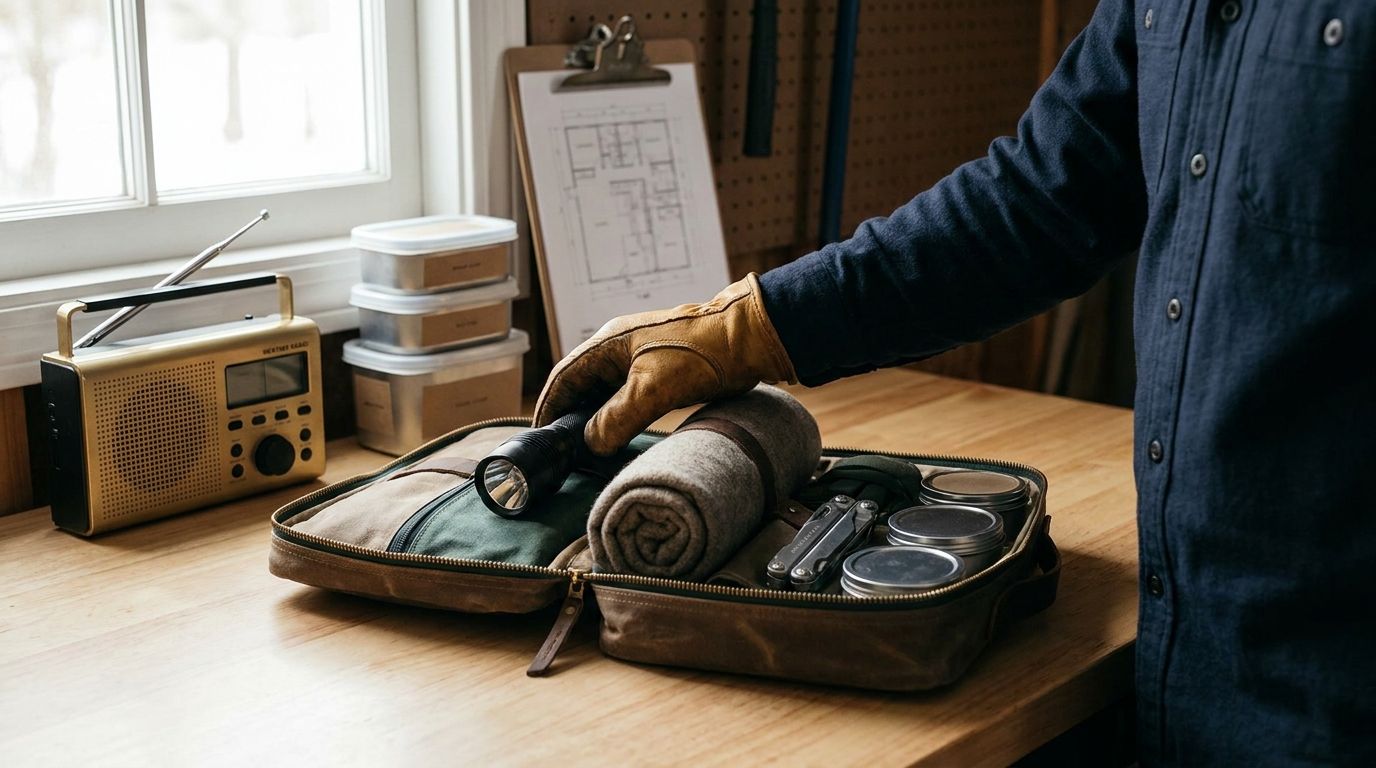
June Wills is at the kitchen sink, rinsing a spoon that smells faintly like day-old chili. Rosa Wills has her phone out, scrolling the neighbor group chat past the same update three times. Sam Wills is at the table, tapping a pen against a printed checklist that's gone soft at the corners. Nothing dramatic. Just Tuesday, and the power is flickering again.
Theo Wills is calm the way competent people are calm. He says, "We have enough to get through the next stretch without improvising everything." Scout the dog drops a toy at his feet, as if he's also taking attendance.
That phrase gets repeated a lot in preparedness circles: "prepared for 72 hours." People say it like it's a pass, or a promise. It's neither.
Here's the straight talk: 72-hour readiness is a household planning target for the first three days after normal routines break. It's what you can realistically feed, water, and manage while services stabilize and neighbors figure out what they can share. Not a bunker. Not a fantasy. A competence mindset you build through small, repeatable decisions.
With Mainstay's adaptive learning system, you can turn that mindset into a simple household planning rhythm that keeps supplies usable and plans current.
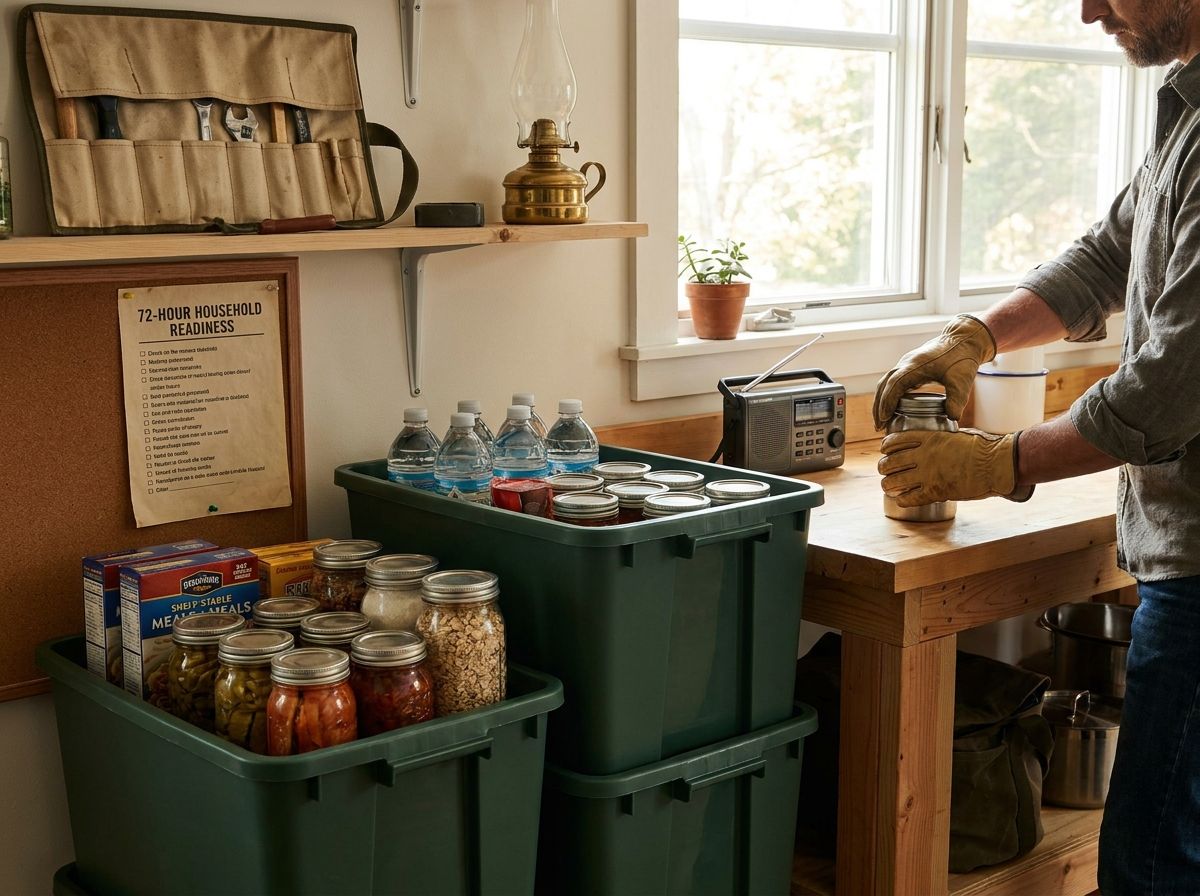
Prepared for 72 hours is a target, not a personality test
"Prepared for 72 hours" sounds like a single milestone. In real life, it's a set of household decisions you can make before you need them.
When people talk about preparedness myths, the big one is that 72 hours equals "self-sufficient." It does not.
A household can be ready for 72 hours and still lean on the community around it. The goal is to keep your life functioning long enough to clear the early chaos, which is exactly when people make the most mistakes: they reach for whatever is easiest, forget expiration dates, and burn through the boring supplies that make everything else possible.
So what does it mean, in plain terms?
You can:
- Keep everyone fed and reasonably hydrated for about three days
- Manage basic hygiene and comfort without burning through your last supplies
- Handle minor injuries and common stressors (sleep, temperature, charging devices)
- Communicate and coordinate with the people you actually rely on
You cannot:
- Assume roads are open, stores are stocked, or deliveries show up
- Assume you can cook anything you want with any fuel you want
- Assume your family will act like they do on a calm day
And yes, you can still be a good neighbor even if your plan isn't perfect. Preparedness is not a moral badge. It's a practical household tool.
The competence mindset behind the number
Competence mindset is what keeps you from spiraling. You decide what you can control, you document it, and you rotate supplies so "prepared" stays true.
A lot of households get stuck because they treat preparedness like a one-time shopping trip. Then they look at their shelves a few months later and realize the labels are fuzzy, the expiration dates are a mystery, and half the items are the wrong size or format for how they actually cook.
That's why 72-hour readiness works best as a planning target. Not a shopping spree.
What to prepare: the household basics that actually matter
Let's get specific. When the grid wobbles or the roads get messy, the first needs are predictable. You don't need a warehouse. You need the right categories in amounts that match your actual household.
Use these buckets as a clean starting point. Adjust for your home and your people.
Food and water you can use without drama
Food and water are the core of 72-hour readiness, but the myth is that you need only "emergency food." Emergency food is fine. It's also a lot easier to get through three days when your plan includes familiar meals that still work when cooking is limited.
For food:
- Choose shelf-stable meals you can eat without special prep
- Include a few items that feel like normal food (rice, pasta, oats, peanut butter)
- Plan for picky days. Everyone has them
For water:
- Plan for drinking and basic use
- Store in containers you can actually access
- Label by date so rotation stays simple
You don't need to calculate every ounce to the decimal. You need enough buffer that you're not rationing on day one.
And you need a plan for "what if the water isn't safe." That's part of the preparedness myth problem too. People assume water storage solves everything. Sometimes it doesn't.
A straightforward household planning approach includes:
- Stored water for drinking
- A way to treat additional water if needed
- A decision rule for when you switch from "use" to "treat"
Comfort and hygiene: the quiet stuff that keeps people steady
You can survive three days without a spa. You can also survive three days with less friction if you plan for basic hygiene.
Think in terms of everyday replacement. You're not trying to recreate a routine. You're trying to prevent the spiral where everyone feels gross, sleep gets worse, and tempers shorten.
Your hygiene and comfort plan can include:
- Hand cleaning supplies
- Tooth care basics
- Waste management items
- A simple plan for temperature control
A lot of households forget waste and then feel embarrassed about it later. Don't. Plan it. Put it in a bin. Label it. Your future self will thank you.
Communication and family coordination
When people say "prepared for 72 hours," they usually picture supplies. Supplies matter, but coordination matters just as much.
If your household has more than one adult, you need a plan for roles. Not a complicated command structure. Just clarity.
In a real situation, you want to know:
- Who checks on updates
- Who handles food and water
- Who monitors kids or dependents
- Who contacts the out-of-area relative or friend
You also want a meeting point if phones lose signal. And you want to practice it once so it isn't brand-new during a stressful moment.
This is where household planning becomes a family skill, not a binder on a shelf.
The preparedness myths that break 72-hour plans
There are a few preparedness myths that show up again and again. They don't come from bad intentions. They come from how people shop, how people plan, and how people hope.
Myth 1: "If I buy 72 hours of food, I am ready."
Food is not the whole plan. Water, hygiene, waste, and basic first aid are what keep the household functioning.
A shelf-stable pantry is a start. A labeled system is what makes it usable.
Myth 2: "72 hours is the same for every household."
It is not. Household needs depend on:
- How many people
- Ages and dietary needs
- Medical requirements
- Mobility and accessibility
- Pets
Scout is small, but the plan still has to include his needs. If your dog eats special food, that's a real planning variable. (This one catches people off guard more than almost anything else.)
Myth 3: "I will remember to check expiration dates later."
Later is where plans go to die.
If you don't rotate, you end up with a shelf of "maybe." Maybe is not a plan.
The fix is simple: label by date, store where you can see it, and rotate on a schedule you'll actually follow.
Myth 4: "We will know what to do once it happens."
You'll know what to do when you've already practiced the decision. The decision isn't "how to survive." The decision is "what do we do first, second, and third."
The good news is that you don't need to rehearse every scenario. You need a short script for the first day, a short script for the second day, and a short script for when outside help is still slow.
You can keep all three scripts on one page.
Build a 72-hour readiness system you can maintain
A lot of households do one big push and then drift. That's normal. Life happens. The trick is building a system that makes maintenance feel like housekeeping, not a project.
Here's a method you can actually keep.
Step one: pick your "72 hour readiness" zone
Choose one place in your home that holds the core supplies. A closet, a shelf, a set of bins. The point is that you don't have to search the house when stress is high.
Your zone should include:
- Water plan items
- Food plan items
- Hygiene and waste basics
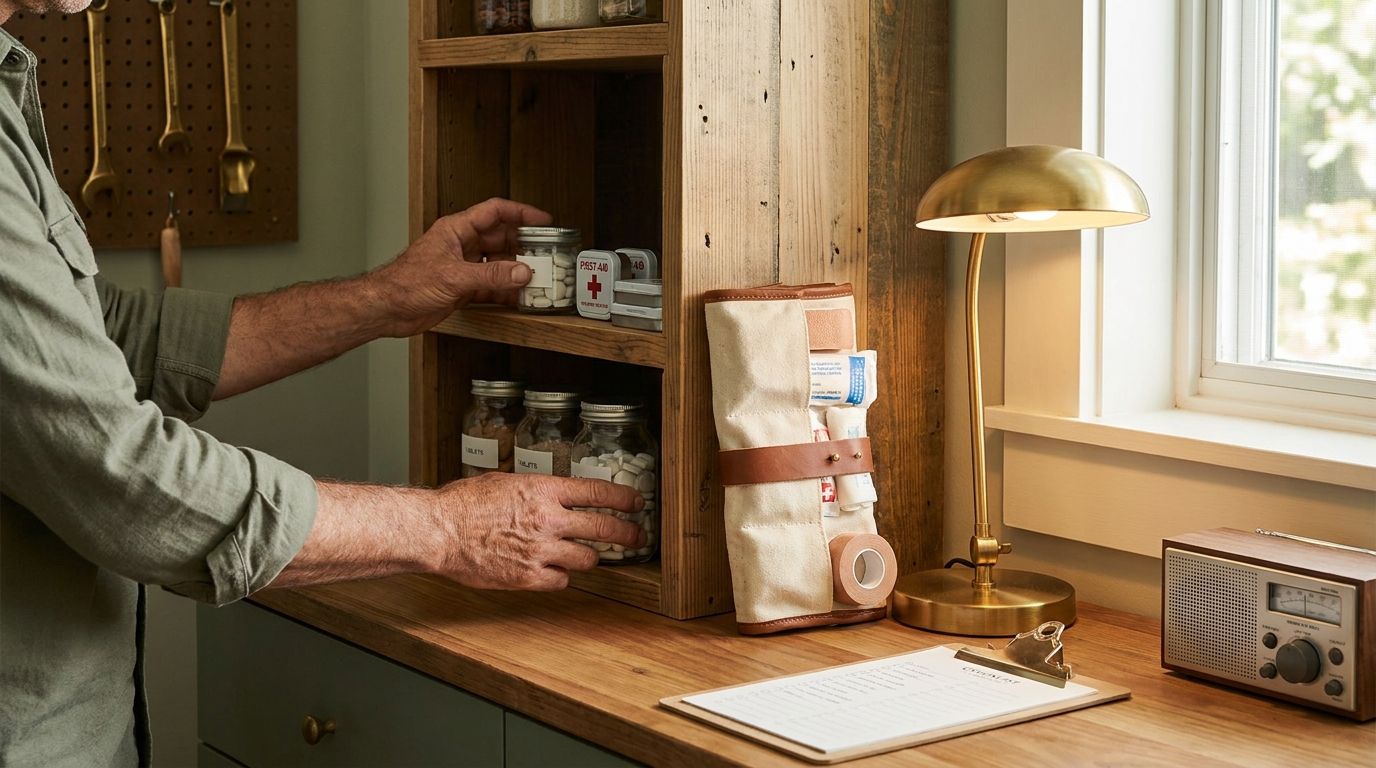
- A small first aid section
- A printed household planning page
Step two: label like you are training a calm person
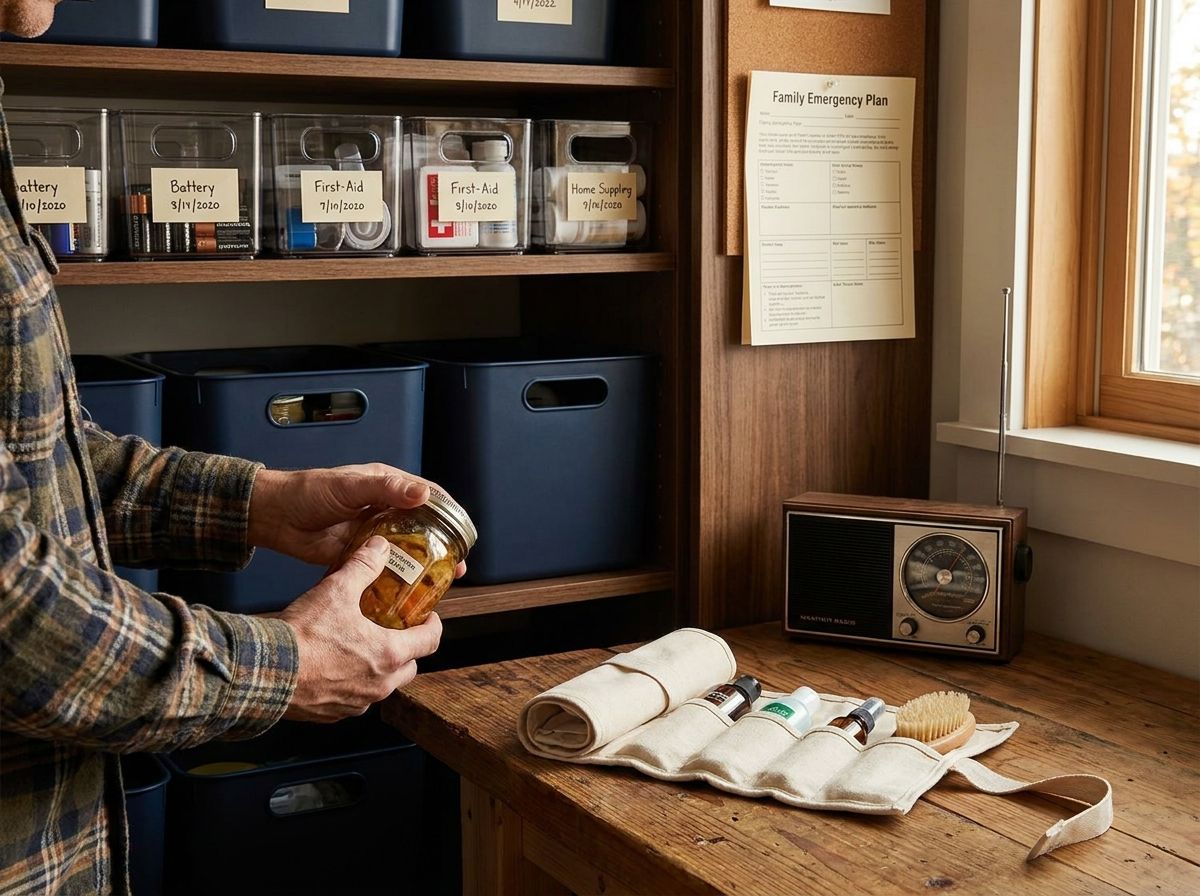
Labeling is what turns "prepared" into "usable." Use dates. Use category names. Use simple labels you can read in low light.
If you've ever stared at a container wondering when you bought it, you already understand why this matters.
Step three: rotate on a rhythm you can keep
Rotation is not complicated. It's consistent.
Pick a cadence that matches your household. Monthly micro-checks work for many people because they line up with how people already check mail, pay bills, or reset the pantry. Weekly audits work too if you like short routines.
The point is that you touch the system often enough that surprises don't pile up.
Step four: document the plan you will actually follow
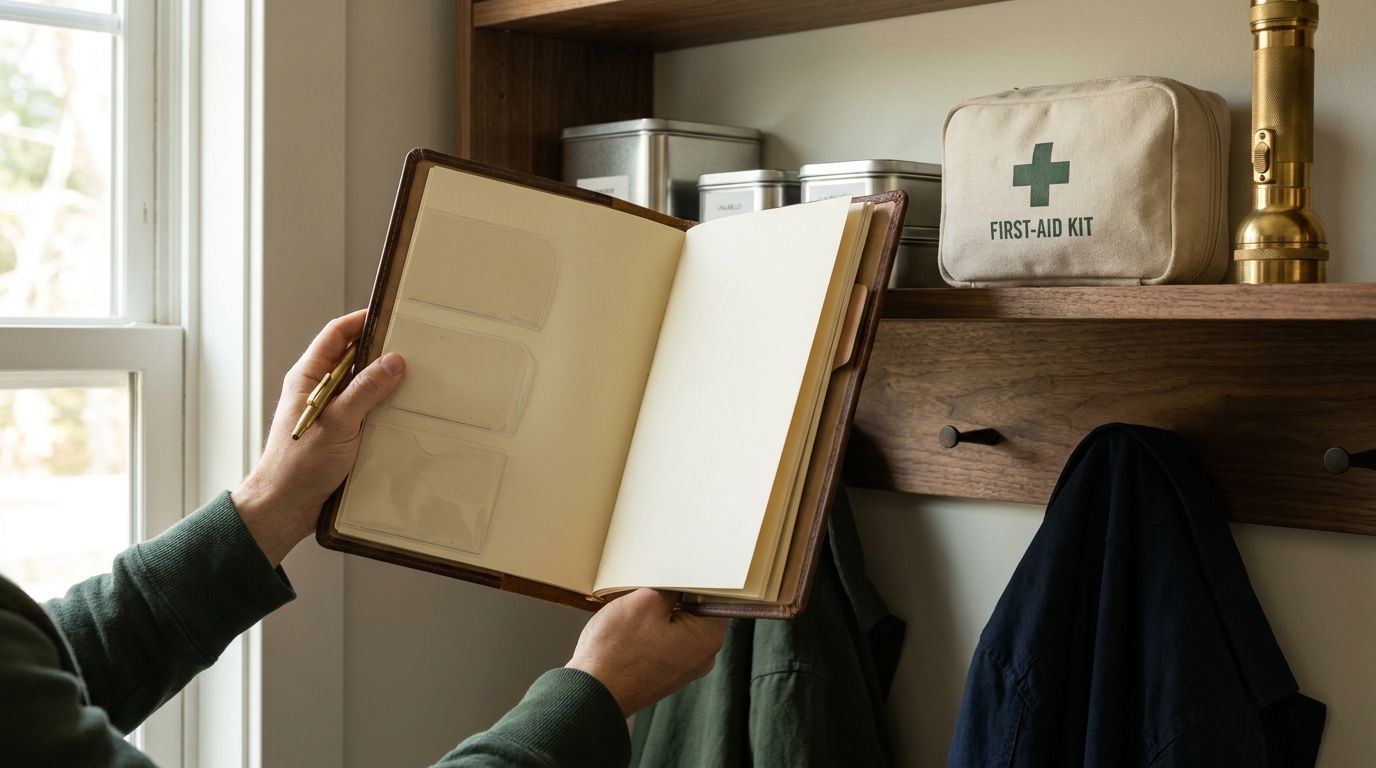
You don't need a novel. You need a one-page family plan that includes:
- Contact info and meeting point
- Roles for adults
- Where supplies are stored
- A short list of what you do when power is out
Keep a digital copy if you want. But print matters because paper works when charging is limited.
Step five: test it with a low-stakes drill
This is where competence mindset shows up in real households. Don't wait for an actual power outage.
Try a drill like this:
- Use your 72-hour food plan for a meal
- Make sure you can open packaging quickly
- Check that everyone can find the bin without searching
If it feels clunky, fix it before you need it.
Make it community-ready, not just household-ready
Most households get through early disruption by leaning on each other. Community is part of household planning, even if your plan starts with your own supplies.
So how do you make your 72-hour readiness community-ready?
- Share your strengths: "I can check on elderly neighbors," "I can run a charging station," "I can keep track of medication times."
- Coordinate in advance: decide how you will communicate if signals drop.
- Keep your plan realistic: you are not trying to be everyone's only solution.
Consider how your supplies interact with your community. If you store enough for three days, you can share a little without collapsing your own plan.
That's the real advantage of having a system. It keeps you steady enough to be helpful.
FAQ
What does 72-hour readiness include for a typical household?
It includes enough food and water for about three days, plus the basics that let people stay functional: hygiene items, waste management, and a simple first aid plan. It also includes planning for communication and roles, so you don't spend the first day figuring out who does what.
Do I really need to plan for water treatment if I store water?
Yes, because stored water can run out faster than you expect or become compromised. A practical plan includes stored drinking water and a way to treat additional water if needed, along with a decision rule for when you switch modes.
What to prepare if my household has medical needs?
Start with medications, dosing schedules, and any required supplies. Then build around water and food that match dietary needs. If you have refrigeration-dependent items, include a plan for what you'll do when cooling stops.
How do I avoid preparedness myths and overbuying?
Plan by categories and rotate what you buy. Use your 72-hour readiness target as a baseline, then adjust for your household's actual needs. If you run a low-stakes drill using your supplies, you learn quickly what's useful and what just takes up space.
A closing that feels like someone has your back
When the lights flicker, it's easy to feel behind. Like you should've done more. Like you should've bought the perfect kit and labeled every container before any of this happened.
But real households don't work like that. They work like June Wills rinsing a spoon while the update refreshes. They work like Sam Wills printing a checklist he actually uses. They work like Theo Wills saying the calm sentence that keeps everyone moving.
Prepared for 72 hours is not a fantasy. It's a household planning target that helps you act like the steady one, even when the situation is messy.
Pick one next step today:
- Choose your 72-hour readiness zone
- Label the contents by date
- Print the one-page family plan and put it where your hands go
Then do one small rotation before you forget. That's how preparedness stays real.
Want this handled automatically? See the Mainstay membership.
Subscribe to comment
Join the Mainstay newsletter to leave a comment — and get new field notes in your inbox.
Get new field notes in your inbox
Practical, calm preparedness — one useful note at a time.