Summer home readiness checklist for heat, storms, water, and cooling
Use this summer home readiness checklist to check heat safety, storm supplies, water storage, cooling, and power before the forecast turns difficult.
At 3:15 on a July afternoon, the kitchen thermometer reads 88 degrees, the ceiling fan spins without doing much, and dark clouds are stacking up over the backyard. That is when a summer home readiness checklist earns its keep. You do not need a dramatic plan. You need to know where the water is, how the house stays cool, what happens when the power fails, and which weather alerts change your next move.
This checklist covers summer home readiness through four practical concerns: heat, storms, water, and cooling. Walk through it before the season gets busy, then make small checks after major storms or long hot spells. Mainstay can help you keep the household profile, inventory, documents, and plan current in one place, but the useful work still starts with a ten-minute walk through your home.
June Wills does this on the first Saturday of June. She checks the window units, opens the cabinet under the stairs, and moves the storm radio next to the keys instead of leaving it buried behind winter gear. It is not exciting. That is the point.
Start with the heat wave household checklist
Heat is easier to manage when you decide ahead of time which rooms, supplies, and habits matter. The National Weather Service identifies heat as the leading cause of weather-related deaths in the United States over long periods. A hot house also puts extra strain on older adults, infants, people with certain medical conditions, and anyone who works outdoors.
Choose one cooler room as the household fallback. It might be a shaded bedroom with a window unit, a basement, or the room farthest from afternoon sun. Move a thermometer there, clear the air vents, and keep a chair, phone charger, water, and needed medications nearby. If you use a portable air conditioner, check the exhaust hose and window seal before the first heat advisory rolls in.
Your heat check should cover:
- Test ceiling fans and portable fans, then clean dust from the blades and intake vents.
- Check that window coverings close fully on the sunny side of the house.
- Replace or clean cooling system filters according to the equipment instructions.
- Write down the location of the nearest public cooling center, library, or other air-conditioned refuge.
- Ask household members how they will recognize confusion, faintness, severe weakness, or hot dry skin.
- Set a specific check-in time for anyone who lives alone or works outside.
The CDC separates heat exhaustion from heat stroke. Heat exhaustion can include heavy sweating, weakness, dizziness, nausea, headache, or faintness. Heat stroke is a medical emergency and can include confusion, loss of consciousness, seizures, or a dangerously high body temperature. Call emergency services for suspected heat stroke and do not leave the person alone while waiting for help.
Do not rely on thirst as your only signal. Keep water visible and make a simple plan for outdoor work. Sam Wills, for example, moves yard work to early morning when the forecast shows a high heat index, then brings the tools inside before the afternoon sun turns the shed into an oven.
Prepare the house for summer storms
Summer storm preparation starts outside. Strong thunderstorms, tropical systems, and straight-line winds can damage roofs, block roads, and cut power even when your home is not in the storm's direct path. The National Weather Service recommends taking warnings seriously and moving indoors before thunder is close enough to hear.
Walk the outside of the house with your phone camera and look upward. Photograph loose gutters, damaged roof edges, leaning branches, and anything that could go airborne. Fix what you can before the next forecast turns urgent. If a repair needs a contractor, record the issue and put it on a dated task list.
Use this storm walk-through:
- Clear leaves and debris from gutters, downspouts, window wells, and drains.
- Secure patio furniture, grills, umbrellas, toys, planters, and trash containers.
- Trim branches that touch the roof, power lines, or windows, using qualified help for hazardous work.
- Check that sump pumps, backup batteries, and basement drains work before heavy rain arrives.
- Photograph the roof, major appliances, and outdoor equipment for insurance records.
- Confirm that everyone knows the most protected interior room, away from windows and skylights.
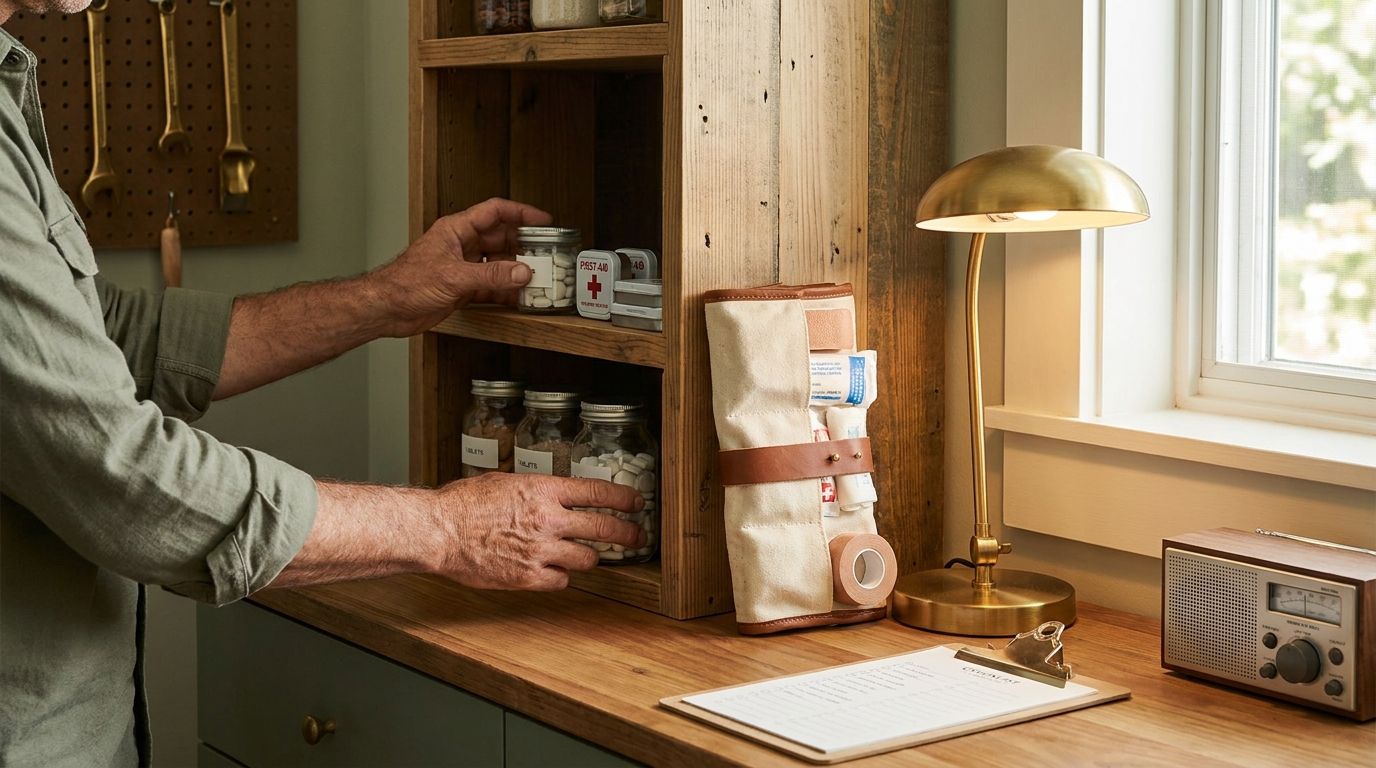
Keep storm supplies where you can reach them without opening the garage door. A garage may be inaccessible after a power failure, a fallen branch, or flooding. Store a flashlight, radio, spare batteries, shoes, work gloves, basic first aid, and copies of key contacts in a known indoor location.
A weather app is useful, but it should not be your only source. Set alerts from your local National Weather Service office, county emergency management agency, or another official source. Watch the difference between a watch and a warning. A watch means conditions could develop. A warning means the hazard is happening, or close enough that you should act now.
When a warning arrives, stop the project. Bring people and pets inside, move away from windows, and avoid corded electronics during lightning. Scout, the household dog, should have a leash and a familiar indoor spot before thunder starts. Dogs often react before the people do, and a panicked escape is a poor time to discover the leash is in the car.
Build a summer water plan
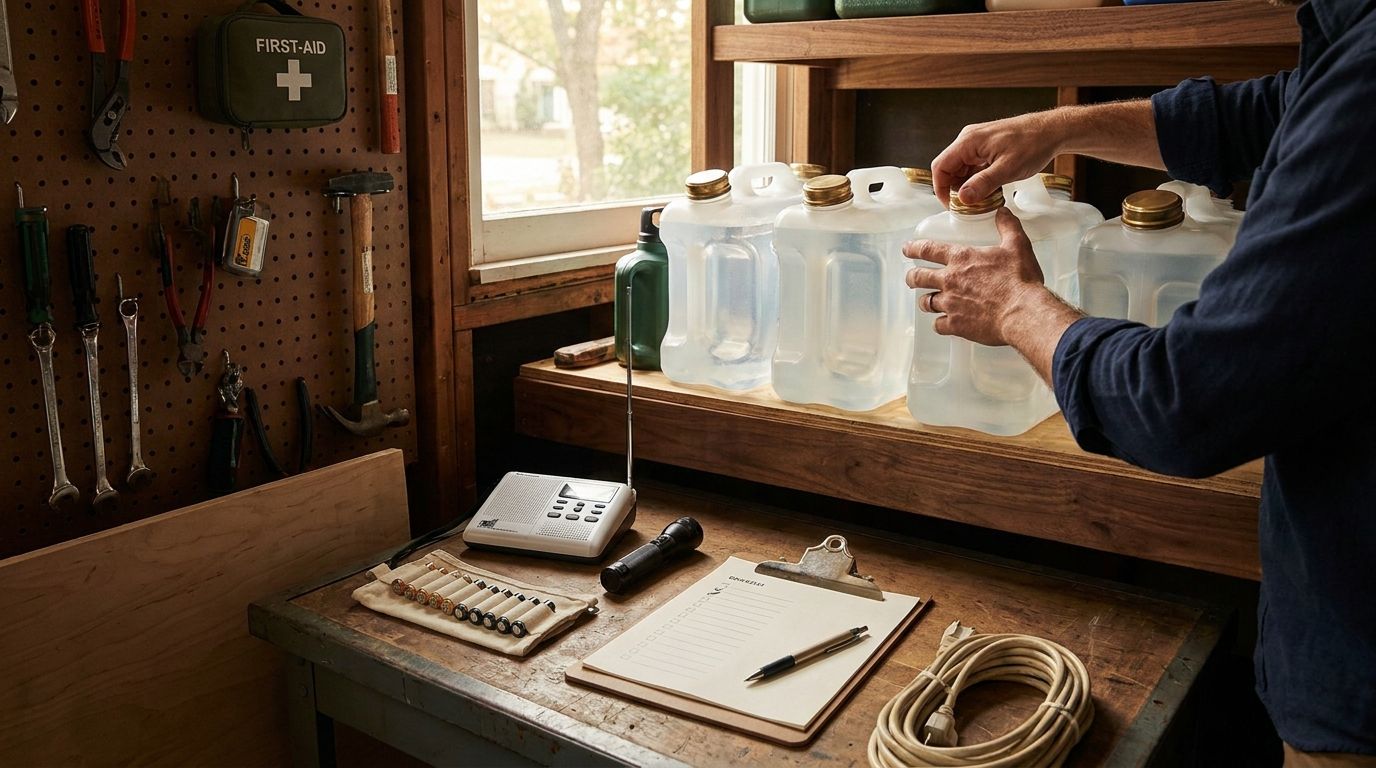
Water belongs at the center of a summer readiness check because heat raises daily demand and storms can affect drinking water, pumping, and local utilities. The CDC commonly advises storing at least one gallon of water per person per day for drinking and sanitation, with a larger amount useful for hot conditions, illness, children, pets, or limited access to outside water.
Start with the number of people and pets in your household. Then decide how many days you can support with stored water while keeping the storage realistic for your space. A three-day supply for four people at one gallon per person per day is 12 gallons before adding pet water or extra sanitation water. That math is simple, but write it down. Guessing from a half-empty pantry is how a household ends up with six gallons and a surprising amount of optimism.
Check each container for:
- A clear label showing the fill date and intended use.
- Cracks, bulges, leaks, algae, or a damaged cap.
- Storage away from direct sunlight, fuel, pesticides, and strong-smelling chemicals.
- A location that stays reasonably cool and does not flood.
- A rotation date that fits your container and water treatment instructions.
Keep some water in smaller bottles for quick distribution. Larger containers are efficient, but awkward when someone is overheated or carrying supplies upstairs. Keep a clean bucket, unscented household bleach, a water filter if you use one, and written treatment instructions with the water supplies. Never assume a filter removes every contaminant, especially after a chemical spill or a local advisory.
Follow local notices about boil-water advisories, do-not-drink orders, and do-not-use orders. Boiling addresses many germs, but it does not neutralize fuel, chemicals, or every contaminant. If the utility says not to use the water, use stored water for drinking, cooking, brushing teeth, and medication until officials provide updated guidance.
Include Scout in the calculation. Pets need clean drinking water, and hot pavement, exertion, and humidity can raise their risk of heat stress. Keep a bowl and a spare leash with the household water supplies so the plan works for the whole home.
Check cooling, power, and safe backup options
A cooling plan is not just an appliance plan. It is a priority plan for the hours when the power is out and the indoor temperature is climbing. List what must stay powered, what can wait, and what should never connect to an improvised setup.
Your list may include:
- A medical device or medication that requires refrigeration.
- One fan or portable cooling unit for the chosen cool room.
- Phones, a weather radio, and a way to charge them.
- Refrigerator and freezer power, with a thermometer to track temperature.
- Lighting for hallways, stairs, and the bathroom.
Test backup batteries before summer. Charge each unit, connect the intended device, and confirm the cables fit. A battery displaying a full charge is not the same as a setup you have tested under load. Label the cable with its purpose if several look alike. The household should not need a detective novel at midnight.
If you use a generator, keep it outside and well away from doors, windows, and vents, following the manufacturer's clearance instructions. Never operate a fuel-burning generator, grill, camp stove, or vehicle in a garage, basement, porch, or other enclosed space. Carbon monoxide has no smell, and open doors do not make indoor operation safe. Test carbon monoxide alarms and replace batteries according to the alarm maker's schedule.
Use natural cooling where it helps. Close blinds on sunny windows during the day, open windows only when outside air is cooler and safe, and avoid running the oven during a power outage. A battery fan can move air, but it cannot make an overheated room safe on its own. If the home keeps heating up, leave for a cooling center or another air-conditioned location before anyone becomes confused or weak.
A practical summer power plan also includes a destination. Write down where you will go, how you will get there, what you will carry, and how you will handle pets. June keeps a short list on paper because a dead phone is a poor place to store the only copy of a plan. (She also keeps a spare copy in the car, which has saved her at least once.)
Protect the house from water, smoke, and fire
Summer weather can bring flash flooding, wildfire smoke, lightning, and dry grass near structures. These hazards do not always arrive together, but the home checks overlap. Water needs a path away from the foundation. Smoke needs a way to stay outside. Fire needs less fuel near the house.
Inspect the low points around your property. Downspouts should send water away from the foundation, not toward a basement window or a neighbor's doorway. Keep drains clear, and know which rooms would take on water first. Store important documents, electronics, and medications above floor level where practical. A document vault or sealed container can protect the papers you would not want to replace on a busy Tuesday.
Use a smoke plan when air quality falls:
- Check the Air Quality Index through AirNow or your local health department.
- Close windows and doors when outdoor smoke is unhealthy.
- Set central air to recirculate if the system allows it, and use a properly sized filter.
- Run a portable air cleaner in the room where people spend the most time, if you have one.
- Avoid candles, smoking, frying, and other indoor sources that add particles.
- Keep essential medications and glasses accessible if you need to leave quickly.
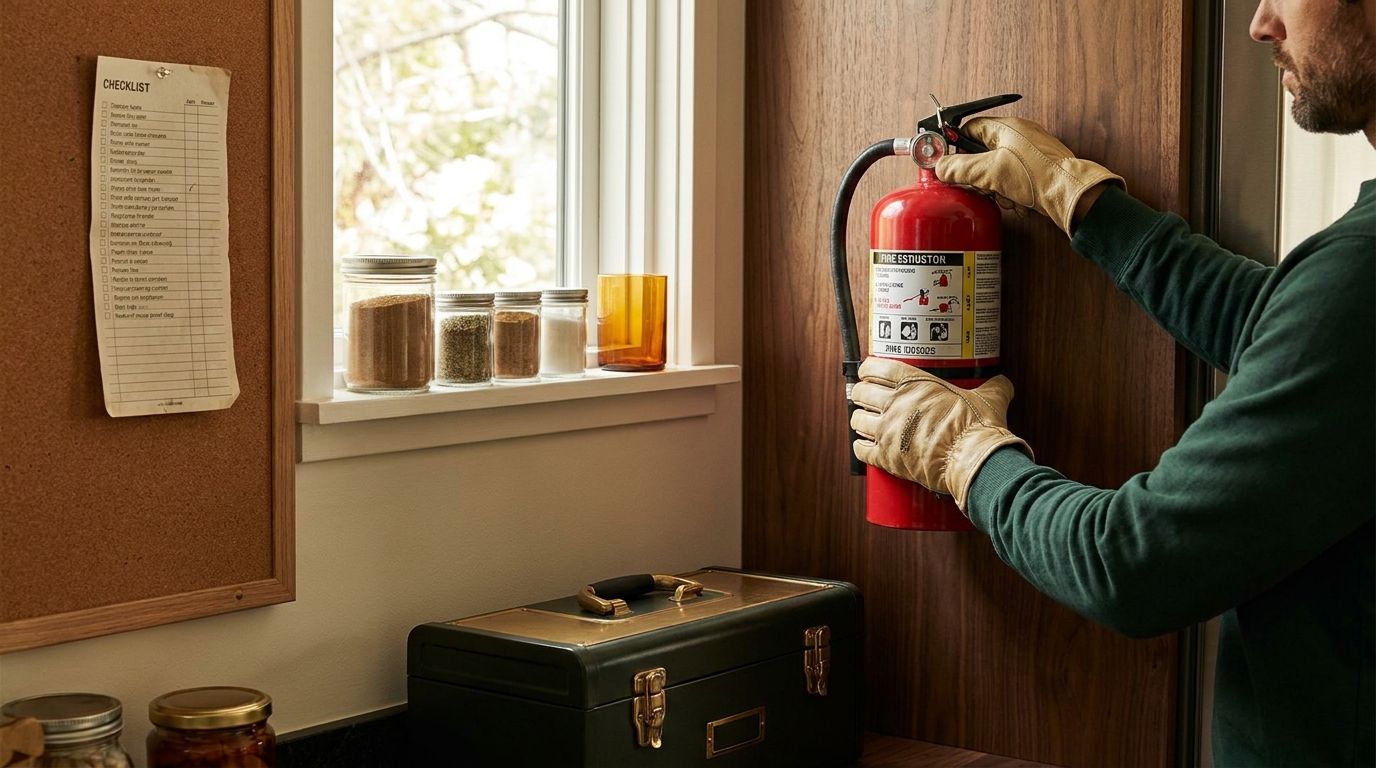
For wildfire risk, move firewood, cardboard, dry leaves, and propane storage away from the house as local guidance recommends. Clean debris from roof valleys and under decks. Check that garden hoses, shutoff tools, and work gloves are accessible, but do not treat a hose as a reason to stay when an evacuation order is issued.
In July 2024, a fast-moving storm in western Pennsylvania left roads flooded and neighborhoods without power after a short period of intense rain. A household that had moved water, flashlights, and medications to an upstairs room had more options than one that waited for the basement to fill. The lesson is ordinary: notice the low points before water finds them.
Turn the checklist into a seasonal rhythm
A summer home readiness checklist works when it has an owner and a date. Put the tasks on a calendar rather than relying on the memory of whoever noticed the problem last year. You can use Mainstay's inventory and preparedness plan to record supplies, dates, and the household's next action, or use a paper sheet on the refrigerator. The method matters less than the follow-through.
Use a simple schedule:
- At the start of summer, test cooling, alarms, radios, batteries, water containers, and storm alerts.
- Before a predicted heat wave, move water into the cool room, check medications, and confirm the cooling destination.
- Before severe weather, secure outdoor items, charge devices, and bring pets inside early.
- After a storm, inspect for downed lines, roof damage, spoiled food, flooding, and unsafe water.
- At the end of summer, rotate water and seasonal supplies, clean equipment, and record repairs for next year.
Give every item a status: ready, needs attention, or replace. That small choice prevents a common failure where a household owns the right supply but cannot tell whether it still works. Add the expiration date for batteries, medications, filters, water treatment products, and food that may suffer in heat.
Do one dry run. Turn off the main breaker only if you know the procedure and it is safe, then test the lights, chargers, and communication plan without pretending the outage is a game. More simply, sit in the chosen cool room and ask whether you can find water, a flashlight, a phone charger, and the household contact list in under two minutes.
If the answer is no, fix the location rather than buying more gear. Readiness usually gets better when the right item is easier to find, not when the closet becomes more crowded.
FAQ
What should be on a summer home readiness checklist?
Cover heat safety, water, storm protection, cooling, power, air quality, fire risk, pets, medications, and communication. Check both the supplies and the location of each supply, because an item that cannot be found during a warning is not serving the household well.
How much water should a household store for summer?
Start with at least one gallon per person per day for drinking and sanitation, following CDC-style guidance. Add water for pets, medical needs, cooking, hot weather, and the number of days you want to cover, then store it away from heat, sunlight, fuel, and chemicals.
How do I keep a house cool during a power outage?
Close sunny windows, use battery-powered fans, limit heat from cooking and appliances, and move people to the coolest room. Monitor indoor conditions and leave for an air-conditioned location before anyone shows signs of serious heat illness.
What is the safest place to use a generator in summer?
Use a fuel-burning generator outdoors, well away from doors, windows, and vents, according to the manufacturer's instructions. Never use it in a garage, basement, porch, or other enclosed space, and test carbon monoxide alarms before the season starts.
What should I do before a summer storm arrives?
Bring in or secure loose outdoor objects, clear drains, charge communication devices, move pets indoors, and review the safest interior room. Follow local weather warnings and stop outdoor work when dangerous weather is approaching.
Set a 20-minute appointment with yourself this week. Walk the house, check the water count, test one cooling device, verify the storm alert, and write down the place you will go if the home becomes too hot. Then record the gaps and assign each one a date. Calm readiness is mostly a series of small jobs finished before the sky changes.
Want this handled automatically? See the Mainstay membership.
Subscribe to comment
Join the Mainstay newsletter to leave a comment — and get new field notes in your inbox.
Get new field notes in your inbox
Practical, calm preparedness — one useful note at a time.