The 30-minute household readiness reset
A calm, repeatable household readiness routine for checking supplies, updating plans, and fixing the small gaps that cause big stress.
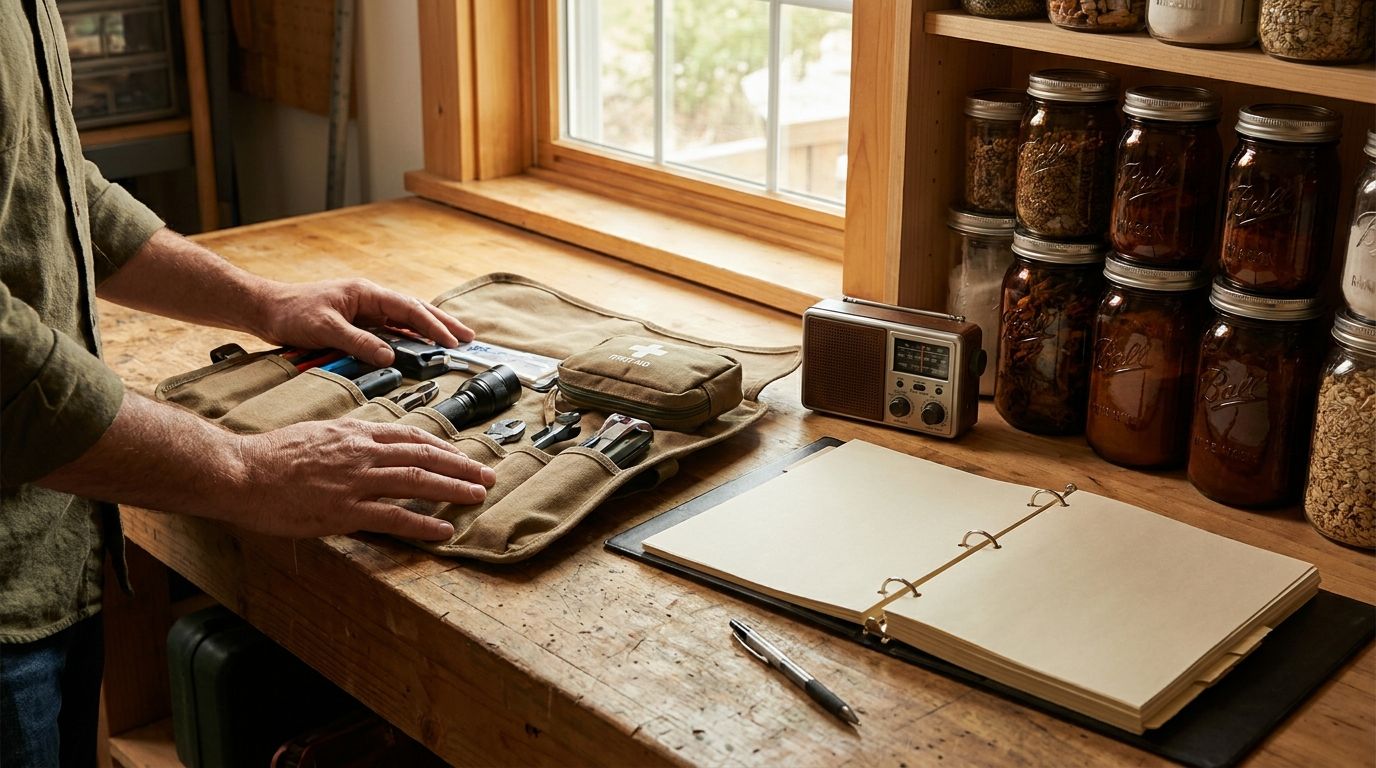
June Wills found the dead flashlight behind the cereal boxes on a Tuesday evening. Sam had already opened the pantry, the dog was waiting for dinner, and the kitchen counter held three unrelated receipts, a loose battery, and one very confident dust bunny.
A quick readiness check does not need to take all afternoon. In 30 minutes, you can inspect your supplies, update one household detail, and fix the small problem most likely to bite you later. That is enough for a genuinely useful routine.
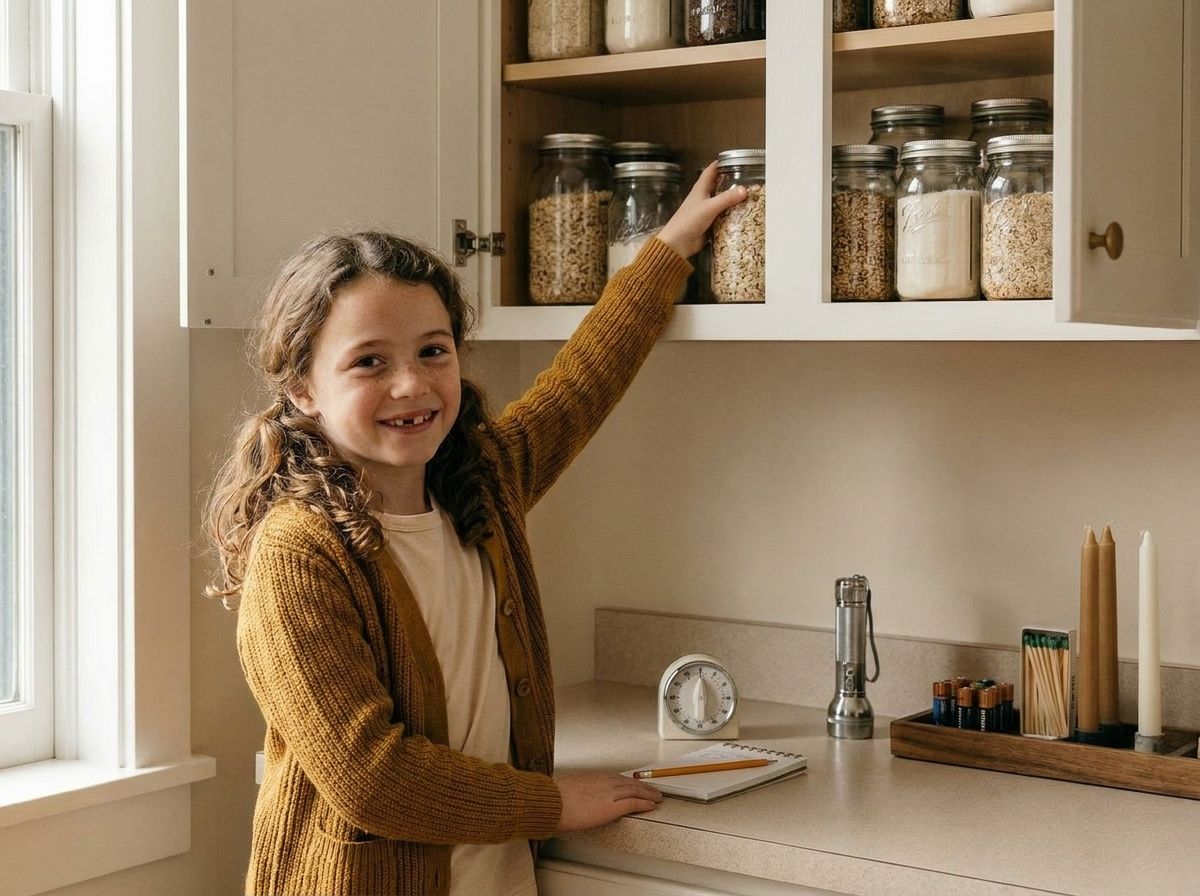
The point is not to build a perfect household. The point is to keep your actual home in working order. You are checking what changed, putting a few things back where they belong, and making the next decision easier before it becomes a harder one.
Why a 30-minute reset works
A readiness task feels heavy when it has no edges. "Check the house" can mean anything from glancing at the pantry to rewriting every family document, and that kind of open assignment is easy to postpone, especially after work, school pickup, dinner, and the usual small parade of household repairs.
A 30-minute reset gives the task a finish line. You are not trying to close every gap in one sitting. You are looking for the items that affect comfort, safety, communication, and the next ordinary day at home.
This approach also respects how households actually work. Supplies get used. Batteries migrate from the junk drawer to a kid's toy. Someone finishes the last bottle of water and forgets to put it on the shopping list. A plan that was solid in January may not fit the household in October.
Your reset can be useful even when nothing is wrong. That is the quiet advantage. You catch the weak point while it is still a five-minute errand, not while everyone is standing in the kitchen asking where the flashlight went.
Keep these limits in place:
- Set a 30-minute timer before you start.
- Check the areas you use most often.
- Fix one issue immediately when you can.
- Record anything that needs a later purchase or decision.
You can run this weekly, every other week, or once a month. Consistent home readiness does not mean inspecting every item every week. It means keeping a steady appointment with the household so small changes do not pile up unnoticed.
What should you check every week?
Check the supplies and plans that shift through normal use. Food and water levels, medications, lighting, charging cables, contact information, and weather-specific needs deserve regular attention. Long-life items like stored documents or rarely used tools can follow a slower schedule.
The best schedule is the one you will actually repeat. A 15-minute check done consistently beats a two-hour audit you keep moving to next Saturday.
Minutes 0 to 8: scan the household baseline
Start where your everyday supplies live. For most households, that is a pantry, utility closet, garage shelf, or a cabinet near the kitchen. Do not begin by pulling everything onto the floor. You are looking for movement and obvious gaps, not launching a new storage project.
Use this short scan:
- Look at drinking water and note what has been opened or moved.
- Check shelf-stable food for empty spaces, damaged packaging, or items close to their use-by dates.
- Look at medications and flag anything that needs a refill conversation with a pharmacist or clinician.
- Test one light source and confirm that its batteries or charging cable are nearby.
- Check items that support daily needs specific to your household, such as pet food, infant supplies, glasses, hearing devices, or mobility equipment.
Your supply check should include the things your household actually depends on, not only the items that look rugged on a shelf. A compact flashlight may matter more than an impressive-looking kit if it is the light you can reach without searching.
Check dates with some judgment. A date on a package may signal a quality change rather than an instant safety risk, but damaged, swollen, leaking, or moldy food should not stay in rotation. When you are unsure about a food or medication, go to the manufacturer, your pharmacist, or a reliable public health source for the specific answer.
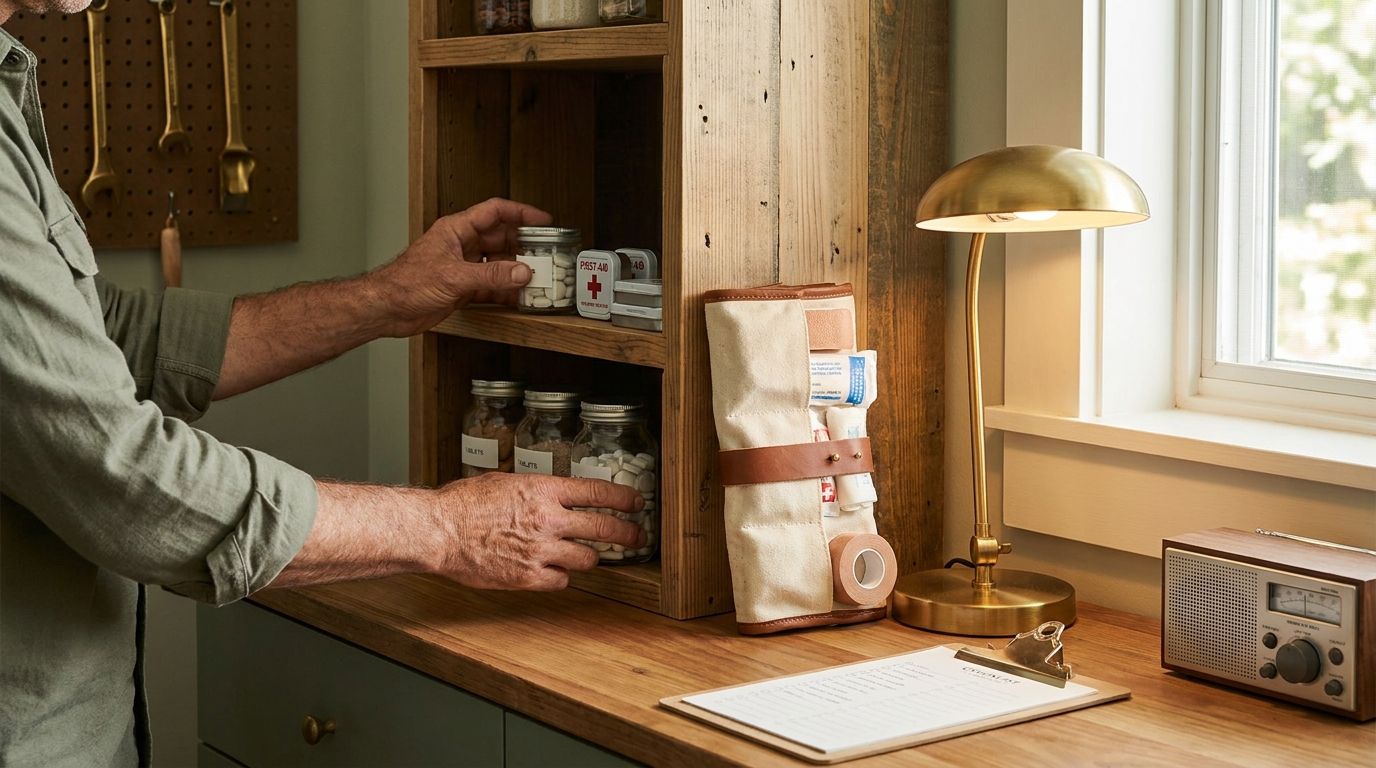
Now make three decisions: use soon, replace, or leave alone. "Use soon" goes to the front of the pantry. "Replace" goes on the shopping list. "Leave alone" returns to its spot without further thought.
This is where Mainstay can help you keep the check current. You can record what you have in Inventory, attach a replacement note to the item, and see the household profile that tells you what the plan needs to support. The tool earns its place by holding the memory when your brain is already busy with everything else.
Minutes 8 to 16: test the things that need to work
A supply is not fully useful until you know where it is and whether it works. This part of the reset is less about counting and more about a quick function check.
Pick a few items from different parts of the home:
- Turn on a flashlight or lantern.
- Connect a charging cable to the device it belongs with.
- Check that the radio, power bank, or battery station has a reasonable charge.
- Open the first aid kit and confirm that the supplies you reach for most are near the top.
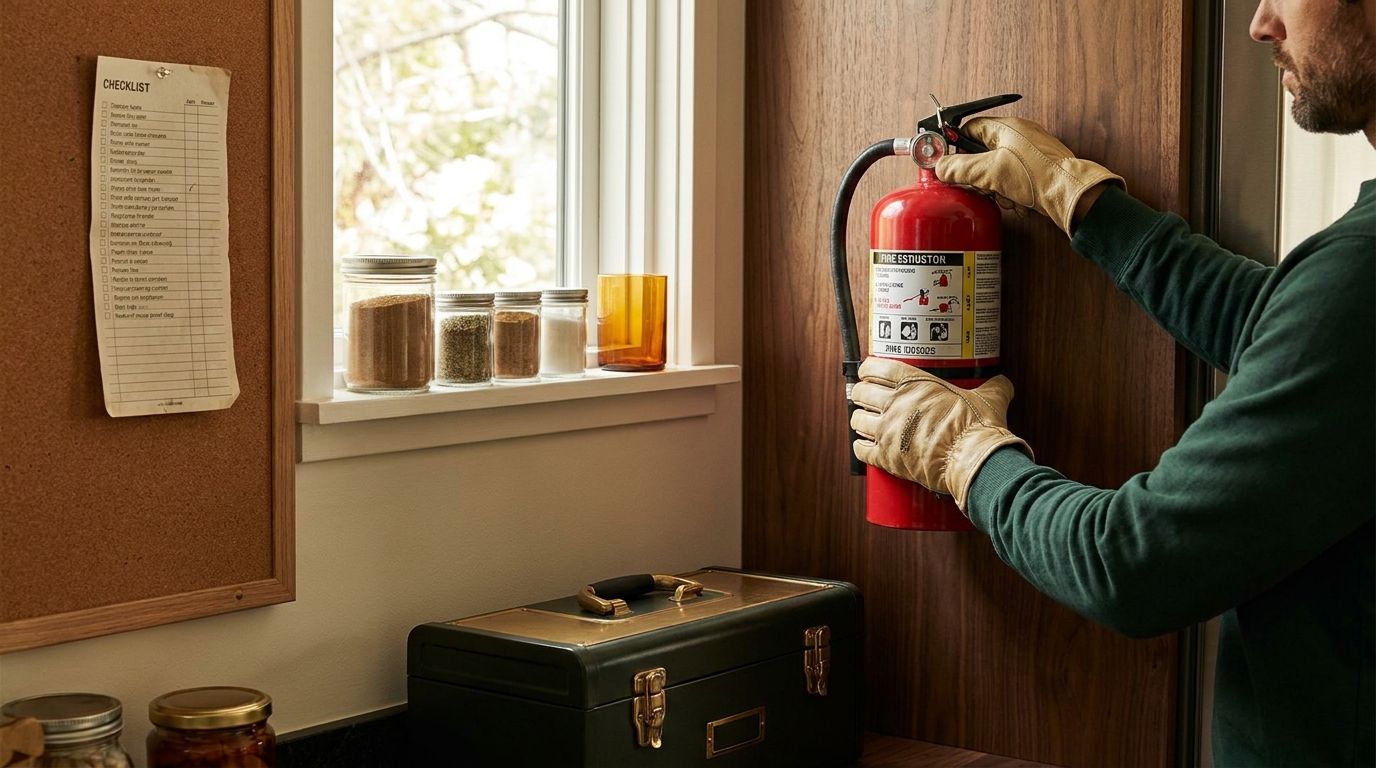
- Look at the fire extinguisher gauge and make sure nothing is blocking access.
- Confirm that the household knows where the water shutoff and main electrical panel are.
You do not have to run every device through a full test every week. Pick one or two items, then rotate through the rest during the month. The goal is to catch dead batteries, missing cables, locked cabinets, and equipment that has quietly migrated to another room.
If you find a problem, solve the smallest version of it right now. Replace the batteries if they are on hand. Put the cable in the right bin. Move the flashlight to the stair landing. Add the missing item to your next shopping trip. A five-minute fix has more value than a detailed note that disappears under ten other notes.
Give each important item a fixed home. Household organization is not about making every shelf look like a product catalog. It is about reducing the number of decisions you have to make when the lights are out, someone is sick, or the weather has closed the roads.
A useful storage location has three qualities:
- You can reach it without moving heavy or fragile items.
- More than one adult in the household knows it exists.
- You can return the item there after using it.
If an item fails the third test, the location is probably too far away or too inconvenient. Change the location instead of blaming yourself for poor discipline. Systems should fit the people who use them, not the other way around.
Minutes 16 to 24: update the household plan
Supplies cannot answer every household question. Spend the next eight minutes on one part of the plan.
Pick the question that has changed most recently. Has anyone started a new medication? Has a child changed schools or a work schedule shifted? Did a relative move closer or farther away? Is a pet staying with you more often? Did you buy a backup power device but never decide what it should run first?
Write down the current answer in plain language. Avoid building a document no one will read. A useful page might include:
- Who contacts whom if the household is separated.
- Where everyone meets if home is not available.
- Which phone numbers belong on paper.
- Who needs medication, mobility, communication, or dietary support.
- Which two neighbors or relatives should know your basic plan.
Focus on one question per reset. The plan gets stronger because it gets revisited, not because you write ten pages in one sitting.
The same principle applies to local conditions. Your area may face different problems in different seasons, a coastal household watches storm updates differently from one in a wildfire corridor or a region with long winter outages. Use reliable local alerts and public agency guidance, then turn that information into one action your household can understand and act on.
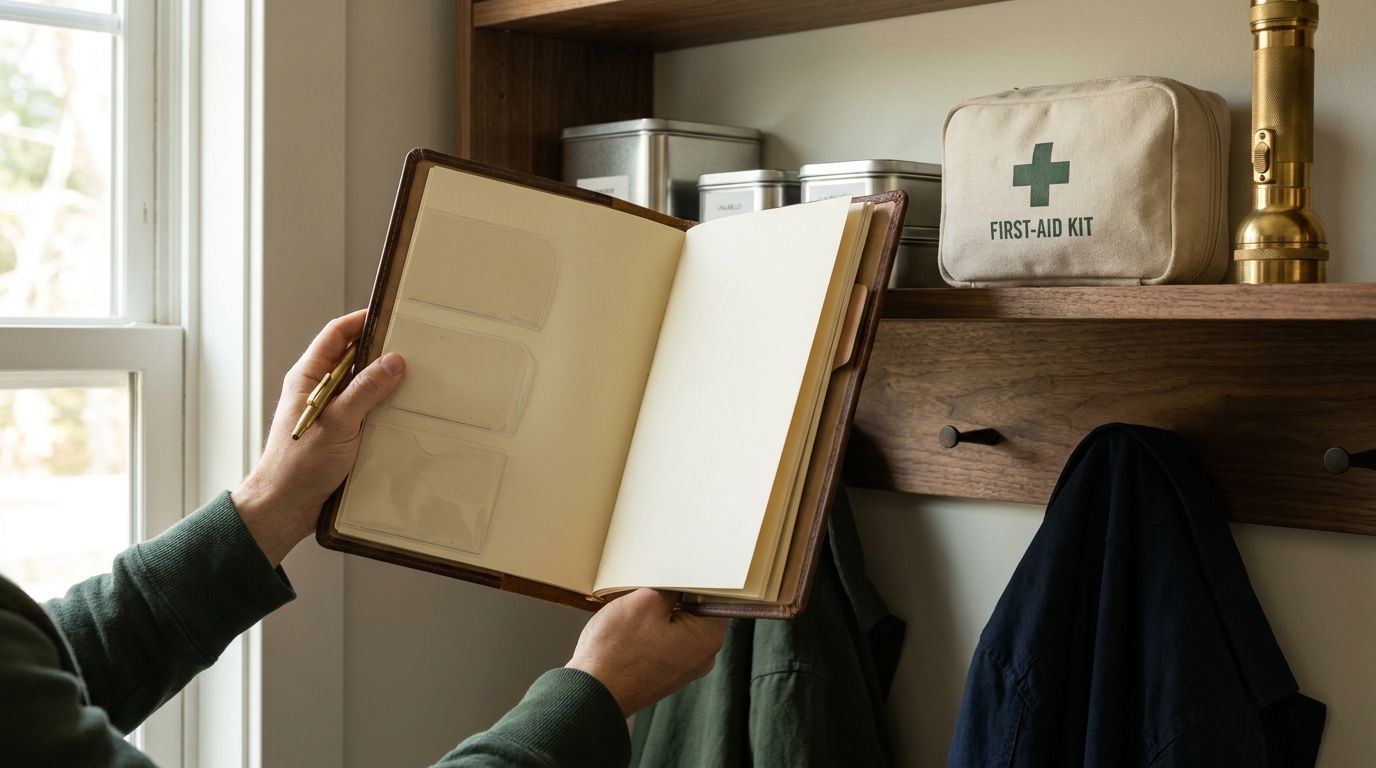
If a plan depends on an app, account, or phone number, keep a paper backup of the essential details. Phones lose power. Passwords get forgotten. The paper does not need to be elegant. It needs to be readable and stored somewhere you can reach without hunting.
This is also a good moment to check whether your document vault has current versions of insurance information, medical details, identification copies, and property records. You do not need to open every file. Just confirm that the important documents are present, current, and accessible to the adults who may need them.
Minutes 24 to 30: close the loop
The last six minutes are where a check becomes a routine. Walk back through the area and finish the loose ends you created.
Put away anything you pulled out. Move "use soon" food to the front. Add replacement items to a list you will actually see. Record one plan update. Set the next check on your calendar before the timer ends.
Keep the final record short:
- One item fixed today.
- One item to buy or replace.
- One plan detail to review next time.
- The date of the next reset.
That list gives you continuity without turning the household into a part-time records department. If you use Mainstay, the Dashboard gives you one place to review inventory, the preparedness plan, and documents that need attention. If you use paper, keep one sheet on the inside of a cabinet door. Both methods work when they stay visible and current.
Take a photo of a shelf only if it genuinely helps you remember the layout. Label bins in words that make sense to your household. "Power" is usually better than an elaborate category name that only made sense to the person who invented it.
Stop when the timer ends. You are allowed to leave a non-urgent improvement for next week. A household readiness routine should make you steadier, not give you another reason to feel behind.
What if the check reveals a lot of missing supplies?
Start with the need that affects daily function. Water, medications, lighting, communication, and food that fits your household usually deserve attention before specialized gear. Build a short buying plan and spread the cost over ordinary shopping trips if that works better for your budget.
Avoid trying to close every gap at once. A slow, visible improvement is still improvement, and it is far easier to maintain than a rushed shopping spree followed by another neglected shelf.
How do you keep the routine from becoming another abandoned checklist?
Attach it to something you already do. Run the check after grocery shopping, on the first Sunday of the month, or while the coffee brews on a quiet morning. Keep the timer and checklist in the same spot every time.
Give the routine a narrow purpose each time. When the task has a clear start, a clear finish, and one useful result, it takes less willpower to repeat.
A reset that fits real households
The value of a quick readiness check is not measured by how much equipment you own. It shows up when you can find the light, explain the plan, and notice that the water supply needs attention before the cabinet is empty.
You may miss a week. You may open a drawer that has become a museum of loose chargers. That does not mean the system failed, it means you found the part of the system that needs a smaller, more practical home.
June did not reorganize the whole kitchen that Tuesday. She replaced the flashlight batteries, moved the light to the hallway cabinet, and wrote down one item to buy. Sam added the new location to the household plan. The whole thing took less time than arguing with the dust bunny.
That is the standard worth keeping. Make one useful correction, leave the household a little easier to manage, and return next week when you have room for the next small improvement.
FAQ
How often should I do a household readiness reset?
A weekly check works well for supplies that get used often, such as food, water, medications, and batteries. You can use a monthly schedule if that fits your household better, then do a shorter check after travel, illness, severe weather, or a major change at home.
What belongs on an emergency supplies check?
Check items your household depends on for water, food, lighting, communication, medical needs, sanitation, and pet or mobility support. Confirm both the quantity and the condition of the items, then verify that the storage location is known to the adults in the household.
Is 30 minutes enough for weekly home preparedness?
Thirty minutes is enough for a focused scan, a few function tests, and one plan update. It is not meant to replace a full seasonal inventory or a detailed household planning session, but it keeps small problems from becoming a large backlog.
What should I do if I keep postponing the reset?
Make the task smaller and attach it to an existing habit. Set a 10-minute timer, choose one area, and fix one thing. Once the routine feels ordinary, extend it to 30 minutes when your schedule allows.
Before you finish today, set a timer for 30 minutes and choose the cabinet, shelf, or closet your household uses most. You do not need a perfect plan. You need one clear place to start and permission to improve the home a little at a time.
Want this handled automatically? See the Mainstay membership.
Subscribe to comment
Join the Mainstay newsletter to leave a comment — and get new field notes in your inbox.
Get new field notes in your inbox
Practical, calm preparedness — one useful note at a time.