The basics, done right: a household water plan that matches CDC-style guidance
A calm, practical household water plan. You’ll know how to store, rotate, and document safe water basics using a CDC-style approach.
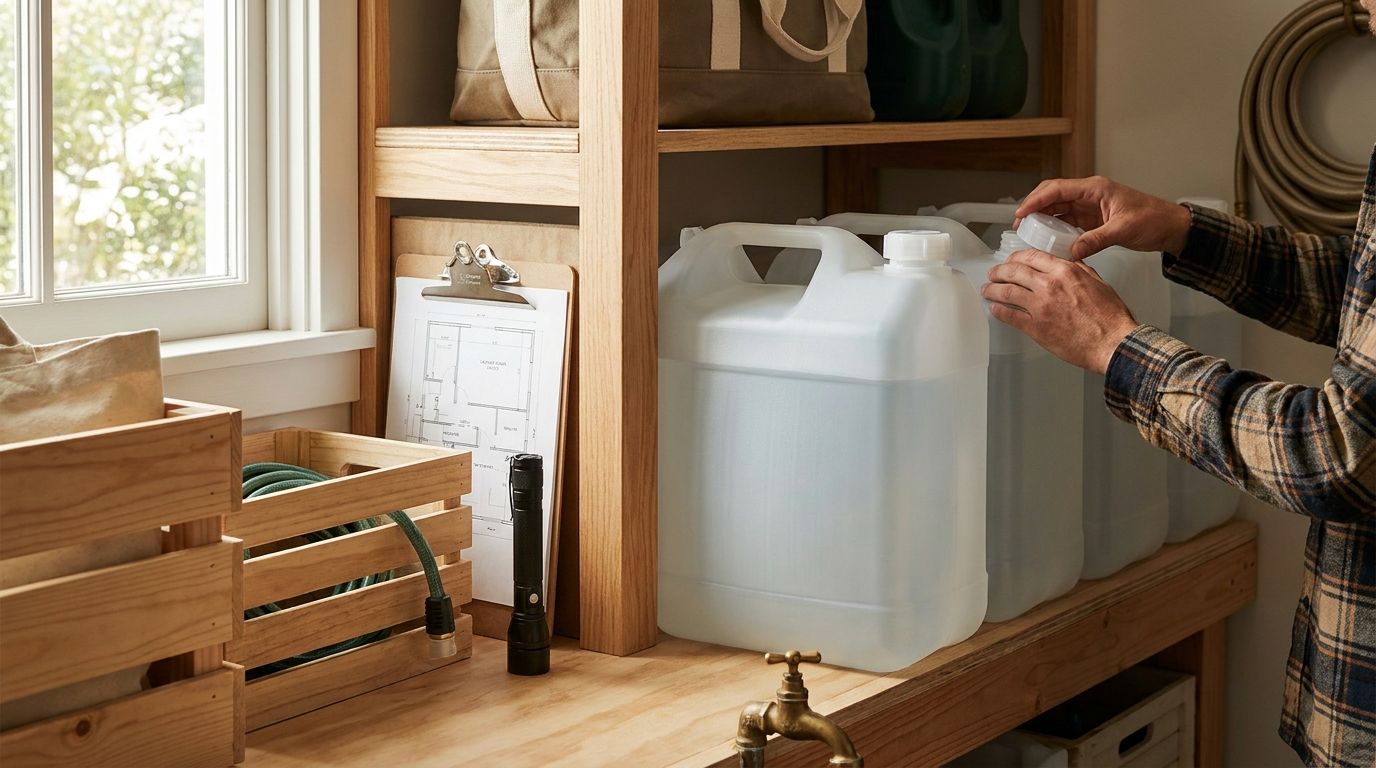
Rosa opens the fridge and finds the milk is fine. The water pitcher is not. The filter light is blinking, and she stares at the sink like it personally let her down. Sam is already halfway through the grocery run, and June is holding a sticky note that says, "Check water plan."
That moment is the whole point. Water planning is not a dramatic project. It is a household habit that keeps you calm when the usual systems get weird.
This post gives you a water plan checklist built around CDC-style water guidance: safe water basics, household water storage, and a simple rotation routine so the plan stays real and not just theoretical.
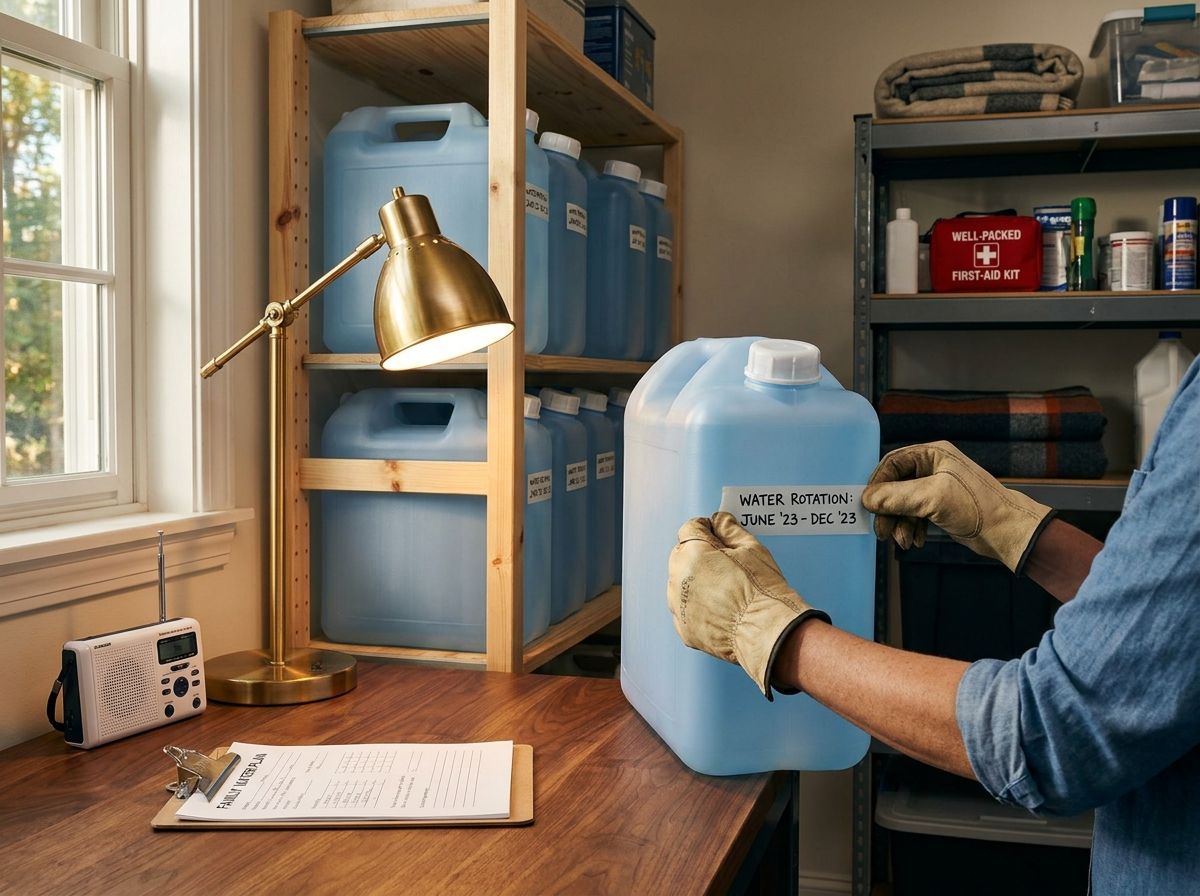
The answer block: what your household water plan should include
Your household water plan should cover three things: a plan for safe drinking water, a plan for when water is not safe to drink, and a storage-and-rotation routine you will actually follow. CDC water guidance focuses on protecting drinking water from contamination, so your plan should match that focus with clear containers, clear labeling, and a clear "what to do first" sequence.
Now let's make it practical.
1) Start with safe water basics, not a fantasy scenario
You do not need a bunker. You need a plan that covers the common ways water becomes unreliable.
CDC-style guidance comes down to a few ideas you can fold into your routine:
- Treat water as unsafe if you do not trust the source.
- Use approved methods to make water safe to drink.
- Store enough safe water for the time it takes to get reliable water back.
In real life, "water is unsafe" often looks smaller than the headlines. A boil-water advisory after heavy rain. A temporary pressure loss. A neighborhood well that tests positive for something you cannot see or smell.
So your plan should start with questions you can answer today.
Your safe water basics questions
Ask yourself these, then write the answers down.
- What do you use for drinking water right now? (Tap, fridge filter, bottled, something else.)
- Where do you get it if the tap is unreliable? (Neighbors, store pickup, bulk delivery, stored water.)
- What method will you use if you need to make water safe? (Boiling, filtration, disinfection.)
If you already have a water filter, you still need a plan. Filters help with some issues and not others. A filter is a tool inside a system, not the system itself.
How to match CDC-style thinking without getting lost
CDC water guidance is built for situations where contamination is possible. That means your plan should avoid a common trap: assuming "water in the pipes" is always safe.
Treat your planning as a simple decision tree instead:
- If the source is trusted, you use it.
- If the source is not trusted, you switch to stored safe water and your safe-treatment methods.
You are not predicting disaster. You are setting your household up to respond quickly, without having to think it through from scratch under pressure.
2) Build household water storage that fits your real day
Household water storage is where plans either become useful or stay on paper.
June once bought a dozen bottles because "that's what people do." The bottles lived in a tote under the bed until moving day, when nobody could remember when they were purchased. Not dangerous, just useless.
So here is the approach that works for a self-reliant household: store what you will actually use.
Start with your minimum target
Most households plan in terms of days. CDC-style guidance commonly uses a per-person per-day amount as a baseline, though the exact number varies by source and local guidance. The core idea stays consistent: plan for drinking and basic needs.
Pick a target you can support without resentment. A good starting point is:
- A short window you can cover immediately (like 3 days) using stored water.
- Enough containers that you can access what you need without digging through everything else.
If you already have bottled water at home, count it toward your baseline. Just be honest about what it covers and what it does not.
Choose containers with rotation in mind
You want containers that:
- Store safely for the time you need.
- Pour easily and cleanly.
- Let you rotate without making a mess.
Keep your water storage in two categories:
- Drinking water containers you treat as your "safe water basics" stock.
- A way to make additional water safe if needed (treatment tools, plus the plan to use them).
That second category matters because storage alone has limits. A plan that includes treatment methods keeps your household from feeling stuck when stored water runs low.
Where to put water storage so it stays usable
Put water where you can reach it under stress. Not behind a wall of camping gear in a closet nobody opens.
A simple placement rule:
- Keep a portion of your storage on the same floor as your main living area.
- Keep another portion in a separate location in case one area is inaccessible.
You do not need perfect. You need accessible.
3) Use a water plan checklist that covers storage, rotation, and documentation
This is the part people skip. Then they end up doing math under pressure.
A water plan checklist turns "we should do something" into a routine.
With Mainstay's adaptive learning system, you can keep your water plan checklist as a living task list tied to dates you can trust. The goal is not to become a full-time auditor, it is to keep your household from guessing.
Your water plan checklist (print it or keep it in your notes)
Run this checklist once a month, then do a quick review after any big event (storms, long outages, a move, a major family schedule change).
- Inventory: how many containers you have and how much water they hold.
- Status: what is still within its expected usable period.
- Rotation: which containers you will use next for normal drinking and then refill.
- Labels: dates are visible, and containers are grouped by date.
- Treatment tools: your boil/filter/disinfection tools are present and not expired.
The checklist is intentionally simple. Complex checklists fail because they are too hard to maintain.
Rotation that does not require heroics
Rotation is where households either keep water plan checklist accuracy or lose it.
Here is a rotation method that stays calm:
- Use the oldest stored water first for normal drinking.
- Replace what you used with new water.
- Update labels immediately.
That is it. The "immediately" part is the difference between a plan you can trust and a plan you hope is true.
If you keep a dedicated water shelf or bin, rotation gets easier. Pull from the oldest group without reorganizing the whole house.
Documentation that actually helps
Documentation should answer three questions quickly:
- How much safe water do we have?
- When does it need attention?
- What do we do if tap water is not safe?
Use a simple water plan page in your household file. Include:
- A list of your stored water containers and their dates.
- Your treatment method plan (boiling, filtration, disinfection).
- Contact info for local alerts (your city or county website, or your preferred notification app).
You do not need a novel. You need a page you can read while you are tired.
4) Make a "what to do first" plan for when water is not safe to drink
Most households rarely need to use treatment tools. But when they do, the first hour matters.
CDC-style guidance emphasizes acting quickly when contamination is suspected, which means your plan needs a clear order of operations written down ahead of time.
Your first-steps sequence
Write this sequence down and keep it with your water plan checklist.
- Check local advisories: confirm whether the issue is boil-water, no-water, or something else.
- Protect drinking water immediately: use stored safe water for drinking and cooking.
- Treat water for additional needs: if you need more water, use your safe-treatment method.
- Keep using the plan until advisories lift.
Even if you never face this exact scenario, having the steps written down cuts decision fatigue when it counts.
Treatment tools: match the tool to the risk
This is where people get tripped up by "one size fits all." Filtration and disinfection do not solve every concern the same way.
Your plan should include:
- What method you will use for boiling.
- What kind of filter you have, and whether it is rated for drinking water safety.
- What disinfection option you will use if you need it.
Keep it grounded in what you own today. Buying a tool you do not know how to use is just another item to manage.
If you are unsure about your filter type or your disinfection supplies, treat that as a planning task. The best time to figure it out is when you are calm, not when you are hauling water across the yard in the dark.
A reality check about "stored water" and "made safe water"
Stored water is your immediate buffer. Treated water expands your capacity. That split matters because households often run out of stored water and then freeze up about what to do next.
Your plan prevents that by making the next step obvious.
And yes, it is okay to start small. A plan you can maintain beats a plan that looks impressive once.
Water plan checklist you can copy into your household file
Use this as your quick reference page.
Water plan checklist
- Drinking water stock: [containers, total gallons/liters]
- Oldest containers: [dates]
- Rotation plan: use oldest first, replace immediately
- Treatment tools on hand: [boil/filter/disinfect]
- "If water is not safe" steps: check advisory, use stored water, treat additional water, keep going until lifted
- Local alert source: [city/county link or app name]
Water plan schedule
- Monthly: update inventory, check labels, review rotation timeline
- After storms/outages: confirm advisory status and adjust plan
- Every 6-12 months: do a slower audit of treatment tools and container condition
That schedule fits real households. No weekend project required.
FAQ
How much water should my household store using CDC water guidance ideas?
CDC water guidance commonly uses a per-person per-day planning amount for drinking and basic needs. Your best move is to pick a target you can maintain and rotate, then document it in your water plan checklist so you can verify you are still on track.
What is the safest way to rotate household water storage?
Use the oldest stored water first for normal drinking and cooking. Replace what you use with new water, then update labels right away. Rotation works when it is immediate and visible, not when it is remembered three weeks later.
Do I need a water plan if my tap water is usually fine?
Yes, because "usually fine" can change quickly during advisories, pressure loss, or contamination events. A water plan checklist built around safe water basics helps you switch from tap to stored or treated water without improvising under pressure.
What should I do first if local water is not safe to drink?
Check local advisories first, then protect drinking water immediately by switching to stored safe water. Treat additional water as your plan specifies, and keep following the advisory until it is lifted. Having the steps written down reduces decision fatigue.
Closing: your calm system beats last-minute scrambling
Rosa ends up writing the dates on the containers herself. Sam labels where the replacement water goes. June tucks the water plan page into the same folder where the rest of the household basics live.
No one feels heroic. That is the win.
A water plan checklist is not about fear. It is about competence you can feel in your hands. When water gets weird, you already know where things are, what dates matter, and what to do first.
Next step: pick one cabinet or bin, build a simple "safe water basics" shelf, and write your water plan checklist page today. Then schedule one monthly check so the plan stays accurate without drama.
Want this handled automatically? See the Mainstay membership.
Subscribe to comment
Join the Mainstay newsletter to leave a comment — and get new field notes in your inbox.
Get new field notes in your inbox
Practical, calm preparedness — one useful note at a time.