The four-season readiness rhythm: monthly micro-checks that keep everything current
A calm, monthly routine that turns “we should check” into real household inventory checks across all four seasons.
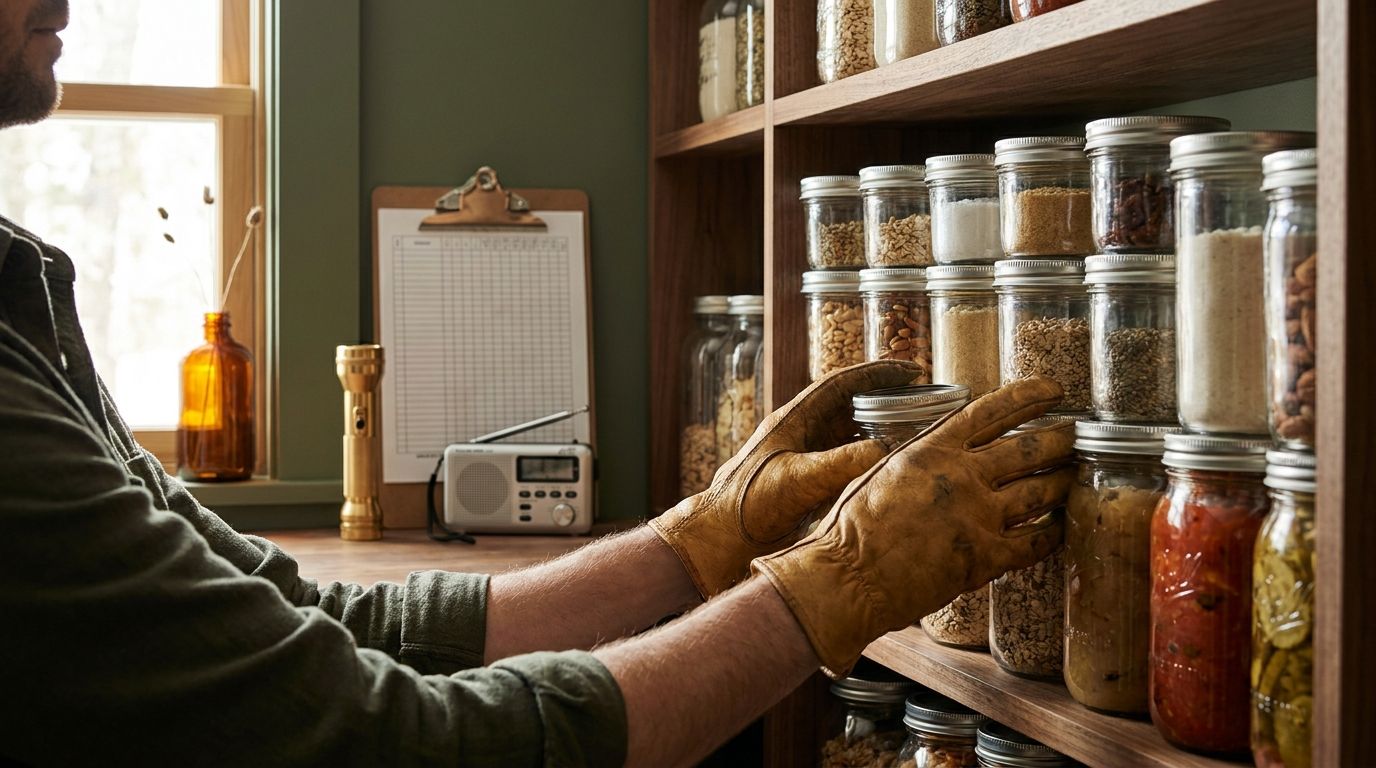
Rosa Wills is standing in the pantry with her flashlight app open, staring at a row of cans like they personally offended her. Sam walks in, reads the look, and says, "Did we buy these for a plan we never made?" June, from the kitchen table, holds up a sticky note that says "winter stuff" and quietly adds, "It's July. We're supposed to be past this."
That moment is familiar. Not because you forgot on purpose, but because life keeps moving and preparedness has a way of getting pushed to "later." The fix is not a big weekend project. It is a four-season readiness rhythm that uses monthly micro-checks to keep everything current without drama.
With Mainstay's adaptive learning system, you track what you have, rotate what you use, and document what needs attention on a simple cadence. You still get the calm feeling of competence. You just earn it one small check at a time.
The answer: how the four-season readiness rhythm works
You run monthly readiness micro-checks, then four times a year you do a seasonal pass that matches what the calendar actually does to your home. The monthly checks keep household inventory checks from drifting out of date. The four-season passes catch the bigger seasonal needs you cannot remember reliably in the middle of a busy week.
That rhythm keeps your seasonal preparedness checklist from becoming a document you feel guilty about. It becomes a living routine.
Why monthly beats "once a year"
A once-a-year check sounds tidy. It is also how you end up with winter supplies that are expired, half-used, or missing the one thing you needed most when snow showed up early.
Monthly readiness is small enough that you do it even when the week is loud. It is consistent enough that you notice changes while they are still fixable. A month is long enough to use something up, short enough to correct course before you are scrambling.
And yes, you will still miss things. You are human. The point is that your system catches up to you.
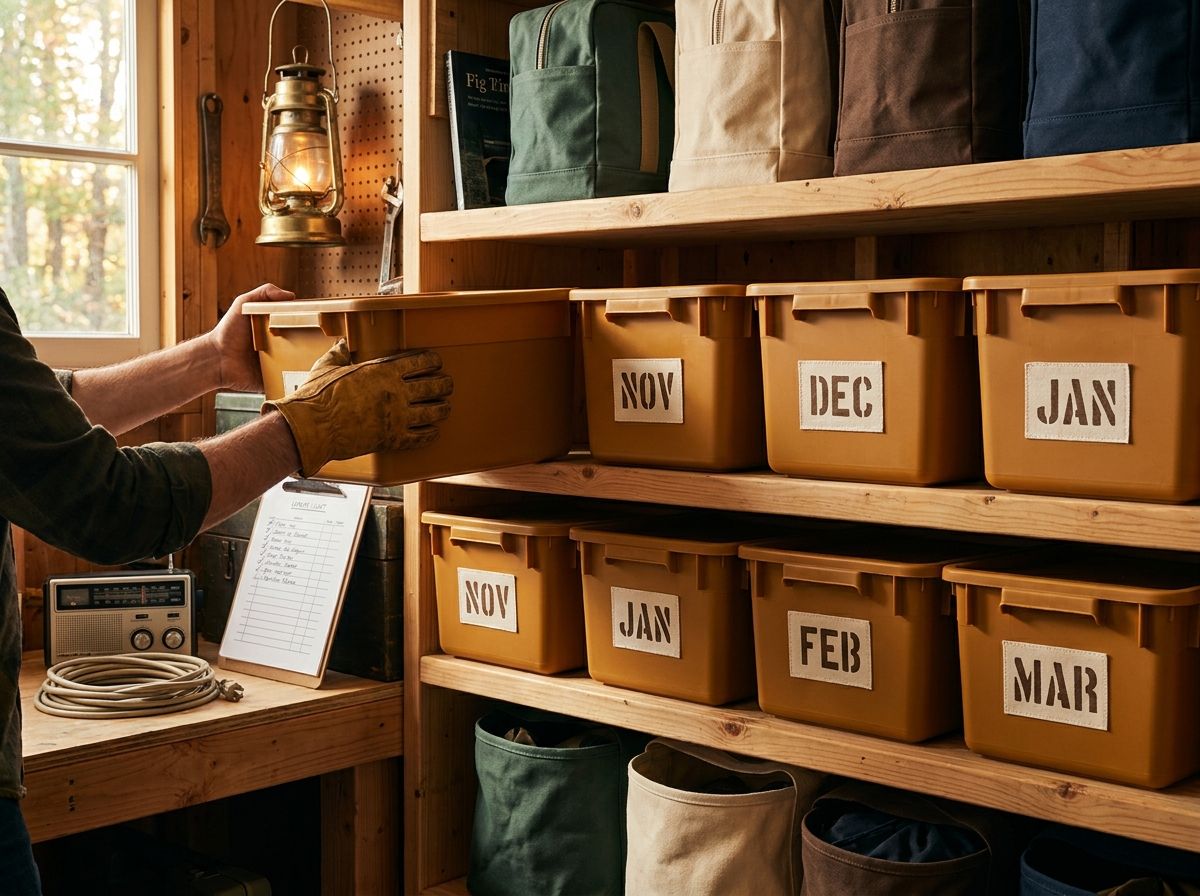
Your four-season rhythm in plain terms
The goal is simple: keep the household inventory checks current, then four times a year run a seasonal pass that aligns your supplies with weather and household patterns.
Here is a structure you can follow without turning it into a hobby.
The monthly micro-check (about 20 minutes)
One quick circuit each month. You are not searching for everything. You are verifying the handful of things that drift.
Pick a day you can repeat. The first Saturday after payday. The last Sunday before the next month starts. Whatever fits. Consistency beats cleverness.
During the monthly micro-check, you do three things:
- Look at date-sensitive items in your main storage spots (food, batteries, meds, first aid).
- Confirm you have what you need for the next two to four weeks of normal life (not a worst-case fantasy).
- Log what you used and what you need to reorder.
This is the part that feels almost too easy, which is why it works. You are not rebuilding. You are maintaining.
The four times a year seasonal pass (about 60 to 90 minutes)
Monthly checks keep you close. The seasonal pass gets you aligned.
Each pass is tied to what actually changes in your household.
- Spring: focus on moisture, ventilation, and the switch from heat to cooling.
- Summer: focus on hydration, heat comfort, and sun-related first aid basics.
- Fall: focus on temperature swings, seasonal pests, and heating prep.
- Winter: focus on warmth, safe water handling basics, and power disruption readiness.
Your seasonal preparedness checklist is not a single list you print once. It is a set of categories you review on a cadence, the same buckets each season, so you are not reinventing the wheel every time.
How to keep it from becoming "another chore"
If you have ever tried to do preparedness and felt your brain start to spiral, you are not broken. You just tried to do it all at once.
Make the monthly micro-check a maintenance task like cleaning a filter or checking tool drawers. It is about keeping things in working order.
Here is what to do when you feel resistance:
- Start with the easiest storage area first. You want momentum.
- Stop after the circuit, even if you spot other issues.
- Put the "other issues" on a small list for the seasonal pass.
That last part matters. It turns your attention into a plan instead of a worry.
What to check each month (the household inventory checks that matter)
You do not need to audit every object in your home every month. You need to audit the parts that change, expire, or get consumed without you noticing.
Think of your home as a set of systems. Supplies are part of those systems.
1) Date-sensitive supplies
This is where monthly readiness pays off the fastest.
Go through your main categories and check:
- Food and drinks with a best-by date.
- Batteries and chargers.
- First aid items you actually use.
- Any personal medications that have a predictable refill rhythm.
You are looking for two things: expiration dates and "we used this and forgot to replace it."
If you find a mismatch, do not fix everything. Fix the next replacement, then reorder the rest so you are not back here next month.
A good rule: if you touch it, you log it. That keeps your household inventory checks honest.
2) Water and sanitation basics
Water planning is a whole category, but your monthly micro-check can be simple.
Check:
- Labels on containers and any filtration items you store.
- The condition of hoses, faucet attachments, or anything you would grab for a water-related task.
- Household cleaning items you rely on for sanitation.
You are verifying accessibility. You are not building a new system.
And if you do not store much water, that is fine. Your monthly check still works because it focuses on what you can access quickly and what you need to replace.
3) Power and lighting backups
Power disruptions are not scheduled. Your supplies can be.
During monthly readiness, check:
- Flashlights and any batteries you keep with them.
- Charging cables that are actually still usable.
- Any backup lighting you rely on in the dark.
This is one of those areas where a little attention saves a lot of frustration. A flashlight with dead batteries is worse than no flashlight because it makes you waste time when you have none to spare.
4) Comfort and heat basics
Comfort supplies are not just about survival. They are about keeping routines stable when the house gets cold or the schedule goes sideways.
Check:
- Warm layers you keep in the same spot each year.
- Blankets or sleeping bags you might use when the house runs cold.
- Any disposable heat sources you store (and their dates).
When June Wills complains about the "winter stuff" sticky note, the real issue is not the note. It is that the seasonal switch did not happen with the same care as the rest of the household routines. Your monthly micro-check is how you prevent that.
The seasonal pass: what changes with the calendar
Monthly micro-checks keep you current. Seasonal passes help you adapt.
Four times a year, each pass has a small theme so you do not drown in details.
Spring pass: moisture control and airflow
Spring is when humidity and dampness sneak in. It is also when you start opening windows again, which means you notice what you have been ignoring all winter.
During your spring seasonal pass:
- Inspect storage areas for signs of moisture.
- Confirm ventilation items you rely on.
- Review any supplies that sit in basements, garages, or closets.
If you store anything in cardboard, check it like you mean it. Cardboard is a great container until it is not.
Summer pass: hydration and heat comfort
Summer readiness is not only about extreme heat. It is also about normal summer days when routines shift and things go missing from the yard.
During your summer seasonal pass:
- Check hydration-related supplies and any drink mixes you keep.
- Review first aid basics that match summer activities.
- Confirm you have cooling or comfort items that stay available.
This is also a good time to look at your household inventory checks for outdoor items. The stuff you grab for the yard is often the stuff that disappears first.
Fall pass: temperature swings and home systems
Fall is when the house starts acting differently. You feel it in drafts. You hear it in the way appliances run. You notice it when you pull on a jacket and realize you did not actually put things away where they belonged.
During your fall seasonal pass:
- Review heating-related supplies and warm clothing storage.
- Check for any gaps in insulation-related items you keep.
- Inspect items that protect your home from pests.
Don't chase perfection. Chase readiness.
Winter pass: warmth, safe water handling basics, and power disruption
Winter is where your seasonal preparedness checklist earns its keep.
During your winter seasonal pass:
- Confirm warmth supplies are accessible and in good condition.
- Review any power disruption items like batteries, flashlights, and charging plans.
- Check water-related basics you would use in a short-term disruption.
This is the pass where you look at your home like you are trying to help yourself on a bad day. If you cannot find it quickly, it is not ready.
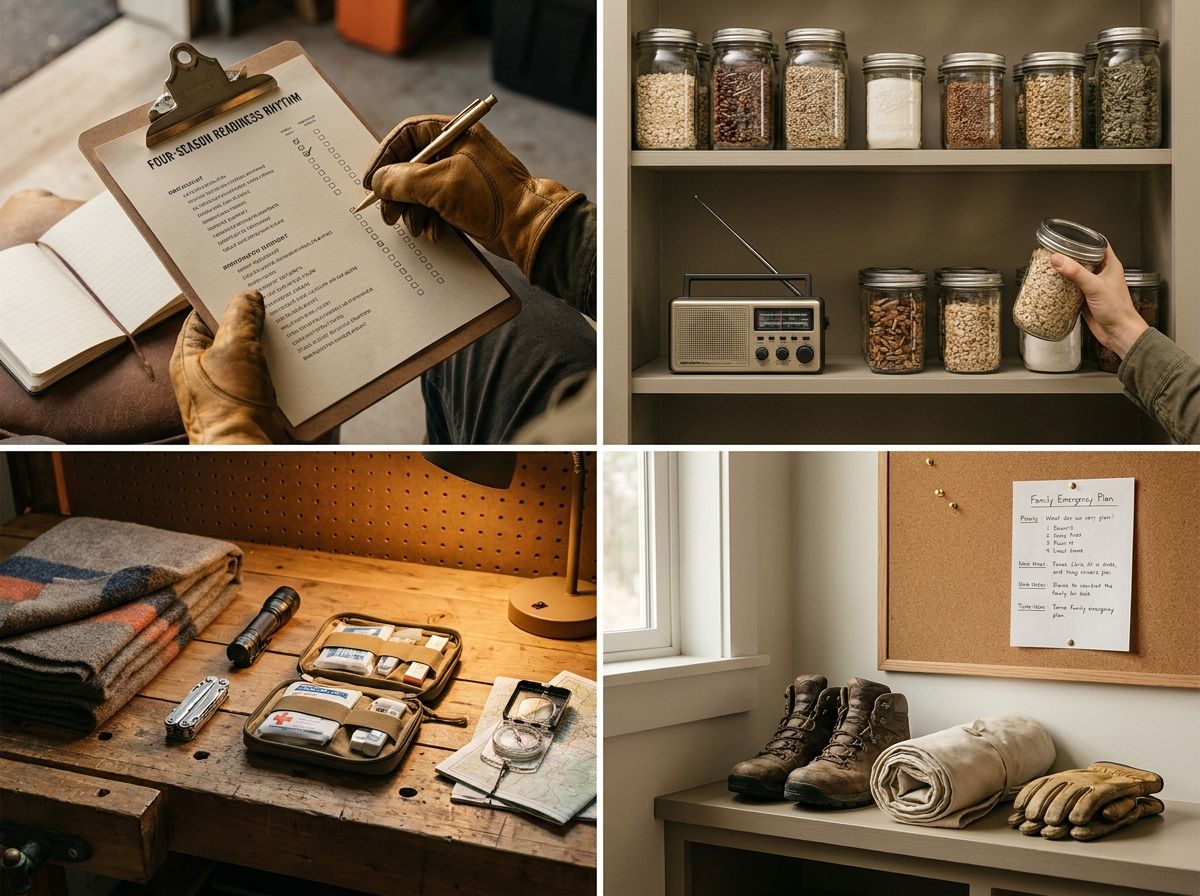
A simple way to run the routine without losing your mind
You need two things: a place to store notes and a way to remember what you already checked.
It does not have to be fancy. It has to be consistent.
Use a single "micro-check" log
Keep a small notebook or a digital note titled "Monthly readiness." Each month, write:
- Date of the check.
- Items you inspected.
- What you replaced or reordered.
- Anything that needs attention in the seasonal pass.
That log turns your memory into a record. You stop rethinking the same questions every month.
Put your supplies where you can actually reach them
Preparedness fails when supplies are "somewhere." You want them in a small number of known spots.
Make sure the storage locations match your reality:
- Food and date-sensitive items live together.
- Batteries and lighting supplies live together.
- First aid items live together.
- Water and water-handling basics live together.
You are building a system your household can follow without you explaining it every time.
Rotate as you use, not after you panic
Rotation is the quiet engine of readiness. You use items, you rotate them, you update the log. Simple.
When you rotate during normal life, the seasonal pass becomes lighter. You are not hunting for what is expired. You are verifying what is still good.
This is where Mainstay's approach fits naturally. Methodical, calm, grounded in how households actually run.
Community notes: what neighbors learn from each other
You do not have to do this alone.
In neighborhood conversations, people share two types of stories. The first is the "we found expired stuff" story. The second is the "we were ready and it felt normal" story.
The normal one usually comes from the same habit: monthly readiness.
A neighbor might say, "We do a quick check at the start of each month." Another might say, "We review the main supplies every season and keep a log." They are not doing it because they love checklists, they are doing it because it reduces friction and keeps the household from turning preparedness into a stressful surprise.
And if you are thinking, "My household will never stick to this," you might be right. Your first version can be imperfect.
Try this instead:
- Do the micro-check for three months in a row.
- Keep it small.
- Adjust where you store notes.
Once it becomes a habit, you can expand. That is how competence grows.
FAQ
What should be on a seasonal preparedness checklist?
A seasonal preparedness checklist should include the categories that change with the weather and household routine: date-sensitive supplies, water and sanitation basics, power and lighting items, and warmth or comfort essentials. Keep the list focused on what you can verify quickly during monthly readiness and review more thoroughly during each of the four times a year seasonal passes.
How long should monthly readiness take?
Monthly readiness is designed to take about 20 minutes. You inspect the most drift-prone areas, confirm accessibility, and log what you replaced or need to reorder. If it takes longer, shrink the scope until you can keep the habit.
What do household inventory checks look like in real life?
Household inventory checks look like a quick scan of dates, a look at what you used up, and a note of what you must reorder. You are not counting every item. You are verifying that your supply buckets match your household needs.
Do I really need four times a year seasonal passes?
Yes, because weather and household patterns shift. Monthly micro-checks keep you current, but the seasonal pass helps you adapt to what the calendar changes in your home. Four times a year is enough structure to stay aligned without turning preparedness into an all-year project.
Your next step
Tonight, pick one storage spot that you know always causes questions. Pantry shelf. Bathroom cabinet. The drawer where batteries live. Then do a 10-minute scan for dates and accessibility.
That small win is how Rosa Wills gets her sticky note off the table. It is how Sam Wills stops guessing. It is how June Wills keeps the household plan from slipping.
You are not behind. You are building a rhythm. Keep the monthly check small, keep the seasonal pass scheduled, and let the calm competence build itself month after month.
Want this handled automatically? See the Mainstay membership.
Subscribe to comment
Join the Mainstay newsletter to leave a comment — and get new field notes in your inbox.
Get new field notes in your inbox
Practical, calm preparedness — one useful note at a time.