The household readiness baseline: what enough looks like
You do not need a warehouse. You need a household readiness baseline that matches your home, your family, and the reality of time.
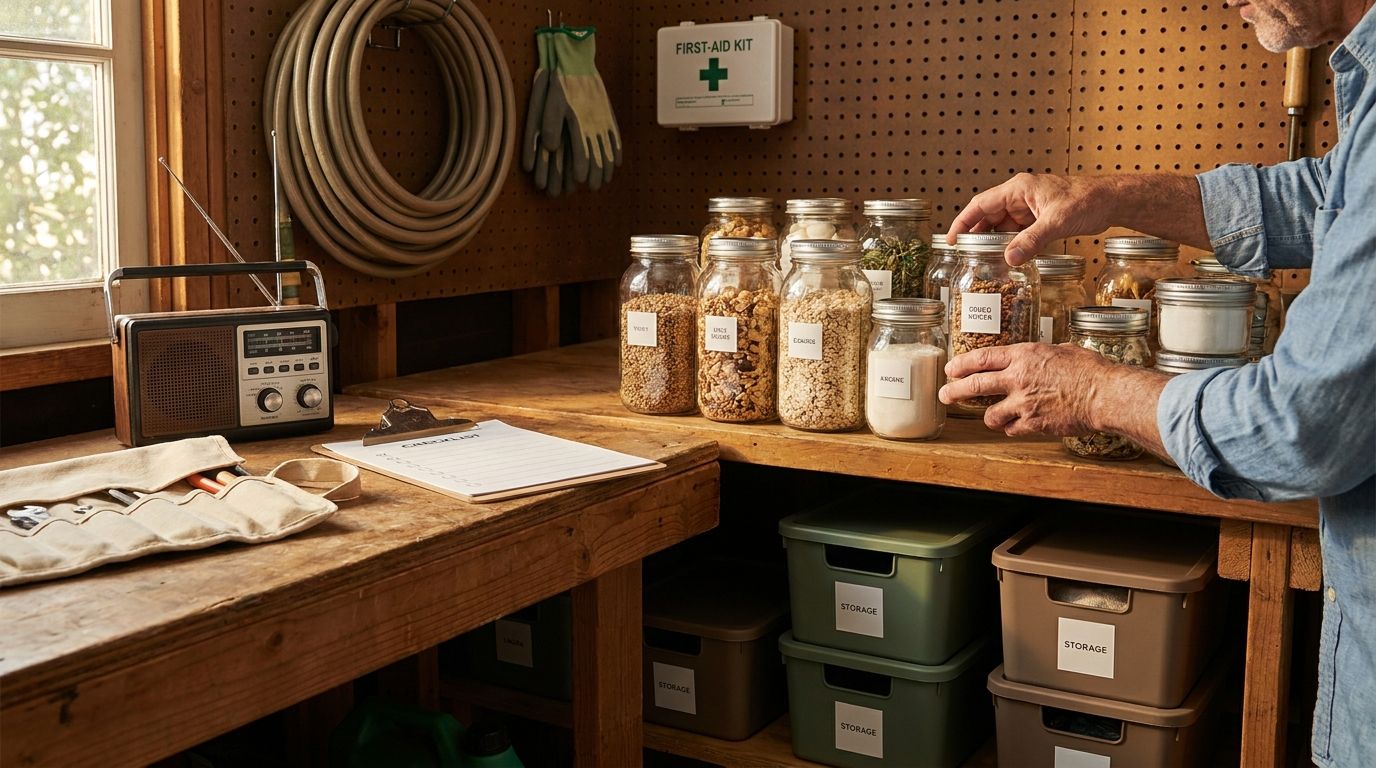
Rosa Wills is standing in her kitchen with a half-empty pantry bin and a sticky note that says "check again." Sam Wills is already eyeing the expiration dates like they personally offended him. June Wills keeps turning the same question over in their head: what does "enough" even mean, when life keeps happening?
Here's the answer up front. Your household readiness baseline is a clear, practical set of supplies and plans that let you handle the most common disruptions without improvising from scratch. It pulls from FEMA-preparedness-checklist thinking, the CDC home kit approach, and the CPSC consumer safety mindset, all working together. Not perfect. Not maximal. Just steady.
And if you can hit that baseline, you can build beyond it later without feeling like you're already behind.
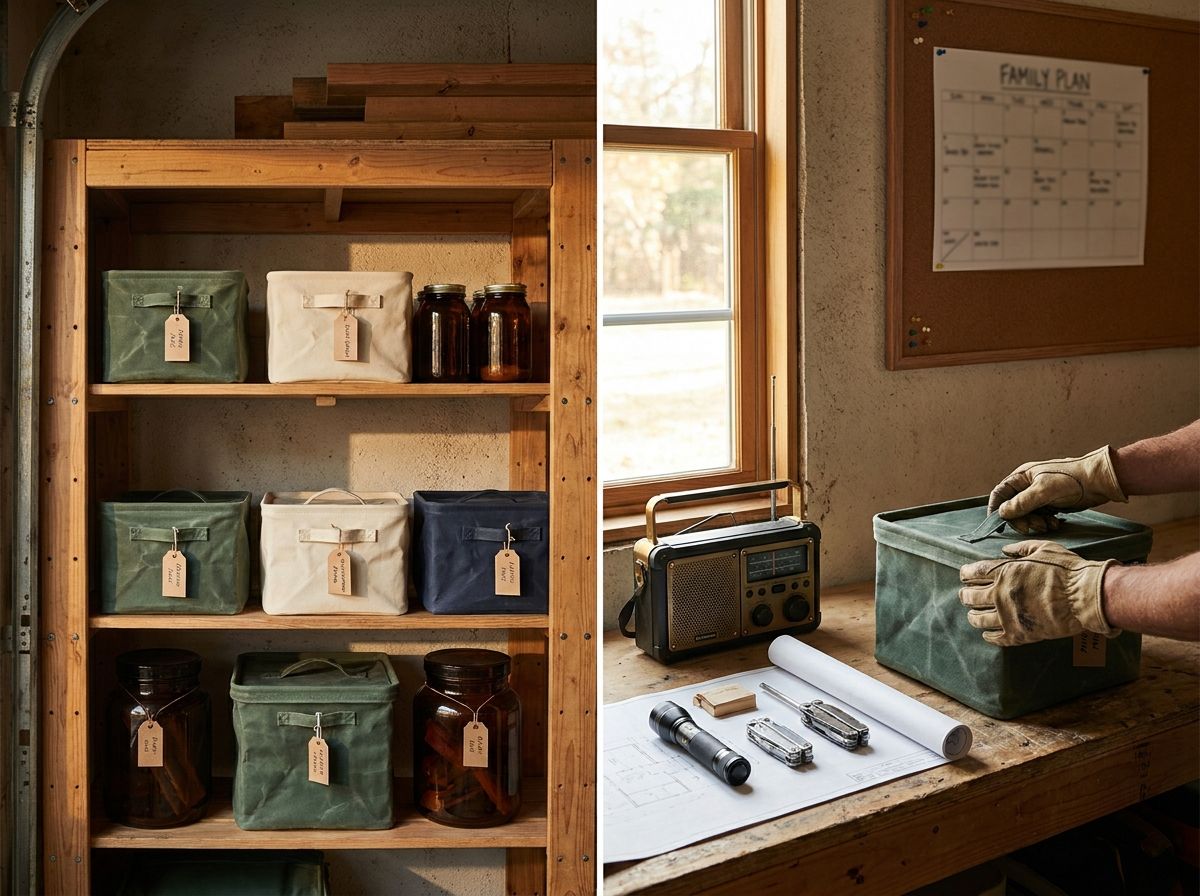
What "enough" looks like in real households
The household readiness baseline is not a vibe. It is a level you can verify.
Most official guidance circles the same themes: have basic supplies, know how to use them, keep them in good condition, and reduce hazards at home. FEMA preparedness checklists focus on actions and household planning. The CDC home kit approach is about having key items for health and hygiene. CPSC consumer safety adds a practical layer on top, basically "don't create new risks while you prepare."
Your baseline should cover three buckets:
- Life necessities for a short disruption. You are not storing for the apocalypse. You are covering the gap when roads close, power fails, or the schedule breaks.
- Health and basic first aid. You are not treating everything. You are keeping small problems from becoming bigger ones.
- Safety and utilities you control. You are keeping the house from becoming the problem, which means safe storage, smoke and carbon monoxide protection, and knowing how to shut things off when needed.
Because if you don't define baseline, you end up doing the thing you already hate: buying random items, moving them to a shelf, then forgetting what you have. That's not preparedness. That's a storage hobby.
Practical takeaway: define baseline as "auditable"
Pick a baseline you can check in one sitting. Not a weekend project. One sitting.
Here is what "auditable" means in practice:
- You can point to each category in your home.
- You can show the date on items that expire.
- You can explain, in plain terms, how you would use what you have.
If you can't do those three things, your baseline is still a wish.
The FEMA/CDC/CPSC-style baseline categories
You do not need to merge three agencies into one spreadsheet. You do need to borrow what each one is good at.
FEMA preparedness checklists give you the "plan and practice" backbone. CDC home kit thinking gives you the "health basics and hygiene" backbone. CPSC consumer safety keeps you from overlooking hazards while you stock supplies.
With Mainstay's adaptive learning system, you can turn that into a household readiness baseline you actually keep current, instead of something you re-learn every year.
Let's break it down into categories you can stock at home.
1) Water and food you can rotate
Start with the simplest truth: people drink more when they are stressed. Water planning is not just storage. It is access.
A baseline does not need to be fancy. It needs to be usable.
What to stock at home:
- Water: enough for drinking and basic sanitation for your household, for the disruption window you choose.
- Food: shelf-stable meals and snacks you can open without tools you don't have on hand.
- Comfort items: coffee, tea, electrolyte packets. Not because it's cute, because morale is a real resource.
CDC-style thinking also reminds you that hygiene matters. If you have water, you can wash hands, clean small messes, and slow the spread of illness through the household.
2) A CDC home kit that is actually a kit
A kit is not a pile. It is a set of items you can find when you are tired.
A baseline CDC home kit audit typically includes:
- Bandages and wound care
- Antiseptic wipes or solution
- Pain and fever reducers
- Any basic prescription needs for your household
- Oral rehydration supplies if you already use them or want a plan for dehydration
You should also include hygiene basics that match your home. If you have kids, that includes items for diapering and handwashing. If you have mobility limitations, that means accessibility choices you can reach without climbing.
3) CPSC consumer safety items that prevent secondary problems
This is where a lot of households accidentally fall down. They prepare for one problem and create another.
CPSC consumer safety thinking fits your baseline as the "no new hazards" layer.
What that looks like in practice:
- Smoke and carbon monoxide alarms are working and not past their lifespan.
- Fire safety basics are present where you can reach them.
- Batteries are stored safely and replaced before they leak.
- Any heating or cooking backups have clear, safe use rules.
You do not need to be an electrician. You do need to keep hazards from sneaking in while you stock.
4) Comfort and power basics for "still living"
You want a calm household, not a survival camp.
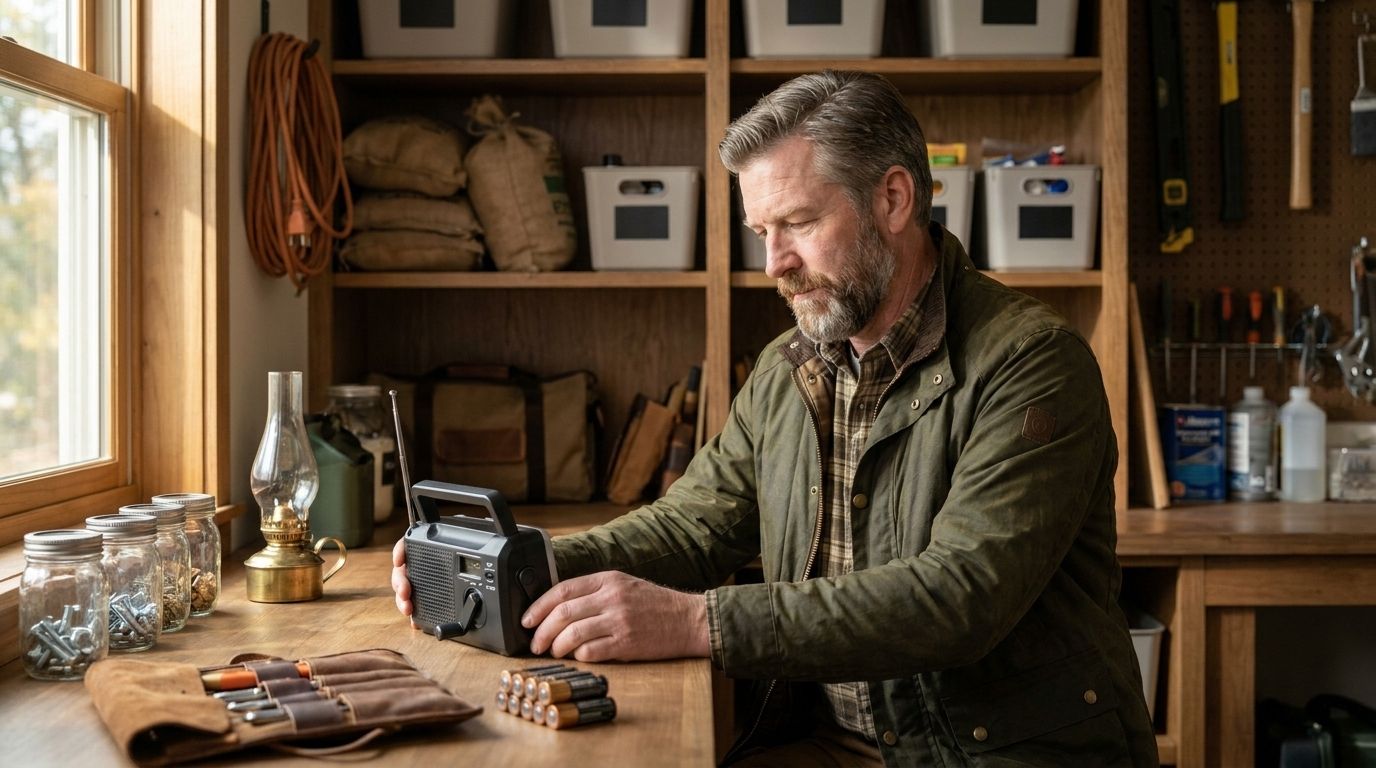
The calm power baseline is a practical subset: lighting, charging, and heat options that match your home.
A baseline can include:
- Flashlights and spare batteries
- Phone charging options
- A way to keep a small space warm safely
- Basic cold storage planning (even if it is just "what to do with what's in the fridge")
5) Documents and communication you can access
Paper still matters when phones die or networks slow down.
Your baseline should include:
- A printed family file with key contacts, medical info, and plans
- A digital backup stored somewhere you can reach from multiple devices
FEMA preparedness checklist thinking emphasizes that information needs to be usable under stress. Not buried in a folder you haven't opened since 2021.
Practical takeaway: keep it to categories, not a shopping list
If your baseline is "water, food, health, safety, comfort, documents," you can evolve it without starting over.
If your baseline is "buy 37 things," you will stall.
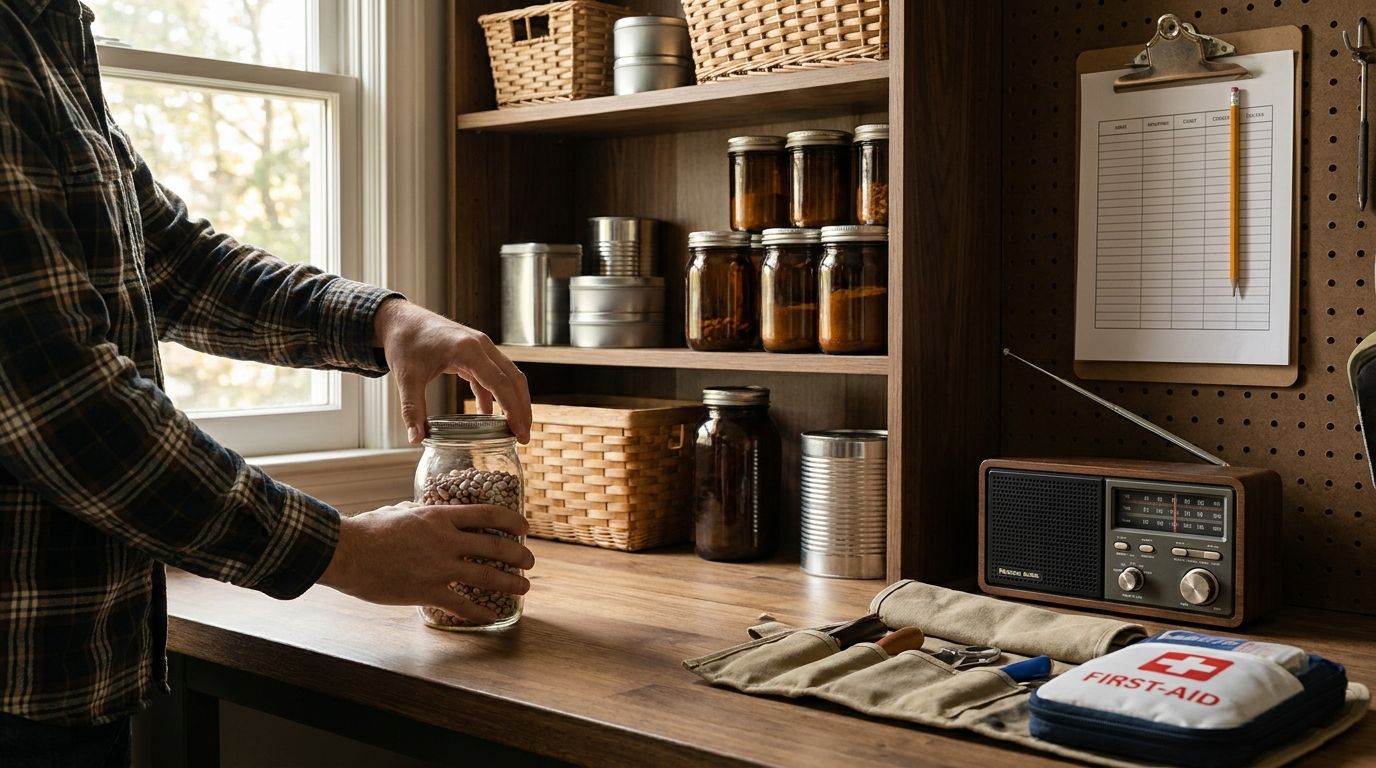
Build your baseline with a 60-minute household audit
You do not need a perfect day to start. You need a defined block of time.
Here's a 60-minute audit you can run on a Saturday morning while the coffee is still doing its job.
Step-by-step audit
1) Pick the categories. Write the six categories on a notepad: water/food, health kit, safety layer, comfort/power, documents.
2) Walk the house with a trash bag and a notepad. Remove anything expired or broken in those categories. If it is unusable, it does not get to stay.
3) Check expiration dates and usability. Do a quick read on labels. If you cannot tell when something expires, it is not part of the baseline yet.
4) Test access. Open the bin. Find the items. Put them back. If you cannot reach them easily, they are not baseline-ready.
5) Write one plan sentence per category. Example: "Water is in the labeled bins on the shelf by the pantry door." Another example: "First aid kit lives in the hall closet, labeled and ready."
6) Choose your next restock trigger. Pick one rule you can keep. "Reorder when we use half." "Reorder at the printed date on the shelf label."
That's it. Not a full reorganization. Not a new hobby.
Where June and Rosa usually get stuck
June Wills is the kind of person who wants to do it right. Rosa Wills is the kind of person who wants to do it today. When they run the audit, the friction usually shows up in two places:
- Too much time spent on the perfect container. A baseline needs clear labels more than it needs matching bins. You can upgrade containers later.
- Too many "maybe" items. If you have a "maybe" item, it is not baseline. It is a future upgrade.
So they make a rule: baseline items are items they can explain and use without reading a manual.
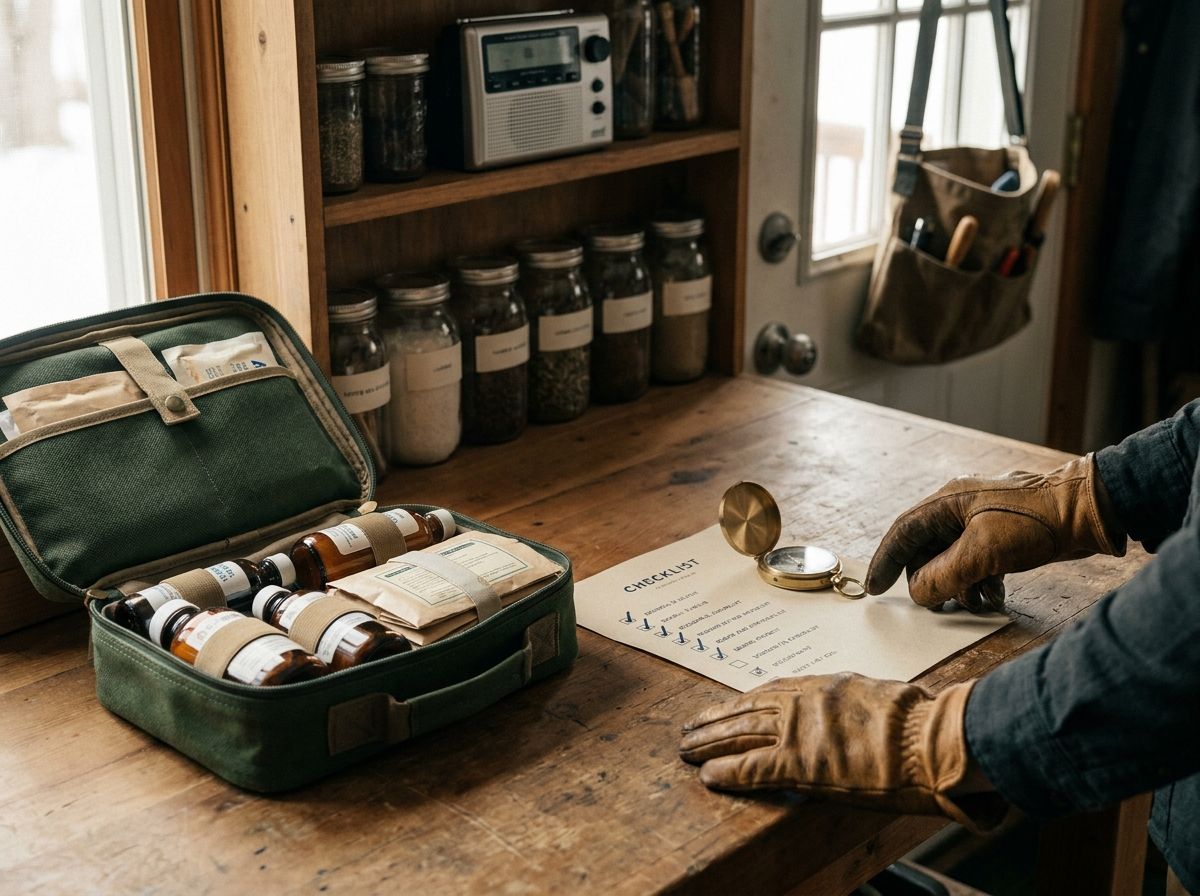
What to stock at home: baseline quantities you can choose without guessing
This is the part where people either overthink it or underdo it. Sometimes both, back to back.
A baseline does not require exact math on day one. It requires a choice you can defend.
Pick a baseline disruption window that matches your life. Many households use a "short disruption" window because it fits real events: a power outage, a road closure, a week where getting to the store is harder than usual. Then stock quantities that cover that window.
A simple way to choose quantities
Use your household size and your routines.
- Water: choose drinking amounts first, then add sanitation needs.
- Food: choose meals you can eat without cooking, then add snacks.
- Health: choose supplies that cover common injuries and basic illness support.
- Safety: choose items that reduce risk immediately.
- Comfort: choose items that keep you functioning.
Think in terms of "enough for the disruption window" rather than "enough for the worst day you can imagine." Your baseline is about being steady.
The CPSC consumer safety layer for storage
CPSC-style guidance tends to emphasize safe storage and preventing hazards. That means you store items the way you would store anything else you respect.
Baseline storage choices:
- Keep chemicals separate from food and health supplies.
- Store batteries and small electronics so they do not short or leak.
- Keep sharp tools and medications in stable, reachable locations.
- Make sure backup heating or cooking options have safe placement rules.
You are not trying to "win" at storage. You are trying to remove friction when you need to act.
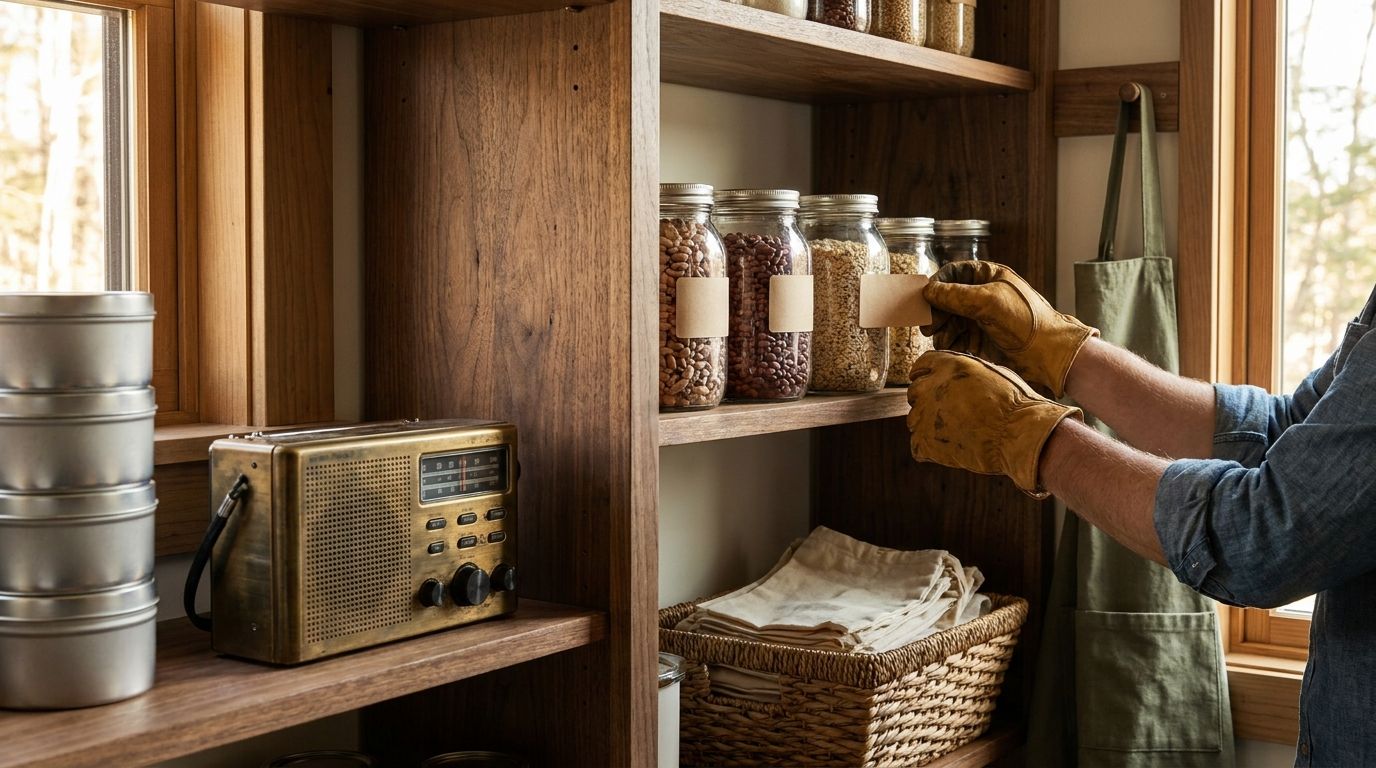
Practical takeaway: label like you're teaching a new version of yourself
Labeling is the baseline multiplier. You want labels that answer three questions quickly:
- What is it?
- When does it expire?
- Where does it go back?
A category label plus an expiration date is enough. Simple beats clever here every time.
Make the baseline last: rotation, restock triggers, and proof you can find
A baseline fails when it becomes a one-time project.
The fix is a routine that takes minutes, not hours.
The baseline maintenance loop
You can build this into your life without turning it into a calendar obsession.
Use a loop that looks like this:
- Inventory: know what you have.
- Rotate: use the oldest first.
- Document: keep dates and locations visible.
This matches the Everyday Readiness System approach, applied directly to baseline items.
Restock triggers that keep you from "oops" shopping
Choose triggers that fit how you actually shop.
Here are four that work:
- Reorder when you hit half.
- Reorder when an item expires within a set time window.
- Reorder when you open a new container for the first time.
- Reorder after you use an item for a real-life need.
The baseline goal is to prevent the moment where you open the kit and realize you've been quietly borrowing from it for months.
Scout's role (and why that matters)
Scout is a dog, and that means the household readiness baseline includes pet realities too. If you have pets, treat their supplies as part of the same system. Food, water access, and basic health items should live in the same labeled structure as the rest of your baseline.
Even if you think "we'll remember," you won't always. Life gets loud. Ask anyone who's stood in front of an open pantry at 9 PM trying to remember if they bought more dog food. Baseline systems make remembering easier.
FAQ
How long should a household readiness baseline last?
It should cover the disruption window you choose based on your life. Many households start with a short disruption window because it fits real events like power outages and limited shopping days. The key is that you can audit it and rotate it.
What's the difference between a baseline and a full preparedness plan?
A baseline is the minimum you can verify and maintain. A full plan includes more scenarios, more options, and more practice. You can build toward that later, but baseline keeps you functional right now.
Do I need a CDC home kit if I already have first aid supplies?
If your first aid supplies are not organized, dated, and easy to access, you still need a kit. CDC home kit thinking is about having the right items together and keeping them usable. Organization and usability are part of the medical value.
What should I prioritize if my budget is tight?
Prioritize water access, a usable food plan, a health kit that covers common needs, and safety basics like working alarms. Comfort and documents come next because they reduce stress and improve coordination. Pick fewer categories, then make them solid.
Your next step that takes less than an hour
If you want to start today, run one household readiness baseline audit. Grab a notepad, check the six categories, remove anything expired or broken, and write one sentence per category about where it lives and how you would use it.
June Wills does not need to become a prepper. Rosa Wills does not need to become a spreadsheet person. Sam Wills does not need to be perfect. You just need a baseline you can find when your day is messy.
That is what Mainstay is for: stay organized, keep supplies in working order, and build the calm that your household and neighbors can count on.
Want this handled automatically? See the Mainstay membership.
Subscribe to comment
Join the Mainstay newsletter to leave a comment — and get new field notes in your inbox.
Get new field notes in your inbox
Practical, calm preparedness — one useful note at a time.