The household supply cabinet audit: find missing items before you need them
A practical household supply inventory that helps you spot gaps, replace expired items, and keep your home ready without buying half the store.
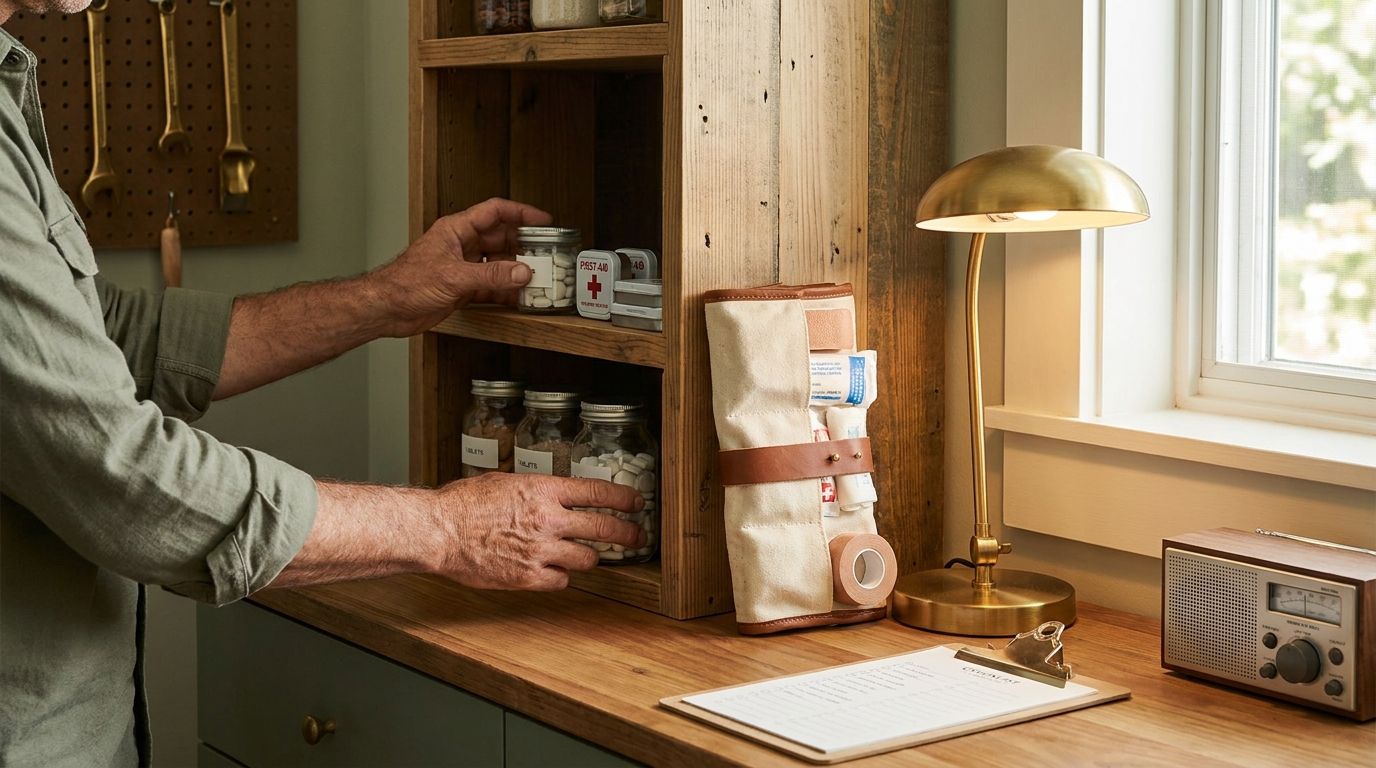
June Wills found the empty shelf at 7:12 on a wet Tuesday morning. Sam had a scraped knee, Scout was barking at the delivery truck, and the household supply cabinet had no bandages. It had gauze, tape, and a bottle of antiseptic that expired before anyone remembered putting it there.
A household supply inventory helps you catch those gaps while the day is still ordinary. A simple emergency supply audit shows what you have, what is missing, and what needs replacing, so your home preparedness checklist reflects real life instead of an optimistic version of your pantry.
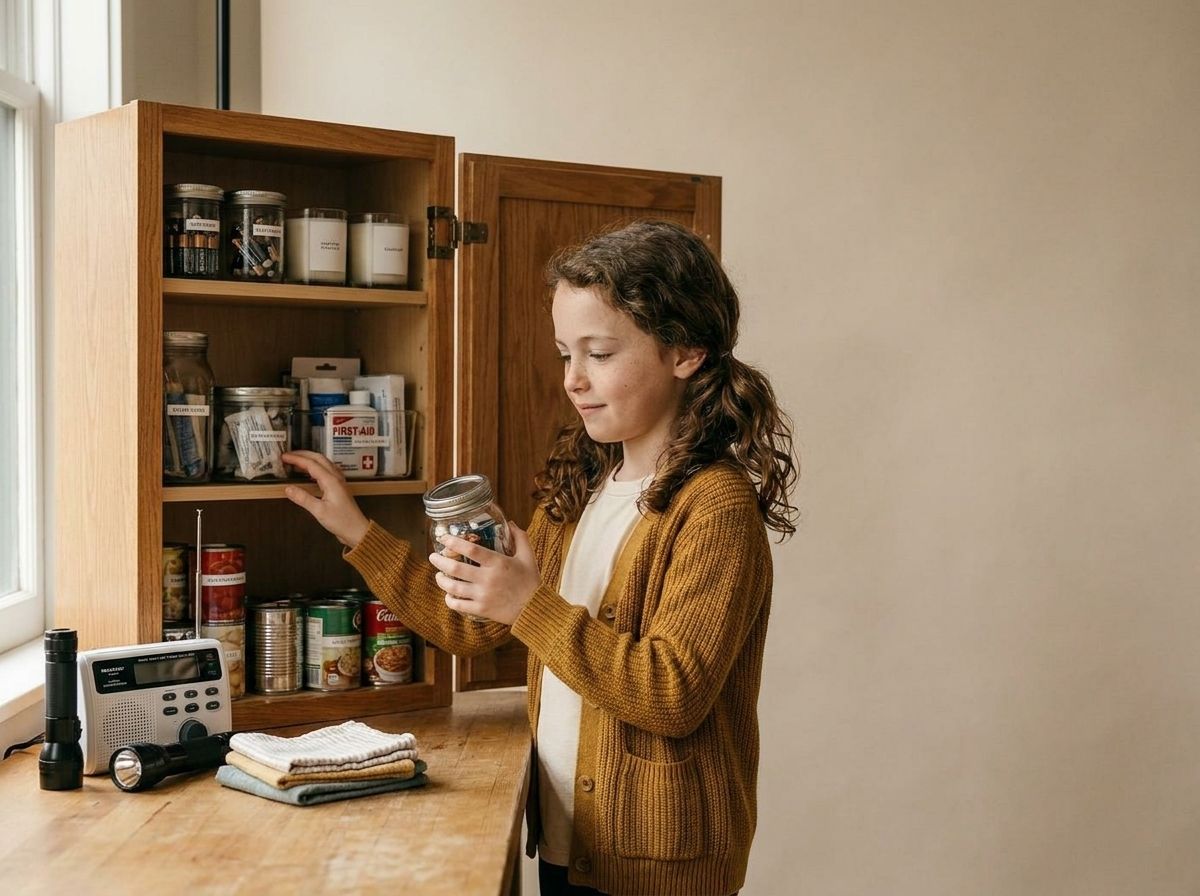
June did not fail at household readiness. She had supplies, labeled bins, and even a list saved on her phone somewhere below several grocery receipts and a photo of Scout asleep upside down. The problem was that nobody had checked whether the list matched the cabinet.
That is the part most people miss. Readiness is not only about buying useful things. It is about knowing what is available, knowing where it lives, and noticing when an ordinary item has quietly walked off the shelf.
Start with the cabinet you actually use
An audit works best when you begin with the place your household actually reaches for supplies. Do not start by browsing a large checklist online. Start at the cabinet, closet, drawer, or shelf that holds the things you grab during a minor household problem.
Pull everything out. Yes, everything. This is the moment where the rubber band collection usually reveals itself, along with four nearly empty bottles of cleaner and a mystery key that has survived three moves.
Set up four working zones on the floor or counter:
- Keep: usable items with clear purpose and enough quantity
- Replace: expired, damaged, empty, or nearly empty items
- Relocate: useful items stored where nobody can find them
- Decide: items you bought for a specific reason but no longer use
The goal is not a perfect storage room. The goal is a truthful household inventory system. If you have one flashlight with working batteries, record one flashlight. Three containers with unknown contents do not count as three reliable supplies.
Check the condition of each item. Look for cracked packaging, leaking bottles, corroded battery contacts, stiff seals, missing instructions, and supplies that have become awkward to use. A tool that only works if you hold it at a strange angle is not a dependable tool. Ask me how I know.
Then check access. A supply can be physically present and still fail the household test if it is buried behind winter coats or locked in a room nobody can reach without a key.
Your audit should answer these plain questions:
- Can you find the item in under a minute?
- Can the person who needs it use it without extra explanation?
- Is the quantity enough for the likely household need?
- Would you notice if the item disappeared tomorrow?
If the answer is no, write down the gap. You are not grading yourself. You are collecting useful information while there is still time to act on it.
Build an inventory by household job
A long shopping list can make a home feel less organized, not more. Group your household supply inventory by the job each item performs. That approach helps you spot missing functions instead of getting distracted by brands, packaging, or an impressive stack of stuff.
Use categories that match the way your household actually lives:
- Health and personal care: bandages, pain relievers, prescription supplies, glasses, hygiene items
- Water and food support: stored water, manual can opener, shelf-stable meals, pet water and food
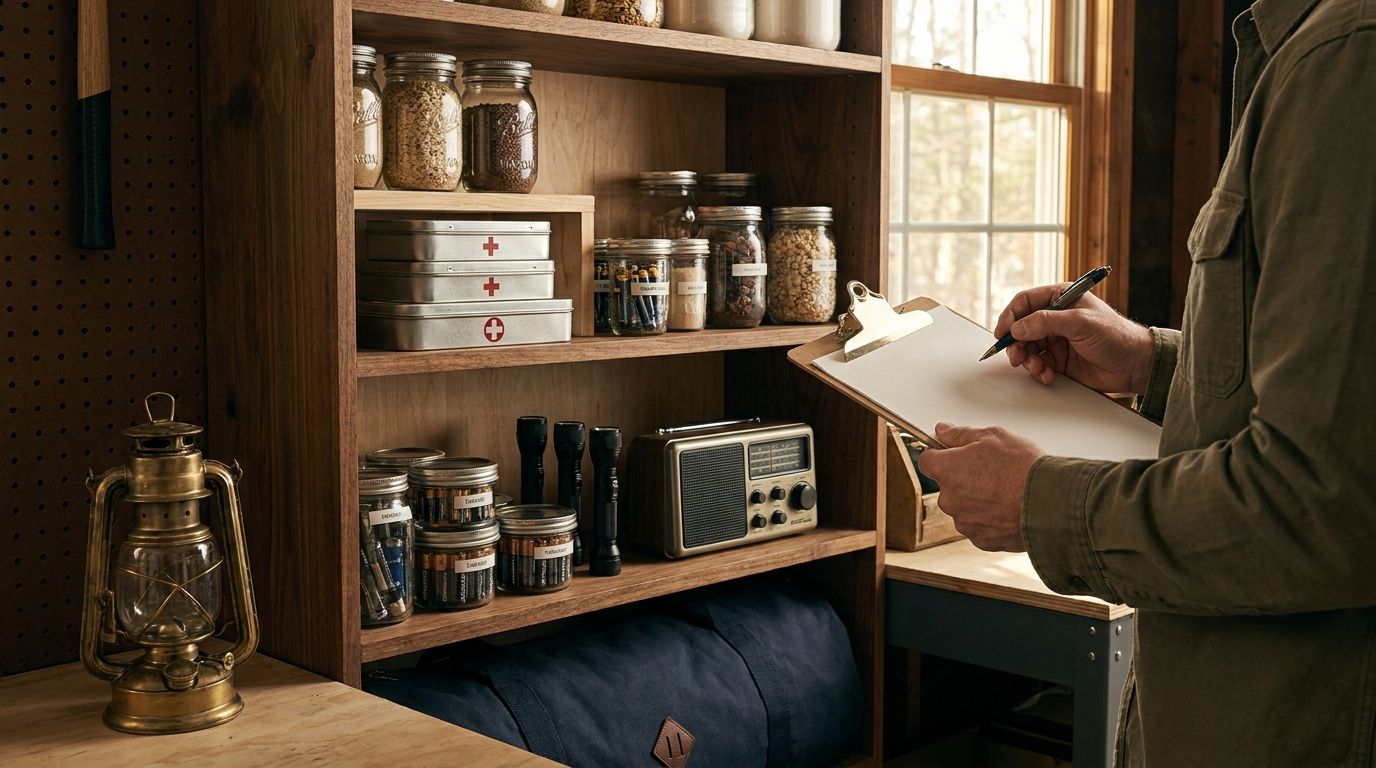
- Light and communication: flashlights, spare batteries, charging cables, power banks, battery radio
- Cleaning and sanitation: gloves, trash bags, disinfectant, paper towels, soap
- Home repair: work gloves, basic hand tools, duct tape, plastic sheeting, fasteners
- Comfort and clothing: blankets, warm layers, sturdy shoes, towels, spare socks
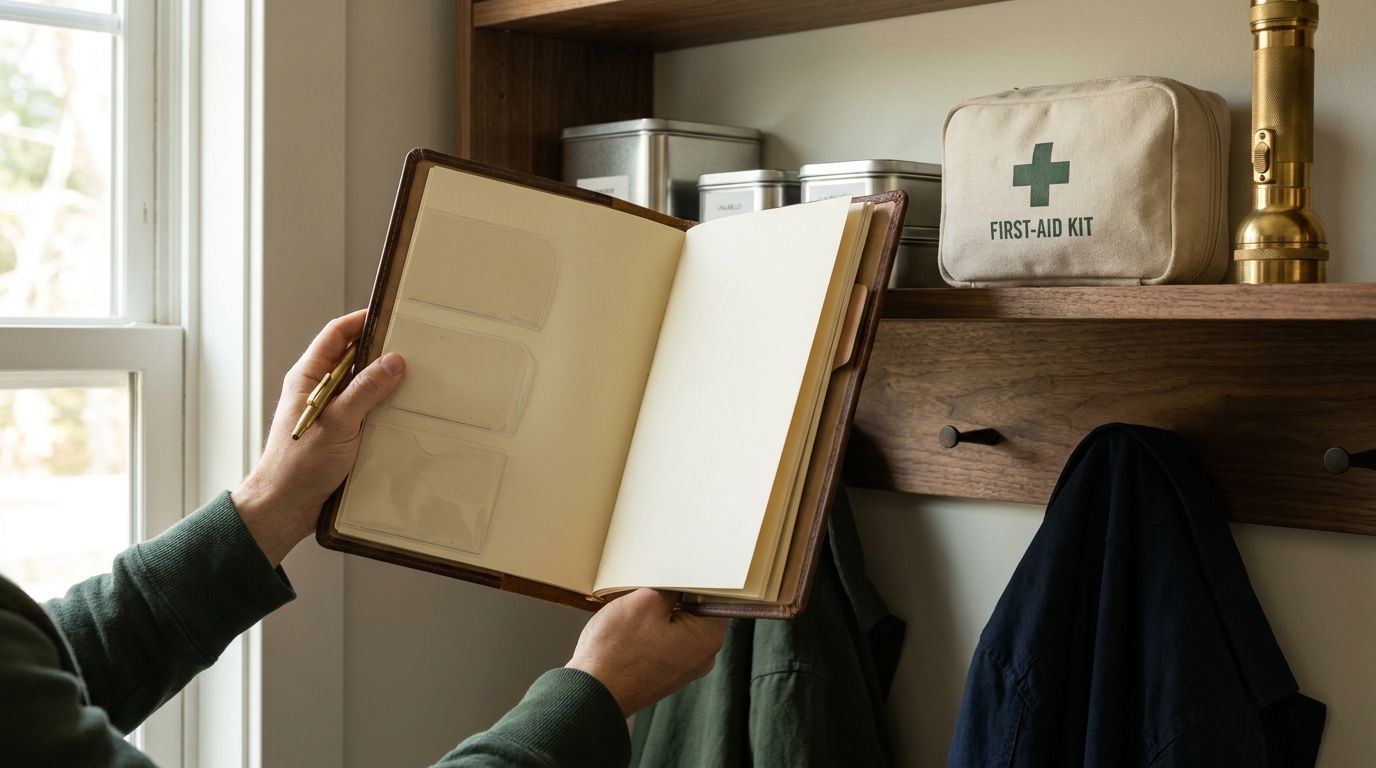
- Records and access: copies of key documents, contact information, spare keys, cash
These categories are starting points, not laws. A household with an infant, a person who uses a medical device, or a dog has different needs than a household with none of those factors. Your supply cabinet should serve the people who live there, not some imaginary average family.
For each category, record four details:
1. What you have now
2. What amount you want available
3. Where you keep it
4. When you will check it again
The amount you want does not need to be dramatic. You might decide to keep two working flashlights per bedroom, a week of necessary prescriptions based on your refill schedule, or enough pet food to cover several days beyond your normal delivery window. Use your actual routines as the guide.
A household inventory system becomes useful when it supports decisions. "Batteries" is not enough information. "Two unopened packs of AA batteries in the hall cabinet, check in October" gives you something you can act on.
You can also add a reorder point. This is the quantity that signals you to replace an item before it runs out. If your household uses one bottle of dish soap every month, you might set two unopened bottles as the reorder point. When you open the last spare, dish soap goes on the next shopping trip. Simple.
Mainstay can hold this kind of household profile, inventory, and preparedness plan in one place, but a paper sheet taped to the cabinet door gets the job done too. The best system is the one you will actually check when you are tired and mildly annoyed.
Find the quiet gaps people overlook
The obvious items rarely cause the most trouble. You probably remember food, water, flashlights, and basic first aid. The gaps tend to hide in the small supplies that connect one task to the next.
Walk through a normal household problem and look for the missing link. If the power goes out, you may have a lantern but no batteries that fit it. If a pipe leaks, you may have a bucket but no quick way to shut off the water. If someone gets sick, you may have medicine but no thermometer, tissues, or practical way to clean the bedding.
Use these prompts during your emergency supply audit:
- What lets you open, move, carry, charge, clean, or dispose of something?
- What item requires a specific size, connector, refill, or matching part?
- What does a child, older adult, guest, or pet need that you do not use yourself?
- What supply would be hardest to buy late at night or during bad weather?
- What would you want near the bed, not across the house?
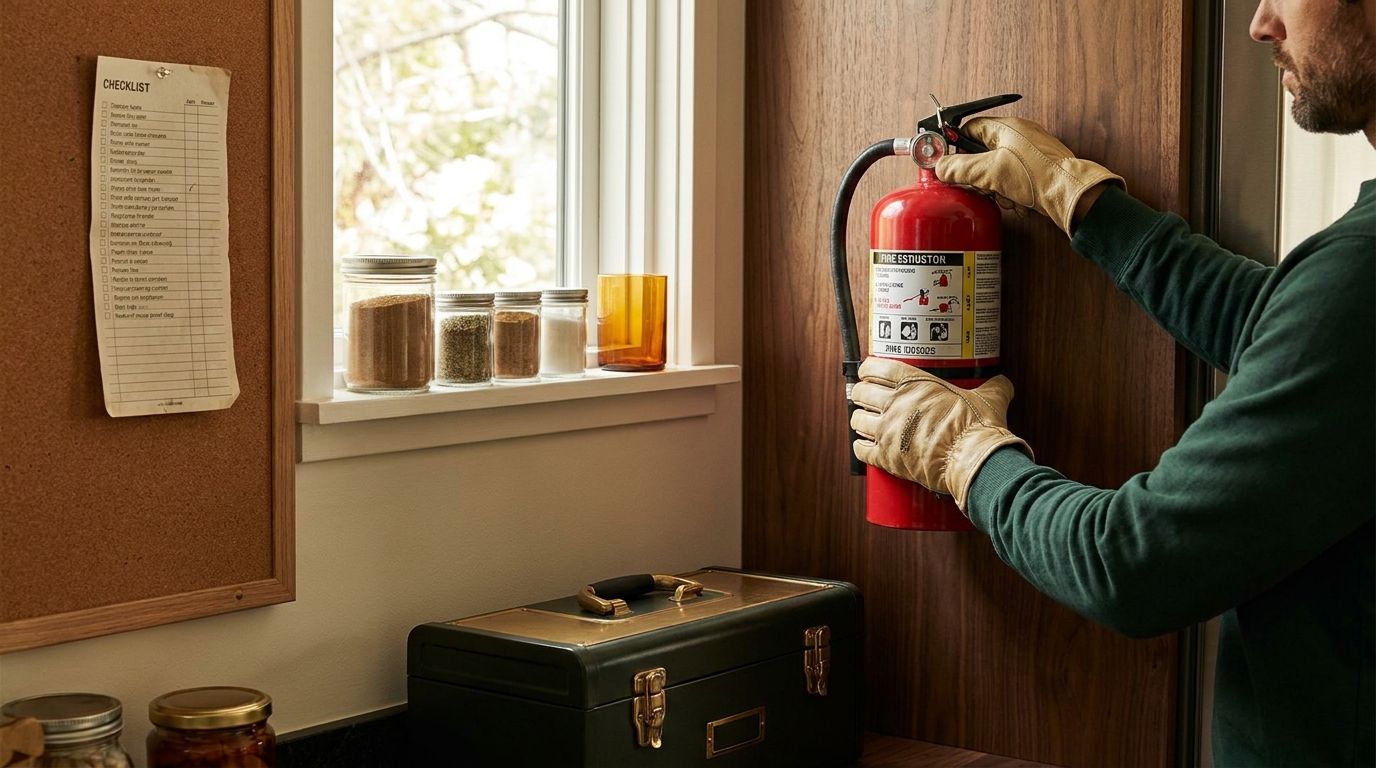
Check the items that depend on other items. A portable stove needs the correct fuel and a safe way to light it. A phone needs a charging cable that fits that phone, plus a charged power source. A first aid kit needs gloves, clean dressings, and a way to dispose of used materials.
Medication deserves its own careful review. Keep a current list of prescriptions, doses, prescribing office phone numbers, and pharmacy details. Follow your clinician's instructions and pharmacy rules for refills. Some medications cannot be stored or replaced casually, so your plan should reflect the guidance you already receive.
Do not overlook household-specific needs. Write down the supplies connected to:
- Mobility, hearing, vision, or communication needs
- Infant feeding, diapers, or formula preparation
- Pet food, medication, leashes, carriers, and cleanup
- Allergies, food restrictions, or medical equipment
- Work uniforms, school materials, or essential daily routines
The point is not to imagine every possible event. It is to protect the routines that keep your household running when the normal options are limited. That is a calmer and more useful question.
Why does a household supply inventory need a use test?
A use test checks whether the supply works for the person who will actually use it. An item can be present, technically functional, and still be the wrong size, too complicated, or stored somewhere nobody can reach it.
Try one item from each important category. Open the packaging. Turn on the light. Fit the battery. Use the can opener. Find the shutoff tool. If the test exposes a problem, record the fix instead of trusting your memory to hold it.
Turn the audit into a routine you can keep
A supply audit should not become a weekend project that leaves you surrounded by bins and questioning every decision you made since 2019. Keep the work small enough that you can repeat it.
Use a monthly rotation that touches one area at a time:
- Week one: health supplies and personal care
- Week two: water, food support, and pet supplies
- Week three: light, charging, and communication
- Week four: cleaning, repair, clothing, and documents
Every month does not need a full inspection of every item. You are building a rhythm that catches changes before they become surprises. If your household has frequent travel, medical needs, or a fast-changing schedule, check those areas more often.
Put a date on the inventory itself. Add the next check date beside the category, not only in a calendar app. A visible note helps whoever is standing in front of the cabinet understand what has already been reviewed.
For items with expiration dates, use a simple label:
- Use soon: consume or move into normal household use
- Check before use: inspect condition and instructions
- Replace: do not rely on it as a current supply
Expiration dates need judgment, they are not all the same. Follow label directions for medicine, disinfectants, batteries, and other products where performance or safety depends on age. Rotate food through normal meals when you can. That keeps the cabinet familiar and cuts down on waste.
When you finish, make a short shopping list based on impact. Replace the missing item that supports an important daily need before buying a nicer version of something you already own. A working thermometer may matter more than a second specialized gadget.
Keep the list short enough to actually finish. A practical audit might produce five purchases, two items to relocate, and one question for a pharmacist or utility provider. That is progress, not evidence that your household has fallen behind.
Your home preparedness checklist should end with ownership. Decide who checks the cabinet, who adds purchases, and who knows the storage locations. June might handle medicines and documents while Sam checks pet supplies with an adult nearby. The assignment can be simple. Everyone should know where the reliable items live.
How often should you complete an emergency supply audit?
A focused monthly check works well for most households, with a larger review every six months. Check supplies sooner after illness, travel, a move, a power outage, a major weather event, or any stretch when the cabinet gets heavy use.
The schedule matters less than the habit. A ten-minute check that happens consistently is more useful than a perfect audit you keep postponing.
Leave your household with fewer surprises
At the end of June's audit, the cabinet looked less impressive. Fewer random bottles, no mystery bin. She added bandages, a thermometer, batteries that fit the lantern, and a small amount of pet food to the shopping list.
She also moved the first aid supplies to a shelf Sam could reach and put the flashlight where everyone could find it. The changes were ordinary. That was the point.
A household supply inventory is not a test of character. It is a snapshot. It tells you what is true today, then gives you a reasonable next action.
If your cabinet is disorganized, expired, or full of supplies you cannot explain, you are not alone. Most households build their supply systems one purchase at a time, often after a scraped knee, a storm, a late-night illness, or a store run nobody wanted to make.
Start with one shelf this week. Write down what is there. Replace one real gap. Then put the next check on your calendar before you close the cabinet.
That is enough for today. Your household does not need a dramatic overhaul. It needs a clear view, a few working supplies, and someone willing to keep the system honest. You can be that person without carrying the whole weight alone.
FAQ
What should I include in a household supply inventory?
Include supplies for health, water and food support, lighting, charging, cleaning, home repair, clothing, records, and household-specific needs. Record the item, quantity, storage location, condition, and next review date.
What is the difference between an emergency supply audit and a home preparedness checklist?
An emergency supply audit checks what you physically have and whether it works. A home preparedness checklist covers a broader set of tasks, which can include contacts, documents, equipment checks, and household decisions.
How do I track expiration dates without making the system complicated?
Record the month and year for items where age matters, then use a monthly category check. Move food into normal use when practical, and follow product or professional guidance for medicines and other supplies with specific storage requirements.
Where should I keep my household inventory system?
Keep the current list somewhere you can reference it during a cabinet check, such as a shared note, binder, or household dashboard. Include storage locations so another adult can find supplies without having to ask you to remember every detail.
Want this handled automatically? See the Mainstay membership.
Subscribe to comment
Join the Mainstay newsletter to leave a comment — and get new field notes in your inbox.
Get new field notes in your inbox
Practical, calm preparedness — one useful note at a time.