The role of community in preparedness: building local networks
Explore how building local networks enhances community preparedness and survival collaboration for men seeking self-reliance.
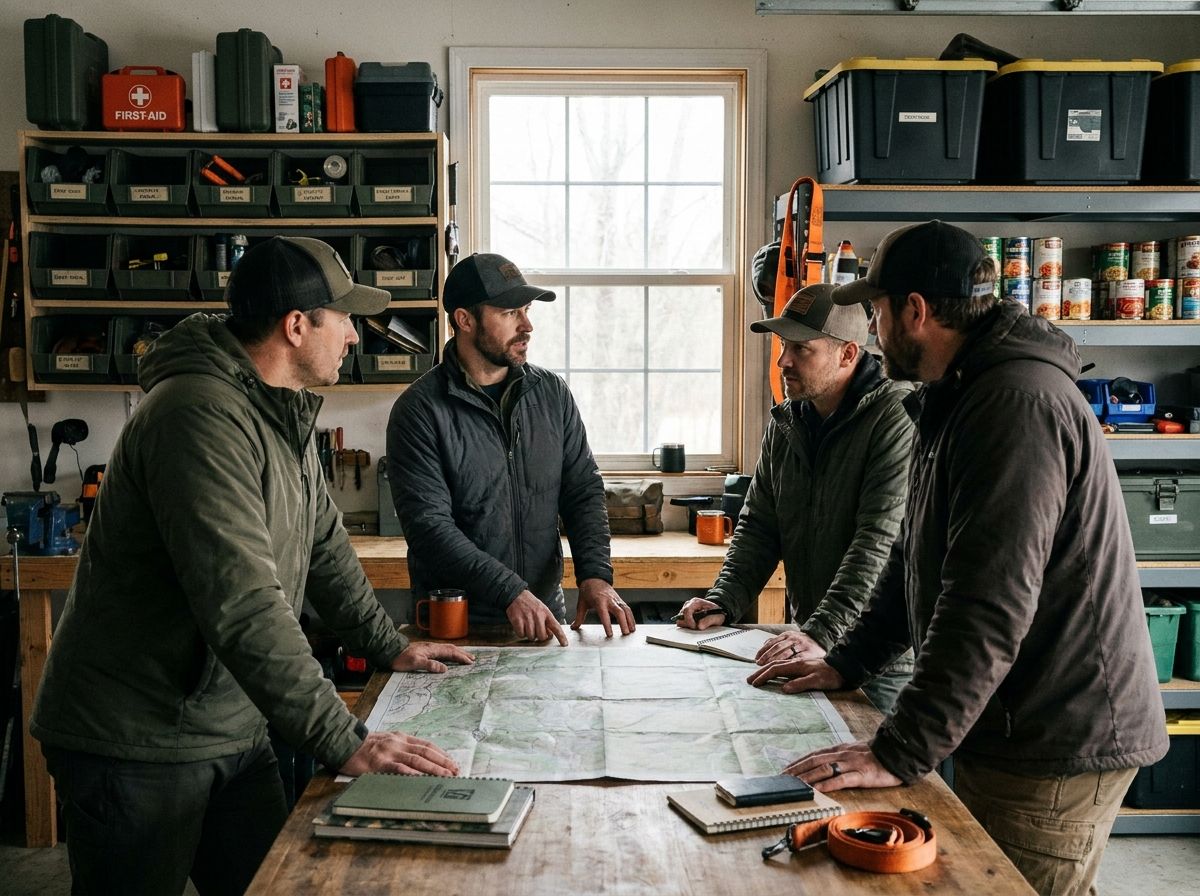
You're sitting in a local coffee shop, scanning the room while your black coffee goes lukewarm. Two guys at the corner table are deep into something, their voices low but animated. You catch fragments: food storage rotations, tourniquet technique, a debate about the best rally point if the grid goes down. Not idle talk. These men are building something, and what they're building is exactly what separates a neighborhood that holds together from one that falls apart.
The importance of community preparedness
Community preparedness isn't a buzzword. It's the structural backbone of real self-reliance. When individuals pool their knowledge and resources, they create a safety net no single person can replicate on their own. According to the National Preparedness Coalition, neighborhoods with active preparedness groups recovered 30% faster from disasters compared to those without organized support. That's not a marginal difference. That's the gap between manageable and catastrophic.
When a disaster hits, official help is rarely immediate. Your neighbors are your first responders. They know the street layout, they know who has a generator, they know which house has a retired medic. When Hurricane Harvey slammed Houston in 2017, community members self-organized into informal rescue teams while official resources were still being deployed. Local residents like Jim McKeown launched their own boats and pulled stranded families out of floodwater, because they were there and they were ready.
Identifying local resources
Start close. Community centers, churches, schools, local fire departments, even the hardware store on the corner are all nodes in a network you haven't fully mapped yet. Local fire departments and health clinics often run preparedness programs that are open to the public and criminally underattended.
In 2022, the Cedar Park Community Center in Texas hosted a disaster preparedness workshop series that drew over 200 residents. They used what was already there: a building, chairs, and people who knew things. If your neighborhood has a firefighter or an EMT who runs a small business, that person is a resource. Invite them to speak. Buy them a coffee first, it goes a long way.
Forming a local preparedness group
Once you've mapped your local resources, start recruiting. You don't need a formal structure on day one. Host an informal gathering at your place or a nearby park, lay out your thinking, and see who leans in. The ones who ask follow-up questions are your core.
The Seattle Preppers Meetup formed in 2018 out of exactly this kind of organic start. Today they have over 300 members, monthly skill sessions, and a working local emergency communication plan. They didn't launch with a manifesto. They launched with a conversation.
Skills sharing and training
Every person in your network brings something to the table. Seriously, every one of them. One guy knows how to build a fire without matches. Another spent a decade as a diesel mechanic. Someone's wife is a registered nurse (and if you're smart, you make sure she feels genuinely welcome at those meetings). The goal is to surface those skills and cross-train.
The Santa Cruz Preppers in California demonstrated this during the COVID-19 pandemic, pivoting to online workshops that covered everything from food canning to basic home repair. The more redundancy you build in your network's skill set, the harder it is to knock the whole thing over. One person's absence shouldn't leave a critical gap.
Organizing community drills
Reading about evacuation routes is not the same as walking them. Schedule drills. Run scenarios. Los Angeles neighborhoods have started organizing community-level earthquake simulations where residents practice assembling at designated rally points and running through their communication protocols. The gaps you find in a drill are problems you can fix. The gaps you find during an actual event are a different story.
The 2022 Great ShakeOut earthquake drill had over 10 million participants. That kind of scale starts with local groups deciding to actually show up and practice.
Utilizing technology for communication
Apps won't save you if you haven't already built the relationships, but they're a serious force multiplier once you have. Platforms like Nextdoor and WhatsApp let you push real-time information fast. During a recent winter storm in Colorado, the Colorado Preppers Network used a WhatsApp group to coordinate a food drive and resource-sharing effort that reached over 100 families. Road conditions, shelter availability, who needs help and where, that information moved in minutes instead of hours.
Keep your digital communication plan simple. The more steps required, the fewer people will actually use it when things get chaotic.
Building relationships with local authorities
This one gets skipped more than it should. Invite a fire department rep or a local officer to one of your group meetings. Not to be the authority in the room, just to share what they know about local protocols and resources. In a small Texas town, a standing relationship between residents and local police meant that when a flood hit, residents were already plugged into the communication chain. They got evacuation guidance early, which is the only time it's actually useful.
Mutual respect goes both ways. Show up, be organized, and local authorities tend to take you seriously.
Expanding your network through local events
Farmers' markets, community fairs, even a local 5K are all places where you can connect with potential allies. Set up a booth. Talk to people. The 2023 Preparedness Fair in Nashville drew over 5,000 attendees and gave local organizations a real platform to connect, share, and demonstrate value. Workshops on emergency medical training and food preservation ran alongside vendors offering quality gear. You meet people in those rooms you'd never encounter otherwise.
FAQ
How can I start a local preparedness network?
Reach out to a handful of neighbors and host an informal gathering. Parks and community centers work well for early meetings. Keep the first conversation low-pressure and focused on shared goals.
What activities can we do as a community to prepare?
Organize skills-sharing workshops, run drills for realistic local scenarios, and hold training sessions on first aid, self-defense, and supply management. A neighborhood cleanup day also builds camaraderie while getting practical work done.
How often should we meet?
Monthly meetings are a solid baseline. Regularity keeps preparedness from slipping down everyone's priority list. Supplement with occasional skill-focused sessions or scenario exercises to maintain momentum.
What should I include in a community emergency plan?
Map your communication protocols, rally points, available community resources, and each member's assigned role. Keep a shared document somewhere everyone can access it, and update it when things change.
How can technology help in community preparedness?
Messaging apps handle rapid coordination well. Group chats can push real-time updates, share resource availability, and keep everyone on the same page without requiring everyone to be in the same room. Social media works for broader outreach and mobilization.
What are some common pitfalls to avoid when building a preparedness network?
Don't wait for a crisis to start building. The relationships have to exist before you need them. Also, keep communication clear and make sure everyone understands their role. Confusion during high-stress situations costs time you won't have.
Building local networks is one of the highest-leverage things you can do for your overall readiness. Identify your resources, form your group, cross-train relentlessly, and stay plugged into your local authorities. The next step is simple. Reach out to two or three neighbors this week and float the idea. That conversation is where it starts.
Want this handled automatically? See the Mainstay membership.
Subscribe to comment
Join the Mainstay newsletter to leave a comment — and get new field notes in your inbox.
Get new field notes in your inbox
Practical, calm preparedness — one useful note at a time.