What to do when the water is not safe to drink
A boil water notice covers more than drinking, the bleach ratio is one number worth writing down, and neither boiling nor bleach touches chemicals. What CDC and EPA actually say.
The notice arrives as a text message or a knock on the door, and it is always short. Do not drink the water until further notice. Then you are standing at the sink holding a glass, improvising.
Most of what people improvise is close to right. Boiling works. The bleach thing is real. It is the details that go wrong, and a few of them go wrong in ways that matter.
The notice covers more than drinking
This is the first thing households get wrong and the easiest to fix.
If your water is unsafe, the CDC says do not use it to drink, wash dishes, brush your teeth, wash or prepare food, wash your hands, make ice, or make baby formula.
Ice is the one that slips past people. The tray in the freezer was filled before the notice and it is the same water. Formula is the one that matters most.
Brushing your teeth is the one nearly everybody does on autopilot about four hours in.
Boiling is the best answer
The CDC puts it plainly: boiling is the best way to kill germs in water. Not the most convenient. The best.
If the water is cloudy, deal with that first. Filter it through a clean cloth, a paper towel, or a coffee filter. You can also let it settle and draw off the clear water from the top.
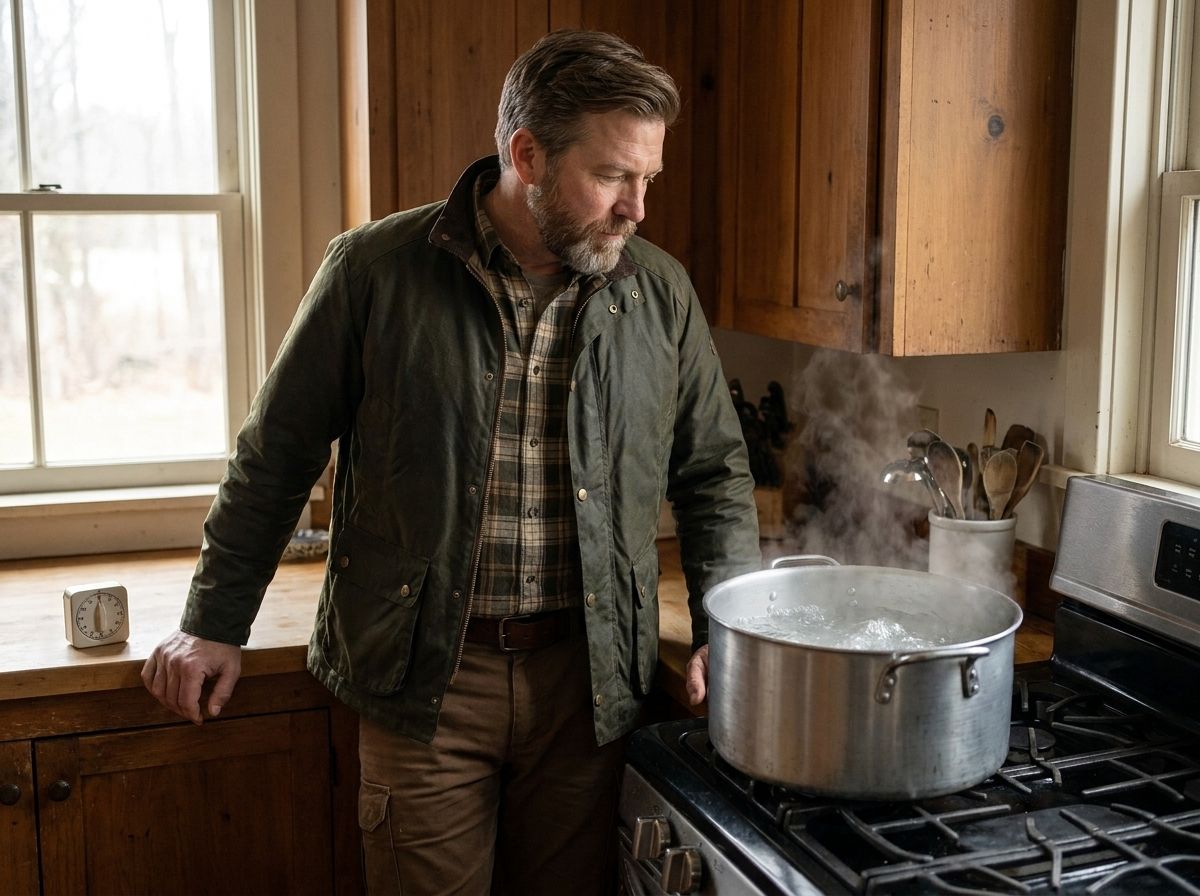
Then bring the clear water to a rolling boil for one minute.
Let it cool on its own and store it in clean containers with tight covers.
It will taste flat, because boiling drives the dissolved air out of it. The CDC's fix is to pour it between two clean containers and let it stand a few hours, or add a pinch of salt for each quart.
The one number that depends on where you live
Above a certain elevation, water boils at a lower temperature and one minute stops being enough. Both agencies say boil for three minutes instead. They disagree about where that line is.
The CDC puts it above 6,500 feet. The EPA puts it above 5,000 feet, or 1,000 meters.
Same rule, different line, and the gap between them is real ground. Denver sits in it. So does a good deal of the mountain west.
If you live between the two figures, boil the full three minutes. It costs you two minutes and it settles the question.
If you cannot boil
No power and no gas is a normal enough situation, so here is the second method.
Use unscented household chlorine bleach. Read the label first, because many bottles now carry instructions for exactly this. If yours does not, look at the active ingredient. In the United States it is typically between 5 and 9 percent sodium hypochlorite.
For bleach in that range, the CDC's figure is 8 drops per gallon of clear water.
Double it if the water is cloudy, murky, colored, or very cold.
Stir it well. Let it stand at least 30 minutes before you drink it. Store it covered.
Two things about the bottle itself. The EPA says use regular unscented bleach only, not scented, not color safe, and nothing with added cleaners. It also says use bleach that is fresh, or that has been stored at room temperature for less than a year. Bleach loses strength sitting in a warm garage, which means the ratio on this page assumes a bottle that has not been there since 2023.
And bleach is a second choice, not an equal one. The CDC notes that chemical disinfectants do not work as well as boiling on some germs, including the parasites Cryptosporidium and Giardia.
What a filter does and does not do
This is where good equipment gives people false confidence.
Portable water filters will not remove viruses. That is the CDC's flat statement, and it surprises most people who own one.
To remove bacteria, a filter needs an absolute pore size of 0.3 micron or smaller. To remove parasites, 1 micron or smaller. Most filters will handle parasites and leave the viruses and bacteria behind.
So a filter is a step, not the answer. After filtering, add a chemical disinfectant to the filtered water to kill what the filter missed.
What none of this fixes
Boiling and bleach kill germs. They do nothing about chemistry.
The EPA is direct about it: boiling or disinfection will not destroy other contaminants such as heavy metals, salts, and most other chemicals. Boiling actually concentrates them, because you are removing water and leaving everything else behind.
The CDC draws the harder line. You cannot make water containing fuel, toxic chemicals, or radioactive material safe by boiling or disinfecting it. If you suspect any of those, use bottled water or a different source and call your health department.
This is the part worth carrying: treatment answers one question, not every question. If the problem is a main break, boil it. If the problem is something that got into the ground, boiling it is not a solution and can make it worse.
Water already in the house
Before you go looking outside, the EPA points out what is already indoors. You can melt ice cubes. You can drain the hot water tank or the pipes.
The water heater is the one people forget, and it has been quietly holding clean water this whole time.
One hard exception from the CDC: never use water from radiators or boilers that are part of your home heating system. That water can make you sick. A water heater is for washing and drinking. A boiler is not, and in a basement they can look similar enough to matter.
If you do go to an outside source, the EPA says skip anything with floating material in it, a dark color, or a questionable odor, and prefer flowing water over still.
What to do this week
Three small things, none of which involve buying anything.
Find the drain valve on your water heater and know which one it is. Standing in a dark utility closet is a poor time to learn the difference between the water heater and the boiler.
Look at your bleach. If it is scented or color safe, it does not count for this, and you may want a small plain bottle that does.
Write the ratio down. Eight drops per gallon, stand 30 minutes, double it if the water is cloudy. Tape it inside a cabinet door. It is the kind of number that is easy to look up today and impossible to look up on the day you need it.
Where this comes from
Every number on this page is quoted from the agency that published it, not from us.
- Centers for Disease Control and Prevention, How to Make Water Safe in an Emergency (published September 19, 2024; checked July 2026)
- Environmental Protection Agency, Emergency Disinfection of Drinking Water (updated February 24, 2026; checked July 2026)
Where the two differ on boiling altitude, both figures are given above under their own name rather than averaged into a third number neither agency published.
Mainstay is general guidance, not professional advice. Verify anything critical against official sources such as FEMA, the National Weather Service, and the American Red Cross.
FAQ
What should I avoid using unsafe tap water for?
Do not use it for drinking, washing dishes, brushing your teeth, washing or preparing food, washing your hands, making ice, or making baby formula. Ice made before the notice should also be treated as unsafe because it came from the same water.
How long should I boil water to make it safer?
If the water is cloudy, filter it through a clean cloth, paper towel, or coffee filter first, or let it settle and draw off the clear water. Bring the clear water to a rolling boil for one minute, or for three minutes if you live above the applicable high-elevation threshold. The article recommends three minutes between 5,000 and 6,500 feet because the CDC and EPA use different elevation cutoffs.
How much bleach should I add if I cannot boil the water?
For clear water and unscented household bleach containing 5 to 9 percent sodium hypochlorite, add 8 drops per gallon. Double that amount if the water is cloudy, murky, colored, or very cold, then stir it and let it stand for at least 30 minutes. Use regular unscented bleach without added cleaners, and check the label first.
Can a portable water filter make unsafe water safe to drink?
A portable filter is only a step, not a complete solution. The article says filters will not remove viruses, and recommends adding a chemical disinfectant after filtering to kill what the filter missed.
Can boiling or bleaching remove fuel, chemicals, or heavy metals from water?
No. Boiling and disinfection kill germs but do not destroy heavy metals, salts, fuel, toxic chemicals, radioactive material, or most other chemicals. If those contaminants are suspected, use bottled water or another source and contact the health department.
Want this handled automatically? See the Mainstay membership.
Subscribe to comment
Join the Mainstay newsletter to leave a comment — and get new field notes in your inbox.
Get new field notes in your inbox
Practical, calm preparedness — one useful note at a time.