What to unplug during a power outage: a room-by-room safety check
A calm, room-by-room guide to unplugging appliances, protecting electronics, checking food, and restoring power without surprises.
June Wills was standing in the kitchen doorway when the house went quiet. The refrigerator stopped humming, the microwave clock went dark, and Scout lifted his head from the rug as if he'd been personally assigned to investigate.
What to unplug during a power outage depends on the appliance, the room, and what you plan to use when electricity comes back. Start with sensitive electronics and anything that generates heat, then leave a small number of essential items connected only if you have a safe backup power source.
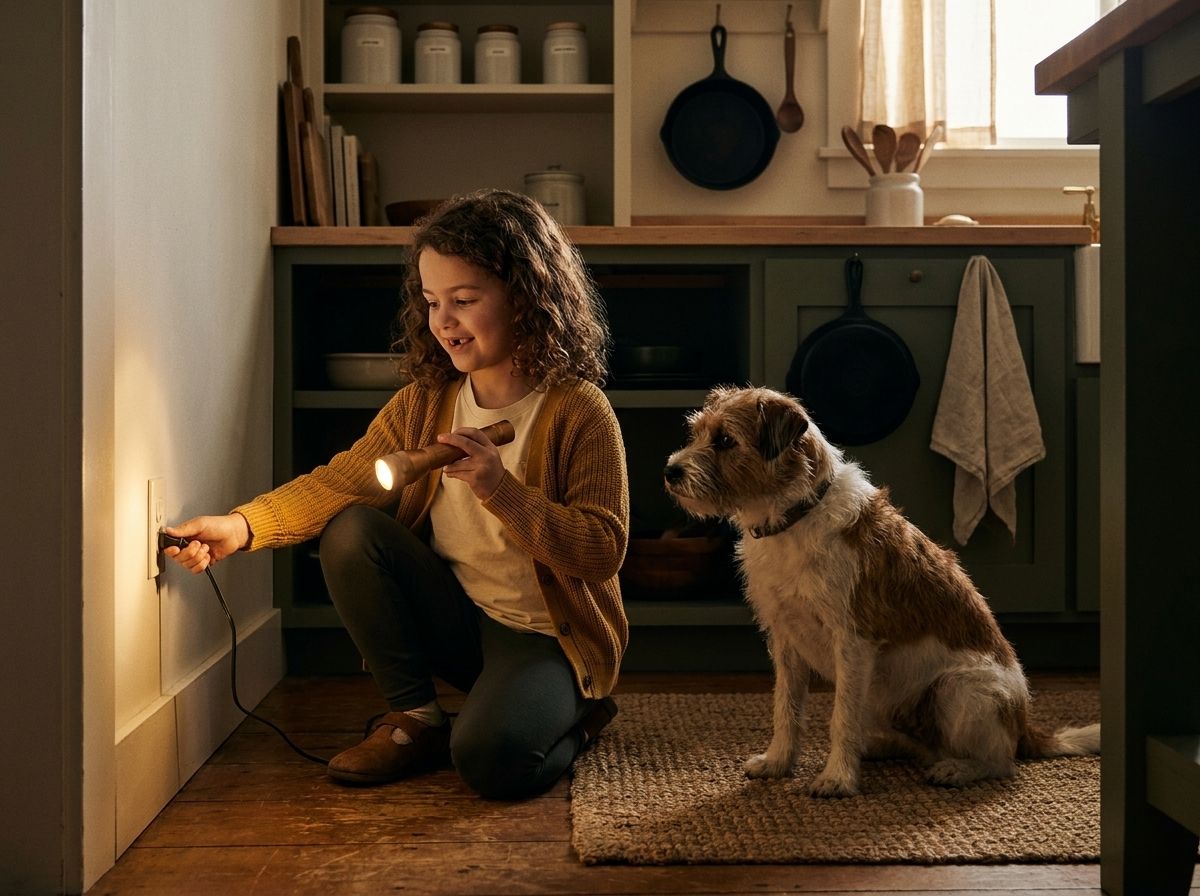
June didn't try to solve the whole house at once. She grabbed a flashlight from the drawer, walked room by room, and handled the obvious loads first. That small decision mattered, because a dark house makes simple tasks feel strangely large, especially when everyone is asking what still works and whether the power will be back in two minutes or two hours.
If you've ever stood beside a silent refrigerator with a phone flashlight clamped between your teeth, you are not behind. You're having a completely normal household moment. Power outage electrical safety is less about dramatic action and more about removing avoidable problems while you still have enough light to see what you're doing.
Start with the whole-house check
Before you unplug anything, look and listen. Is the outage limited to your home, or is the whole street dark? Are there sparks, smoke, a burning smell, or damaged wires outside? If you see a fallen power line, stay at least 35 feet away from it and from anything it's touching, as the American Red Cross advises. Don't approach it because it appears inactive.
Keep your path clear as you move through the house. A flashlight is more useful in your hand than balanced on a counter, and the Red Cross recommends having one for every household member. If everyone has a light, nobody needs to cross a dark room hunting for the household's only working torch.
Use this opening sweep:
- Put phones, chargers, and portable batteries where you can find them.
- Check for smoke or a hot-plastic smell near outlets and power strips.
- Look outside before touching a service panel or walking near a damaged line.
- Note which appliances were running when the power stopped.
Then unplug the items most likely to be damaged by a surge when electricity returns. That includes televisions, computers, gaming equipment, printers, routers, chargers, and other electronics with circuit boards. Unplug the whole power strip if it's easy to reach. Don't yank cords from behind heavy furniture in the dark. A safe check can wait until you have a clear view.
Leave a light switched on so you know when power returns. Use a lamp you can reach without stepping over cords or furniture. You're creating a simple signal, not rebuilding the electrical system before dinner.
The kitchen: protect food and unplug heat
The kitchen deserves a slower check because it combines heat, water, food, and a surprising number of plugged-in appliances. Start with the stove, toaster oven, toaster, air fryer, coffee maker, kettle, slow cooker, and countertop oven. Unplug anything that produces heat or could start heating the moment power returns. If a burner or heating element was on when the outage began, confirm that its controls are off.
Next, look at the refrigerator and freezer. Keep both doors closed as much as possible. FEMA says the refrigerator will keep food cold for about four hours. A full freezer will hold temperature for about 48 hours, and a half-full freezer for about 24 hours, as long as the door stays shut. The Red Cross gives the same guidance.
You don't need to stand there taking inventory with the refrigerator door hanging open. Write down what you need later, or snap a quick photo while the room still has daylight. If the outage stretches on, check food temperature using the FEMA and Red Cross guidance. Both say to discard food that has reached 40 degrees Fahrenheit or warmer.
When power is restored, resist the urge to flip every appliance back on at once. Check the refrigerator, freezer, oven, and dishwasher for signs of damage or unusual heat. Restore loads gradually so you can catch a tripped breaker, a smell, or an appliance that doesn't sound right.
A kitchen power outage checklist can be simple:
- Unplug countertop heating appliances.
- Turn off burners and oven controls.
- Keep refrigerator and freezer doors closed.
- Set aside food with an unusual odor, color, or texture.
- Wait before reconnecting nonessential appliances after power returns.
The goal is not to save every item in the refrigerator. Food is replaceable. A questionable meal is not worth turning a difficult evening into a medical problem.
The living room and office: disconnect sensitive electronics
The living room often has the densest cluster of electronics in the house. Television, speakers, streaming boxes, game consoles, lamps, chargers, and a router may all share a single wall outlet. Unplug those devices if you can reach them without moving furniture or stretching across a wet floor.
Move methodically. Start at the wall and work outward, or start with the power strip and disconnect it from the outlet. Labeling cords on a normal day makes this much easier later, especially when several black cables have formed what looks like a small, determined nest behind the entertainment center.
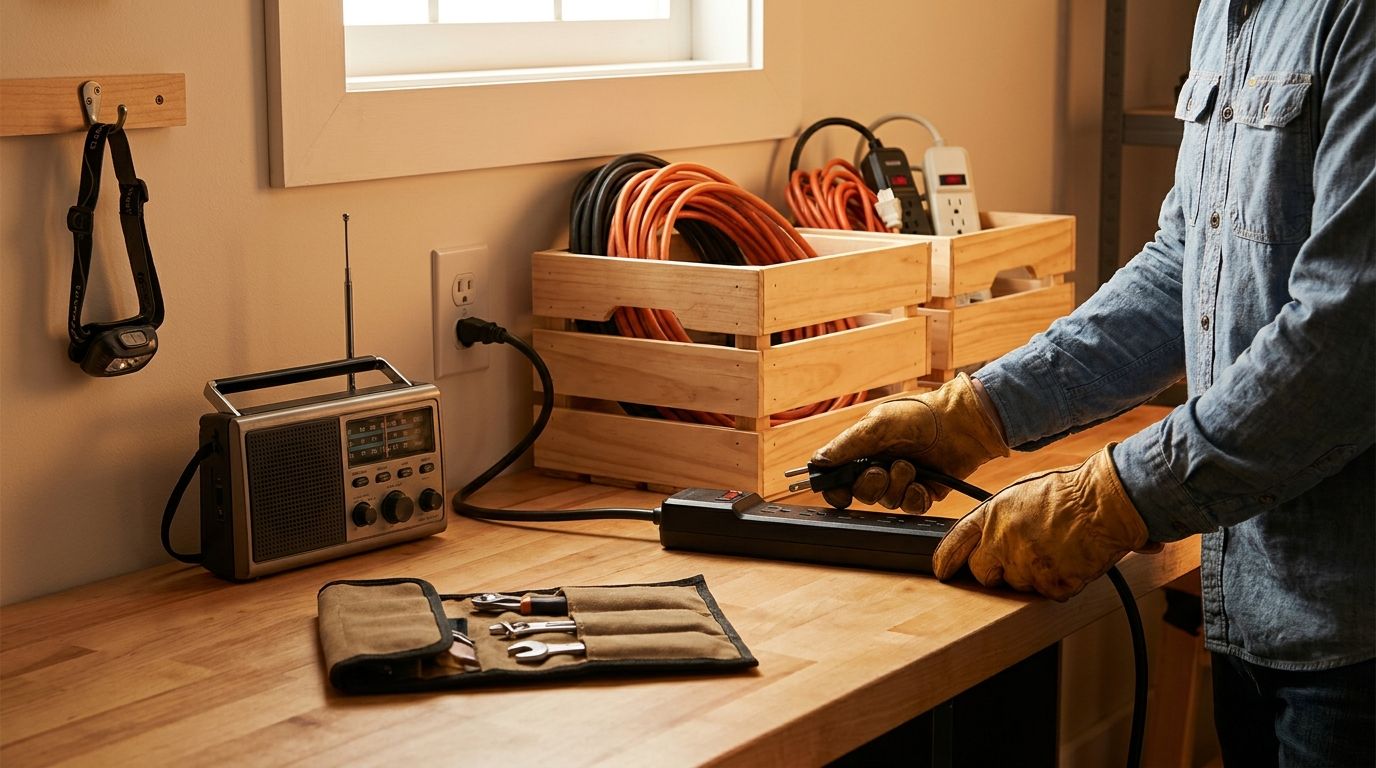
In the home office, unplug the computer, monitor, printer, desk lamp, modem, router, and other nonessential equipment. If a computer has a battery backup, leave it connected only if you understand what that backup supports and you need the system to shut down properly. Otherwise, close the computer safely and unplug it.
Don't use a power strip as a substitute for judgment. A strip organizes plugs, but it doesn't make every appliance suitable for every backup source. Follow the instructions for your generator, battery station, or other equipment. The label and manual are the authority on what that device can handle.
This is also where many households discover their real outage problem: not a lack of gear, just that nobody knows which cord belongs to which device. During a calm afternoon, photograph the setup and mark the important plugs. Store that photo in your household plan. With Mainstay's household inventory and document vault, you can keep that reference with the rest of the information you may need when the lights are out.
Make a short office and living room list:
- Shut down computers before disconnecting them.
- Unplug televisions and entertainment equipment.
- Disconnect chargers that are not actively needed.
- Keep critical instructions and equipment manuals easy to find.
Leave the modem alone if the outage is brief and it's connected to a safe backup source you understand. There is no prize for unplugging the device that lets you check the utility's outage update.
Bedrooms, bathrooms, and utility spaces
Bedrooms usually have fewer heavy appliances, but they still contain lamps, chargers, electric blankets, fans, alarm clocks, and small heaters. Unplug portable heaters and electric blankets. Turn off lamps and disconnect chargers you don't need. Keep cords out of walkways, especially if people are moving around by flashlight.
Don't use a gas stove, charcoal grill, camp stove, or generator indoors to warm a room or charge a device. FEMA says generators, camp stoves, and charcoal grills should always be used outdoors and at least 20 feet away from windows. That distance matters even when the equipment seems small or the weather makes going outside unpleasant.
Check the bathroom for hair dryers, straighteners, electric shavers, heated brushes, and space heaters. If any item was in use when the outage began, unplug it after confirming it's cool enough to handle. Water and electricity are a poor combination, and a dark bathroom makes both harder to manage carefully.
The utility area needs attention too. Unplug the washer, dryer, dehumidifier, workshop tools, and other equipment that was running when the power stopped. Do not handle wet plugs. If water has reached an outlet, cord, appliance, or power strip, leave it alone and get qualified help.
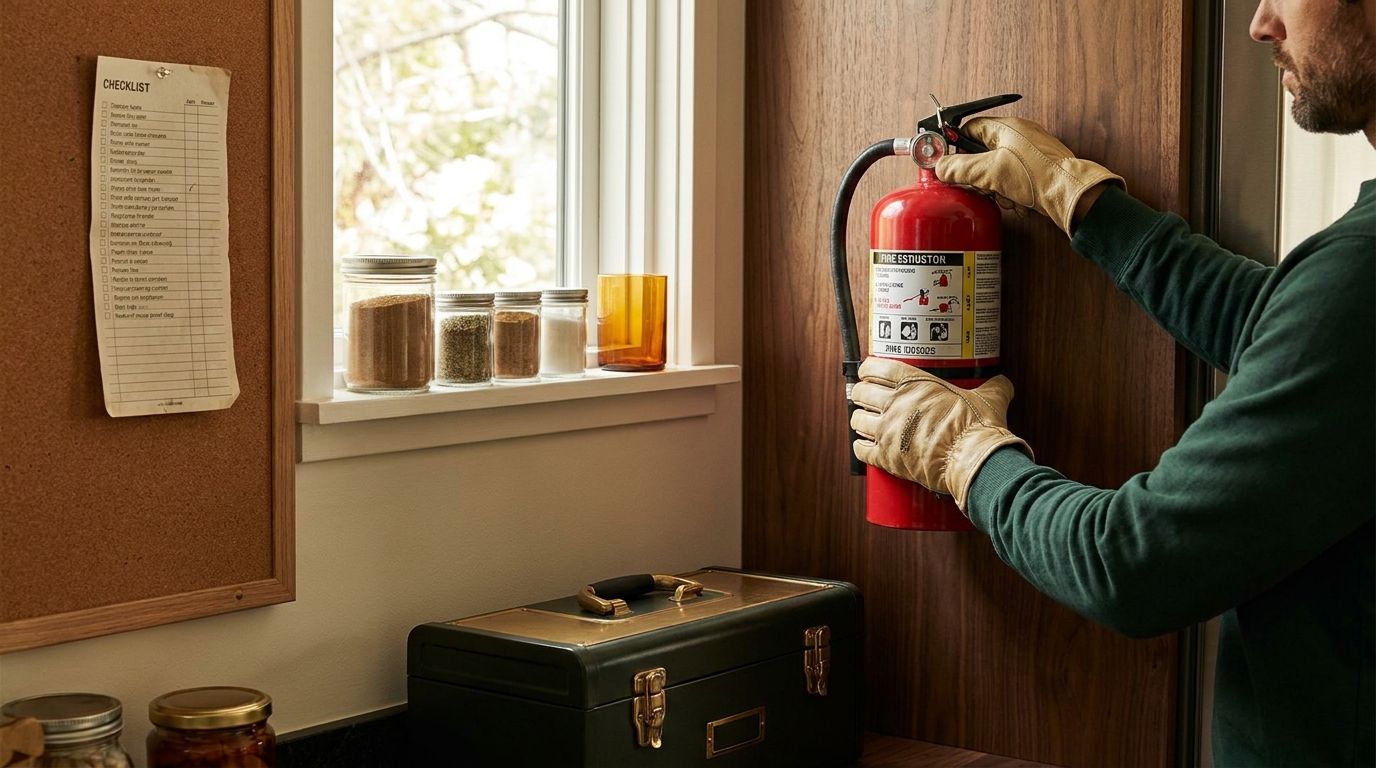
Smoke and carbon monoxide protection should stay active. The Red Cross recommends installing smoke alarms with battery backup on every floor, inside and outside sleeping areas, and testing them monthly. FEMA recommends carbon monoxide detectors with battery backup in central locations on every level of your home.
A power outage is not the moment to pull a detector because its alarm is inconvenient. If it chirps, replace the battery if you can do so safely, then put the detector back in service. If you're running any fuel-burning device, take the alarm seriously. Move everyone to fresh air immediately if it sounds.
When power returns
The return of electricity can feel like the problem is solved. It's a relief, but take a breath before reconnecting the house. Start with the essentials and inspect each item as you go.
Walk the rooms and look for water, scorch marks, damaged cords, or appliances that are unusually hot. Don't use equipment with a frayed cord, cracked casing, bent plug, or burning smell. Set it aside for repair or replacement. Your household doesn't need to prove anything by putting questionable gear back into service.
Reconnect equipment in a controlled order:
- Turn on essential lighting.
- Check the refrigerator and freezer.
- Restore communication equipment if needed.
- Reconnect computers and other sensitive electronics.
- Add convenience appliances only after the basics are stable.
If a breaker trips, don't keep resetting it. Unplug the appliance or group of appliances on that circuit and find the cause. When you're unsure, call a qualified electrician or contact the utility. A professional visit costs far less than an electrical injury or a damaged panel.
Also check refrigerated medication. FEMA says that if the power is out for more than a day, discard any medication that should be refrigerated, unless the drug's label says otherwise. Ask a pharmacist about a replacement or safe storage before making assumptions. The label is the authority.
Use the quiet after the outage to improve your household plan. Write down what stayed plugged in, what was difficult to reach, which flashlight was missing, and which food or medication needed attention. A plan gets useful when it reflects your actual home rather than an ideal version of it. That's the whole point.
FAQ
What should I unplug first during a power outage?
Unplug heat-producing appliances and sensitive electronics first. That usually means countertop cooking appliances, televisions, computers, chargers, and equipment connected to power strips. Leave a safe light switched on so you can tell when power returns.
Should I unplug my refrigerator during an outage?
You can leave the refrigerator closed during the outage so it stays cold as long as possible. Unplug it if you see damage, smell burning, or plan to connect it to a backup source that requires a specific setup. FEMA says the refrigerator will keep food cold for about four hours, so avoid opening the door to browse.
Is it safe to use a generator in a garage with the door open?
No. FEMA says generators should always be used outdoors and at least 20 feet away from windows. Keep generators away from doors, windows, and vents, and follow the equipment manual for connection and operation.
What should I do with food after a long outage?
Keep the refrigerator and freezer closed, then use the temperature guidance from FEMA and the Red Cross. FEMA says to discard food if the temperature reaches 40 degrees Fahrenheit or higher, and food exposed to that temperature for two hours or more should go. When you can't confirm that food stayed cold, choose the clear answer and throw it out.
A calmer next step
When June finished her walk through the house, the outage hadn't ended. But the dangerous guesswork had. Heat-producing appliances were off, sensitive electronics were disconnected, the refrigerator door stayed shut, and everyone knew where the flashlights were.
That's what a useful home outage safety checklist actually gives you: not control over the utility, but a clear next action when the house becomes unfamiliar. Put the list somewhere visible, save the appliance manuals, and walk the rooms once on a normal day. You're allowed to make this easier for your future self.
Store non-perishable food and water supplies for at least two weeks, as the Red Cross recommends. Keep your car's gas tank at least half full, also per the Red Cross. Then add the room-by-room unplugging check to your household plan. The next outage may still be inconvenient. It doesn't have to be confusing.
Where this comes from
Want this handled automatically? See the Mainstay membership.
Subscribe to comment
Join the Mainstay newsletter to leave a comment — and get new field notes in your inbox.
Get new field notes in your inbox
Practical, calm preparedness — one useful note at a time.