
Where to put a generator when the power goes out
Most generator advice stops at the purchase. The decision that actually matters is where you set it down, and almost nobody explains it. What CPSC and CDC say about placement, alarms, and the garage question.
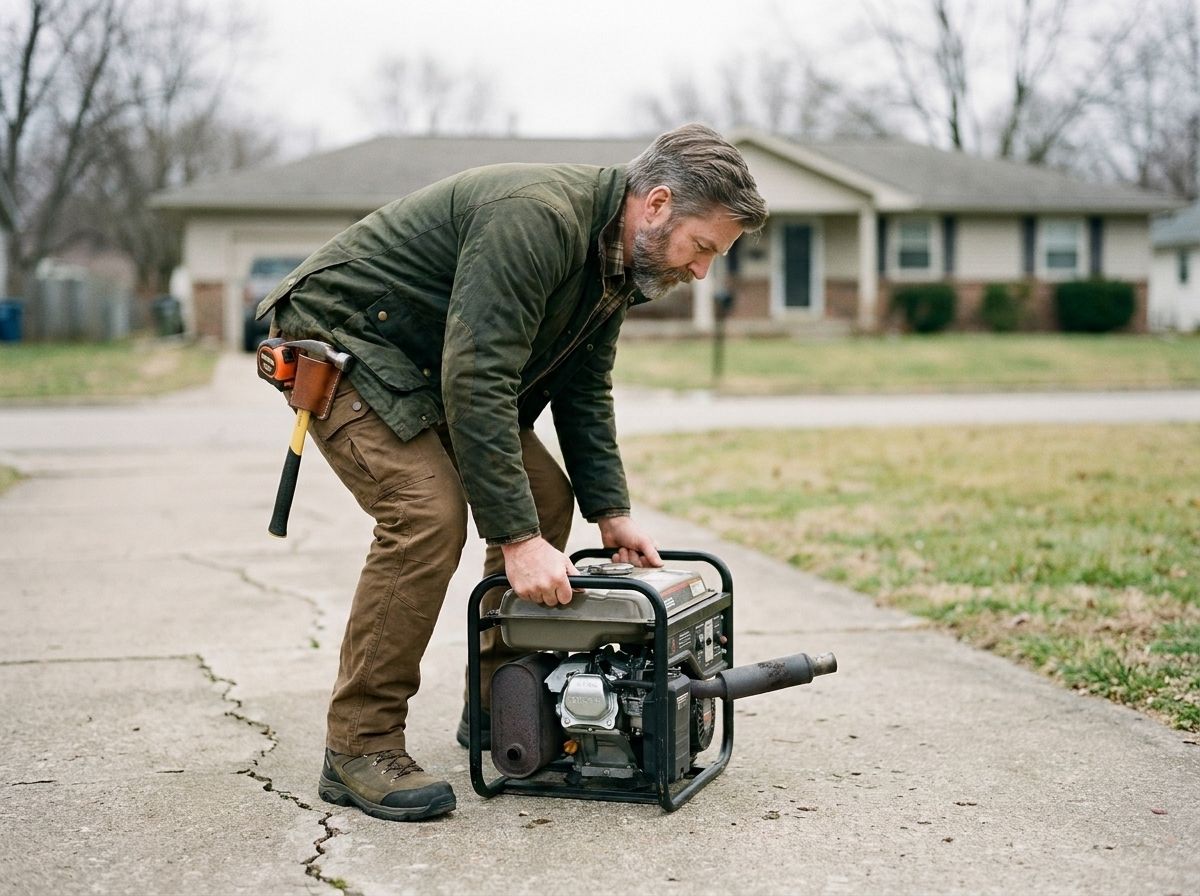
Most generator advice stops at the purchase. Wattage, fuel type, how long it runs on a tank. Then the power actually goes out, you wheel the thing out of the shed, and you are standing in the dark deciding where to set it down.
That is the decision that matters most, and it is the one almost nobody explains.
The part you cannot sense
A portable generator produces carbon monoxide. One of them puts out the same amount as hundreds of cars. That figure is the Consumer Product Safety Commission's, and it is the reason the rest of this is worth five minutes.
You cannot see CO and you cannot smell it. The CPSC calls it the Invisible Killer. Your body has no way to tell you it is there.
The numbers are steady rather than dramatic. More than 200 people in the United States die every year from accidental CO poisoning that has nothing to do with a fire, and more than 100 of those deaths involve portable generators. The CDC counts a wider slice and finds more than 400 deaths a year from unintentional CO poisoning not linked to fires, plus more than 100,000 emergency department visits.
Those deaths are not the generator breaking. They are where it was standing.
Where it goes
Outside, and only outside. At least 20 feet from the house, with the exhaust pointed away. That is the CPSC's guidance.
The CDC adds the detail that matters on a real lot: more than 20 feet from any window, door, or vent. Those openings are how exhaust gets back inside. A generator can sit 20 feet from the wall and still be three feet from a basement window.
So measure to the nearest opening, not to the wall. Walk the spot now, while it is daylight and dry. At night, in the rain, with the power out, you will not want to be pacing out distances.
The garage question
This is the one everybody asks, so here is the plain answer. Never run a generator in the house or the garage. Not with the door open. Not with the windows open. Not for a few minutes.
The CDC and the CPSC both say it in the same flat language, and they say it because an open garage door does not make a garage outdoors.
The same rule covers your car. The CDC says never run a car or truck in a garage attached to the house, even with the garage door open. If you run an engine in a detached garage, open the door for fresh air first.
The alarm is the other half
Placement keeps CO out of the house. An alarm tells you when it got in anyway. You want both.
The CPSC is specific. Put a CO alarm on every level of the home and outside the sleeping areas. Use battery-operated alarms, or alarms with battery backup, so they still work during an outage. That last part is the easiest to skip and the worst one to skip, because the outage is exactly when the generator is running.
Interconnected alarms are better. When one sounds, they all sound. If CO is building in the basement while you are asleep upstairs, that is the difference that reaches you.
The CDC adds one maintenance note: replace the detector on the manufacturer's schedule, or every five years.
What it feels like
The CDC lists the common symptoms as headache, dizziness, weakness, upset stomach, vomiting, chest pain, and confusion. People describe it as feeling flu-like.
That is the trap. Flu-like is easy to explain away on a cold night when the power is out and everyone is already tired and miserable.
The symptoms are also not a reliable warning. The CDC is blunt about it: people who are sleeping, drunk, or under the influence of other substances can die from CO poisoning before they have symptoms. There is no waking up and noticing. That is what the alarm is for.
Who it reaches first
Everyone is at risk. The CDC notes that infants, the elderly, and people with chronic heart disease, anemia, or breathing problems are more likely to get sick from CO.
If that describes someone under your roof, none of the guidance changes. The alarm just matters more.
If you think it is CO
Get outside to fresh air first. Then call 911. That order is the CPSC's, and it is deliberate. You cannot help anyone from inside a house that is filling with CO.
Do not go back in to open windows. Do not hunt for the source. Outside first.
The other ways it gets in
The generator gets the attention, but the CDC's list of household CO sources is longer, and the rest of it shows up during an outage for the same reason: the power is off and people improvise.
Never heat the house with a gas oven. Never use a portable gas camp stove indoors. Never burn charcoal indoors, because burning charcoal gives off CO in every color: red, gray, black, or white.
Every one of those is something a reasonable person does on a cold night with no electricity. That is why they are on the list.
What to do this week
None of this asks you to buy a generator or change the one you have. It asks for two small things.
Walk your yard and pick the spot. More than 20 feet from the house and from every window, door, and vent, with room for the exhaust to point away. Decide it while it is daylight.
Then check your CO alarms. Every level, outside the bedrooms, battery or battery backup. Press the test button. If you do not have one on every level, it is the cheapest thing you will add to your kit all year.
After that, give it a schedule so it is not a thing you remember on your own. The CDC hangs the battery check on the clock change each spring and fall. Two dates you already notice, doing the work for you.
That is the whole job.
Where this comes from
Every number on this page is quoted from the agency that published it, not from us.
- Consumer Product Safety Commission, Carbon Monoxide Information Center (checked July 2026)
- Centers for Disease Control and Prevention, Carbon Monoxide Poisoning Basics (updated January 12, 2026; checked July 2026)
Mainstay is general guidance, not professional advice. Verify anything critical against official sources such as FEMA, the National Weather Service, and the American Red Cross.
FAQ
How far should a portable generator be from my house?
Place it outside, at least 20 feet from the house, with the exhaust pointed away. Measure the distance to the nearest window, door, or vent, since exhaust can enter through those openings.
Can I run a generator in a garage with the door open?
No. Never run a generator in a house or garage, even if the door or windows are open, because an open garage door does not make the garage outdoors.
Where should I put carbon monoxide alarms during a power outage?
Put a CO alarm on every level of the home and outside the sleeping areas. Use battery-operated alarms or alarms with battery backup, and interconnected alarms are better because they all sound when one detects CO.
What should I do if I think there is carbon monoxide in my home?
Get outside to fresh air first, then call 911. Do not go back inside to open windows or look for the source.
Can I use a gas oven, camp stove, or charcoal indoors during an outage?
No. Never heat the house with a gas oven, use a portable gas camp stove indoors, or burn charcoal indoors, because these can produce carbon monoxide.
Want this handled automatically? See the Mainstay membership.
Subscribe to comment
Join the Mainstay newsletter to leave a comment — and get new field notes in your inbox.
Get new field notes in your inbox
Practical, calm preparedness — one useful note at a time.